The Border Country That Produced the Border Collie
For many of us who share our lives with Border Collies, their boundless energy, piercing "eye," and undeniable intelligence can sometimes feel like a puzzle. Understanding where these incredible dogs come from, the harsh lands and even harsher demands that forged them, isn't just a fascinating history lesson; it's the key to truly appreciating and managing their unique traits in our modern world. This guide delves deep into the very origins of the Border Collie, exploring the environment and the dedicated people who shaped the breed we know and love today.
The Ancient Roots of Herding Dogs in Britain
Before the "Border Collie" as we recognize it even existed, various types of herding dogs were indispensable companions to shepherds across the British Isles. These weren't fancy show dogs with pedigrees stretching back generations, but rugged, utilitarian animals bred for a singular purpose: to gather and control livestock, often in challenging, isolated conditions. Their lives depended on their ability to work, and their survival depended on their intelligence and stamina.
The Earliest "Collies" and Their Tasks
The term "collie" itself is thought to derive from an old Scottish word referring to black-faced sheep, the "coley" sheep, which these early dogs often tended. Imagine the scene: vast, untamed hillsides, often blanketed in mist or rain, with scattered flocks of sheep that were semi-feral and notoriously difficult to manage. A shepherd on foot, or even horseback, would be utterly lost without a canine partner. These early collies weren't just running alongside; they were an extension of the shepherd's will, navigating treacherous terrain, finding lost lambs, and pushing stubborn ewes. They needed keen senses, boundless energy, and an innate understanding of flock dynamics, often working far out of sight and hearing, relying on their own judgment and a few distinct whistles.
The Need for a Specialized Herder
As sheep farming evolved, so did the need for more specialized dogs. The common "cur" dogs or "shepherd's dogs" of the era were good, but inconsistent. Shepherds began to actively select for specific traits: the ability to "eye" sheep (control them with an intense stare rather than barking or nipping), a quiet working style, and an incredible responsiveness to even subtle commands. This wasn't about aesthetics; it was about efficiency and effectiveness. A dog that could move sheep gently but firmly saved the shepherd time, effort, and crucially, protected the flock from injury or stress. This intense selection pressure, driven by the practical needs of working life, laid the groundwork for the exceptional herding talent that would eventually become synonymous with the Border Collie.
The Anglo-Scottish Border: A Unique Cradle for a Breed
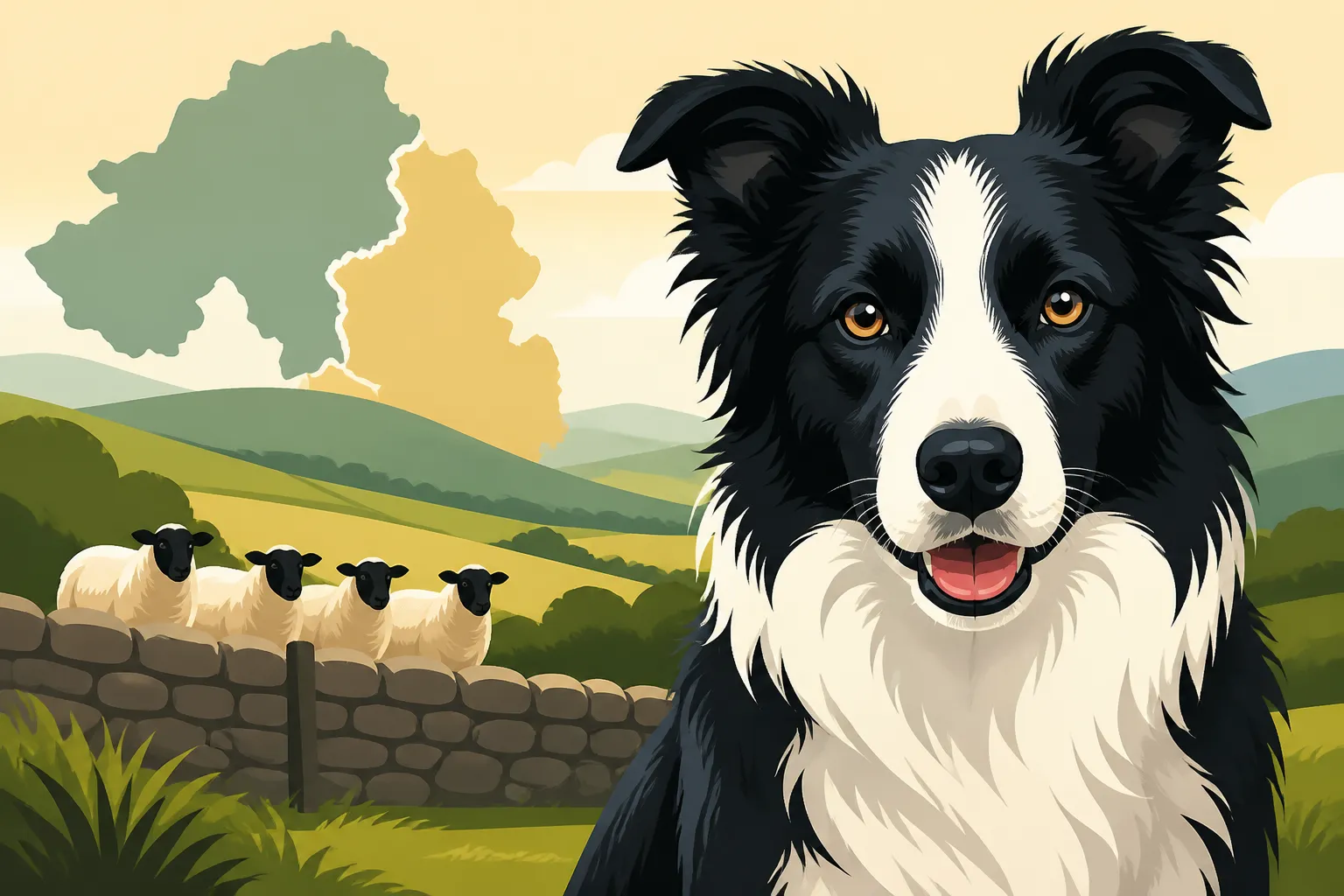
The specific region that gave the Border Collie its name, the Anglo-Scottish Border, was not just a geographical boundary but a crucible that forged its distinctive qualities. This area, a rugged expanse of hills, valleys, and unpredictable weather, demanded a dog of unparalleled grit and intelligence.
The Landscape's Influence on Development
Picture the Border country: sweeping moorlands, steep fells, and a patchwork of small farms clinging to the hillsides. The climate is often harsh, with biting winds, driving rain, and often heavy snow in winter. The sheep breeds native to this region, like the hardy Scottish Blackface and Cheviot, are tough, independent, and accustomed to fending for themselves. They are not easily swayed, and a dog working them needed to be equally resilient, physically tough, and mentally sharp. The endless undulating terrain, full of hidden dips and sudden rises, meant a dog needed incredible stamina and agility, capable of covering vast distances over rough ground without tiring. This isn't flat pasture work; this is navigating a challenging, ever-changing environment. It's no wonder that the Border Collie developed its famous stamina and agility in such a demanding environment.
The Lifestyle of the Border Shepherd
Life for a Border shepherd was solitary and physically demanding. Flocks could be large, often spread out over unfenced land. A shepherd often spent entire days, and sometimes nights, out on the fells, reliant on his dog for survival as much as for work. This meant the dogs needed to be hardy, self-sufficient, and capable of making intelligent decisions independently while still remaining utterly devoted and responsive to their handler. There was no room for fancy breeding trends; only practical working ability mattered. Dogs that couldn't perform were simply not kept or bred. This intense pressure for functional excellence honed the Border Collie's instincts, making them superb problem-solvers on the hoof. What Separates a Border Collie From Every Other Herder really comes down to this kind of foundational development.
Old Hemp: The Foundation of the Modern Breed
It's impossible to talk about the Border Collie's origins without speaking of Old Hemp, a dog so influential that virtually every Border Collie alive today can trace its lineage back to him. Born in 1893 in Northumberland, England, Hemp wasn't just another talented working dog; he possessed a revolutionary style that would forever change how sheep were worked.
Hemp's Revolutionary Working Style
Prior to Hemp, many herding dogs worked with a lot of noise and aggression, barking and nipping at the sheep to move them. While effective, it could also be stressful for the flock and sometimes led to injuries. Old Hemp, however, was different. He worked with an incredibly strong, yet calm, "eye." He would crouch low, fix the sheep with an intense, steady gaze, and move them with an almost hypnotic control, rarely barking or resorting to harsh methods. This quiet, powerful presence was a revelation. His demeanor was so effective that it allowed for far greater precision and less stress on the sheep, a quality highly prized by the discerning shepherds of the Border country.
His Unparalleled Influence as a Sire
Hemp's working prowess and calm temperament quickly made him a sought-after sire. He was bred extensively, reportedly siring over 200 puppies in his lifetime. What made his progeny so special was their consistent ability to inherit his calm "eye" and working intelligence. Shepherds saw that his offspring not only performed exceptionally in the fields but also passed those desirable traits onto the next generation. This wasn't just random luck; it was a testament to his strong genetic contribution to the emerging breed type. Old Hemp and Every Border Collie Alive Today is a title that truly reflects his monumental impact on the breed's genetic foundation.
The Standardization of the "Hemp" Style
Hemp's influence went beyond just siring pups; his working style became the gold standard. Shepherds began to actively seek out and breed dogs that emulated his calm, controlled approach. This informal standardization eventually led to the more formal recognition of this particular type of working dog as distinct from other "collies" throughout Britain. Without Hemp, the Border Collie's signature working style, the very essence of its being, might never have fully developed or become so universally admired.
The Evolution of the Name: From Collie to Border Collie
The journey from a generic "collie" to the specifically named "Border Collie" is a tale rooted in geography, tradition, and the passionate efforts of working dog enthusiasts to define their unique breed. It wasn't an overnight change but a gradual process of distinction.
The General Term "Collie"
For centuries, "collie" was a broad term used for various shepherd's dogs throughout the British Isles. There were Scotch Collies, Welsh Collies, English Collies, and many other regional variations, all serving similar purposes but with differing styles and appearances. These dogs were usually identified by their locality or the type of sheep they worked. They were functional dogs, bred for purpose rather than specific aesthetic standards. The need for a more precise identifier grew as specific working types emerged with highly refined skills.
James Reid and the Naming of the Breed
The formal distinction came much later, largely credited to James Reid, the Secretary of the International Sheep Dog Society (ISDS), who first used the term "Border Collie" in 1915. He needed a way to differentiate the superior working collies from the Anglo-Scottish Border region from other types of collies that were being developed more for show or as general farm dogs. The "Border" part of the name was a simple, yet powerful, acknowledgment of their geographical origin and the specific working environment that had shaped them. James Reid and the Name Border Collie in 1915 marked a pivotal moment in the breed's history, giving it the distinct identity it holds today.
The Role of the International Sheep Dog Society (ISDS)
The International Sheep Dog Society, founded in 1906, played an absolutely critical role in formalizing the breed's identity and preserving its working heritage. Unlike kennel clubs focused on appearance, the ISDS was established to promote and maintain the working abilities of sheepdogs. They organized trials and created a registry based solely on demonstrated working talent, not on physical traits. This was a radical approach that ensured the Border Collie would remain, first and foremost, a working dog. The ISDS became the guardian of the breed's functional integrity, cementing the idea that a Border Collie's value lay in its ability to work sheep, a principle that continues to resonate deeply within working dog communities worldwide. The International Sheep Dog Society, Founded 1906 built the framework that protected the breed's core identity.
How the Working Standard Shaped the Breed
The Border Collie stands apart from many other breeds because its development was dictated almost entirely by a working standard, not an aesthetic one. This emphasis on performance over appearance has profoundly influenced every aspect of the breed, from its intelligence to its physical conformation.
Performance Over Pedigree: The ISDS Philosophy
The International Sheep Dog Society's foundational principle was revolutionary: dogs were registered based on their proven ability to herd sheep, not on how closely they conformed to a predetermined look or even on a lengthy family tree. While ancestry was important for tracing good working lines, the ultimate test was always in the field. This meant that dogs with exceptional natural talent and trainability were the ones that were valued and bred, regardless of their ear set, coat color, or tail carriage. This relentless focus on functional merit ensured that the Border Collie remained a highly efficient and intelligent working animal.
The Traits Valued by Shepherds
What did shepherds value most? Not a flashy coat or a particular head shape. They needed a dog that was:
- Intelligent and Biddable: Able to learn complex commands quickly and execute them reliably, even at a distance.
- Strong-Eyed: Possessing that intense gaze to control sheep without being overly aggressive.
- Stamina and Durability: Capable of working long hours over rough terrain in all weather conditions without tiring.
- Quiet and Responsive: Able to move sheep calmly and efficiently, responding instantly to subtle whistles or hand signals.
- Natural Herding Instinct: The innate desire and ability to gather and move livestock in an organized manner.
These are the traits that truly defined the breed, and breeders rigorously selected for them. This practical selection pressure explains why Border Collies are often described as having an insatiable work ethic and an incredible capacity for learning. The Border Collie in Sheepdog Trials is where these traits are put to the ultimate test.
Contrast with Conformation Breeding
This working-first approach stands in stark contrast to breeds developed primarily for conformation shows, where physical appearance according to a written standard is paramount. While kennel clubs like the AKC eventually recognized the Border Collie, the working community, particularly the ABCA (American Border Collie Association), maintained a separate registry to protect the breed's working integrity. This split reflected the deep-seated belief that prioritizing looks could dilute the very essence of what makes a Border Collie so extraordinary. Why Working Breeders Fought AKC Recognition highlights this long-standing tension. The result is a breed that is incredibly diverse in appearance but remarkably consistent in its drive and working ability.
The Landscape's Influence on Border Collie Traits
It’s easy to talk about history, but the physical environment of the Border Country didn't just witness the Border Collie's development; it actively sculpted the dog's physical and mental attributes. Every trait, from its agility to its problem-solving skills, can be traced back to the demands of its ancestral home.
Physical Adaptations for Rugged Terrain
Imagine running all day across uneven, boggy ground, scrambling up rocky outcrops, and leaping over streams. This is the daily reality of working sheep in the Border Fells. To thrive in such an environment, the Border Collie developed specific physical characteristics:
- Athletic Build: They possess a balanced, medium-sized frame that is powerful but not bulky, allowing for both speed and endurance. Their deep chest provides ample lung capacity for sustained effort.
- Agile and Sure-footed: Their well-angulated hindquarters provide propulsion, and their flexible spine allows for quick turns and sudden stops. They have tough, compact feet, often with strong nails, that grip well on varied surfaces, minimizing slippage.
- Double Coat: While coat length varies (rough or smooth), both types provide excellent protection against the elements. The dense undercoat insulates against cold and wet, while the harsher outer coat sheds water and dirt, crucial for a dog spending hours outdoors in inclement weather. The Rough and Smooth Border Collie Coats both served essential purposes.
These aren't just pretty features; they are functional adaptations that allowed the Border Collie to perform its duties effectively and efficiently in a demanding environment.
Mental Acuity and Independence
The sheer distances involved in herding on open fells meant that a Border Collie often worked far from its shepherd, out of direct sight or hearing. This necessitated a high degree of intelligence, independence, and initiative.
- Problem-Solving Skills: Faced with a stubborn ewe or a split flock, the dog couldn't always wait for a command. It had to assess the situation, predict the sheep's movements, and make intelligent decisions on its own. This constant mental engagement fostered an incredible capacity for problem-solving.
- Acute Observational Skills: A working Border Collie is always "on," constantly observing the flock, the terrain, and its handler. This sharp observational ability translates into their renowned perceptiveness and readiness to anticipate tasks.
- Drive and Focus: The instinct to gather and control is deeply ingrained, requiring immense focus. This "eye" and intense concentration are not just genetic; they were actively selected for by generations of shepherds. This is why a Border Collie needs so much mental stimulation today; that drive is still there. If you've ever wondered about The Border Collie Stare and Where It Comes From, look no further than these working origins.
The Border Country created a dog that was not just physically capable but also a true intellectual partner, a dog that could think for itself when necessary, making it an invaluable asset to its human companion.
The Living Legacy: Why This History Matters Today
Understanding the Border Collie's origins isn't just an academic exercise; it's absolutely vital for anyone who lives with, works with, or plans to adopt one of these magnificent dogs. Their history profoundly explains their behaviors, their needs, and even their challenges in modern homes.
Understanding Their Innate Drive and Needs
That intense gaze, that seemingly endless energy, that relentless focus on anything that moves – these aren't quirks; they are direct legacies of a working heritage. A Border Collie was bred to spend its entire day actively engaged, both physically and mentally. This means:
- More Than Just Walks: Simply taking your Border Collie for a walk around the block, even a long one, is often not enough to satisfy its inherent needs. Their minds need to be worked as much as their bodies. They need tasks, puzzles, and opportunities to use their intelligence. Regular training sessions, dog sports like agility or obedience, or even advanced trick training can provide this vital mental outlet. You might even find yourself browsing for durable mental stimulation toys from retailers like Chewy to keep them engaged. Exercise, Work and What Actually Settles a Border Collie is a constant quest for many owners.
- A Need for Purpose: Border Collies thrive when they have a job to do. Even if they're not herding sheep, they can channel that drive into other activities. Whether it's fetch, learning new commands, scent work, or even just helping you carry groceries, giving them a sense of purpose can prevent boredom and destructive behaviors.
- Sensitivity and Responsiveness: Their acute sensitivity to commands and subtle body language, honed on the sheep fields, means they respond incredibly well to positive reinforcement and clear communication. Harsh methods are not only unnecessary but can often be detrimental to their sensitive nature.
Recognizing these deep-seated needs allows you to provide an environment where your Border Collie can truly flourish, rather than becoming frustrated or developing behavioral issues out of unfulfilled instincts.
Managing Common Behavioral Challenges
Many common "problems" Border Collie owners face are direct manifestations of their ancestral purpose. Chasing cars, nipping at heels, or trying to "herd" children are all instinctual behaviors that, while inappropriate for a suburban home, were once essential for survival and work.
- Redirecting Herding Instincts: If your Border Collie tries to gather your kids, the cat, or even the vacuum cleaner, it's not being naughty; it's just doing what it's genetically programmed to do. Instead of punishing the instinct, the key is to redirect it. Large, herding balls, formal herding lessons (even for pet Border Collies if safe and accessible), or structured games can provide an acceptable outlet.
- Preventing Obsessive Behaviors: Their intense focus, while a huge asset in the field, can sometimes tip into obsessive behaviors like shadow chasing or light fixation. Understanding that this stems from their ingrained "eye" helps in setting boundaries and providing alternative, healthier forms of mental stimulation. Chasing shadows and light is a classic example of this misdirected drive.
- The Importance of an "Off-Switch": A working Border Collie on a farm usually has periods of intense work followed by periods of quiet rest. Pet Border Collies, however, often struggle to self-regulate. Teaching them an "off-switch" – a cue to relax on a mat or in their crate – is crucial. This doesn't suppress their drive but teaches them appropriate times to engage and disengage. After a demanding session, a comfy bed and a long-lasting chew toy (perhaps something sturdy found at Chewy) can help them unwind. What a Border Collie Does With Its Whole Day really needs structure when not working sheep.
By acknowledging the powerful genetic blueprint within your Border Collie, you can approach training and management with empathy and effectiveness, building a stronger bond based on mutual understanding.
Table: Key Milestones in Border Collie Development
To summarize the pivotal moments that shaped this incredible breed, here's a brief timeline of its journey from a general herding dog to the distinctive Border Collie we know today.
| Year/Period | Event/Development | Significance |
|---|---|---|
| Ancient Times | General "Collie" or Shepherd's Dogs | Early herding dogs in Britain, unspecialized but essential. |
| Late 19th Century | Rise of Herding Trials (e.g., 1873 Bala Trial) | Began to identify superior working dogs and promote selection for skill. |
| 1893 | Birth of Old Hemp | Revolutionary calm "eye" working style, progenitor of modern Border Collies. |
| 1906 | Founding of the International Sheep Dog Society (ISDS) | Formalized working trials, established a registry based on merit, not looks. |
| 1915 | James Reid Coined "Border Collie" | Officially named the breed, distinguishing it from other "collies." |
| Mid-20th Century | Global Spread of the Breed | Exceptional working ability led to their adoption by shepherds worldwide. |
| 1995 | AKC Recognition of the Border Collie | Sparked controversy among working enthusiasts, highlighting the "split" in breeding philosophies. |
This table illustrates the journey and the emphasis placed on working ability throughout the breed's history.
Disclaimer
This article is for general informational purposes only and does not constitute professional advice. Laws, prices and regulations vary by location and change over time. Consult a qualified professional for guidance on your specific situation.