Why Films Cast a Border Collie as the Farm Dog
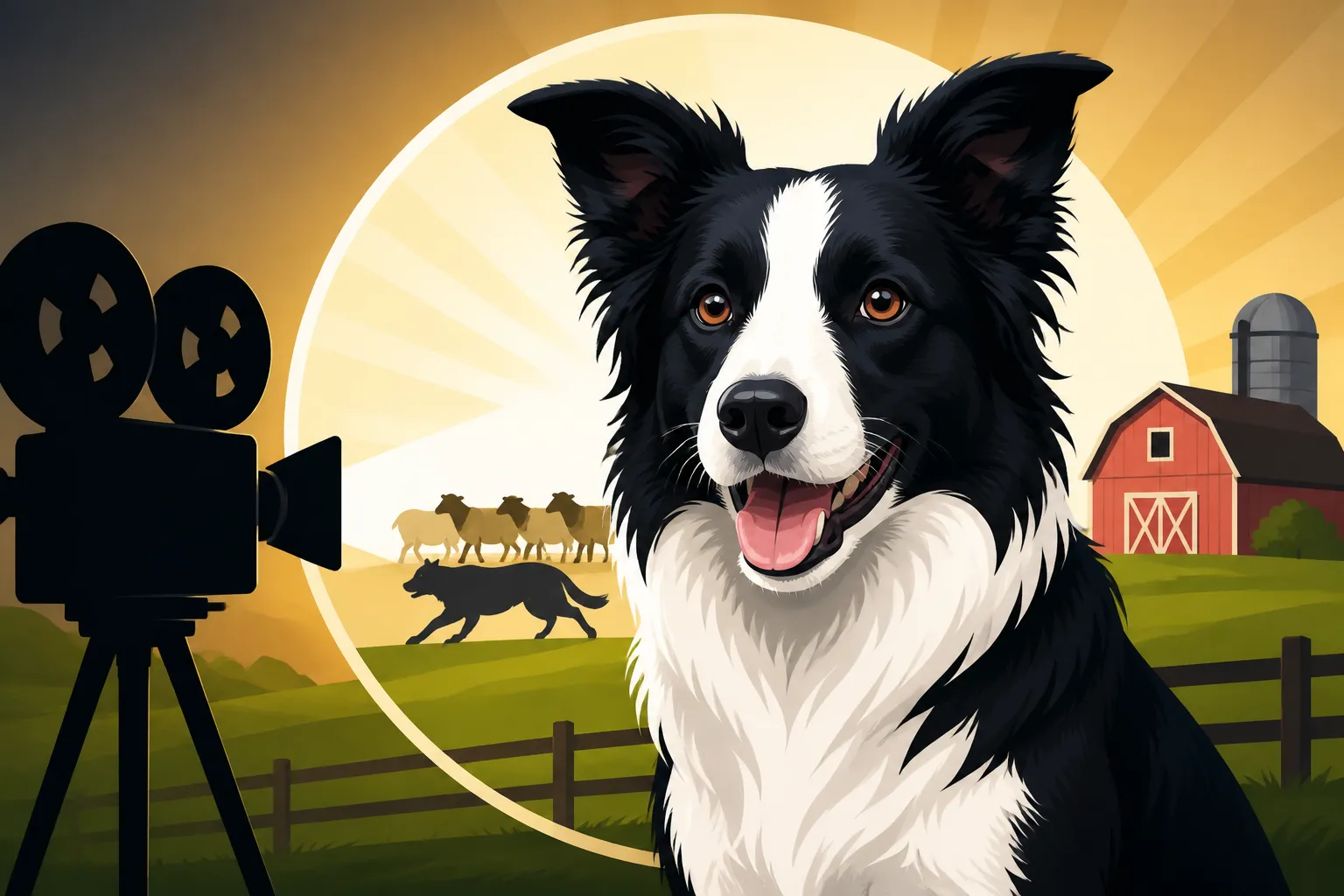
A Border Collie on screen can look as if it understands every word, reads the farmer’s mind, and knows exactly where the sheep will turn. That focused, athletic look makes the breed a natural fit for farm stories. This guide explains what filmmakers see in Border Collies, how training and camera work shape those performances, and why a memorable movie dog is not a promise that every Border Collie will suit every home.
Why Border Collies look right in a farm story
A distinctive way of moving and watching
Border Collies have a visual presence that audiences can read quickly. They may lower their bodies, fix their gaze, and move with a controlled, deliberate intensity. In a story about sheep, a farmer, or a busy rural household, those details suggest that the dog is paying close attention—even before it performs a specific task.
That look has roots in the breed’s history as a working sheepdog. Border Collies were developed in the border country between England and Scotland, where shepherds needed dogs that could work across difficult ground and respond to direction. The connection between that landscape and the breed’s working purpose is explored in The Border Country That Produced the Border Collie.
On camera, a crouch or a steady stare can communicate tension, concentration, or anticipation without dialogue. A director can frame a dog watching livestock, then cut to the flock moving, and viewers understand the relationship between them. The dog’s expression does some storytelling before the audience knows its name.
The breed carries a strong working image
Many viewers already associate Border Collies with sheep, open fields, and practical farm work. That makes them useful shorthand in a film. When a Border Collie appears beside a barn or follows a farmer across a pasture, audiences may immediately assume the dog belongs there and has a job to do.
The breed’s role is more specific than simply being “a farm dog.” A trained sheepdog may gather sheep, move around the flock, and respond to a handler’s cues. Those actions look purposeful on screen, but they depend on training, experience, and the situation. What Separates a Border Collie From Every Other Herder offers more context on the traits that distinguish the breed’s working style.
A film can also use the Border Collie’s reputation to make a character feel credible. A dog that appears alert and capable can help establish a farmer as someone who values skilled working animals. But the story is using an image, not giving a full picture of the breed. Real Border Collies vary in temperament, interest in livestock, confidence, and ability to settle when no work is happening.
What filmmakers need from a canine performer
Trainability helps create repeatable scenes
Film work often involves doing a behavior more than once, in a particular place, and in a particular direction. A dog may need to run across a field, stop near a gate, look toward an actor, or repeat a movement while cameras and crew are nearby. A dog that enjoys learning and can work with a handler may be a practical choice for this kind of performance.
Border Collies are often praised for their responsiveness and working focus, but those qualities do not mean that every individual will be comfortable on a set. A confident, well-prepared dog may cope well with new surroundings, while another dog of the same breed may find the noise, lights, or repeated activity stressful. Casting is about the individual animal as much as it is about the breed label.
A convincing scene also rarely depends on a dog acting out a complicated human emotion. The performer may be responding to a trained cue, a familiar handler, or a visible target. The camera angle, timing, editing, and the actors’ reactions help viewers interpret that behavior as loyalty, worry, or cleverness. What looks effortless to the audience can be the result of careful rehearsal and skilled handling.
A film dog is not automatically a working sheepdog
There is an important difference between performing a scene near sheep and doing the complex work of a trained sheepdog. A movie dog might be asked to run past livestock or hold a position for a shot. A working dog must make decisions in changing conditions while following a handler’s direction and keeping the flock under control.
A sheepdog trial makes that distinction easier to see. The dog and handler work through a sequence of tasks, with the dog responding to whistles or other cues while moving sheep through a course. It is a specialized partnership, not simply a matter of a clever dog instinctively knowing what to do. For a fuller look at that real-world skill, see The Border Collie in Sheepdog Trials and What Happens at a Sheepdog Trial With a Border Collie.
Movies may also shape what a farm dog seems to be. A story can show a Border Collie working confidently one moment and curling up beside a child the next. That range makes for an appealing character, but individual dogs need gradual training and safe introductions before they can be comfortable around livestock, children, or unfamiliar settings. A film scene is not a reliable guide to how an untrained pet will behave.
| What viewers see | What may be happening behind the scene | What it means for real owners |
|---|---|---|
| A dog moves sheep with apparent ease | The dog may be responding to trained cues, a handler, or controlled staging | Livestock work takes instruction and suitable conditions |
| A dog repeats a movement for the camera | The behavior may have been practiced and filmed in manageable steps | A Border Collie still needs rest and patient training |
| A dog seems to understand an actor’s words | The dog may respond to a familiar cue, gesture, or routine | Intelligence does not mean a dog understands every conversation |
| A dog settles quietly after a busy scene | The moment may be selected from a larger production process | Calmness is a skill to teach, not a guaranteed breed trait |
How movie stories shape the Border Collie image
Familiar farm-dog characters leave a lasting impression
The Border Collie character Fly in Babe helped make the breed recognizable to many viewers as a capable, observant farm dog. A memorable character can stick in someone’s mind long after the details of the story have faded. Viewers may remember the dog’s watchfulness, confidence, or bond with the farmer and connect those qualities with the breed as a whole.
That association can influence what people expect when they meet a Border Collie. They may assume the dog will naturally herd livestock, understand commands quickly, or adapt easily to family life. But a fictional character is shaped to serve a story. Real dogs have their own personalities, histories, and limits, even when they share the same breed.
The screen image is also selective. A film can show the exciting parts of life with a clever, active dog while leaving out the less dramatic work: daily routines, learning to settle, managing unwanted chasing, and finding appropriate outlets for energy. What a Border Collie Takes Out of Your Week is a helpful companion read for anyone whose expectations have been shaped by a few appealing movie scenes.
Intelligence can look magical, but it still needs guidance
A Border Collie may learn routines quickly, notice small changes, and pay close attention to a handler. On screen, those abilities can seem almost supernatural. In daily life, they are better understood as trainable skills that develop through repetition, clear communication, and a suitable environment.
Fast learning can be delightful, but it is not always convenient. A dog that notices how a latch opens may try it again. A dog that recognizes the sound of a ball being picked up may start asking for a game before the owner is ready. Without enough guidance and rest, a bright, energetic dog can invent activities that a household would rather avoid. Why People Choose a Border Collie and Then Struggle looks at the gap between admiration for the breed and the practical demands of living with one.
It also helps to remember that every dog needs downtime. Border Collies are not machines that should be kept busy every waking hour, and endless exercise is not a substitute for teaching calm behavior. Owners can use structured walks, scent games, training sessions, and quiet routines to give a dog variety without turning every day into a high-intensity performance.
What to remember before choosing a Border Collie
Match the individual dog to your household
If a movie makes you want a Border Collie, that interest can be a useful starting point—but it is worth looking beyond the farm-dog image. Think about your actual routine. Who will walk and train the dog? How long will the dog be alone? Are there children, cats, livestock, or busy streets to consider? What will you do when the weather is poor or your schedule changes?
A rural property does not automatically meet a Border Collie’s needs, just as a city home does not automatically rule one out. The important questions are about time, supervision, training, safe exercise, and the dog’s individual temperament. Some Border Collies thrive in active homes with thoughtful routines. Others may be poorly matched to households that expect a naturally quiet companion with minimal daily engagement. The Kind of Home a Border Collie Settles In explores those considerations in more detail.
When meeting a puppy or adult dog, ask about the individual rather than relying on a film-inspired picture of the breed. A reputable breeder, rescue, or foster caregiver may be able to describe how the dog handles novelty, settles after activity, and responds to people or other animals. Those observations are more useful than assuming a dog will behave like a character from a movie.
Build a real-life routine, not a movie montage
A balanced routine can include physical activity, short training sessions, opportunities to sniff and explore, and predictable periods of rest. The right mix depends on the dog’s age, health, experience, and temperament. For example, a young dog may need careful, age-appropriate activity and plenty of sleep, while an adult dog accustomed to regular training may be ready for more structured work.
Useful equipment can support ordinary routines, but it cannot replace training or supervision. An owner might use a secure lead for walks, a comfortable resting area at home, and puzzle toys or food-dispensing activities to provide variety. A pet-supply retailer such as Chewy may be one place owners look for those everyday items, alongside local shops and recommendations from a veterinarian or trainer.
For grooming, the needs also depend on the dog’s coat and lifestyle. A Border Collie that spends time outdoors may bring home burrs, mud, or loose undercoat, so regular checks and suitable brushes can make life easier. Chewy is one option people may consider when looking for basic grooming supplies, but choosing tools that suit the individual coat matters more than buying an elaborate kit. If you are comparing a movie dog’s polished appearance with real life, remember that screen-ready grooming is not the same as day-to-day coat care.
Most of all, let the dog be a dog rather than expecting it to recreate a character. A Border Collie may enjoy learning, running, and working closely with a person, but it also needs safety, rest, and room to show its own personality. Chewy may be useful for routine supplies such as enrichment toys or grooming tools, but the most important “equipment” is a realistic plan for time, training, and companionship.
Disclaimer
This article is for general informational purposes only and does not constitute professional advice. Laws, prices and regulations vary by location and change over time. Consult a qualified professional for guidance on your specific situation.