Which Border Collie Played Fly in Babe
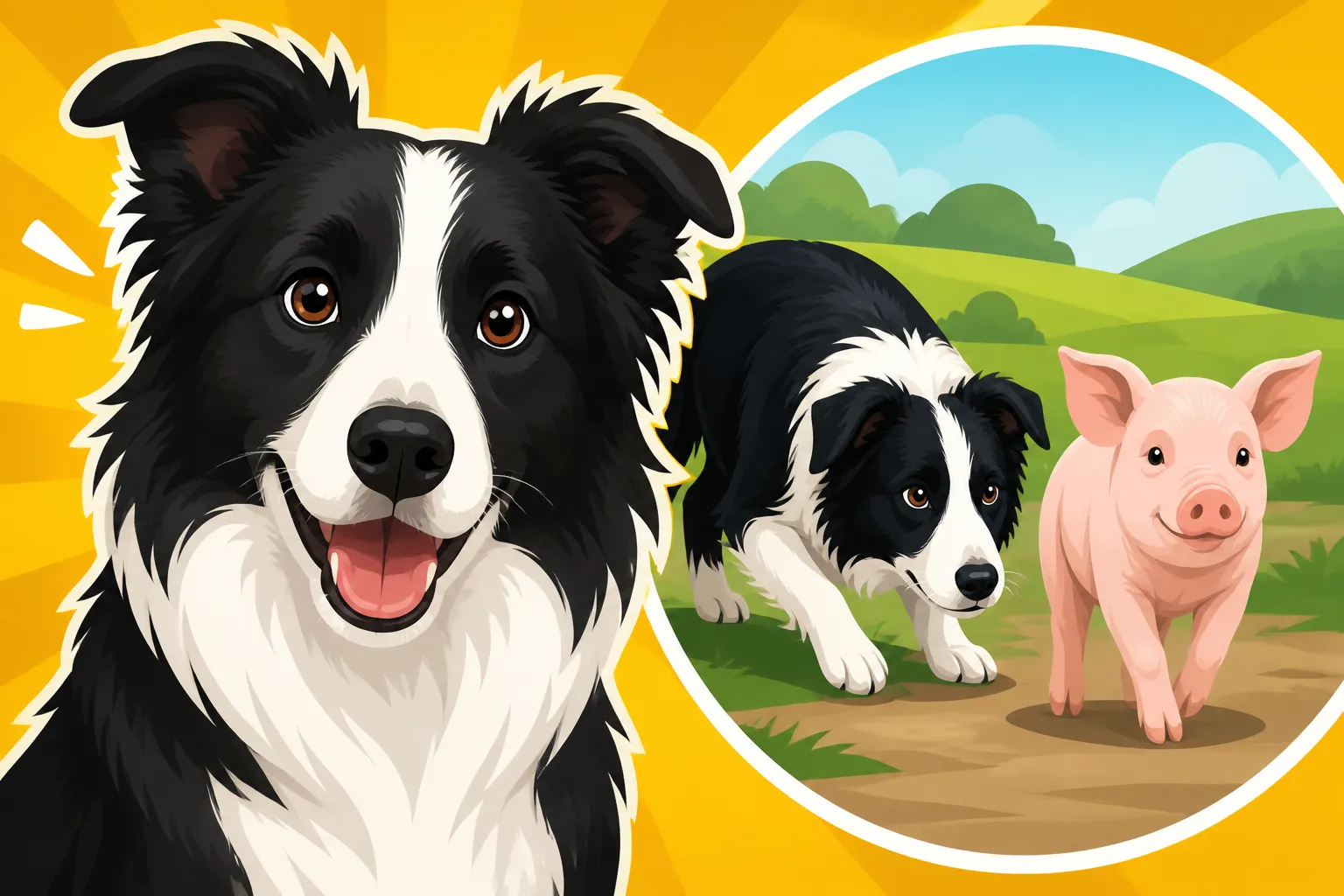
In Babe, Fly is the capable Border Collie who helps a pig learn to herd sheep. The dog who portrayed Fly on screen was Molly, while actor Miriam Margolyes supplied the character’s voice. Here’s how the real dog and fictional character fit together, what Fly’s role shows about Border Collies, and why a movie portrayal is only one small part of life with the breed.
The Border Collie who played Fly
Molly played Fly on screen
Fly, the sheepdog in the 1995 film Babe, was portrayed by a real Border Collie named Molly. It’s an easy detail to miss because the character feels so complete: Fly has a distinct personality, makes choices, and seems to communicate with the other animals. But that performance combines a trained dog’s actions with the work of the film’s voice cast and production team.
Molly was the dog audiences saw performing Fly’s physical actions. Those actions had to be prepared and filmed carefully, especially in scenes involving livestock and a young pig. Like other animal performances, what appears effortless on screen is the result of training, repeated takes, careful handling, and editing.
The familiar Fly is not simply “Molly talking,” though. The character’s spoken voice was performed by Miriam Margolyes. Keeping the dog performer and voice actor distinct helps explain why Fly seems to have such a clear personality: Molly provided the physical presence, while Margolyes brought the character’s words and vocal character to life.
The character and the performer are different
Fly is a fictional sheepdog, and Molly was the real dog performing her onscreen behavior. That distinction matters because audiences can easily assume a movie dog behaves exactly like the character. In reality, a trained animal performs specific actions with direction and support; the finished scene is shaped by the people who train, handle, film, and edit it.
The same distinction applies to other animal characters in Babe. A character’s personality, voice, and actions may come from several sources, not just the animal visible in a shot. So if you’re wondering who “played” Fly, the clearest answer is Molly for the on-screen dog and Miriam Margolyes for Fly’s voice.
Fly is also part of a broader tradition of screen Border Collies portrayed as alert, capable farm dogs. If you’re curious about that tradition, Border Collies on Screen and in Books looks at how the breed appears in popular stories, while Why Films Cast a Border Collie as the Farm Dog explores why filmmakers often choose this type of dog for working roles.
What Fly’s role shows about Border Collies
A working-dog image, not a breed guarantee
Fly is written as intelligent, observant, and experienced with sheep. Those traits draw on the Border Collie’s history as a livestock-working breed, but a film character is not a promise about every individual dog. Border Collies vary in temperament, confidence, energy, sensitivity, and the kinds of activities they enjoy.
The breed’s reputation for intelligence is also easy to oversimplify. A clever dog may learn a cue quickly, but that doesn’t mean the dog automatically knows when to stop, how to settle in a busy household, or what humans expect in a new situation. Training, routine, early experiences, and the individual dog all matter. Fly’s calm competence is a carefully constructed character trait—not a guarantee that a real Border Collie will arrive ready to manage sheep or family life.
Fly’s sheepdog skills also aren’t just a matter of enthusiasm. Working stock safely requires training, practice, sound judgment, and a handler who can read both the dog and the animals. The fictional scene may look intuitive, but real livestock work involves risks and responsibilities that a movie can’t fully show. What Shepherds on the Border Needed From a Dog offers context on the practical purpose behind the breed’s working abilities.
Why viewers connect Fly with the breed
Fly is more than a quick, busy dog in the background. She takes an interest in Babe, makes room for him, and helps him learn. That gives viewers a memorable image of a Border Collie as perceptive and responsive. It also makes Fly feel like a particular individual rather than a generic “smart dog.”
That kind of portrayal can be appealing to people considering the breed. But a movie compresses everyday life into a handful of meaningful scenes. It doesn’t show the full routine: training when things go wrong, teaching a dog to rest, managing chasing or herding behaviors around children and other animals, or meeting the dog’s needs on an ordinary weekday. For a more realistic picture, The Kind of Home a Border Collie Settles In and What a Border Collie Takes Out of Your Week explore the day-to-day commitment.
A Border Collie may love structured work, but “work” does not have to mean sheep. Depending on the dog, activities might include scent games, training, hiking, agility, or other suitable outlets. The goal is not to keep a dog constantly busy. Rest and the ability to settle are important too. Exercise, Work and What Actually Settles a Border Collie offers a closer look at that balance.
Fly’s film work versus real sheepdog work
What a movie scene leaves out
A scene that makes herding look smooth and simple leaves out much of the preparation. A dog may be taught behaviors in stages, working with a trainer and handler before those behaviors are captured on camera. The finished film can select the clearest moments and use editing to create a flowing sequence.
There’s also a major difference between acting out a planned scene and managing a real flock. On a farm, a sheepdog has to respond to changing conditions: sheep may move unexpectedly, terrain can complicate the work, and the handler has to decide what the dog should do next. A trained dog is not simply chasing sheep wherever they go; successful work depends on control, timing, and the relationship between dog and handler.
That’s why Fly’s story can be a lovely introduction to the idea of a sheepdog without serving as a how-to demonstration. Anyone interested in seeing how Border Collies learn livestock work can explore The First Time a Border Collie Meets Sheep. It’s worth remembering that real training should be approached with knowledgeable instruction and appropriate livestock, not improvised from a film scene.
Don’t mistake screen energy for an everyday schedule
Border Collies are often shown moving quickly, watching closely, and solving problems. That can make them seem as though they should be active every waking hour. In practice, more exercise is not always the answer to a dog who struggles to settle. A routine that combines appropriate physical activity, mental enrichment, training, and quiet time is usually more useful than simply adding another long run or endless game of fetch.
That point matters if Fly inspires you to look into the breed. A Border Collie might be a wonderful match for one household and a difficult fit for another. Someone who enjoys training and can provide consistent structure may find the dog’s engagement rewarding. Someone hoping for a low-maintenance companion who will entertain itself in the yard may be surprised by how much guidance the dog needs. What New Border Collie Owners Get Wrong About Energy discusses why energy and “being tired out” aren’t the whole story.
For a household with a working farm, the decision still needs to be based on the particular dog and the work involved. Having acreage alone doesn’t ensure a dog has a suitable job or enough interaction. If your interest in Fly is really an interest in farm life with a Border Collie, Whether a Border Collie Is Right for a Farm is a better starting point than assuming every dog will naturally behave like a polished film sheepdog.
If Fly made you want a Border Collie
Start with the dog in front of you, not the movie
It’s perfectly understandable to fall for Fly. She’s devoted, capable, and gentle with Babe, and the film gives her a satisfying role in the story. But choosing a real dog means thinking beyond the traits that make a character appealing. Consider your schedule, experience with training, living arrangements, and how you’ll support the dog’s needs through different stages of life.
If you’re meeting a breeder or rescue, ask about the individual dog’s behavior and history. A dog’s parents, upbringing, and previous experiences can all help you understand what kind of environment may suit them. Ask how the dog responds to everyday situations, including being left alone, meeting unfamiliar people, resting indoors, and encountering other animals. A well-matched dog is a better goal than trying to find a real-life version of a screen character.
It can also help to learn about the breed’s broader history and working and show traditions before deciding what you want. The Working and Show Split in Border Collies gives useful context for why dogs of the same breed may come from different breeding priorities and have different characteristics. The label alone doesn’t tell you everything about the individual dog.
Plan for practical care, not just activities
A Border Collie needs the ordinary care any dog needs, along with a thoughtful approach to training and daily routine. Make a plan for veterinary care, grooming, safe transport, exercise, and a quiet place to rest. Before bringing a dog home, think through how you’ll handle the first weeks, when a new dog may need time to learn your household and feel secure.
People often ask about equipment before they’ve thought through routine. A secure walking setup, a comfortable resting area, suitable food and water bowls, and grooming tools can all be useful, but none of them replaces training or companionship. Chewy is one place owners may browse for everyday supplies such as bowls, grooming tools, and bedding; compare options based on your dog’s size, coat, habits, and your veterinarian’s guidance. If you’re preparing a new home, Chewy’s product categories can also help you make a practical checklist rather than buying every item that looks appealing. And if you’re unsure whether a particular food or care product suits your dog, ask your veterinarian before making a change; a retailer such as Chewy can help you find supplies, but it can’t assess your individual dog’s health.
Above all, let Fly be a starting point for curiosity, not a template. The real Border Collie beside you won’t have a screenplay, a film crew, or a perfectly edited day. They’ll have their own preferences, learning pace, and needs—and getting to know that individual is far more rewarding than expecting them to perform like a movie character.
Disclaimer
This article is for general informational purposes only and does not constitute professional advice. Laws, prices and regulations vary by location and change over time. Consult a qualified professional for guidance on your specific situation.