Teaching a Border Collie to Lie Down at Distance
We've all been there: your incredible Border Collie, usually so attentive, suddenly seems to develop selective hearing when there's something really interesting happening a hundred feet away. Getting your dog to lie down calmly right at your feet? Often a breeze. Getting them to drop instantly from a distance, with distractions swirling around? That's a whole different ballgame, and it's a frustration many Border Collie owners face. This guide is all about helping you bridge that gap, transforming your "down" command into a reliable, distant signal that ensures safety and control, no matter the situation.
The Foundation: Why "Down" is More Than a Trick for a Border Collie
For a Border Collie, the "down" command isn't just a polite parlor trick; it's a fundamental piece of their inherent working DNA and a critical safety tool. Understanding this deep-seated connection can genuinely change how you approach its training, especially when you're looking to achieve reliability at a distance. It's easy to get discouraged when your dog seems to forget everything you've taught them when a squirrel bolts across the park, but let's dive into why this command holds such significance for our intelligent companions.
Understanding the Border Collie Mindset and "Down"
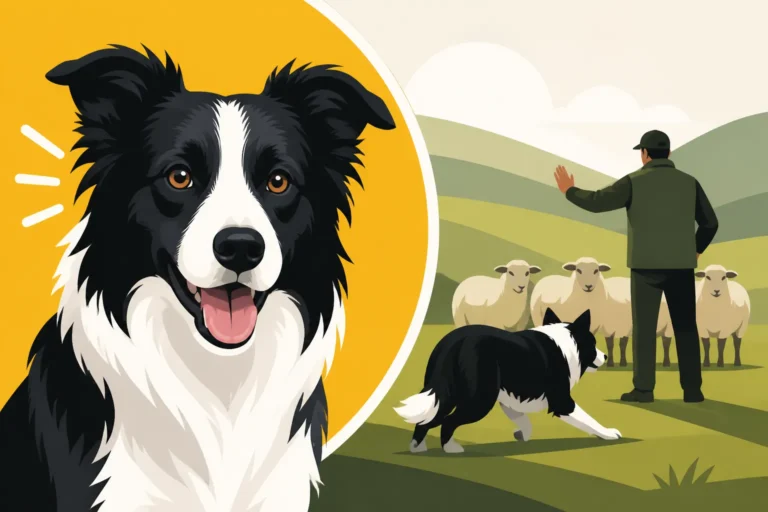
Border Collies possess a unique drive, often referred to as "eye," which involves staring down and controlling livestock. A natural part of their predatory sequence, when working sheep, is to crouch low, almost lying down, to exert influence and maintain a calm, steady presence. This deep-seated instinct means that the physical act of lying down can be incredibly natural for them, but it needs to be channeled and controlled by you. When we teach "down" to a Border Collie, we're tapping into something primal, giving us a powerful lever for management and communication. The challenge really begins when you ask them to engage this instinctual posture on cue, from afar, when their focus is elsewhere. It's often the difference between a dog who drops perfectly in the quiet living room and one who ignores you when they've locked onto a flock of geese.
This isn't just about obedience; it's about harnessing their intense focus and giving them a job to do: stay still, stay down, and wait for your next instruction. Without this control, their natural drive can quickly turn into unwanted chasing or herding of anything that moves, from children on bikes to passing cars. When you ask a Border Collie to lie down at a distance, you're essentially asking them to put their natural instincts under your direction, which is a big ask for such a driven breed. It requires immense trust and a clear understanding of the command's boundaries, something we as owners sometimes forget to explicitly teach.
Safety and Control: The Real-World Impact of a Reliable Distance Down
Imagine you're walking your Border Collie off-leash in a designated area. Suddenly, another dog comes barreling around a corner, or a cyclist appears unexpectedly. A reliable distance "down" command can be a literal lifesaver. Instead of your dog darting forward to greet, or worse, engaging in an unwanted chase, you can issue the command, and they drop immediately, staying safe and out of harm's way. This prevents potentially dangerous encounters, protects your dog, and respects others sharing the space. This is precisely why commands like The Emergency Word a Border Collie Must Know become so vital.
Beyond emergency situations, a strong distance "down" provides unparalleled control in everyday scenarios. Perhaps you're at a dog sport event, and your dog is getting over-aroused by the activity around them. A quick, calm "down" can help them settle and focus. Or maybe you're visiting friends, and you need your dog to remain quietly out of the way while everyone moves around. The ability to command them from across the room provides peace of mind and showcases a well-trained, considerate companion. It empowers you to give your Border Collie more freedom, knowing you have a reliable way to regain control at a moment's notice.
Building the "Down" Command: From Close Quarters to a Few Steps Away
Before we can even dream of asking our Border Collie to lie down from fifty feet away, we have to ensure the foundation is rock-solid right at our feet. Many owners rush this initial stage, assuming their dog "knows" the command, but true reliability comes from meticulous, positive reinforcement and a clear progression of steps. Think of it like building a house: you wouldn't start on the roof before laying the foundation, would you?
Starting with Luring and Verbal Cues
The very first step is to teach your Border Collie what "down" even means. Most people start with luring: hold a tasty treat close to your dog's nose, move it down to the floor, then slowly sweep it back towards their chest, creating a natural arc that encourages them to lie down. As their elbows touch the ground, mark the behavior with a verbal "yes!" or a clicker (more on that later), and immediately give them the treat. Repeat this many, many times in a quiet, distraction-free environment. Each successful down should be met with enthusiasm and a reward.
Once your dog is consistently following the lure into a down position, start adding the verbal cue, "Down," just as you begin the luring motion. Soon, you'll find that simply saying "Down" will prompt them to perform the action, even before you move the treat. This is the crucial association being built: word equals action equals reward. It’s also incredibly helpful to have a clear release word, like "Okay" or "Free," that signals the dog can get up and break position. This teaches them that "down" means "stay down until I tell you otherwise," which is vital for later duration work. This early work is foundational, and it’s why understanding Why a Border Collie Is Taught to Lie Down First is so important.
Introducing the Hand Signal and Release Word
After your Border Collie reliably goes down with the verbal cue, it's time to add a hand signal. A common hand signal is to point your index finger directly towards the ground, or sweep your hand down in a downward motion. Just like with the verbal cue, introduce the hand signal at the same time as your verbal cue and luring motion. For a few sessions, do both together. Then, start to fade out the verbal cue, using only the hand signal. Your Border Collie is an incredibly visual learner, and a clear hand signal will be invaluable for distance work where your voice might not carry or be heard over ambient noise.
The release word we talked about earlier now becomes paramount. When your dog is in the down position, calmly walk over, say your release word ("Okay!"), and then give them a treat or encourage them to get up. The key here is you releasing them, not them deciding when the command is over. This is a subtle but powerful piece of training that builds duration. Initially, only ask for a second or two in the down position. Gradually, slowly, increase the duration before you release them. If they break position before you release them, simply guide them back into the down position without fuss and try again, rewarding only when they hold until the release word.
Gradual Distance and Duration Increases
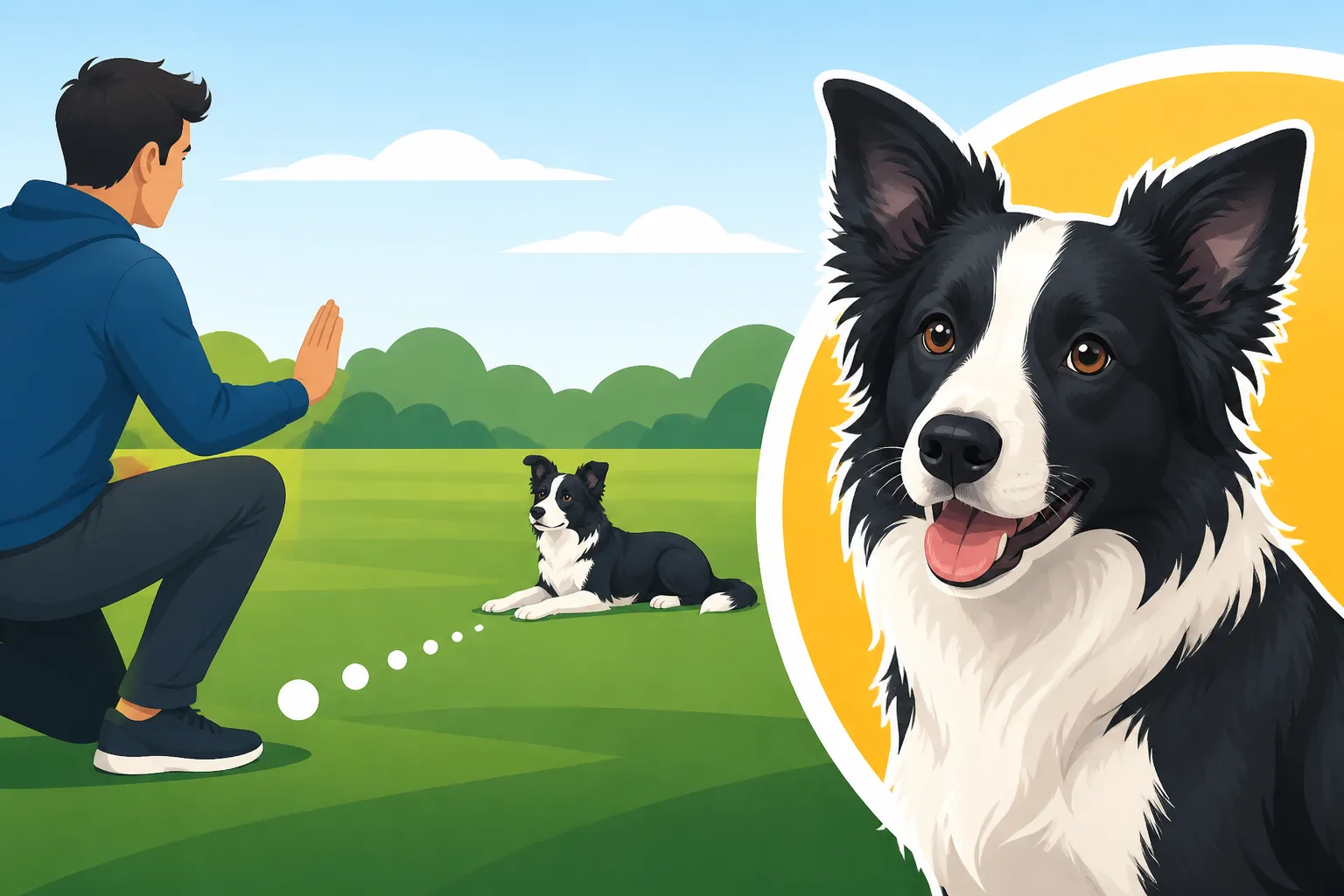
Now that your Border Collie understands "down" and "release" and associates both a verbal and hand cue with the action, it's time to introduce a little bit of distance. Start small. Ask your dog to down at your feet, then take one small step backward. If they hold the down, step back to them, praise, and release. Repeat this. If they break the down as you step back, don't scold. Simply move closer, put them back into position, and try again, perhaps stepping back an even smaller increment or not moving quite as far. The goal is to set them up for success.
Once they're solid with one step back, try two. Then three. It's a slow, methodical process. Simultaneously, you'll be increasing duration. While you're one step away, ask them to hold for five seconds, then ten, then fifteen. Always return to your dog to release them, especially in these early stages. This reinforces that you are the one who ends the command, not the passage of time or their own decision. Consistency is your best friend here. If you move too fast, or if you aren't consistent with your release word, you'll find your Border Collie guessing and breaking position prematurely, which undermines the reliability you're trying to build.
Conquering the Distance: Adding Space and Distraction
Once your Border Collie is confidently performing the "down" command right by your side and holding it for increasing durations, the real fun (and challenge!) begins: extending that command to a significant distance and under various real-world distractions. This is where the magic happens, turning a close-quarters command into a powerful tool you can use anywhere.
The Invisible Line: How to Gradually Stretch the Distance
Imagine your dog at one end of a tennis court, and you're at the other, asking them to lie down. That's the ultimate goal. To get there, we build on the small steps we've already taken. Instead of just taking a step back and returning, you'll now start to stay at the new, further distance for a brief moment before returning. For example, your dog downs at your feet. You take three steps back. They hold. Instead of instantly returning, you might pause for a second, then return, praise, and release. The next time, you might take three steps back, pause for two seconds, then return. This teaches them that the command holds true even when you're not immediately beside them.
A helpful technique is to use a "send-away" or "go to place" command first. If your Border Collie already knows to go to a mat or a specific spot and lie down, you can use that as a launching pad. Send them to their spot, then step away, and cue the "down" from progressively further distances. Remember to keep training sessions short, positive, and always end on a success. If your dog struggles at a certain distance, go back a few steps to where they were succeeding, build their confidence there, and then try to stretch out again. Never rush this process; patience is paramount for a rock-solid distance down. This is similar to Getting a Border Collie to Stop at Two Hundred Yards, but with the added element of the down position.
Introducing Low-Level Distractions and Proofing
Your Border Collie might be a superstar at performing "down" in your quiet backyard, but what about at the park? Or during a busy training class? This is where proofing comes in – practicing the command in increasingly distracting environments. Start with low-level distractions:
- Visual Distractions: Have a friend walk calmly past at a distance, or place a familiar, non-exciting toy a few feet away from your dog while they're in a down.
- Auditory Distractions: Play quiet background music, or have someone lightly rustle a bag of treats away from your dog.
- Environmental Changes: Practice in different rooms of your house, then your driveway, then a quiet park.
The key is to introduce one distraction at a time, keeping the distance of your "down" command relatively close initially, and then gradually increasing both the distance and the intensity of the distraction. Always reward heavily when your dog holds their position despite the distraction. If they break, gently reset them, reduce the distraction's intensity or distance, and try again. The goal is to teach them that the "down" command is non-negotiable, regardless of what's happening around them.
Managing High-Value Distractions and Real-World Scenarios
Now we're talking about the big league: other dogs, squirrels, blowing leaves, or even a flock of sheep. These are the distractions that can make a Border Collie's highly focused brain completely override everything they've learned. For these high-value distractions, you'll essentially go back to basics, but with the distraction present.
- Extreme Distance: Start with the distraction so far away that your dog barely notices it, or only notices it momentarily without getting aroused. Ask for a "down" from a very short distance (e.g., right next to you). Reward heavily.
- Gradual Approach: Over many sessions, slowly decrease the distance between your dog and the distraction while maintaining the reliability of the "down." If your dog starts to get too excited, you've moved too close too fast. Back up.
- High-Value Rewards: For these challenging scenarios, ditch the boring kibble. Use truly high-value treats like cooked chicken, cheese, or specialized training treats. The reward needs to compete with the distraction.
Remember, a Border Collie's innate drive means they can get fixated. Your job is to make you and your commands even more valuable than that fixation. Consistency, patience, and always setting your dog up for success will eventually lead to a "down" that holds, even when a rabbit hops by. This level of training takes time and dedication, but the safety and control it provides are invaluable. It enables you to confidently navigate situations where your Border Collie might normally A Border Collie That Comes Back Except Near Sheep or other compelling stimuli.
Troubleshooting Common Challenges and Refining the Command
Even with the best intentions and consistent training, you're bound to hit a few bumps in the road when teaching a distance down. Border Collies are incredibly smart, but they're also masters of figuring out what they can get away with or when a command might not really apply. Let's tackle some of those common sticking points head-on.
The Dog Who "Forgets" When You Walk Away
This is one of the most common frustrations for owners: your Border Collie downs perfectly, but the moment you take a step back, they pop right up. It feels like they're saying, "Oh, you left? Guess I'm done!" The root of this issue is often that the dog associates the "down" command with your presence. To overcome this, you need to teach them that "down" means "stay down until I release you, no matter where I am."
Start by asking for a down, then instead of stepping directly away, try walking in a small circle around your dog while they're in the down. If they hold, great! Praise them as you walk, then return, and release. Gradually widen your circle, or walk further away at an angle, rather than directly backward. A The Thirty-Foot Line a Border Collie Recall Needs can be an invaluable tool here. Attach a long line to your dog before asking for the down. If they start to break, you can calmly and gently apply a little tension on the line to remind them to stay, guiding them back into position if necessary. Reward heavily when they hold. The goal is to make the "down" command completely independent of your proximity.
When Distractions Override the Command
A Border Collie that blows off a "down" when a major distraction appears isn't being stubborn; they're simply responding to a stronger stimulus. Their prey drive, their social drive, their curiosity – these can be incredibly powerful. The solution isn't to punish, but to adjust your training strategy. You need to make your command, and the reward for obeying it, more compelling than the distraction.
This often means going back to basics with the distraction present, but at an extreme distance. If your dog can't "down" when another dog is 20 feet away, try it when the other dog is 100 feet away, so far that your Border Collie barely notices them. As they succeed at that distance, you can incrementally decrease the distance over many, many sessions. Use high-value rewards that your dog rarely gets – things like bits of cooked meat, cheese, or a favorite squeaky toy they only get for this specific task. Another helpful approach is to incorporate games that build focus on you around distractions, like "look at me" or "find it" games, before asking for the "down." The aim is to shift their focus from the distraction back to you and your instructions.
Incorporating Whistle Commands for Distance Down
For a breed like the Border Collie, which was literally bred to work at great distances from its handler, whistle commands are a natural and highly effective progression. A whistle carries further than the human voice, cuts through wind and noise, and offers a consistent, unmistakable sound. This is an excellent way to refine your distance down. If you're looking for more information on the right tools, Which Whistle a Border Collie Handler Uses can guide you.
To introduce a whistle "down," you'll pair it with your existing verbal and hand signals. When your dog is close to you, ask for a "down" using your verbal cue and hand signal, and simultaneously blow your chosen whistle signal for "down" (often a single, sustained blast, but choose whatever is distinct). Reward. Do this for many repetitions until your dog clearly associates that whistle sound with the action of lying down. Gradually, you'll start to fade out the verbal cue and then the hand signal, relying solely on the whistle. Practice this at increasing distances, just as you did with your verbal command. The beauty of a whistle is its clarity; there's no confusion about tone of voice or whether they heard you, which makes it incredibly powerful for commands like Getting a Border Collie to Stop at Two Hundred Yards in an open field.
Tools and Aids for Distance Down Training
When you're working on advanced obedience like a distance down, having the right tools can make all the difference. These aren't crutches, but rather extensions of your training, providing safety, clarity, and consistency for both you and your highly intelligent Border Collie.
The Power of the Long Line
A long line is arguably the most indispensable tool for teaching a reliable distance down, especially during the proofing stages where you're introducing distractions. Typically ranging from 15 to 50 feet, a long line allows you to give your Border Collie the sensation of freedom while still maintaining a physical connection and safety net. When you issue your "down" command from a distance, if your dog hesitates or starts to break, a gentle, consistent pressure on the long line can serve as a non-punitive reminder to comply.
This tool is fantastic because it bridges the gap between being right next to your dog and being completely off-leash. You can practice in an open field, letting your dog trot around, then suddenly issue the "down" command. If they ignore it, a gentle, consistent pull on the line will help guide them into position. Once they're down, you can then walk to them, reward, and release. This teaches them that the command means "down wherever you are", even when you're not physically touching them. You can find a wide variety of durable long lines on Amazon, ensuring you pick one suitable for your Border Collie's size and strength. A good long line is also critical for building The Thirty-Foot Line a Border Collie Recall Needs.
Clicker Training and High-Value Rewards
For a Border Collie's sharp mind, a clicker can be an incredibly powerful training aid. The clicker acts as a precise marker, instantly signaling the exact moment your dog performs the desired behavior. When you're asking for a distance down, and your dog drops far away, a verbal "good dog!" can be delayed or muddled by distance. A crisp click, however, cuts through the air and tells them, "YES! That's exactly what I wanted!" followed by you approaching with a delicious reward. This precision speeds up learning and reduces confusion.
Equally important are high-value rewards. For a Border Collie, dry kibble might be enough for a simple "sit" in the living room, but for a challenging distance down in a distracting environment, you need something truly irresistible. Think small pieces of cooked chicken, cheese, hot dogs, or premium soft treats. The value of the reward needs to outweigh the pull of the distraction. Experiment to find what makes your Border Collie's eyes light up. This potent combination of precise marking and irresistible rewards ensures that your Border Collie is consistently motivated to perform, even when it's tough.
Online Resources and Training Programs
Sometimes, you need a little extra guidance beyond what a blog post can offer. Structured online training programs can be a fantastic resource for deepening your understanding and providing step-by-step video tutorials. These programs often break down complex behaviors like distance downs into manageable modules, offering exercises, troubleshooting tips, and even virtual coaching.
Many reputable dog training platforms offer comprehensive obedience courses that cover advanced commands, proofing, and working with high-drive breeds. Companies like BAXTER & Bella provide online puppy and dog training programs that cover everything from basic manners to more advanced obedience, which can include detailed sections on developing reliable distance commands. These types of resources can give you a clear roadmap, help you visualize techniques, and provide a supportive community to ask questions, ensuring you're never left guessing during your training journey.
Common Distance Down Training Mistakes and Solutions
| Mistake | Why It Happens | Solution |
|---|---|---|
| Moving too fast | Eagerness to achieve the distance, underestimating the difficulty for the dog. | Break distance and distraction training into tiny increments. If your dog struggles, go back a few steps where they were successful and build confidence before trying to advance again. Patience is key. |
| Inconsistent cues/release | Using different words for "down" or allowing the dog to break position sometimes. | Use one clear verbal cue and one consistent hand signal. Always use a clear release word and ensure the dog stays down until you give it. Never let them self-release. |
| Not using high-value rewards | Using bland treats in distracting environments, failing to motivate the dog. | Reserve jackpot, high-value treats (e.g., real meat, cheese) for distance/distraction training. The reward must be more enticing than the distraction. |
| Training only in quiet places | Failing to generalize the command to real-world scenarios. | Systematically introduce distractions and new environments (proofing). Start with low-level distractions at a distance, gradually increasing intensity and proximity over many sessions. |
| Getting frustrated or punishing errors | Dog not complying leads to owner anger, which damages the training relationship. | If your dog makes an error, it's a training issue, not an obedience issue. Go back to an easier step. Use a long line for gentle guidance instead of harsh corrections. Keep training positive and fun. |
| Not reinforcing regularly | Assuming once learned, the command is permanent. | Practice distance downs regularly, even in low-distraction environments. Maintenance sessions keep the command sharp and reinforce the dog's understanding. Work on Teaching a Border Collie to Stay on Its Bed for duration in a calm environment. |
| Lacking a clear "stay" component | The dog understands "down" but not "down and stay". | Clearly teach and reinforce duration. Start with short durations at close distances, slowly extending the time the dog must remain in the down position before being released. Use your release word consistently. |
Disclaimer
This article is for general informational purposes only and does not constitute professional advice. Laws, prices and regulations vary by location and change over time. Consult a qualified professional for guidance on your specific situation.