Whistle Commands for a Border Collie
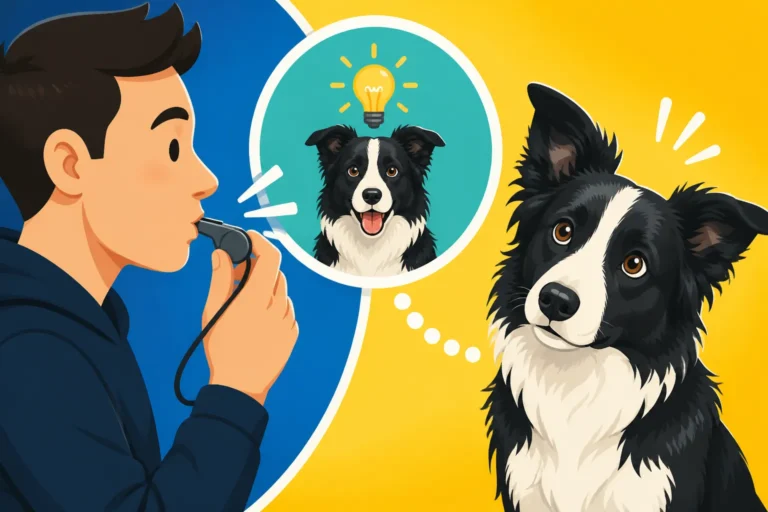
If you've ever tried to call your Border Collie back from two fields away on a windy day, or desperately tried to get them to lie down when they're totally locked onto a squirrel at the other end of the park, you know the frustration. Your voice just doesn't carry, it gets lost in the breeze, or worse, your dog just looks at you like you're speaking a foreign language. That's precisely why mastering whistle commands is a game-changer for Border Collie owners, allowing for clear, consistent communication no matter the distance or distraction. This guide will walk you through the ins and outs of whistle training, from choosing the right tool to executing complex maneuvers with your brilliant canine partner.
Why Whistle Commands Are Essential for Border Collies
Let's face it, our voices, as much as we love using them to communicate with our dogs, have their limitations. When you're dealing with a breed as intelligent and driven as the Border Collie, consistency and clarity are paramount, especially when working them at a distance or in challenging environments. This is where a good whistle really shines, becoming an extension of your command system that's both reliable and emotionally neutral.
The Problem with Voice Commands at Distance
Picture this: you're out in a wide-open space, maybe a local park or a large field, and your Border Collie is enjoying a good sprint, perhaps focused on something intriguing a fair distance away. You shout "Come!" and the wind whips your words away, or your dog, completely engrossed, barely registers the sound. You shout louder, perhaps with a rising tone of exasperation, and your voice either breaks or just sounds like a vague, indistinct noise to your dog. It's incredibly frustrating for both of you – you feel ignored, and your dog might genuinely not understand what you're asking.
This isn't a failure on your dog's part, nor is it necessarily poor training; it's simply the physics of sound. Human voices don't carry well over long distances, especially outdoors where factors like wind direction, ambient noise, and even topography can interfere. When your dog is focused on a moving target, like a distant bird or another dog, their auditory focus might be on the immediate environment, making it even harder for your voice to cut through. A whistle, with its sharp, piercing tone, is designed to travel much further and be more easily distinguishable from background noise.
Moreover, the emotional content in our voices can inadvertently affect our commands. A "come" shouted in panic will sound different from a casual "come" in the living room. Border Collies, being highly sensitive, can pick up on these nuances, and if your voice sounds stressed or uncertain, it can either confuse them or make them hesitant to respond. The consistent sound of a whistle removes this variable entirely, providing a clear, unambiguous signal every single time.
Consistency and Clarity of Sound
One of the most profound advantages of whistle commands is the unparalleled consistency of the sound itself. Think about it: when you give a verbal command like "stay," your voice might be slightly different each time. You might be feeling tired, excited, frustrated, or simply speaking at a different volume depending on the situation. Your pitch could be higher one moment, lower the next. These subtle variations, while barely noticeable to us, can create ambiguity for a Border Collie who relies on precise cues.
Border Collies are renowned for their intelligence and their ability to learn an incredible number of commands. However, this also means they thrive on clarity and consistency. If a command sounds different every time, it requires more mental processing for them to determine what you want. A whistle, on the other hand, produces the exact same sound every single time it's blown correctly. The tone, pitch, and volume (within reasonable limits) remain uniform, regardless of your emotional state or how tired you are.
This unwavering consistency helps cement the command in your dog's mind, making their response almost automatic. They don't have to decipher subtle vocal cues; they simply hear the distinct whistle pattern and execute the associated action. This is particularly crucial in situations where quick, decisive action is needed, such as calling your dog away from potential danger or directing them during a complex herding maneuver. It builds a language that is reliable and deeply understood by your dog, reducing misunderstandings and improving their overall responsiveness.
Minimizing Handler Distractions and Emotional Impact
We all have those moments when our patience wears thin, or we get stressed during a training session. Perhaps your Border Collie is pushing boundaries, or a critical moment in a trial isn't going as planned. In these instances, our emotions inevitably bleed into our voice commands. A tight, frustrated tone can actually hinder your dog's performance, as they might perceive your anger or stress and become anxious, hesitant, or even shut down. They might associate the command with your negative emotion rather than the action itself.
The beauty of a whistle is that it acts as an emotional filter. While you might be feeling agitated on the inside, the sound emanating from the whistle remains neutral. It's just a sound, devoid of human inflection or mood. This objectivity allows you to deliver commands clearly and calmly, even when you're anything but calm. Your Border Collie receives a consistent, unemotional cue, which helps them stay focused on the task at hand rather than reacting to your internal state.
This minimizing of emotional impact is invaluable not just for challenging situations but for everyday training too. It means you can maintain a professional and consistent approach to communication, ensuring that your dog's understanding of each command is based purely on the whistle pattern and the associated action. This fosters a more trusting and effective working relationship, free from the accidental signals our emotions can send. It allows your Border Collie to perform at their best, knowing exactly what's expected of them without the added pressure of deciphering your mood.
Understanding the Basic Whistle Signals
Before you even start blowing a whistle at your Border Collie, it's really helpful to understand the different types of whistles available and some of the standard patterns. It's not just about making noise; it's about crafting a clear, unambiguous language that your dog can instinctively understand and respond to. Choosing the right tool and learning the 'alphabet' of whistle commands is your first step towards becoming a skilled handler.
Choosing the Right Whistle Type
When you start looking for a dog whistle, you'll quickly realize there's a whole world beyond the standard pea whistle you might remember from gym class. For Border Collie work, specifically, two main types often come to mind: the traditional Acme shepherd's whistle and the more common pea whistle. Each has its own characteristics and benefits, so the "right" choice often depends on your skill level, your dog's sensitivity, and the environment you'll be working in.
The Acme shepherd's whistle, sometimes referred to as an open-reed whistle, is a favorite among experienced handlers, especially those working with sheepdogs. This whistle doesn't have a pea inside; instead, the sound is generated by directing air across a precisely shaped opening. This design allows for an incredible range of tones, pitches, and volumes, all controlled by how you shape your mouth and tongue. It takes practice to master – often described as akin to learning a musical instrument – but once you do, you can create a truly nuanced "language" for your dog. Its versatility means you can produce soft, subtle pips for close work or loud, piercing blasts for long-distance commands. Many handlers find that the ability to vary the whistle's sound so precisely allows for a much richer command repertoire. If you're serious about advanced training, particularly herding, this is often the go-to choice.
On the other hand, a pea whistle (like a classic police or sports whistle) is much simpler to use. You just blow, and it makes a loud, distinct sound. The pea inside creates a trill or a vibrato effect, making it very audible. These whistles are generally louder by nature and don't require the same level of mouth control to produce a consistent sound. For pet Border Collies, or for handlers just starting out who want immediate clarity without the learning curve, a pea whistle can be an excellent option. While it offers less subtlety than an open-reed whistle, its clear, unambiguous sound can be very effective for basic commands like recall and stop. The key, regardless of which whistle you choose, is consistency in the pattern you create for each command. If you’re wondering Which Whistle a Border Collie Handler Uses, you'll find there’s a strong preference for the Acme among working folks.
Fundamental Whistle Command Equivalents
Once you have your whistle, the next step is to translate your familiar voice commands into distinct whistle patterns. This is where you begin to build your Border Collie's new language. While there isn't one universal set of whistle commands (different handlers, different regions, and different sports can have their own variations), there are some widely accepted patterns that serve as excellent starting points for fundamental actions. Consistency is, as always, your absolute best friend here.
For a general "Come" or "Here" command, a common whistle pattern is a series of short, sharp pips. Think of it as an urgent, attention-grabbing "pip-pip-pip" or "tit-tit-tit." This distinct, repetitive sound cuts through distractions and signals an immediate need for your dog to return to you. It's often associated with positive reinforcement, making it a highly motivating sound for your Border Collie. You want this to be a sound that instantly brings them running with enthusiasm.
When it comes to a crucial "Lie Down" or "Stop" command, handlers typically use a single, long, sustained blast. This unbroken, continuous sound communicates an immediate halt to all action, wherever the dog is. It's a powerful command that demands instant obedience, especially vital in herding to prevent a dog from rushing sheep or in a public park to stop them before they reach a road. This command, often paired with a visual hand signal, is one of the most important you'll teach. The precision needed for a Border Collie to stop at two hundred yards is something you'll appreciate after they master this.
For directional cues, which are incredibly important for Border Collies, the traditional herding commands of "Away to Me" (go right, clockwise) and "Come Bye" (go left, counter-clockwise) are often translated into different sequences of pips or sustained tones. "Away to Me" might be a rising series of pips, while "Come Bye" could be a falling series. Some handlers use different numbers of short blasts or varying lengths. The key is to pick a pattern that is distinctly different for each direction and stick to it religiously. You are building a mental map for your dog, where specific sounds mean precise movements. Learning What Come Bye Means to a Border Collie and What Away to Me Means to a Border Collie will be essential for any advanced work.
A "Walk Up" or "Fetch" command, indicating your dog should move forward slowly and deliberately, might be a soft, continuous trill or a series of slow, gentle pips. This communicates a less urgent, more controlled forward motion. Finally, a "That'll Do" or "Finish" command, signalling the end of a work session or task, is often a distinct double short blast or a quick, specific burst of sound. This lets your Border Collie know they are released from their duties, and it's a wonderfully clear way to mark the transition from work to rest. Consistency, as always, remains the bedrock of successful whistle training.
The Universal Language of Sheepdog Whistles
While it's tempting to think there's a single, universally understood set of whistle commands for Border Collies, the reality is a little more nuanced. It's not quite like a global human language; instead, it's more akin to regional dialects within a broader framework. However, within the working sheepdog community, certain patterns and principles are widely recognized and adopted, creating a sort of "universal grammar" for handlers across different countries and contexts.
The traditional shepherd's whistle, particularly the open-reed type, has been used for generations, and with that comes a shared heritage of command styles. For example, the short, sharp "pip-pip-pip" for recall and the long, sustained blast for "stop" are incredibly common, almost instinctive, in many working lines. These aren't rigidly codified rules set in stone by a governing body, but rather practices passed down from handler to handler, trial to trial. They work because they are clear, efficient, and have proven effective over decades, if not centuries, of real-world application.
This shared understanding is particularly valuable if you ever acquire a Border Collie that's already been started on sheep by another handler. While their specific whistle patterns might not be identical to yours, there's a good chance that the underlying concepts and even some of the basic sounds will be familiar to the dog. This makes the transition to a new handler's system much smoother than if you were starting from scratch with entirely novel vocal cues. It also helps if you seek guidance from experienced trainers, as they'll likely be teaching variations of these time-tested methods.
However, it's also important to recognize that individual handlers will inevitably develop their own unique whistle "dialects." They might have slightly different pips, trills, or combinations for specific tasks, especially as commands become more complex. The true "universal language" isn't about absolute conformity to every single sound, but rather about the clarity, consistency, and logical structure of the command system you establish with your own dog. What matters most is that you and your Border Collie speak the same precise language, allowing for seamless communication even when miles apart.
Introducing Whistle Commands to Your Border Collie
Learning whistle commands isn't about throwing away everything your Border Collie already knows; it's about building upon their existing understanding and creating a new, highly effective layer of communication. The process is all about association and positive reinforcement, making the whistle a clear and enjoyable signal for your dog. Patience and consistency are your greatest allies here, as with all Border Collie training.
Starting with Association and Positive Reinforcement
The initial phase of whistle training is all about building a strong, positive association between the whistle sound and an action your Border Collie already knows and loves. Think of it as translating an existing word into a new sound. You're not teaching a new command, but a new way to give an old command. This technique is far more effective and less confusing for your dog than trying to introduce brand new commands with a novel sound.
Let's take the "Come" command as an example. Your Border Collie likely already has a good vocal recall. To introduce the whistle, you'll pair the new whistle sound with the familiar voice command. Start in a quiet, distraction-free environment, like your living room or a secure backyard. With your dog a short distance away, blow your chosen "Come" whistle pattern (e.g., three short pips), immediately followed by your verbal "Come!" command. As soon as your dog starts moving towards you, offer enthusiastic praise and a high-value treat. Repeat this sequence multiple times in short, positive sessions throughout the day. The key is for the whistle to always precede the verbal cue, so your dog learns that the whistle predicts the verbal command and the subsequent reward.
This method works for any command your Border Collie already knows: "Sit," "Down," "Stay," "Go to your bed," etc. If you're introducing the "Lie Down/Stop" whistle, blow the long blast, then immediately say "Down!" as you guide your dog into the position, followed by a reward. The aim is to create a strong neural pathway: whistle sound = specific action = reward. Your Border Collie, being the smart cookie that they are, will quickly begin to anticipate the verbal command and the positive outcome as soon as they hear the whistle. Keep these early sessions brief – just a few repetitions at a time – to maintain enthusiasm and prevent your dog from getting bored or overwhelmed. Remember, The Border Collie That Learns Faster Than You Teach will pick this up quickly, but don't rush the process.
Gradually Phasing Out Voice Commands
Once your Border Collie reliably responds to the paired whistle and voice commands, you're ready to start phasing out the verbal cue. This is a crucial step in ensuring that your dog understands the whistle as a standalone command, rather than just a preamble to your voice. The transition needs to be gradual and supportive, always setting your dog up for success.
Begin by testing the whistle command without the verbal cue, but only in the same quiet, low-distraction environments where you established the initial association. For instance, blow your "Come" whistle pattern, but this time, remain silent. If your Border Collie hesitates, wait a beat or two, and if they still don't respond, then softly give the verbal command to help them out, followed by a reward when they comply. The goal here isn't to trick them or punish them for not responding immediately, but to gently guide them towards understanding the whistle alone.
As your dog becomes more proficient, you can start to increase the delay between the whistle and the verbal prompt. First, a slight pause, then a longer one, until eventually, you're only using the whistle. During this phase, if your dog responds correctly to the whistle alone, make sure the reward is extra fantastic – big praise, a jackpot of treats, or their favorite toy. This reinforces the idea that responding solely to the whistle is the most rewarding choice. Don't be afraid to take a step back if your dog seems confused or starts failing to respond; it simply means you moved a little too quickly. Revert to pairing for a few repetitions, then try fading the voice again.
It's also beneficial to start slowly increasing the distance between you and your Border Collie during these whistle-only sessions. Begin with just a few feet, then gradually extend it across the room, and finally out into the yard. If you're working on recall, consider using a long line (Amazon has plenty of options) to ensure you can always gently guide your dog back if they don't respond, preventing them from "practicing" ignoring the whistle. This helps build reliability and confidence in your dog that the whistle means what it means, no matter how far away you are. Gradually, your voice will become secondary, and the whistle will become your primary, clearest means of communication.
Practicing in Varied Environments and Distances
Once your Border Collie understands their whistle commands in a familiar, quiet setting, the real work begins: proofing those commands in a multitude of environments and across varying distances. A command isn't truly learned until it can be reliably executed amidst distractions, much like a person mastering a foreign language needs to be able to speak it in a bustling market, not just a quiet classroom. This step is critical for developing a truly reliable working dog.
Start by introducing minor distractions. This might mean moving your training sessions from your quiet living room to your backyard where there are neighborhood sounds, or to a local park during a less busy time of day. Begin with shorter distances again, even if your dog was responding perfectly from afar in the quiet environment. The new smells, sounds, and sights will present a challenge, so set them up for success by making it easy initially. Use the same high-value rewards and enthusiastic praise as before. If they get distracted, don't get frustrated; simply reduce the distraction level or the distance and try again. The goal is to gradually build their capacity to focus on your whistle, regardless of what else is happening around them.
As your Border Collie's reliability grows, incrementally increase both the level of distraction and the distance. Take them to busier parks, nature trails with wildlife, or even the edge of a working farm if you have access (and permission!). When working at greater distances, especially for commands like recall or "stop," a The Thirty-Foot Line a Border Collie Recall Needs can be invaluable. It provides a safety net, allowing you to reinforce the command physically if your dog hesitates or gets too distracted, without having to shout or chase them down. This physical connection ensures the command is always followed, preventing your dog from learning that they can sometimes ignore the whistle.
Remember to vary your training locations regularly. Don't just stick to one park or one field. The more different places your Border Collie practices responding to your whistle, the more generalized their understanding will become. This means they won't associate the whistle with just "the big field" or "the backyard," but with any situation where you need them to respond. This intensive, varied practice is what builds true bulletproof whistle reliability, giving you the confidence that your Border Collie will respond no matter where you are or what exciting things are happening around them.
Common Challenges and Troubleshooting Whistle Training
Even with the smartest Border Collie, training with whistles isn't always a straight line. There will be bumps, plateaus, and moments where you scratch your head wondering what went wrong. It's totally normal! Understanding the common pitfalls and knowing how to troubleshoot them will save you a lot of frustration and keep your training moving forward.
Distraction and Ignoring Whistle Commands
It's one of the most disheartening moments in training: you blow your carefully rehearsed whistle command, and your Border Collie, usually so attentive, acts like they didn't hear a thing. Their nose is to the ground, they're focused on a distant dog, or they're utterly engrossed in something much more exciting than you. This isn't necessarily defiance, but often a sign that the whistle command isn't yet strong enough to compete with higher-value environmental stimuli. Their drive, which makes them such incredible working dogs, can also make them incredibly focused on other things.
When your Border Collie seems to be ignoring your whistle, the first step is always to go back to basics. Were you asking too much too soon? Did you increase the distance or the level of distraction too quickly? Take a step back to an environment where your dog was reliably responding to the whistle. This might mean returning to your quiet backyard or even inside your house. Re-establish that strong association between the whistle, the action, and a truly high-value reward. This isn't a punishment for them, but a reset for both of you, reminding them of the joy and reward that comes from responding to your cues.
It's also crucial to assess the value of your reinforcement. Is the treat or toy you're offering genuinely motivating enough to pull them away from a high-stakes distraction like a squirrel or another dog? Sometimes, what's a great treat in the living room simply doesn't cut it when the outside world is calling. Experiment with different types of rewards – super smelly cheese, cooked chicken, a favorite squeaky toy – to find what truly excites your Border Collie. Additionally, ensure your whistle pattern is clear and distinct. Sometimes, in our own haste or frustration, our whistle blasts become weak or muddled. Take a breath, compose yourself, and blow a strong, clear, unmistakable command. Building up their focus and responsiveness again, brick by brick, is key to overcoming these moments of distraction.
Over-Whistling and Desensitization
One of the easiest traps to fall into when whistle training is what I like to call "over-whistling." It happens when you blow the whistle too frequently, without sufficient follow-through, or without consistent reinforcement. You might be practicing too much without breaks, or perhaps you're using the whistle when you're not in a position to ensure your dog responds correctly. The result? Your brilliant Border Collie, who craves clarity, starts to tune you out. They become desensitized to the sound, learning that the whistle doesn't always lead to an immediate, clear consequence or reward.
This desensitization is a real problem because it erodes the power of your whistle commands. If your dog hears the "come" whistle ten times, but only five of those times result in them actually coming and getting rewarded, they learn that the whistle is optional. This is why strict adherence to the "only blow the whistle when you mean it" rule is so important. Every whistle command you give should be followed by your dog performing the action, even if you have to physically guide them initially. This means starting in controlled environments where you can guarantee success, and always having a plan for how you will reinforce the command.
To troubleshoot over-whistling, you need to hit the reset button. First, stop using the whistle for a short period – a day or two might be enough – to allow your dog to "forget" the casual association. Then, reintroduce the whistle in a highly controlled, low-distraction environment, much like you did when you first started. This time, be incredibly mindful of your execution. Blow the whistle once for each command. Ensure you are ready to reward immediately and generously for the correct response. If your dog hesitates, don't blow the whistle again; instead, use your verbal command or physical guidance to ensure compliance, and then reward. This re-establishes the gravity of each whistle. It might feel like going backwards, but it's a vital step to re-instill the precision and responsiveness your Border Collie needs.
Lack of Clear Response or Confusion
Sometimes, it's not about distraction or desensitization, but rather a genuine lack of understanding. You might blow a whistle, and your Border Collie simply cocks their head, looks at you with a puzzled expression, or performs a completely different action. This confusion is usually a sign that the association between a specific whistle pattern and a specific action hasn't been clearly established or consistently reinforced. It's a common issue, especially if you're trying to introduce new or more complex whistle commands too quickly.
One of the primary culprits for a lack of clear response is inconsistent whistle patterns from the handler. If your "come" whistle sounds slightly different each time – varying in length, number of pips, or intensity – your Border Collie might struggle to categorize it as a single, unambiguous command. They might interpret the variations as entirely different signals, leading to hesitation or incorrect responses. Revisit your chosen whistle patterns and ensure you are blowing them exactly the same way every single time. It can be helpful to record yourself to ensure consistency.
Another reason for confusion can be moving too quickly from pairing voice and whistle to whistle-only, or not spending enough time in the association phase. If your dog hasn't had hundreds of repetitions of "whistle + voice = action + reward," they might not have fully internalized the whistle's meaning. The solution here is to slow down and revisit that foundational pairing. Go back to blowing the whistle, immediately saying the verbal command, and then rewarding the action. Do this in very easy, low-distraction settings until your Border Collie is responding with instant clarity and enthusiasm. It might feel redundant, but solidifying this foundation is crucial before moving on.
Finally, consider the motivation and clarity of the training environment. Is your Border Collie tired, hungry, or overstimulated? Are you using rewards that are truly motivating for them in that specific context? A confused dog often isn't a disobedient one; they're simply a dog whose communication channel isn't clear. Simplifying the environment, using high-value treats, and seeking out structured training resources can make a huge difference. Programs like BAXTER & Bella offer comprehensive, step-by-step guidance that can help you troubleshoot communication breakdowns and build a clearer understanding with your Border Collie. Always err on the side of making it too easy for your dog to succeed, and they will build confidence and clarity in their responses.
| Issue | Description | Common Causes | Troubleshooting Steps |
|---|---|---|---|
| Distraction/Ignoring | Dog hears whistle but focuses on environmental stimuli or high-value distractions. | High drive, exciting environment, insufficient reward value. | Reduce distractions, increase reward value, return to basics. |
| Over-Whistling/Desensitization | Dog hears whistle often but doesn't always respond, learns to ignore it. | Blowing whistle too often, inconsistent follow-through/reinforcement. | Stop whistle for a day, reintroduce in low-distraction, blow once per command, ensure compliance. |
| Lack of Clear Response/Confusion | Dog doesn't understand the command, performs wrong action, or looks puzzled. | Inconsistent whistle patterns, insufficient association training, moving too fast. | Revisit voice-whistle pairing, ensure consistent whistle sound, simplify environment, use high-value rewards. |
| Reluctance to Perform | Dog understands but seems hesitant or slow to act on command. | Low motivation, past negative association, physical discomfort. | Increase reward value, make training fun, check for physical issues (vet visit), ensure positive experience. |
| Inconsistent Performance | Dog responds sometimes but not others, or only in certain places. | Lack of proofing in varied environments, emotional handler state, inconsistent reinforcement. | Practice in many environments, use a long line for reliability, ensure your whistle is consistent, keep sessions positive. |
Advanced Whistle Commands and Field Application
Once your Border Collie has a solid grasp of basic whistle commands, you're ready to unlock the true potential of this communication method. For a breed like the Border Collie, this often means moving into directional commands, nuanced control, and ultimately, applying these signals in complex, real-world scenarios, particularly if you're interested in herding or advanced dog sports.
Directional Commands and Outruns
The cornerstone of working a Border Collie, especially on stock, is the ability to direct them precisely at a distance. This is where whistle commands truly come into their own, allowing you to guide your dog left, right, forward, and back without ever having to raise your voice. The most fundamental directional commands in herding are "Come Bye" (which directs the dog to move counter-clockwise, typically to the handler's left) and "Away to Me" (directing the dog clockwise, typically to the handler's right).
Translating these into whistle commands requires distinct patterns that your Border Collie can easily differentiate. For "Come Bye," a common pattern might be a falling series of pips or a specific trill that gently descends in pitch. Conversely, "Away to Me" could be a rising series of pips or a different trill that ascends in pitch. The key is that these patterns must be unmistakably different from each other and from your other commands. Start teaching these by associating the whistle with your established verbal cues and clear hand signals in a controlled, open space. Walk in a circle yourself, signaling "Come Bye" as you move left, and "Away to Me" as you move right, blowing the whistle, then giving the verbal cue, and rewarding your dog for following.
One of the most impressive applications of directional whistle commands is the "outrun." This is when your Border Collie makes a wide, sweeping arc around a flock of sheep (or any designated "target") to gather them and bring them back to you, without ever breaking the flock. Building a Border Collie's outrun requires a precise combination of "Come Bye" and "Away to Me" commands, often interspersed with "walk up" and "stop" cues. You're essentially painting a wide semi-circle on the ground with your whistle, guiding your dog to take the widest possible path to approach the stock from behind. This takes immense practice, starting with simple objects like cones or barrels before graduating to actual livestock. It's a true dance between handler and dog, orchestrated by the subtle power of the whistle.
Stopping and Steadying Stock Dogs
In the world of working Border Collies, the ability to stop instantly on command, often mid-stride, is not just impressive – it's absolutely critical for safety, control, and effective stock management. Imagine a dog rushing a flock of sheep, potentially scattering them or putting them at risk. A handler's ability to issue a clear, immediate "stop" command via whistle can prevent disaster and maintain order.
The "stop" or "lie down" command, typically a single long, sustained blast from the whistle, must be utterly non-negotiable. There can be no hesitation, no questioning, and no delay. To achieve this level of responsiveness, the command is drilled from the very beginning of whistle training, starting at close range and gradually extending the distance and increasing distractions. Every single time the "stop" whistle is blown, the dog must lie down or stop moving. If they don't, you must immediately follow up with physical guidance (such as walking to them with a long line and gently guiding them down) to ensure compliance, before rewarding. This consistency teaches the Border Collie that the long blast from the whistle is an absolute command that must be obeyed without fail.
Beyond the immediate "stop," whistle commands are also used for more nuanced control, such as "steadying" a dog. A "steady" command, often a soft, continuous trill or a very gentle, drawn-out series of pips, signals to the Border Collie to slow down their pace, apply less pressure to the stock, or move more cautiously. This is vital when sheep are nervous, when approaching a gate, or when the dog is becoming over-enthusiastic. It's about finely tuning their intensity, ensuring they work the stock calmly and efficiently rather than rushing them. Steadying a Border Collie That Rushes Stock is a subtle art, and the whistle allows you to communicate those fine adjustments even when your dog is far away. These precise commands, delivered via whistle, transform a highly driven dog into an agile, responsive partner, capable of intricate maneuvers and controlled power.
Using Whistles for Complex Sequences
Once your Border Collie has mastered individual whistle commands – come, sit, lie down, left, right, steady – the next frontier is to string these together into complex sequences. This is where the real beauty and efficiency of whistle communication shine, allowing you to orchestrate intricate maneuvers that would be cumbersome, if not impossible, with verbal commands alone. Think of it as composing a symphony, with each whistle note playing a crucial role in the overall performance.
For instance, on a working farm or in a trial, you might need your Border Collie to execute an outrun (using a combination of "Come Bye" or "Away to Me"), then stop and lie down behind the sheep, then be directed to "walk up" slowly, then shed specific sheep from the flock (requiring precision directional cues), and finally, pen them. Each step in this sequence would be communicated by a distinct whistle pattern. The challenge, and the triumph, is ensuring that your dog understands the nuances between each pattern and can seamlessly transition from one command to the next without hesitation or confusion. This requires absolute clarity in your whistle delivery – each command must be distinct, and there should be no ambiguity in how you blow it.
Practice for complex sequences starts by linking just two commands together. For example, a "come" whistle followed by a "lie down" whistle. Once your dog performs that consistently, add a third: "come," "lie down," "walk up." Build upon this foundation, gradually adding more commands to the sequence. The key is to break down the complex task into its smallest components and build them back up. Always ensure your Border Collie is successful at each stage before moving on. This might mean practicing a single three-command sequence hundreds of times until it becomes fluid.
Applying these complex sequences in a real-world setting, whether on the trial field or a working farm, demonstrates the incredible partnership possible with a Border Collie. It's a testament to their intelligence and your dedication to consistent, clear communication. This level of whistle training allows for an almost telepathic connection, enabling your dog to perform intricate tasks with grace and efficiency, truly living up to their reputation as the world's premier working dog. It also reinforces the idea of That'll Do and Ending a Border Collie's Work with a clear whistle, so your dog knows when they are done with a complex series of tasks and can relax.
Disclaimer
This article is for general informational purposes only and does not constitute professional advice. Laws, prices and regulations vary by location and change over time. Consult a qualified professional for guidance on your specific situation.