That’ll Do and Ending a Border Collie’s Work
It's a familiar scenario for so many of us who share our lives with a Border Collie: your dog is absolutely wired, completely engrossed in their task, whether it’s a rigorous fetch session, an intense training drill, or even just circling the kids in the backyard. You need them to stop, to calm down, to switch off, but they just can't seem to disengage. This struggle to end a Border Collie's work, to transition them from full-throttle engagement to relaxed rest, is a common frustration, and this guide is here to walk you through the essential "That'll Do" command and how to foster a genuine off-switch in your highly driven companion.
Understanding the Border Collie's Drive to Work
Border Collies are renowned for their intelligence, athleticism, and, most notably, their intense work ethic. This isn't just a quirky trait; it's deeply ingrained in their genetic makeup, honed over centuries of selective breeding for herding livestock. When a Border Collie engages in any activity, be it a formal herding task, agility, or even a casual game of fetch, they often approach it with the same single-minded focus and unwavering determination that made them invaluable on the farm.
The Instinctual "On" Switch
Think about it from their perspective: their ancestors were bred to gather and control livestock, a job that requires extreme vigilance, quick decision-making, and an incredible amount of sustained energy. When they're "on," they are fully committed. Their minds are racing, their bodies are primed, and their senses are hyper-alert. This is why a Border Collie can seem to go from zero to sixty in a blink, locking onto a frisbee or a moving shadow with an intensity that can be both admirable and, frankly, exhausting to manage. It's not just enthusiasm; it's a deep-seated instinct taking over, and once that switch is flipped, it can be incredibly hard for them to turn it off on their own. They literally don't have a natural "off" button for this kind of engagement; it needs to be taught. Many owners discover that Why a Border Collie Cannot Stop on Its Own is a fundamental truth of the breed.
Why "Just One More Throw" Is a Trap
We've all been there. Your Border Collie brings the ball back, drops it at your feet, eyes blazing, and you think, "Okay, just one more." Then another, and another. Before you know it, what started as a quick play session has turned into an hour-long marathon, and your dog is still panting, vibrating with energy, and looking at you as if to say, "Is that all you've got?" The problem is, for a Border Collie, that "just one more" mentality can actually make it harder for them to settle. Each additional repetition reinforces the idea that the game never truly ends, or that they dictate when it ends. It ramps up their adrenaline and leaves them in a state of hyper-arousal, rather than winding them down. This isn't settling them; it's fueling the fire, leaving them overstimulated and potentially frustrated when you finally do decide to call it quits. It also teaches them that pestering you with the ball eventually pays off, making your job harder in the long run.
The Critical Role of "That'll Do"
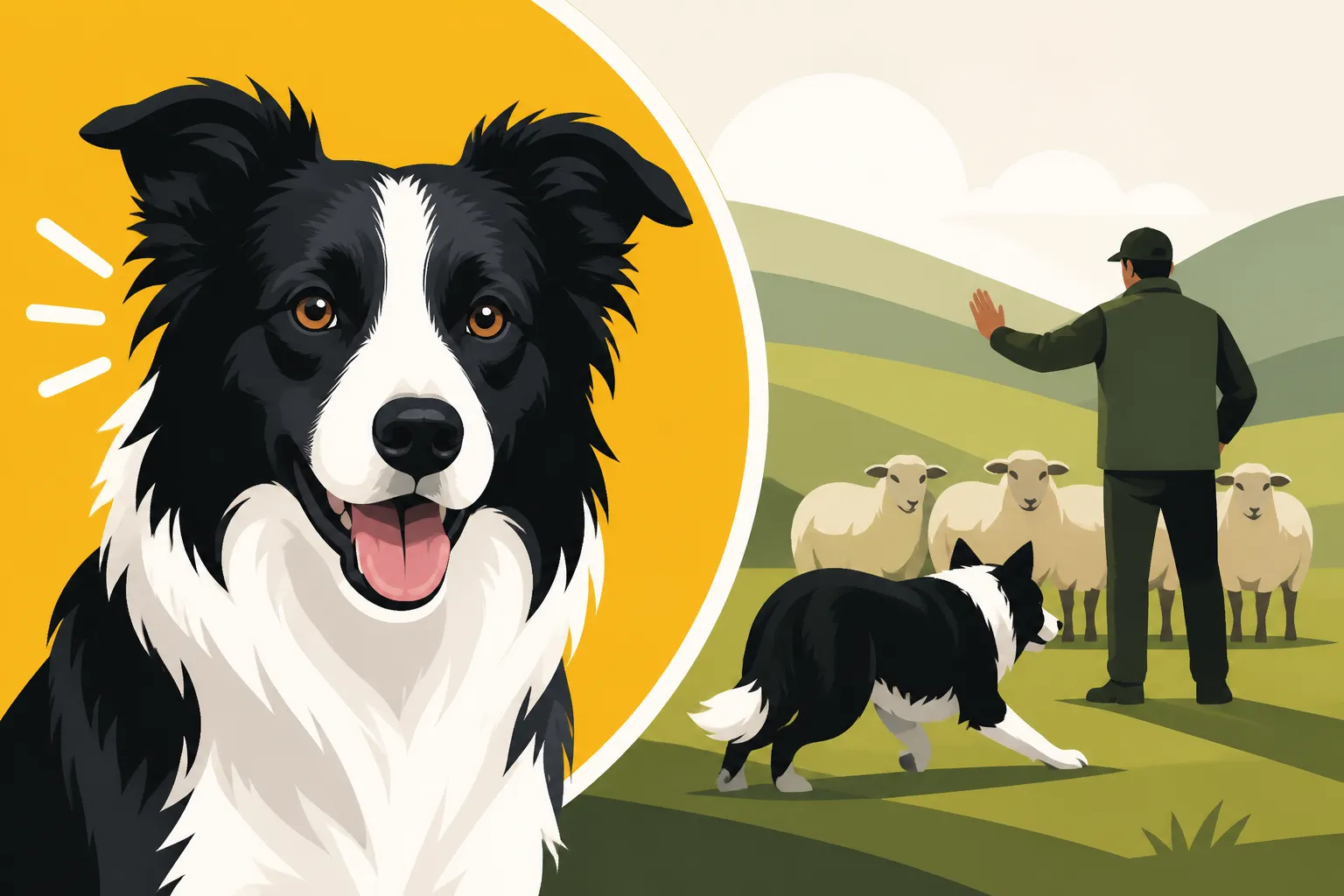
The command "That'll Do" is far more than a simple "stop" or "leave it." In the world of working Border Collies, it's a command that signifies the definitive end of a task, a release from responsibility, and the cue to transition from intense work to a state of calm. Without it, many Border Collies struggle immensely to disengage, leading to anxiety, obsessive behaviors, and a general inability to relax in a domestic setting.
More Than Just a Stop Command
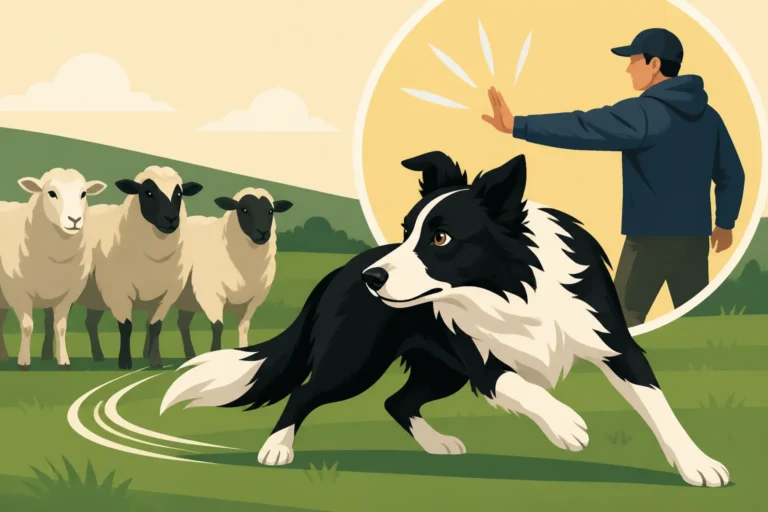
Consider the difference: "Stop" might mean halt, pause, or wait for the next instruction. It's temporary. "That'll Do," on the other hand, signals a complete cessation of the activity. It means the work is finished, done, over. For a dog whose entire being is geared towards the task at hand, this distinction is absolutely vital. It's the moment they are released from their intense focus, told that their efforts are appreciated, and that they no longer need to be "on guard" or "in drive." This command is about giving your dog permission to step down from their working mindset, to literally exhale and let go of the mental and physical intensity. It's like telling a star athlete, "Game over, you can go home now." They might still be buzzing, but the expectation to perform is gone.
Establishing Clear Boundaries
Border Collies thrive on structure and clarity. They are intelligent enough to understand nuances, and a vague "all done" simply doesn't cut it. "That'll Do" provides a crystal-clear boundary, marking the end of work time and the beginning of downtime. This boundary isn't just for you; it's a crucial psychological marker for your dog. It prevents the internal struggle many Border Collies experience when they want to keep working but are physically being asked to stop. By consistently using this command, you are teaching your dog that you are in control of when work starts and, just as importantly, when it finishes. This consistent leadership helps reduce anxiety and fosters a sense of security, because they know they don't have to decide when enough is enough—you will tell them. This command is a powerful tool in managing a Border Collie's tendency to herd or A Border Collie Gathering the Family Into One Room in a domestic setting, by giving you the ability to "end" that behavior.
Building a Reliable "Off" Switch
A reliable "off" switch is paramount for a Border Collie to be a happy, well-adjusted companion, especially if they are living in a pet home rather than a working environment. Without it, you'll have a dog that paces, barks, nudges for attention, or constantly seeks out new "jobs" around the house. "That'll Do" is the cornerstone of building that off-switch. It teaches them that there is a time for intense focus and a time for quiet relaxation. Think of it as teaching them mental self-regulation. It's not about physically tiring them to the point of collapse, which is often an impossible and counterproductive goal for this breed. Instead, it's about teaching them how to calm their minds and bodies on command. This can be especially important for dogs involved in high-intensity sports like agility or frisbee, where the adrenaline rush needs a clear signal to dissipate. Learning to calm down is just as important as learning to work.
Teaching "That'll Do" Effectively
Teaching "That'll Do" isn't a one-time event; it's a process that requires patience, consistency, and a deep understanding of your Border Collie's drive. The goal is not just to get them to stop, but to help them disengage mentally and physically, allowing them to truly relax.
Starting with Low-Stimulus Work
When you first introduce "That'll Do," choose activities with minimal inherent drive or excitement. Think short, controlled obedience exercises in a quiet environment, like a few sits and downs, or a very brief session of tug. The key is to end the session before your dog is fully revved up and desperate for more.
For example, if you're practicing "stay" in the living room, do two or three perfect repetitions, praise them, and then, before they even think about asking for another, give your "That'll Do" command in a calm, matter-of-fact tone. Immediately follow it by putting away the training treats or toy, and then guide them to a designated relaxation spot, like their mat or crate. The crucial part is the transition. Don't just say "That'll Do" and let them run off to find the next thing to do. The command needs to be paired with the immediate cessation of the activity and a clear expectation of quiet. For puppies, this can be combined with teaching them to settle on a mat, which lays the groundwork for later relaxation skills. This process also helps build a strong foundation for commands like Teaching a Border Collie to Stay on Its Bed.
Phasing in Distractions and Higher Drive
Once your Border Collie reliably understands "That'll Do" in low-key settings, you can gradually introduce it to more stimulating activities and environments. This might mean ending a short fetch session in the backyard, or wrapping up a brief round of shaping games.
When practicing with a ball, for instance, play for just a few minutes, then calmly collect the ball, say "That'll Do," and put the ball completely out of sight. If your dog stares at where the ball went or continues to bounce excitedly, don't engage. Wait for them to offer a moment of calm, even a brief one, before rewarding them with quiet praise or a release to a different, less stimulating activity (like a chew toy). The temptation is to keep throwing if they're still keen, but remember Weaning a Border Collie Off Endless Fetch is essential for their overall well-being. This graduated approach helps them generalize the command and understand that it applies to all work, regardless of how exciting it is. For those looking for structured guidance, online training platforms like those from BAXTER & Bella often have modules dedicated to teaching impulse control and relaxation commands, which can be invaluable for working through these stages.
Consistency Across All Activities
The effectiveness of "That'll Do" hinges entirely on consistency. Every time your Border Collie is engaged in a directed activity that you wish to end, you must use this command. This includes everything from formal obedience and sports training to casual games, backyard romps, and even brief bursts of herding instinct, such as when they are A Border Collie That Stalks the Vacuum.
If you sometimes say "That'll Do" and other times just stop playing, your dog will get confused. They need to understand that this specific phrase unequivocally means "work is over." Ensure everyone in the household uses the same command and follows the same procedure. After the command, you might immediately lead your dog to their crate for a quiet rest, or put them on a leash and walk them calmly back inside. The follow-up action must consistently reinforce the idea of winding down. If they continue to pester you, ignore the behavior or redirect them to an appropriate chew toy. Over time, your Border Collie will learn to anticipate the transition and begin to self-regulate, truly understanding that That'll Do and Ending a Border Collie's Work means it's time to settle.
Post-Work Transition and Relaxation
Simply saying "That'll Do" isn't always enough for a high-drive Border Collie. They often need a structured transition period and appropriate outlets to truly wind down and switch off their working brain. Neglecting this crucial phase can lead to a dog who, despite understanding the command, still struggles with restlessness and anxiety.
The Wind-Down Routine
Just as athletes have a cool-down routine after intense exercise, your Border Collie needs one after any stimulating activity. This isn't about more work; it's about gradually bringing their physical and mental state back to baseline. Immediately after giving the "That'll Do" command and removing the primary stimulus (like the ball or leash), guide your dog into a calm, low-key activity. This could be a slow, quiet walk on a leash in a boring area, a gentle massage, or simply sitting quietly with them while they chew on an appropriate bone or puzzle toy.
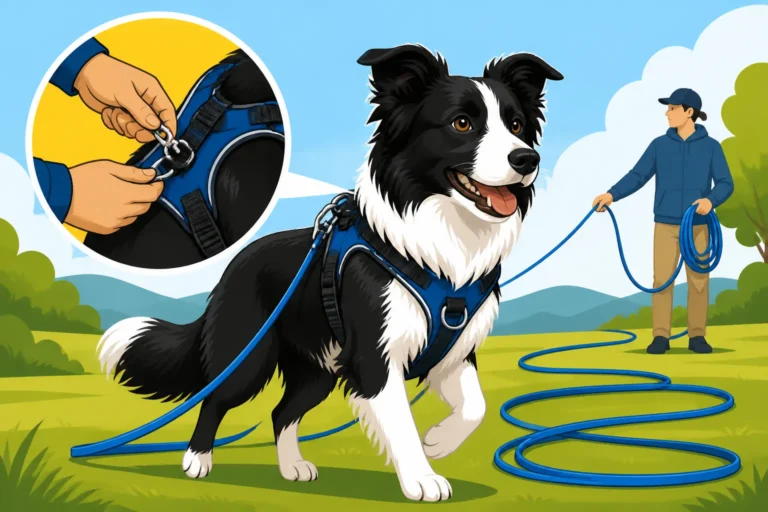
The goal is to prevent them from immediately seeking out the next exciting thing. For many Border Collies, a short sniff-walk on a long line can be a wonderful way to decompress. Sniffing is a calming behavior that engages their brain in a different, less intense way. It's about shifting gears, not slamming on the brakes. During this time, keep your own energy calm and low. Avoid exciting praise or boisterous play. The Thirty-Foot Line a Border Collie Recall Needs can also serve as a great tool for a post-work sniffari walk.
Providing Appropriate Outlets for Residual Energy
Even after a good "That'll Do" and a wind-down, a Border Collie might still have some residual mental or physical energy that needs an appropriate, low-key outlet. This is where enrichment toys and activities shine. Instead of another game of fetch, offer a KONG filled with frozen peanut butter, a snuffle mat with their dinner scattered inside, or a puzzle feeder that requires thought, not just brute force.
These types of activities engage their brain in problem-solving, which is mentally tiring without being physically stimulating in an excitatory way. Chew toys, particularly those designed for power chewers, can also be excellent. Chewing is a natural, self-soothing behavior for dogs that helps release endorphins and reduce stress. Having these items ready and presenting them consistently after a "That'll Do" routine helps build a positive association with settling down. Many affordable options are available on Amazon that can keep their minds busy without revving them up. Remember, Puzzle Feeders That Hold a Border Collie are not all created equal; some are too easy and won't keep their attention long enough.
Recognizing True Relaxation vs. Frustration
It's crucial for us as Border Collie owners to learn the subtle differences between true relaxation and a dog who is simply frustrated or has given up trying to get your attention. A truly relaxed Border Collie will often be lying down, perhaps sighing softly, with relaxed muscles, a loose jaw, and slow, even breathing. Their eyes might be soft, or they might even be napping.
A frustrated dog, however, might be lying down but with a tense body, ears constantly swiveling, eyes darting, or still mouthing at your hands or clothes. They might be prone to A Border Collie That Chews Itself When Bored. They may even be quiet, but it's a tense, watchful quiet, not a restful one. Learning to read these signals is key. If your dog isn't truly relaxing, you might need to re-evaluate your wind-down routine, the duration or intensity of their "work," or the type of post-work enrichment you're providing. Sometimes, it means going back to basics with your "That'll Do" command in a simpler setting.
Common Challenges and Troubleshooting
Even with the best intentions and consistent training, Border Collies can present unique challenges when it comes to the "That'll Do" command. Their intense drive and intelligence can sometimes work against us, requiring us to be even more strategic and patient.
The Dog Who Refuses to Quit
You've said "That'll Do," you've put the toy away, but your Border Collie is still buzzing, staring at the spot where the ball landed, or nudging your hand relentlessly. This is the classic "refusal to quit." It often stems from an incomplete understanding of the command, a lack of consistent follow-through, or simply being over-stimulated.
To address this, go back to basics. Reduce the intensity and duration of the "work" sessions. End them even sooner than you think you should, before your dog reaches that hyper-focused state. Practice "That'll Do" in a sterile environment with minimal distractions. When you give the command, immediately disengage your attention from the dog. Turn your back, walk away, or leave the room if necessary. Do not make eye contact or verbally reprimand; simply remove your participation in the "game." This teaches them that the game truly ends when you say so, and that pestering you will not restart it. Consider using a tie-back or long line to manage their movement without confrontation. For specific guidance on managing obsession, some online programs, such as those offered by BAXTER & Bella, include modules on impulse control and disengagement.
Managing the "Adrenaline Dump"
Some Border Collies, after a high-drive session, can experience what feels like an "adrenaline dump." They might become zoomy, nippy, barky, or generally over-the-top, even after the "That'll Do" command. This isn't defiance; it's often an inability to process the intense arousal they just experienced. They are literally vibrating with excess energy and don't know what to do with it.
For these dogs, the wind-down routine is even more critical. Instead of just putting them away, incorporate a structured activity that helps them channel that energy in a calmer way. A short, slow, leashed walk (not a run!) can help. Scent work, where they have to use their nose to find hidden treats, is another fantastic option as it's mentally engaging and calming. You can even combine "That'll Do" with a "find it" game, scattering treats on the floor. The aim is to bridge the gap between high arousal and true calm with a low-impact, brain-intensive activity. Avoid anything that ramps up their physical energy or eye-contact drive further. For example, rather than another ball, try Scentwork for a Border Collie Between Trial Seasons.
When "That'll Do" Means a Meltdown
In some extreme cases, for highly sensitive or deeply obsessive Border Collies, the "That'll Do" command can trigger a near-meltdown. They might bark incessantly, throw themselves at the toy bag, or even become destructive. This usually indicates that the dog is struggling with immense frustration or anxiety when their drive is abruptly cut off.
This situation requires a very gradual approach. You need to desensitize them to the end of the activity. Start by using "That'll Do" after extremely short, low-intensity sessions—think literally one retrieve, then "That'll Do." Immediately reward calm behavior, even a fleeting moment of it. Gradually increase the duration of calm after the command before re-engaging or offering a different activity. You might even introduce a "cool-down" toy (like a specific chew) that only comes out after "That'll Do." It's about building a positive association with the end of work. If the meltdowns are severe, it's always wise to consult with a professional dog trainer or veterinary behaviorist. Sometimes, a dog needs extra support to learn to cope with these intense feelings, and they might even benefit from understanding why Whether Medication Helps a Compulsive Border Collie is sometimes a consideration.
Integrating "That'll Do" Into a Balanced Lifestyle
The "That'll Do" command, when taught and reinforced consistently, becomes a cornerstone of a well-balanced life for your Border Collie. It’s not just about stopping a specific game; it’s about fostering a mindful approach to their energy, teaching them how to transition, and ultimately, ensuring they can enjoy moments of genuine peace and relaxation alongside their intense work.
Beyond Herding: Applying to All Activities
While "That'll Do" has its roots in stock work, its application extends far beyond the sheep pasture. This command is vital for any Border Collie, whether they're an agility superstar, a disc dog champion, a devoted family pet, or even just a backyard ball enthusiast. It means ending the training session for Teaching a Border Collie to Lie Down at Distance when you've achieved your goal, not when the dog dictates. It means gracefully concluding a game of fetch, signaling the end of a long hike, or even disengaging from intense play with another dog.
Every activity that engages your Border Collie's drive needs a clear end signal. Without it, they'll constantly be looking for the next thing, unable to truly unwind. For example, if your Border Collie is obsessed with frisbee, using "That'll Do" to end practice before they're completely exhausted helps prevent them from becoming frantic every time the frisbee comes out. It teaches them that the frisbee is a tool for fun, not a life-or-death mission that they must dictate. This also helps with issues like The Border Collie That Will Not Drop the Ball, as it establishes handler control over the activity.
The Long-Term Benefits for Dog and Handler
The benefits of a reliably understood "That'll Do" command are immense, impacting both your Border Collie's well-being and your own quality of life with them. For your dog, it reduces stress and anxiety by providing clarity and structure. They learn that they don't always have to be "on," and that rest is a sanctioned, expected part of their day. This can significantly decrease the likelihood of developing compulsive behaviors, frustration barking, or excessive demandingness.
For you, the handler, it offers control and peace of mind. Imagine being able to end a vigorous play session and have your Border Collie calmly settle down, rather than pacing and panting for another hour. It means you can take them to new environments, engage in stimulating activities, and then confidently cue them to relax. This freedom allows for a more harmonious household, fewer unwanted behaviors, and a deeper, more respectful bond with your intelligent companion. It's about fostering a balanced dog who knows when to work, and crucially, when to simply be. A dog that is well-practiced with "That'll Do" is a joy to live with, a testament to thoughtful training and deep understanding of the breed's needs.
| Command | Purpose | Dog's Mental State | Handler's Role | Example Scenario |
|---|---|---|---|---|
| "Stop" / "Wait" | Temporarily halt action, often for a pause or redirection | Engaged, but waiting for next instruction | Guide, pause, or redirect | Dog runs towards fence, you say "Stop!" to prevent them going too far, then redirect to a heel. |
| "That'll Do" | Definitive end of a work/play session; release from task | Transitioning from engaged to relaxed/off-duty | Signal completion, put away tools, initiate cool-down | Dog finishes an agility course, you say "That'll Do!", put them on a leash, and walk calmly to their crate for water. |
| "Leave It" | Ignore a specific tempting item | Focused on item, but redirecting attention | Prevent engagement with an unwanted object/distraction | Dog spots dropped food on sidewalk, you say "Leave It!" to prevent them from eating it. |
Disclaimer
This article is for general informational purposes only and does not constitute professional advice. Laws, prices and regulations vary by location and change over time. Consult a qualified professional for guidance on your specific situation.