A Border Collie That Fears the Smoke Alarm
Oh, the smoke alarm. That shrill, piercing shriek that jolts you awake or sends a chill down your spine when you're just trying to make toast. For many Border Collies, that sound isn't just an annoyance; it's a terrifying, earth-shattering assault on their sensitive ears and nervous systems. If your otherwise calm and collected Border Collie turns into a quivering, panting wreck or a frantic dervish every time the smoke alarm goes off, you're not alone. This guide is here to help you understand why this happens and, more importantly, what practical, empathetic steps you can take to alleviate your beloved dog's fear.
Understanding the Root of Noise Fear in Border Collies
It’s easy to dismiss a dog’s fear of a smoke alarm as “just being a dog,” but for a Border Collie, it’s often deeply rooted in their unique breed characteristics and sensory perception. These aren't just loud noises; they're often perceived as an immediate, existential threat.
Why Smoke Alarms are Particularly Jarring
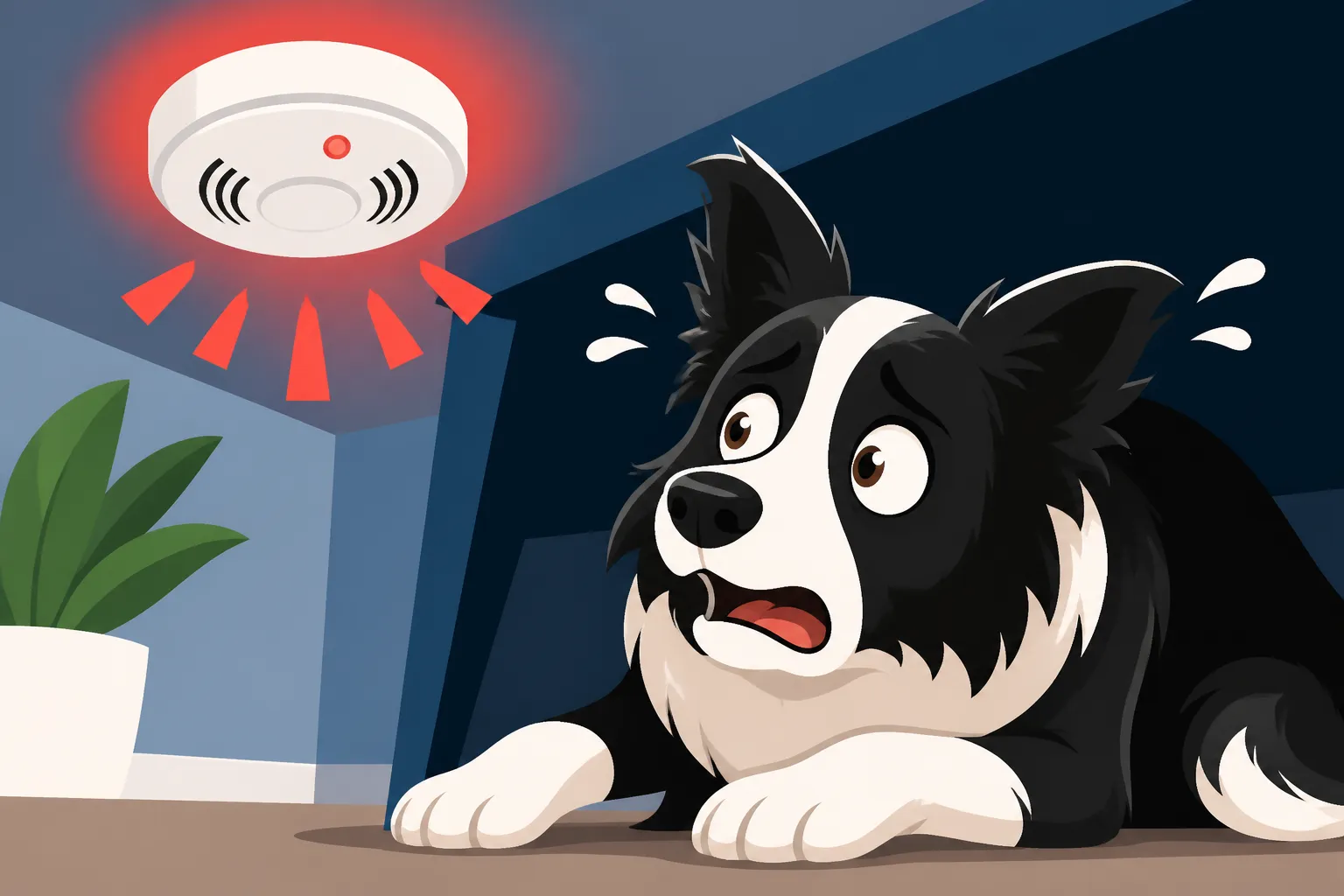
Think about the sound of a smoke alarm from your dog's perspective. It's not a natural sound like thunder or a car backfiring. It's an unnaturally high-pitched, insistent, and often sustained siren that comes from seemingly nowhere within their home – a place they usually consider their safest sanctuary. This sudden, unexpected, and often unlocatable noise can trigger an extreme startle response that quickly escalates into panic. Unlike a doorbell, which usually signals a person, or a distant siren, which fades, a smoke alarm is in their space, relentless, and demands an immediate, unknown reaction. It's disorienting, and because it usually means nothing bad actually happens from our perspective (it was just burnt toast!), dogs don't get a clear, positive outcome to associate with the sound. This lack of resolution only heightens the anxiety.
The Border Collie's Innate Sensitivity
Border Collies are renowned for their intelligence, their intense focus, and their incredible working drive. But these very traits also contribute to their heightened sensory awareness. They are bred to be acutely attuned to their environment, to subtle shifts in livestock movement, and to a handler's quietest commands. This means their hearing is exceptionally sharp, and they process sounds with a level of detail that most other breeds don't. Imagine experiencing every sound amplified and dissected. A smoke alarm, therefore, isn't just loud; it's overwhelmingly, excruciatingly loud, often hitting frequencies that are particularly uncomfortable for canine ears. This inherent sensitivity, while a boon on the working field, can be a significant liability in a modern home filled with sudden, artificial noises. It's why many Border Collies also exhibit Noise Fear in a Border Collie or Sound Sensitivity in a Working Border Collie to other everyday sounds. Their brains are wired to pay attention, and some sounds are just too much for that wiring.
Common Reactions and What They Tell You
A Border Collie's fear of a smoke alarm can manifest in several ways, often falling into the classic "fight, flight, or freeze" categories. Understanding which response your dog exhibits is crucial for knowing how best to help them. It’s not just about stopping the behavior, but about addressing the underlying panic.
The Flight Response: Hiding and Escape Attempts
This is perhaps the most common and understandable reaction. When that alarm blares, your Border Collie might immediately bolt for the safest, most enclosed space they can find. This could be under the bed, in a closet, behind the sofa, or even trying to squeeze into a space far too small for them. They might tremble uncontrollably, pant heavily, and refuse to come out until long after the sound has stopped. Some highly panicked dogs might even attempt to escape the house, frantically scratching at doors or windows, which can lead to injury or getting lost. This desperate need to flee signifies an overwhelming sense of danger and a complete inability to cope with the perceived threat. It's a primal instinct, and your dog isn't being "naughty"; they are genuinely terrified and seeking survival.
For a dog showing this response, their primary need is a safe, quiet retreat. If your home has a designated quiet space for your Border Collie, such as their crate covered with a blanket, it can be a vital resource. Even better if you've already made that space a positive sanctuary for them, perhaps through a routine using a system like BAXTER & Bella, which emphasizes positive reinforcement and building confidence.
The Freeze Response: Shutdown and Pacing
Other Border Collies might react by completely shutting down or, conversely, by pacing frantically without a clear direction. A "freeze" response often looks like extreme stillness: the dog might crouch low, stop moving entirely, or become unresponsive to your commands. Their eyes might be wide, their body rigid, and they might appear almost catatonic. This is a state of intense fear where the dog is too overwhelmed to react, hoping that by remaining still, the threat will pass.
Alternatively, some dogs enter a frantic pacing mode. They might circle endlessly, unable to settle, whining or whimpering softly. This isn't usually an attempt to flee but rather a manifestation of extreme anxiety and disorientation. They don't know what to do, where to go, or how to make the noise stop, so they channel their panic into restless movement. This often indicates a dog caught between instinctual responses, unable to decide on a course of action, and experiencing immense internal stress.
The Fight Response: Barking and Lashing Out
While less common for a smoke alarm, some Border Collies, particularly those with a strong protective instinct or a history of being overwhelmed, might exhibit a "fight" response. This can include incessant, high-pitched barking aimed at the source of the noise (or simply into the air), growling, or even snapping if approached while in this panicked state. This isn't aggression in the malicious sense but rather a fear-driven attempt to make the perceived threat go away. They're trying to ward it off, to "fight" the sound.
If your Border Collie is showing signs of aggression during a noise phobia episode, it's crucial to give them space and avoid direct confrontation. Trying to comfort them physically might inadvertently put you at risk, as a panicked dog might lash out without intending to harm you. In these severe cases, working with a professional behaviorist is highly recommended, as management and systematic desensitization will be key. They can also advise on tools to help manage reactions to other triggers, such as when The Border Collie That Barks at Every Sound.
Practical Steps to Desensitize Your Border Collie
Addressing a smoke alarm phobia requires a multi-pronged approach combining gradual exposure, positive reinforcement, and careful management. This isn't a quick fix; it's a journey of patience and consistency.
Gradual Exposure and Positive Reinforcement
The core of desensitization is to slowly introduce the feared stimulus at a level your dog can tolerate, pairing it with something highly positive.
- Start with the Source: The first step is to record the sound of your smoke alarm. Don't just pull a generic alarm sound from the internet; the specific frequency and tone of your home's alarm are what matter.
- Volume Control is Key: Begin playing the recording at an almost imperceptible volume. So quiet that your dog barely notices it, or perhaps only cocks an ear briefly. The goal is to avoid triggering any fear response at this stage.
- Pair with High-Value Rewards: As the sound plays at this low volume, immediately give your Border Collie something they absolutely adore: their favorite high-value treat, a special chew, or a favorite game. This creates a positive association: "Alarm sound means amazing things happen!"
- Slowly Increase Volume: Over days or weeks, very, very gradually increase the volume. Only increase it if your dog shows no signs of anxiety at the current level. If they show any stress (panting, stiffness, looking worried), drop the volume back down. This is not a race. You might find you can only increase the volume by the tiniest increment each day, or even every few days.
- Vary the Duration and Location: Once your dog is comfortable with short bursts, start varying the duration of the sound and playing it from different rooms. Always pair it with rewards. The idea is to normalize the sound as much as possible in various contexts.
- "BAXTER & Bella" Style Training: Consider incorporating structured training that builds confidence and focuses. Many online programs, like those offered by BAXTER & Bella, emphasize positive reinforcement methods that can be adapted for fear-based issues. Their approach to foundational obedience and confidence-building can make a huge difference in your dog's overall resilience. You can find many related training tools and resources on sites like Amazon.
Creating a Safe Haven
While desensitization is ongoing, it's vital to provide your Border Collie with a dedicated "safe space" where they can retreat when the alarm unexpectedly goes off (because let's face it, burnt toast happens).
- The Cozy Den: This space should be a dark, quiet, and comfortable area. A crate covered with thick blankets (to dampen sound and light), a closet, or a small room that doesn't get much foot traffic can work.
- Soundproofing: Place blankets, pillows, or even acoustic panels (if you're serious) in this area to help muffle external sounds. A white noise machine or a fan can also help to drown out some of the alarm's piercing frequencies.
- Positive Association: Make this space incredibly appealing all the time, not just when an alarm sounds. Feed them meals there, offer their favorite puzzle toys, or give them long-lasting chews only in this space. This helps them view it as a sanctuary, not a punishment corner. For dogs that get easily stressed or bored, providing mental enrichment with items like Puzzle Feeders That Hold a Border Collie in their safe space can be incredibly beneficial.
- Accessibility: Ensure your Border Collie can access this safe haven whenever they need it. Don't block it off or make it difficult for them to get to, especially if you know you might be doing something that could set off the alarm.
Management Strategies for Unexpected Alarms
Even with desensitization, real-life emergencies or accidental alarms will happen. Having a plan in place can significantly reduce the trauma for your Border Collie.
- Identify and Replace Sensitive Alarms: Do you have old, overly sensitive smoke detectors that frequently go off with steam from the shower or a little bit of cooking? Consider replacing them with newer models that use photoelectric technology, which are less prone to nuisance alarms, or those with "hush" features that allow you to temporarily silence them without disarming them completely.
- Emergency Treat Stash: Keep a readily accessible container of exceptionally high-value treats near each smoke alarm. If an alarm goes off, your immediate response (after checking for fire, of course!) should be to calm your dog and administer these treats, moving them towards their safe space.
- Stay Calm Yourself: Dogs are incredibly adept at reading our emotions. If you panic or get stressed by the alarm, your Border Collie will pick up on that and amplify their own fear. Take a deep breath, speak in a calm, reassuring voice, and move deliberately.
- Practice Drills (Once Desensitized): Once your dog is well into the desensitization process, you can do very brief, controlled "practice drills." Set off an alarm briefly, immediately silence it (if possible), and then reward your dog for any calm behavior. This helps them understand that the alarm doesn't mean permanent terror.
- Consider Medication (Short-Term or As-Needed): For severe cases, your vet might prescribe anti-anxiety medication for use during known triggers (like testing the alarms) or as a short-term aid while you work on desensitization. This isn't a cure but can help take the edge off their panic, allowing them to be more receptive to training. You can read more about options like Medication for a Sound-Phobic Border Collie.
| Reaction Type | Description | What It Means for Your Dog |
|---|---|---|
| Flight Response | Hiding, trembling, trying to escape, frantic scratching at doors. | Overwhelmed by fear, seeking safety and distance from the threat. |
| Freeze Response | Stiffening, crouching, unresponsive, wide eyes, restless pacing. | Intense anxiety, unable to process or react, often disoriented. |
| Fight Response | Excessive barking, growling, snapping if approached (rare for alarms). | Fear-driven attempt to ward off the perceived threat, highly stressed. |
When to Seek Professional Help and Resources
While you can do a lot on your own, there are times when an expert's guidance becomes invaluable, especially with such an intense phobia.
Recognizing When You Need Extra Support
If your Border Collie's fear of the smoke alarm is debilitating – meaning they are so terrified they injure themselves, become destructive, or take a long time to recover after an incident – it’s definitely time to bring in the pros. If you've tried consistent desensitization and management techniques for several weeks or months and see little to no improvement, or if the fear seems to be escalating, don't feel like a failure. Noise phobias can be incredibly complex, and sometimes a fresh pair of eyes with specialized knowledge can make all the difference.
A Certified Professional Dog Trainer (CPDT) or, ideally, a Certified Applied Animal Behaviorist (CAAB) or a Veterinary Behaviorist (DACVB) can assess your dog's specific situation, identify subtle triggers you might be missing, and design a tailored behavior modification plan. They can also determine if underlying medical issues are contributing to the anxiety or if medication might be a helpful adjunct to the training. Just as you might seek help for Epilepsy in a Border Collie Between One and Five, complex behavioral issues also warrant expert intervention.
Tools and Training Programs That Can Assist
Beyond professional guidance, there are various tools and training philosophies that can support your efforts.
- Behavioral Modification Programs: Platforms like BAXTER & Bella offer structured online training that focuses on building a solid foundation of obedience, confidence, and calmness. While not specific to smoke alarms, the general principles of positive reinforcement, creating positive associations, and teaching a dog how to relax can be incredibly helpful in managing overall anxiety, which in turn can lessen the severity of noise phobias. Their approach encourages you to be your dog's advocate and build a strong relationship based on trust.
- Enrichment and Mental Stimulation: A well-exercised and mentally stimulated Border Collie is generally a more resilient Border Collie. Ensure your dog is getting adequate physical exercise and mental challenges daily, as outlined in articles like What a Border Collie Does With Its Whole Day. This can reduce baseline anxiety.
- Comfort Aids: Consider items like thunder shirts, calming pheromone diffusers (e.g., Adaptil), or even noise-canceling earmuffs designed for dogs. While not cures, these can provide an additional layer of comfort and reduce the intensity of the sensory input during an alarm. You can often find these products on Amazon.
- Preventative Measures: If you're building or renovating, consider installing smoke detectors with smart features that can notify your phone of an alarm, allowing you to quickly check the situation and potentially silence a false alarm before it terrifies your dog for too long. For those living in closer quarters, soundproofing a dedicated room where the Border Collie spends a lot of time can be a significant investment in their peace of mind and quality of life. Even seemingly small details, such as creating a comfortable and predictable environment, contribute to The Kind of Home a Border Collie Settles In happily.
Remember, this is a journey, and every small step forward is a victory. Your Border Collie relies on you to be their calm, consistent leader, even in the face of a terrifyingly loud smoke alarm.
Disclaimer
This article is for general informational purposes only and does not constitute professional advice. Laws, prices and regulations vary by location and change over time. Consult a qualified professional for guidance on your specific situation.