A Border Collie That Comes Back Except Near Sheep
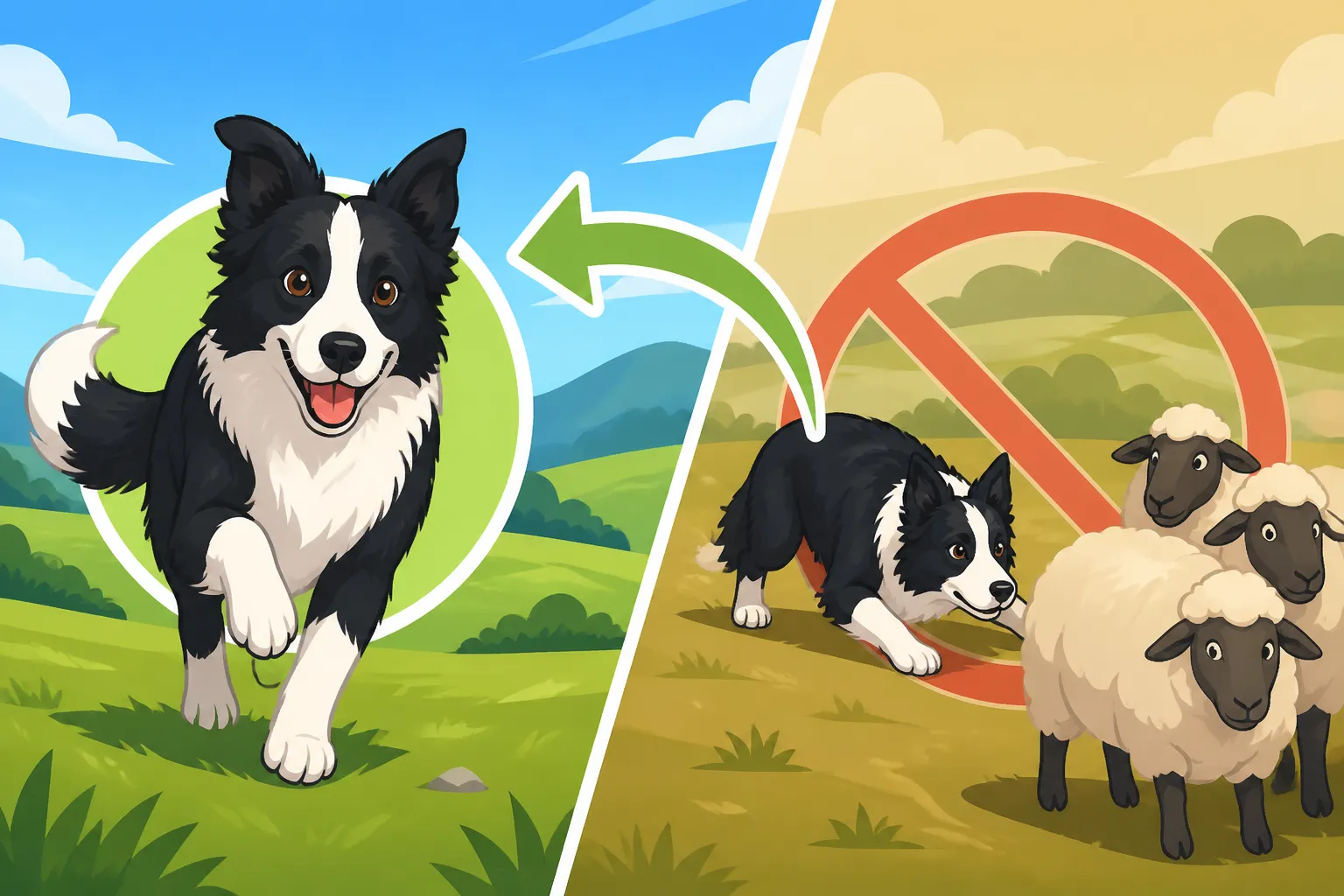
It’s a scenario many Border Collie owners know all too well: your dog has a fantastic recall, comes hurtling back to you in the park, ignores distractions, and is generally a rockstar off-leash. That is, until they glimpse something that moves in a certain way, perhaps a distant flock of sheep, or even just a group of children playing tag. Suddenly, it’s like you’re invisible, and all your careful training flies out the window. This guide aims to unravel why your usually obedient Border Collie becomes deaf to your commands near anything that triggers their herding instinct and offers practical strategies to regain control and foster a truly reliable recall.
Understanding the Herding Instinct's Grip
To truly tackle the disappearing recall near sheep (or anything that simulates them), we first have to respect and understand the sheer power of the Border Collie's herding instinct. It's not just a cute trick; it's the very foundation of their being, honed over centuries of selective breeding.
The Primordial Drive
For a Border Collie, the urge to herd isn't just a learned behavior; it's a deep-seated, genetic imperative. We've bred them for generations to spot, stalk, and gather livestock, and this instinct is hardwired into their DNA. When a Border Collie "locks on" to something that moves like prey or a scattered flock – whether it's genuine sheep, a bicycle whizzing by, or even just a leaf skittering across the ground in a particular way – it taps into this ancient, powerful drive. It's not disobedience; it's simply their brain engaging in the activity they were literally born to do.
This intense focus, often called "the eye," allows them to control the movement of animals with incredible precision. But in a non-herding context, it means that their environment suddenly takes precedence over any other stimuli, including your voice. The satisfaction of the chase, the stalk, the gather, is incredibly self-rewarding for them. It floods their system with endorphins, making it hard for any external reward you offer to compete. Understanding that this isn't personal defiance but a primal urge is the first step toward effective training.
Environmental Triggers Beyond Actual Sheep
While the query specifically mentions sheep, it's crucial to recognize that a Border Collie's herding instinct isn't exclusively reserved for woolly creatures. Anything that mimics the movement, scattering, or flight of a flock can act as a potent trigger. This could be joggers, cyclists, cars, children running and squealing, other dogs at play, or even inanimate objects like balloons bouncing in the wind or plastic bags tumbling across a field.
These everyday occurrences can activate the same intense focus and drive that a flock of sheep would. Your dog might suddenly drop into a characteristic crouch, fixate with that piercing Border Collie stare, and then begin to stalk or circle. At this point, their world narrows to the perceived "prey," and the sounds of your voice become muffled or entirely unheard. It's the adrenaline and the intrinsic reward of the chase overriding everything else, leading to that frustrating moment where your usually perfect recall vanishes into thin air. Many owners have experienced the sudden shift when their dog spots A Border Collie That Herds Joggers and forgets all their manners.
Rebuilding Recall from the Ground Up, With Instinct in Mind
Given the powerful nature of the herding instinct, rebuilding a reliable recall isn't about suppressing it entirely, but rather about teaching your Border Collie that you are the most interesting and rewarding part of their environment, even when triggers are present. It's a journey of consistent, patient work.
Starting in a Neutral Zone
Before you even think about tackling recall near high-value distractions, you must ensure your Border Collie has an absolutely rock-solid recall in a calm, neutral environment. This means starting in a quiet space, like your living room or a securely fenced yard, with no distractions whatsoever. Use incredibly high-value rewards – think boiled chicken, cheese, or their absolute favorite toy – and make coming back to you the most exciting thing in their world.
Practice short distances at first, calling their name enthusiastically and rewarding them instantly the moment they turn towards you or take a step in your direction. Celebrate their return like they've won the lottery. Gradually increase the distance and introduce very minor, controlled distractions, always ensuring you set your dog up for success. This foundational work ensures that the concept of recall is deeply ingrained before you layer on the challenge of their instinctual triggers. Remember, you're building a habit that needs to be stronger than their deepest desires.
Introducing the "Emergency Recall" Command
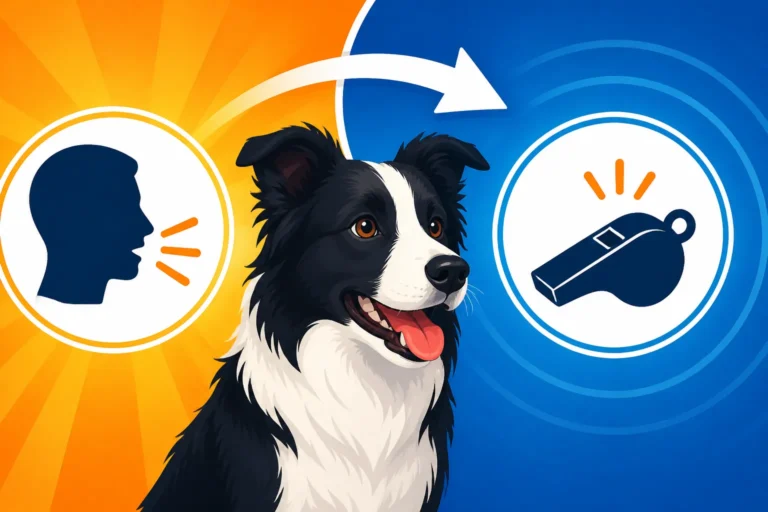
For those moments when the herding instinct completely takes over, a standard "come" command might not cut it. This is where an "emergency recall" comes into play. This isn't just a louder version of your regular recall; it's a completely separate command, ideally a unique word or whistle, reserved only for dire situations when your Border Collie absolutely must come back. The power of this command lies in its pristine association and infrequent, high-stakes use.
To build this, pick a word or sound you never use otherwise. Then, practice it in an entirely distraction-free environment, rewarding with the absolute highest value treat imaginable – something they rarely get. You'll want to avoid using this command unless you are 100% confident your dog will respond, as every time it's used without success, its power diminishes. The goal is to create such a potent positive association that when you deploy it, it literally cuts through their intense focus, compelling them to return. This is the command that will save your dog from The Emergency Word a Border Collie Must Know when they're about to run onto a road or harass livestock.
The Long Line as Your Best Friend
A long line is an indispensable tool when you're working on recall with a Border Collie, especially around potential triggers. It allows you to give your dog the illusion of freedom while maintaining physical control, preventing them from practicing self-rewarding behaviors like chasing and ignoring you. Starting with a 15-foot line and gradually increasing to 30 or even 50 feet provides space for them to roam, sniff, and experience the environment.
When your dog starts to fixate or show signs of engaging with a trigger, you can gently but firmly apply pressure to the line, preventing the full-blown chase. At the same time, give your recall command and, as they orient towards you (even if it's just a slight head turn), reel them in smoothly and reward them lavishly. This teaches them that even when their instinct kicks in, coming back to you is still the more rewarding option. It’s about Building a Border Collie Recall Against Moving Things in a safe, controlled manner. You can find excellent quality long lines of various lengths and materials on platforms like Amazon, making it easy to find one that suits your training needs and your dog's size.
Desensitization and Counter-Conditioning Near Triggers
Once your Border Collie has a strong foundational recall, the next step is to teach them how to respond reliably even when their instincts are screaming at them to do otherwise. This involves carefully managed exposure and making positive associations.
Gradual Exposure and Threshold Management
The key to working with powerful instincts is to never push your Border Collie over their "threshold" – the point where they can no longer think or respond to you because the drive is too overwhelming. Instead, you'll need to slowly and systematically expose them to triggers, always ensuring you stay below that threshold. Start with the trigger at a great distance, so far away that your dog barely registers it, or can still easily disengage.
As the trigger appears (e.g., a distant jogger, a few sheep far across a field), calmly observe your dog. The moment they notice the trigger but before they fully lock on or become aroused, reward them heavily for looking at you or remaining calm. This is called counter-conditioning: changing their emotional response from "I must chase!" to "Oh, a jogger/sheep! That means good things happen when I look at my human!" Gradually, over weeks and months, you can decrease the distance to the trigger, always watching for signs of overstimulation and pulling back if necessary. It’s a slow dance of exposure and positive reinforcement.
Structured "Work" and Impulse Control
Border Collies thrive on work, and denying them any outlet for their herding drive can lead to frustration and unwanted behaviors. Instead of trying to suppress the instinct entirely, channel it into structured, controlled activities that require impulse control and focus on you. This might involve "flirt poles" where you control the "prey" at the end of a stick, or even teaching them to herd large exercise balls in a designated area. The game Giving a Border Collie Something to Gather with an oversized ball can be a fantastic way to fulfill their drive in a safe, human-directed manner.
In conjunction with these outlets, double down on commands like "leave it" and "wait" around potential triggers. If your dog can "leave" a dropped treat, they can learn to "leave" a moving object, given enough practice and the right motivation. By teaching them that you initiate and end the "herding" game, and that listening to you leads to a fulfilling (but controlled) outlet for their drive, you become the gatekeeper to their satisfaction. This strengthens your bond and reinforces your leadership in a way that truly resonates with a Border Collie's mind.
Professional Guidance for Stubborn Cases
Sometimes, despite your best efforts, that powerful herding instinct can simply be too much to manage on your own. If you find yourself consistently struggling, feeling overwhelmed, or if your Border Collie's recall issues are putting them (or others) at risk, it's absolutely okay – and often highly recommended – to seek professional help. An experienced trainer, particularly one with a deep understanding of working breeds and their instincts, can be invaluable.
A good professional can help you identify specific triggers, assess your dog's individual drive levels, and design a tailored training plan. They can provide hands-on guidance, show you how to properly use tools like long lines, and teach you advanced techniques for impulse control and desensitization that might be difficult to grasp from a book or video. Don't view seeking help as a failure; view it as an investment in your dog's safety and your peace of mind. Resources like BAXTER & Bella offer online training programs and support that can provide structured guidance for these kinds of challenges, sometimes offering insights into how to integrate professional strategies into your daily routine without needing constant in-person sessions. Exploring Herding Lessons and Clinic Prices for a Border Collie might also be an option, even for pet Border Collies, as controlled exposure to stock can surprisingly improve impulse control in other areas.
Living with a Powerful Instinct: Management and Consistency
Owning a Border Collie with a strong herding instinct requires a commitment to ongoing management and unwavering consistency. It's not just about a few training sessions; it's about integrating these principles into every aspect of your life together.
Environmental Management is Key
Even with the best training in the world, there will be times and places where your Border Collie's herding instinct will be simply too strong to reliably override. This is where smart environmental management becomes absolutely critical. Rather than setting your dog up for failure, acknowledge their innate drives and adapt your approach. This might mean avoiding certain high-traffic areas during peak times, using a secure, long lead in unfenced spaces, or ensuring your home and yard have robust boundaries.
Consider the practicalities: do you have Fencing Heights a Border Collie Will Not Clear if your dog is prone to jumping or climbing to chase something? Can you provide mental and physical exercise in a controlled, safe environment, like a private field rental or a dedicated dog park (if your dog is suited for group play)? By managing their environment proactively, you reduce the opportunities for them to practice unwanted herding behaviors, allowing your training to take root more effectively. It's about being realistic about their capabilities and providing them with the safest possible outlets for their energy.
Consistency Above All Else
When dealing with a dog as intelligent and driven as a Border Collie, consistency isn't just a recommendation; it's the absolute cornerstone of success. Every single interaction, every walk, every command, contributes to their understanding of what you expect. If recall is sometimes optional, your Border Collie will quickly learn to pick and choose when it suits them to respond. This means every member of your household needs to be on the same page with commands, rewards, and expectations.
Mixed signals are incredibly detrimental to training a Border Collie, as they are expert at finding loopholes and exploiting inconsistencies. Make recall a high-value behavior every single time you call them, even if they're just two feet away. Randomly call them to you during playtime, reward heavily, and then release them back to play. This prevents them from associating recall only with the end of fun. Think of it as an ongoing conversation, where listening to you is always the most rewarding choice, no matter the distraction.
| Recall Training Stage | Environment | Key Focus | Tools | Reward Type |
|---|---|---|---|---|
| Foundation | Low/No Distraction (Home/Yard) | Positive Association, Speed | Regular Leash | High-Value Treats/Toy |
| Controlled Dist. | Mild Distraction (Quiet Park) | Introducing Minor Triggers | Long Line, Harness | Very High-Value Treats |
| Emergency Recall | Low Distraction (Proofing) | Unique Command, Instant Return | Specialized Whistle | Ultimate Reward |
| Trigger Exposure | Managed Distance from Trigger | Counter-Conditioning, Threshold | Long Line, Treats | Ultimate Reward |
| Real-World Proofing | Varied, Safe Environments | Generalization, Reliability | Secure Leash/Long Line | Varied High-Value |
Embracing the "Off-Switch"
While Border Collies are renowned for their incredible drive and work ethic, it's equally important for them to learn an "off-switch." A dog that is constantly "on" – scanning, searching, and ready to go – can become anxious, hyper-vigilant, and prone to engaging their herding instinct inappropriately. Teaching your Border Collie to settle, relax, and disengage is a vital component of a balanced life and a solid recall. This might involve dedicated crate training, creating a comfortable "place" where they are expected to rest quietly, or simply enforcing calm downtime after periods of intense mental or physical exercise.
The ability to switch off doesn't just benefit their mental health; it also makes them more receptive to your commands when it truly matters. A dog that is constantly over-stimulated is less likely to hear or process your recall. Just as we teach puppies Getting a Border Collie Puppy to Rest on Cue, adult Border Collies also need to be reminded of the value of relaxation. Consider a secure crate setup, which many owners refer to as their dog's "off-switch," like What a Border Collie's Off-Switch Crate Setup Costs. This designated quiet space helps them decompress and reinforces the idea that not every moment needs to be spent working or searching for something to herd.
Disclaimer
This article is for general informational purposes only and does not constitute professional advice. Laws, prices and regulations vary by location and change over time. Consult a qualified professional for guidance on your specific situation.