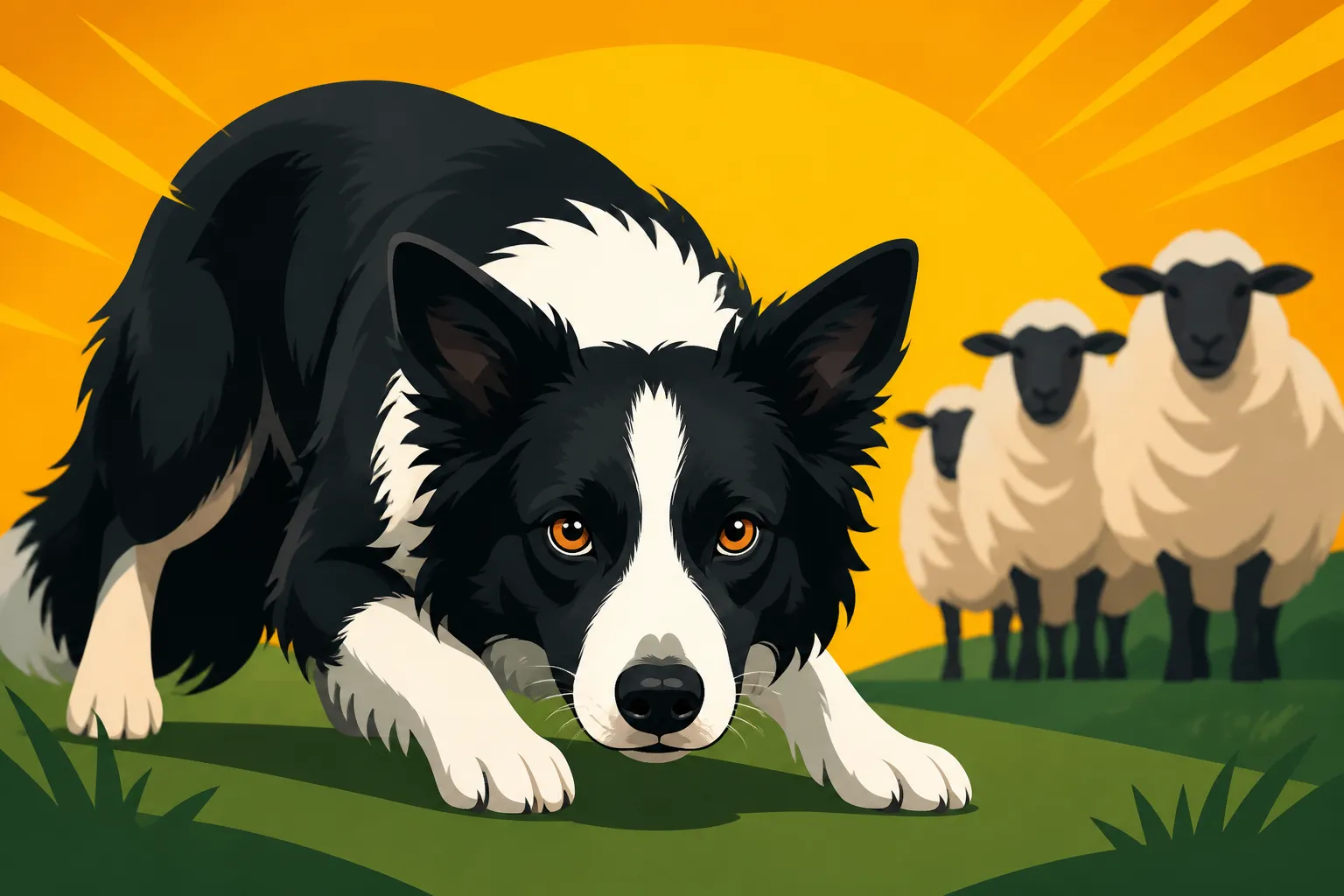
Why a Border Collie Crouches and Stares
One of the most defining, and sometimes perplexing, characteristics of a Border Collie is that intense, almost hypnotic crouch and stare. If you live with one of these incredible dogs, you’ve undoubtedly seen it – that low-slung body, head down, eyes absolutely locked onto something or someone. It can be mesmerizing to watch, but for many new owners, it also raises questions: Is this normal? What does it mean? And how do I manage it, especially when it seems directed at things it shouldn't be? This guide will dive deep into the instinctual roots of this behavior, help you understand its nuances, and provide practical strategies for living harmoniously with a dog whose stare is truly a superpower.
The Deep Roots of the Border Collie Stare
That iconic crouch and stare isn't just a quirk; it's a profound expression of millennia of selective breeding. Border Collies were developed to work sheep, often over vast distances, with minimal direct human interference. Their effectiveness came not from biting or barking, but from their sheer mental presence and ability to control a flock with their gaze.
Tracing Back to Ancestral Herding Instincts
Imagine a vast, open landscape in the border regions between Scotland and England, where sheep roamed freely and fences were rare. A shepherd needed a dog that could gather, move, and hold a flock with precision and quiet authority. This wasn't about brute force; it was about psychological control. The Border Collie’s ancestors, the "collies" of the region, perfected this nuanced approach. They learned to use their body language – especially that low, creeping posture and fixed gaze – to convey threat and direct the sheep without causing panic or scattering them. This "eye" became their primary tool, a silent language understood by both dog and sheep. It allowed them to manage livestock efficiently, conserving their energy and the sheep's.
It’s a truly fascinating piece of history that influences every Border Collie today, whether they've ever seen a sheep in their life or not. The deep genetic blueprint for this behavior is so strong that even a Border Collie raised in a city apartment, far from any livestock, will exhibit elements of it. They might stalk a squirrel, a ball, or even a dust bunny with that same intense focus, an echo of their ancestors on the lonely hillsides. Understanding this primal origin helps us appreciate the depth of their character and the unwavering drive that makes them so unique.
"Eye" – The Core of Their Working Style
In the world of working sheepdogs, "eye" isn't just about looking; it's about exerting influence. A dog with strong "eye" can hold a sheep, or even an entire flock, with its gaze alone. This isn't just staring blankly; it's a focused, predatory-like concentration that signals to the sheep: "I see you, and I am in control." The crouch often accompanies this, making the dog appear smaller, less threatening perhaps, but also more coiled and ready to spring if the sheep challenge its authority. It's a non-verbal communication that says, "I am here, and you will move where I want you to." This allows the handler to direct the dog with subtle whistles and commands, and the dog in turn uses its "eye" to translate those commands into action on the stock.
The power of this "eye" is a double-edged sword. While it’s essential for herding, in a pet home, it can manifest in behaviors that are less desirable. A Border Collie with strong eye might try to "herd" children, other pets, or even inanimate objects. They might fixate on movement – a car, a bicycle, a shadow – with the same intensity they would use on a stubborn ewe. This is why understanding What Strong Eye Means in a Border Collie is so crucial, as it informs how we interact with and train these dogs in a non-working environment. Their instinct isn't wrong; it's just looking for an outlet.
Genetic Hardwiring vs. Learned Behavior
While the predisposition for the crouch and stare is undoubtedly genetic, how and when it manifests is often shaped by environment and early experiences. A Border Collie puppy comes with the hardware, but the software gets programmed through exposure and training. For instance, a puppy from working lines that is exposed to sheep from a young age will quickly learn to refine its natural "eye" into effective herding behavior, often guided by an experienced handler. They learn the nuances of pressure and release, when to hold and when to move.
In contrast, a Border Collie in a pet home might have its "eye" directed towards less appropriate targets if not given constructive outlets. If a young Border Collie is allowed to chase and stare at the lawnmower, the vacuum, or the neighbor's cat, those behaviors can quickly become ingrained. It's not that the dog is being "naughty"; it's simply practicing what comes naturally and what it has learned works to satisfy that intense drive. This highlights the importance of early socialization and training to guide their powerful instincts. Programs like those offered by BAXTER & Bella, which focus on positive reinforcement and early skill building, can be incredibly valuable in shaping these natural tendencies into desirable behaviors. They understand that while the "eye" is genetic, its application is trainable.
Decoding the Stare: What Your Border Collie is Communicating
The Border Collie stare isn't a monolith; it’s a nuanced communication tool that varies based on context, intensity, and the dog’s underlying motivation. Learning to differentiate between these types of stares can help you understand your dog better and respond appropriately.
The Intense, Focused Working Stare
This is the quintessential Border Collie stare – the one that captures their working heritage. When a Border Collie is working stock, or truly engaged in an appropriate task like advanced obedience or agility, their stare is characterized by unwavering focus, often accompanied by a low, almost slinking body posture. Their ears might be half-pricked or slightly flattened, their tail low, and their muscles tensed, ready to spring into action. This stare is efficient and purposeful. It’s about control, strategy, and anticipating the movement of whatever they are "herding."
You might see this version of the stare if your Border Collie is truly engaged with a frisbee or a ball during a focused play session. It's not a playful, bouncy stare; it's serious business. They are assessing trajectory, predicting bounce, and mentally preparing for the retrieve. This is when their intelligence and drive are truly shining. It's a beautiful thing to witness and indicates a dog fully immersed in a task that satisfies its innate need to work. This type of stare, when directed appropriately, is a sign of a happy, fulfilled Border Collie.
The Stare in Play and Social Interactions
Beyond herding or focused work, the Border Collie stare can also appear in more casual settings, though often with slightly different body language. In play, for instance, a Border Collie might "eye" another dog or a person before initiating a chase or a game of keep-away. This stare might be less rigid, perhaps accompanied by a slight wag of the tail or a playful bow, indicating an invitation to play rather than a command. They might crouch low, but their body will seem more fluid, less tense, and they might break the stare more easily. It's their way of saying, "Let's play my way – a little chase, a little stalk!"
However, it's also important to recognize when a stare in social interactions might be misinterpreted, particularly by other dogs who aren't used to the intensity of a Border Collie. Some dogs might find a direct, prolonged stare confrontational or threatening. Similarly, if a Border Collie directs this intense stare at small children, especially those who are running and squealing, it can quickly escalate into unwanted herding behavior like nipping at heels. This is why understanding What Children Have to Learn Around a Border Collie is paramount. Teaching children how to interact respectfully and avoid triggering the herding instinct is key to a safe and happy home.
When the Stare Becomes a Warning
While Border Collies are generally friendly, their intense gaze can also be a component of a warning signal, particularly if they are guarding resources or feeling uncomfortable. This type of stare will typically be accompanied by other indicators of stress or aggression: a stiff body, perhaps a low growl, whale eye (where the whites of their eyes are visible), or a tense mouth. Their ears might be pinned back, or very stiff and forward. This isn't the focused, working stare, but rather a defensive or confrontational one.
If your Border Collie is staring intently at a stranger approaching their food bowl, a toy, or a space they consider theirs, and exhibiting these other tense body language cues, it's a clear signal to back off. This is not about herding; it's about establishing boundaries. Ignoring these signals can lead to escalation. It's crucial for owners to recognize this distinction and intervene to de-escalate the situation, perhaps by calling the dog away or managing the environment to remove the perceived threat. Never punish a growl or a stare that's meant as a warning; it’s your dog communicating its discomfort. Instead, use it as information to manage the situation and address the underlying cause of their discomfort.
Managing and Redirecting the Stare in Everyday Life
Living with a Border Collie means accepting and understanding their powerful instincts. The goal isn't to eradicate the stare, but to channel it into appropriate, productive, and safe behaviors.
Providing Appropriate Outlets for Instinct
Since the crouch and stare are so deeply ingrained, the most effective strategy is to give your Border Collie constructive ways to use these instincts. This means engaging their minds and bodies in activities that mimic the mental and physical demands of herding, without actually involving sheep (unless that's a path you choose to pursue!). Regular, vigorous exercise is a start, but mental stimulation is just as, if not more, important for a Border Collie. Mental Work That Tires a Border Collie Faster often involves problem-solving, learning new commands, or engaging in dog sports.
Consider activities like:
- Disc dog or flyball: These sports allow them to use their speed, agility, and intense focus on a moving object.
- Agility: Navigating obstacle courses requires immense concentration and body awareness.
- Scent work/nose work: This taps into their hunting instincts and is incredibly mentally fatiguing. Brands like Amazon offer a wide variety of puzzle toys and scent work kits that can be a great starting point for indoor mental stimulation.
- Advanced obedience or trick training: Teaching complex sequences or long chains of behaviors truly engages their intelligence.
- Herding lessons (if available and appropriate): For some, this is the ultimate outlet, allowing them to truly embrace their heritage under controlled conditions. This helps them understand The First Time a Border Collie Meets Sheep in a safe, structured way.
Providing these outlets helps satisfy their natural drive, reducing the likelihood that they'll direct their intense stare and herding instincts towards less appropriate targets like children, cars, or shadows.
Teaching an "Off" Switch
One of the biggest challenges with the Border Collie stare is its intensity and persistence. These dogs can get so locked on that it's hard to break their focus. This is where teaching an "off" switch becomes invaluable. This doesn't mean stopping them from staring entirely, but teaching them that they can disengage when you ask. A solid "That'll Do" or "Break" command, akin to what a working handler might use to end a run on sheep, is crucial. That'll Do and Ending a Border Collie's Work involves teaching them that when you say the word, the activity is over, and they need to relax or redirect their attention to you.
Start practicing this in low-distraction environments. Engage your Border Collie in a game of fetch or a staring contest with a toy, then calmly give your "off" command and immediately reward them for disengaging and looking at you. Gradually increase distractions. This teaches them that while their intense focus is valued, they also need to be responsive to your cues and capable of calming down. Having a reliable "come" or "recall" command, especially one strong enough to break a deep focus, is also fundamental. Recall on a Border Collie That Has Locked On is a skill every Border Collie owner needs to cultivate diligently.
Using the Stare in Training to Your Advantage
While we talk about managing the stare, it's important to remember that this intensity is also what makes Border Collies so brilliant in training. Their focus, their eagerness to learn, and their desire to engage with their handler are unparalleled. You can harness this natural intensity and responsiveness to teach them new skills and deepen your bond.
Use their "eye" to maintain their focus during training sessions. When they lock onto you, that's their attention fully given. Reward that engagement. Use their drive for a specific toy or activity to motivate them through complex sequences. For example, if your dog is highly toy-driven, you can use a favorite frisbee or ball as a reward at the end of a successful training drill. Just having that object in your hand, or in sight, can be enough to capture their intense focus and make them eager to perform. This also ties into What a Border Collie Does With Its Whole Day, ensuring those hours are filled with meaningful interaction and mental exercise.
When the Stare Crosses into Obsession or Problem Behavior
Sometimes, the Border Collie's intense focus can drift from productive work or play into obsessive or problematic behaviors that are hard to live with and can indicate underlying stress or anxiety.
Staring at Objects, Shadows, or Reflections
One of the most common problematic manifestations of the Border Collie stare is fixation on moving lights, shadows, reflections, or inanimate objects. This can start innocently – a puppy chasing a sunbeam – but can quickly escalate. The dog might spend hours staring at a patch of light on the wall, tracking reflections from a watch, or even obsessively watching the television. This isn't satisfying their herding instinct; it's often a displacement behavior, a self-stimulatory loop that can become genuinely compulsive. Stopping a Border Collie Chasing Shadows and Light is crucial, as this behavior can lead to high levels of anxiety and even self-mutilation in extreme cases.
These fixations can severely impact a dog's quality of life, making it difficult for them to relax or engage in normal activities. Owners often report dogs becoming agitated if they can't access their "shadows" or becoming hyper-vigilant. It's often a sign that their needs for appropriate mental and physical stimulation aren't being met, or that they are experiencing stress or boredom. It requires consistent intervention and redirection.
Staring as a Precursor to Herding Unwanted Targets
Another common issue arises when the Border Collie's stare is directed at people, other pets, or even vehicles. This is usually the precursor to unwanted herding behavior. A Border Collie might crouch and stare at children running in the yard, then attempt to "gather" them by nipping at their heels or blocking their path. They might fixate on cars, bikes, or joggers passing by the fence, culminating in frantic barking, chasing along the fence line, or even attempting to dart into traffic. A Border Collie Circling Children in the Yard is a scenario many owners face.
This behavior, while rooted in their natural instinct, is inappropriate and potentially dangerous in a domestic setting. It can lead to injuries, property damage, and significant stress for both the dog and the household. The intense focus makes them highly unresponsive to commands once "locked on." Addressing this requires proactive management, environmental control (like secure fencing), and consistent training to redirect that energy.
Compulsive Behaviors Linked to Staring
In severe cases, prolonged staring and fixation can lead to other compulsive disorders. This might include spinning, tail chasing, flank sucking, or excessive licking. These behaviors often provide a self-soothing mechanism but can become incredibly destructive and difficult to break. Spinning and Tail Chasing in a Border Collie often stems from an inability to cope with stress or lack of adequate mental engagement, manifesting through these repetitive, seemingly purposeless actions. The stare often precedes these actions, as the dog becomes fixated on an internal or external trigger, then launches into the compulsive behavior.
It's vital to recognize that these aren't "bad" behaviors, but symptoms of a dog struggling. They require a holistic approach, often involving a combination of increased appropriate exercise and mental stimulation, management of triggers, behavioral modification techniques, and sometimes, veterinary consultation for anxiety or obsessive-compulsive disorders. Whether Medication Helps a Compulsive Border Collie is a valid question to discuss with a vet if other interventions aren't sufficient.
Training Strategies for a Balanced Border Collie
Successfully integrating a Border Collie's intense stare into a calm, well-adjusted life requires dedication to consistent, positive training. The goal is to build a cooperative relationship where their instincts are guided, not suppressed.
Building Engagement and Focus Away from Triggers
One of the most effective ways to manage problematic staring is to teach your Border Collie to engage with you instead of fixating on environmental triggers. This means making yourself the most interesting thing in their world. Use high-value treats, exciting toys (those sturdy ones you can get on Amazon that last more than five minutes!), and enthusiastic praise to reward them for focusing on you, especially when distractions are present. Practice eye contact exercises, where you reward them for simply looking at your face.
Teach a "watch me" or "focus" command, starting in a quiet environment and gradually adding distractions. If your dog starts to fixate on a reflection, calmly call their name, ask for "watch me," and reward them heavily when they break their stare and look at you. This builds a habit of checking in with you, making them less likely to get lost in an obsessive stare. A strong foundation in basic obedience, developed through a structured program like BAXTER & Bella's online training university, can lay the groundwork for this kind of engagement, helping you learn to be the most compelling presence for your dog.
Tools and Techniques to Help Manage Intensity
While training is paramount, certain tools and techniques can assist in managing the sheer intensity of a Border Collie's stare and drive, especially in public or high-distraction environments.
- Long lines: A long line (15-30 feet) allows you to practice recall and engagement in open spaces safely, without your dog being able to fully "lock on" and ignore you, or chase unwanted targets. This is especially useful for building a reliable recall.
- Harnesses: A well-fitting front-clip harness can help redirect a dog's attention and prevent them from pulling as hard when they fixate on something.
- Management of the environment: Sometimes, the simplest solution is to remove the trigger. If your dog stares at cars from a particular window, close the blinds. If they fixate on shadows in the living room, play in a different room or use ambient lighting that doesn't create sharp shadows.
- "Find It" games: If your dog starts to stare at something inappropriate, a quick "Find It!" command, scattering high-value treats on the ground, can quickly break their focus and redirect them to a positive, sniffing behavior. This uses their nose, engaging a different part of their brain and helping them disengage from the visual fixation.
| Stare Type | Characteristics | Implication | Recommended Owner Response |
|---|---|---|---|
| Working Stare | Low crouch, intense eye contact, body tense, focused on task/object | High drive, engagement, purposeful | Encourage, direct with commands, provide appropriate outlets. |
| Playful Stare | Crouched but fluid, tail may wag, intermittent eye contact, directed at playmate | Invitation to play, social interaction | Monitor, ensure appropriate play, intervene if over-aroused. |
| Obsessive Stare | Fixed gaze on inanimate object/light/shadow, repetitive, hard to break | Stress, boredom, lack of mental stimulation, compulsive tendencies | Redirect, engage with owner, provide mental work, seek pro help if severe. |
| Warning Stare | Stiff body, whale eye, growl, pinned ears, direct, prolonged | Discomfort, guarding, potential aggression | De-escalate, manage environment, do not punish, seek pro help. |
Seeking Professional Guidance
If you're struggling to manage your Border Collie's stare or if it's escalating into serious obsessive or aggressive behaviors, don't hesitate to seek professional help. A certified professional dog trainer or a veterinary behaviorist has the expertise to assess your dog's specific situation, identify underlying causes, and develop a tailored behavior modification plan. They can help you understand the nuances of your dog's body language and provide hands-on guidance for implementing effective strategies.
Sometimes, what appears to be a behavioral issue related to the stare might have a medical component, such as pain or neurological conditions, so a veterinary check-up is always a good starting point. A professional can also help you determine if your Border Collie has underlying anxiety that needs to be addressed, potentially with medication in conjunction with behavior modification. Remember, asking for help is a sign of a responsible owner, committed to their dog's well-being. There's no shame in admitting you need extra support when dealing with the powerful instincts of a Border Collie.
Disclaimer
This article is for general informational purposes only and does not constitute professional advice. Laws, prices and regulations vary by location and change over time. Consult a qualified professional for guidance on your specific situation.