Why a Border Collie Is Taught to Lie Down First
When you bring home a brilliant, high-energy Border Collie, it's easy to get caught up in the excitement of all the amazing tricks and advanced commands you want to teach. But for many new owners, the seemingly simple "lie down" command can feel surprisingly difficult to teach, or its true importance overlooked. This guide will walk you through precisely why teaching your Border Collie to lie down first, and perfectly, is not just a basic obedience step, but the absolute cornerstone of their safety, control, and overall well-being.
The Foundation of Control: Why "Down" Is Paramount
It might seem counterintuitive to start with a stationary command for a dog bred for constant motion and incredible drive. You might be thinking, "My Border Collie needs to learn 'come' or 'stay' first!" While those are undeniably crucial, the "down" command—especially when taught thoroughly and consistently—provides an unparalleled level of control and a mental reset that few other commands can offer for this particular breed. It's about more than just getting them to hit the deck; it's about interrupting their powerful instincts and giving them an anchor in a chaotic world.
Stopping Drive in its Tracks
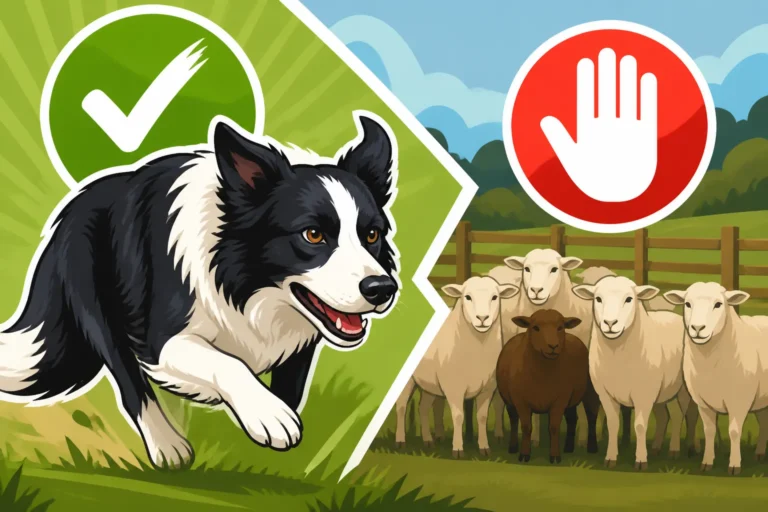
Border Collies possess an almost legendary prey drive, and it’s this intense focus that makes them such exceptional working dogs. But in a pet or sport home, that drive can quickly turn into a liability. Imagine your Border Collie, fixated on a squirrel darting across a busy park path, or locked onto a child running past, starting to gather them like a wayward sheep. Their natural instinct is to pursue, to control, to work. A solid "down" command is your ultimate emergency brake in these moments.
It's the command that says, "Stop. Right there. Disengage." It forces them to break that intense visual lock, that primal urge to chase or gather. Without it, you're constantly fighting against a millennia of selective breeding. Owners often feel frustrated when their Border Collie "tunes them out" once that drive kicks in, seeming deaf to recall or other commands. This isn't defiance; it's often the sheer power of their instinct overwhelming their training. A deeply ingrained "down" offers a way to cut through that intense focus, giving you back control of their attention and their body.
Safety in a Second
Beyond managing innate drive, a reliable "down" command is a critical safety tool, perhaps the most important in your Border Collie's repertoire. We all want our dogs to be safe, but with a breed as quick and reactive as a Border Collie, split-second decisions often mean the difference between a close call and a serious incident.
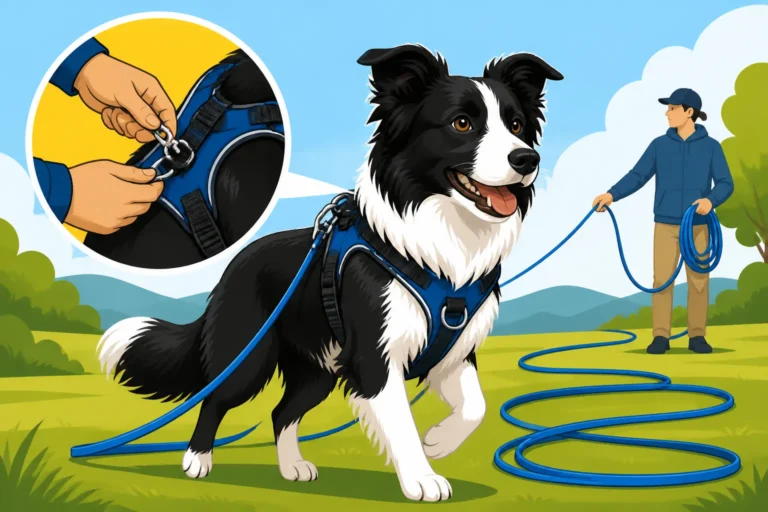
Consider a scenario where your dog accidentally slips their leash near a road, or perhaps another dog approaches aggressively while you're out on a walk. Yelling "come!" might not register immediately if their attention is already elsewhere, or their adrenaline is pumping. A sharp, clear "down!" can often get them to drop immediately, removing them from a potentially dangerous situation by forcing them to stay put, low to the ground, and less likely to run into traffic or escalate an interaction. On a farm, it's the command that can keep them safe from a startled horse or a protective cow. In an agility trial, a quick "down" might prevent a dangerous jump or an accidental collision. It reduces their profile, makes them less likely to be perceived as a threat, and puts them in a position of submission, diffusing tension.
The Mental Reset Button
Border Collies are incredibly sensitive and can become over-aroused surprisingly quickly. Whether it’s too much excitement at the dog park, frustration during a training session, or simply being overwhelmed by a busy environment, their intense focus can turn into frantic energy or even reactivity. When they get to this point, telling them to "sit" or "stay" might only address the physical symptom without calming the underlying mental state.
This is where the "down" command really shines as a mental reset. The act of lying down, especially when sustained, encourages a release of tension and a slowing of their physical and mental state. It's a way to tell them, "Hey, let's take a breath." It forces a moment of stillness, allowing their adrenaline to subside and their cognitive functions to re-engage. You'll often see a Border Collie, after a good "down," shake it off, take a deep breath, and then be much more receptive to further commands or simply capable of being calmer in the environment. This ability to self-regulate, prompted by your command, is invaluable for such an intelligent and high-strung breed.
Building Blocks for Advanced Training
While the immediate benefits of safety and control are clear, teaching your Border Collie to lie down first also lays critical groundwork for almost every other command you'll want to teach, from basic manners to advanced sport work. It's the foundational piece that makes more complex behaviors possible and reliable.
Gateway to Distance and Directional Commands
Think about the incredible control a working Border Collie handler has over their dog at a distance, often hundreds of yards away. That impressive control, those precise directional cues like Come Bye and Away to Me on a Border Collie, all stem from a deeply ingrained understanding of basic commands, particularly "down." If your dog can't reliably lie down right next to you, how can you expect them to do it when they're a football field away, working sheep?
The "down" command is often the first step in teaching true distance control. Once your dog understands the command close up, you can gradually increase the distance between you, practicing that drop no matter how far away they are. This then becomes the anchor for other long-distance commands, such as stopping a run or holding a flock of sheep. Without a strong "down," any attempt to teach something like Teaching a Border Collie to Lie Down at Distance or Getting a Border Collie to Stop at Two Hundred Yards will be incredibly frustrating and likely unsuccessful. It provides a static, low-impact position from which to issue further instructions, ensuring the dog is settled and ready to receive complex information.
Patience and Impulse Control
Border Collies are known for their speed, their intensity, and sometimes, their lack of patience when they really want something. Whether it's the ball, their dinner, or a chance to greet another dog, their impulse control isn't always their strongest suit right out of the gate. The "down" command, especially when combined with a "stay," is a fantastic tool for building this crucial skill.
Asking your Border Collie to lie down and remain down, even for short periods initially, teaches them to resist their immediate impulses. It's about learning that waiting quietly often leads to a greater reward. This translates into better manners around food, at doorways, when new people arrive, or when they're simply asked to relax in a busy environment. It provides a structured way to practice self-control, which is absolutely vital for managing a breed that is always thinking, always anticipating, and always ready to move. Many owners grapple with Why a Border Collie Cannot Stop on Its Own, and the answer often lies in the lack of consistent impulse control training, for which "down" is a key component.
Managing the Border Collie Stare
Ah, the "eye." That intense, piercing stare that a Border Collie can give, whether to a flock of sheep, a moving toy, or even an unsuspecting household member. The Border Collie Stare and Where It Comes From is a fundamental part of their herding instinct, but in daily life, it can escalate into unwanted herding of children, other pets, or even inanimate objects like vacuums. This fixation, while a hallmark of the breed, needs to be managed effectively to prevent problem behaviors.
A reliable "down" command can be incredibly effective at interrupting and redirecting that intense "eye." When you see your Border Collie locking on with that signature stare, issuing a firm "down" forces them to break eye contact, shift their focus, and physically disengage from the object of their attention. This isn't just about stopping them from moving; it's about breaking the mental circuit of fixation. By consistently interrupting the stare with a "down," you teach your dog that intense, unmanaged eye is not always appropriate, and you provide them with an alternative, calmer behavior. It empowers you to guide their focus rather than being dictated by their instinctual drives.
Practical Application and Training Tips
Now that we've established why "down" is so critical, let's talk about how to teach it effectively to your brilliant Border Collie. Remember, consistency and positive reinforcement are key, especially with a breed that learns so quickly and is so sensitive to your cues.
Starting with Lure and Reward
When you first introduce "down," you'll typically use a lure-and-reward method. This makes the learning process clear and positive for your dog.
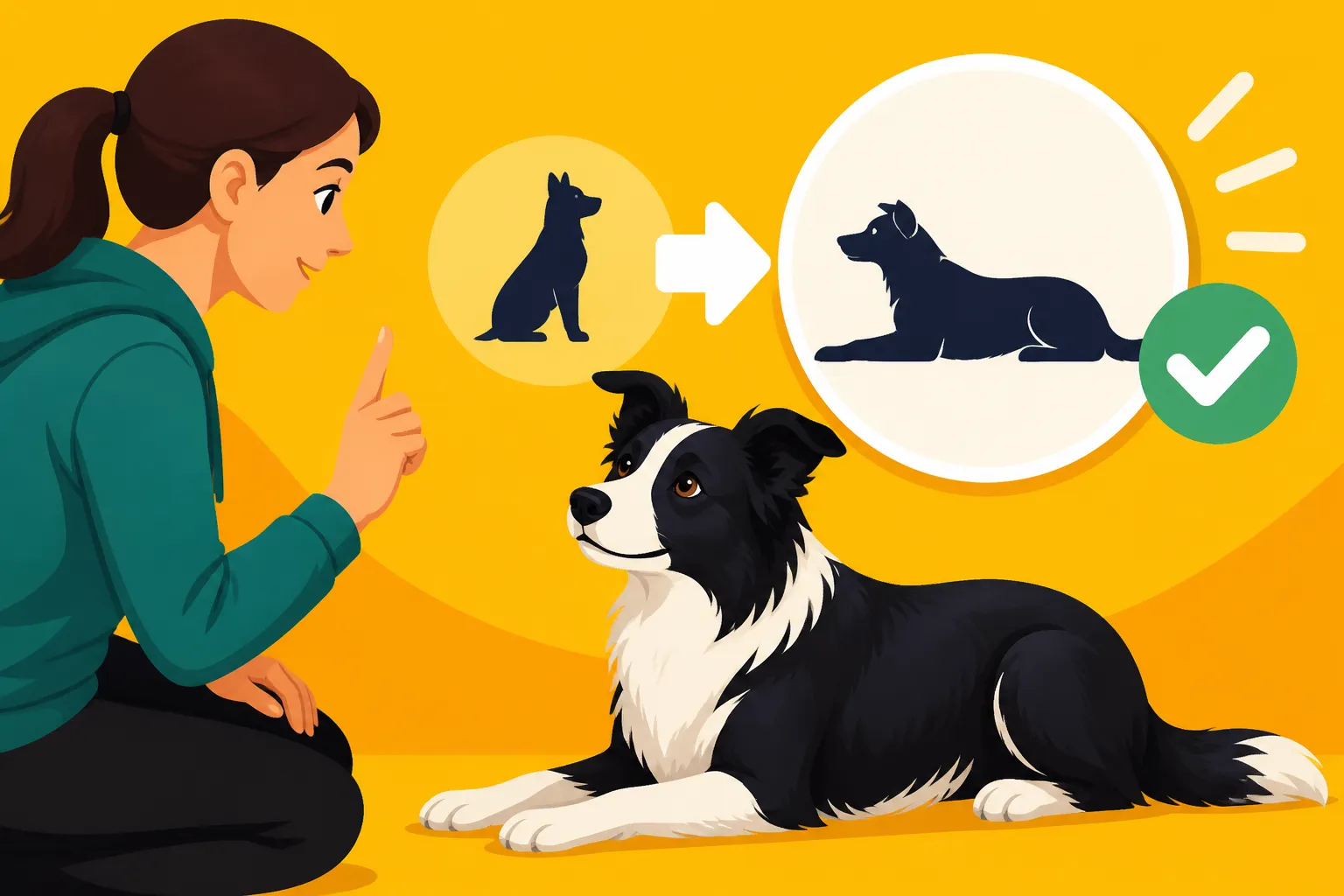
- Get their attention: Start with your Border Collie in a sit position in front of you. Hold a high-value treat (many great options are available from retailers like Amazon) in your hand, close to their nose.
- Lure the movement: Slowly move the treat straight down towards the floor, then smoothly slide it along the floor away from them, towards their front paws. Your dog's nose should follow the treat, naturally lowering their body into a down position.
- Mark and reward: The instant their elbows hit the ground and they are fully down, say your marker word ("Yes!" or click) and immediately give them the treat. Don't wait. The timing is crucial.
- Add the verbal cue: Once they are reliably following the lure, start adding the verbal command "Down" just as you begin the luring motion. Soon, they'll associate the word with the action.
- Fade the lure: Gradually make your hand motion smaller and less obvious until your Border Collie can perform the "down" simply from your verbal cue or a subtle hand signal.
Remember, Border Collies thrive on mental engagement. Keep sessions short, fun, and always end on a high note.
Adding Duration and Distance
Once your Border Collie understands "down" reliably right next to you, it's time to build duration and distance. This is where "down" really becomes powerful.
- Duration first: Start by rewarding them for staying down for just one second, then two, then three, and so on. Gradually increase the time they must remain down before you mark and reward. Always release them from the "down" with a clear release word (like "Okay!" or "Free!") before giving them the final treat, so they understand the duration component.
- Add distance: Once duration is solid, take one small step back while they are in a "down." If they stay, step back, mark, and reward. Gradually increase your distance, always returning to them to reward initially. If they break the "down," gently lead them back to the original spot, put them back into a "down," and shorten the distance you tried to achieve.
- Introduce distractions: Start practicing "down" in increasingly distracting environments. A quiet living room, then a slightly busier room, then the backyard, then a park with minimal activity. This progressive exposure helps generalize the command. Training programs, like those offered by BAXTER & Bella, often provide structured steps for introducing distractions systematically. The goal is for them to hold their "down" no matter what is happening around them.
Troubleshooting Common Challenges
Even with the smartest of breeds, training isn't always a straight line. Here are a few common challenges and how to address them:
- "Pop-ups" or not holding the down: This usually means you're asking for too much duration or distance too soon, or the reward isn't high enough. Go back to basics, shorten the time/distance, and use a treat they absolutely adore. Ensure your release cue is clear.
- Anticipation and breaking: If your Border Collie is popping up before you release them, it might be that they are anticipating the treat or release. Vary your timing. Don't always reward at the same interval. Make them guess a little, but still reward generously for correct behavior.
- Excitement preventing the down: If your dog is too worked up to even lie down, try to calm them slightly before asking. A few simple sits, or just waiting for a moment of quiet, can help. Ensure you're not trying to teach a new skill when they are over-threshold.
- "Down" means "lie down, then immediately get back up": This happens when the owner rewards the act of lying down but doesn't build duration. Ensure you're rewarding for staying down, even if just for a second, before releasing them.
Consistency is your best friend. Practice frequently, but in short bursts, throughout the day. Never nag your Border Collie by repeating "Down! Down! Down!" If they don't respond, you might need to make the environment easier or your reward more appealing, or go back to a more hands-on lure.
| Scenario | Why "Down" Helps | Prevents/Manages |
|---|---|---|
| Unexpected Traffic | Immediate stop, reduced profile, attention redirected. | Running into traffic, injury, panic. |
| Approaching Unknown Dog | Lowers perceived threat, creates distance, allows owner assessment. | Leash reactivity, dog fight, escalating tension. |
| Child Running in Park | Interrupts herding instinct, prevents nipping or circling. | Unwanted herding behavior, frightening children, potential nips. |
| Doorbell Rings | Establishes calm routine, prevents frantic barking/jumping. | Door dashing, jumping on guests, over-arousal. |
| During Meal Prep | Teaches patience, keeps dog out from underfoot. | Begging, counter surfing, accidental tripping. |
| Vet Office Waiting Room | Promotes calm, respectful behavior in a stressful environment. | Stress barking, lunging, interfering with other clients/pets. |
| Agility Course Mistake | Immediate stop, allows handler to reset and guide. | Dangerous obstacle approach, missed contact points, injury. |
| Encountering Livestock | Halts chase instinct, prevents stressing animals, ensures safety. | Chasing sheep/cattle, potential injury to livestock or dog, legal trouble. |
| Overwhelmed by Noise/Crowd | Provides a physical and mental "safe space," encourages calming. | Anxiety-driven behaviors, reactivity, bolting. |
| Ending Work/Training | Signals a clear end to activity, transitions to rest (e.g., That'll Do and Ending a Border Collie's Work). | Continued frenetic energy, difficulty settling, confusion over expectations. |
Integrating "Down" into Everyday Life
Teaching "down" isn't just for training sessions; it's a command that can weave seamlessly into your Border Collie's entire day, enhancing their manners, safety, and overall quality of life. The true power of "down" comes from its consistent application in varied situations, making it a natural part of your communication.
Household Manners and Calmness
Many Border Collie owners struggle with their dog's boundless energy translating into enthusiastic (and sometimes overwhelming) household manners. The "down" command is a fantastic tool for encouraging calmness and good behavior within your home. Imagine the doorbell rings, and instead of a frantic scramble, your Border Collie calmly goes to their mat and lies down. Or, when you're preparing dinner, they settle patiently on their bed instead of pacing underfoot.
By incorporating "down" into these routine situations, you teach your dog appropriate ways to react to common triggers. It helps create an environment where your Border Collie learns that stillness and quiet are often rewarded, reducing unwanted behaviors like jumping on guests, barking excessively, or getting in the way. It’s an integral part of teaching a Border Collie how to truly Teaching a Border Collie to Stay on Its Bed and relax, which is a life skill every Border Collie owner desperately needs.
Field and Sport Applications
For Border Collies involved in any kind of dog sport or working activity, "down" is not just useful; it's often absolutely indispensable. In herding, a clean "down" is fundamental for controlling the stock and demonstrating precision to a judge. It's how a handler might stop their dog mid-outrun or hold a flock of sheep in place. During The First Time a Border Collie Meets Sheep, a solid "down" can prevent a young, overzealous dog from rushing or gripping.
In agility, a "down-stay" at the start line or a quick "down" during a course can be the difference between a clean run and a disqualification, or even prevent an injury. In obedience, it's a core component of many exercises. The ability to drop instantly, on command, regardless of the environment or their level of arousal, means a Border Collie can excel in their chosen pursuits safely and effectively. It’s a versatile command that bridges the gap between pet obedience and high-level performance.
The Lifelong Benefit
The investment you make in teaching a rock-solid "down" to your Border Collie pays dividends throughout their entire life. From their boisterous puppyhood, through their energetic adolescent years, and even into their calmer senior days, a reliable "down" remains a critical tool. It's a cornerstone of their understanding of appropriate behavior, of their ability to be safe in the world, and of their bond with you.
A Border Collie who understands and respects the "down" command is a joy to live with. They are safer, more confident, and better able to navigate the various situations life throws at them. It’s not just a command; it’s a commitment to their well-being and a testament to the powerful communication you can build with such an intelligent and eager partner. As your Border Collie matures, this foundational training contributes significantly to their ability to remain a well-adjusted, confident companion, ideally staying The Border Collie That Stays Sound Into Its Teens both mentally and physically.
Disclaimer
This article is for general informational purposes only and does not constitute professional advice. Laws, prices and regulations vary by location and change over time. Consult a qualified professional for guidance on your specific situation.