The Age to Start a Border Collie on Stock
It's a question almost every new Border Collie owner with an interest in stock work asks: "When can I start my pup on sheep?" That eagerness is completely understandable; after all, it's what these dogs were bred for! But rushing into it can do more harm than anything else, potentially setting your dog back for months or even spoiling their natural instinct. This guide will walk you through the nuances of recognizing readiness, building a solid foundation, and introducing your Border Collie to stock at the right age, ensuring a positive and productive experience for both of you.
Understanding the Natural Instinct: When Does It Emerge?
One of the most captivating aspects of a Border Collie is its innate herding instinct, that deep-seated drive to gather and control. While it's tempting to think this instinct is fully formed from birth, it actually develops and refines over time. Understanding this natural progression is key to knowing when to introduce your dog to livestock. It's not just about a specific calendar age; it's about observing the subtle (and sometimes not-so-subtle) signs that your pup's brain and body are ready for the challenge. Many owners feel a push to start early, fearing they'll "miss the window," but often, patience pays off exponentially.
Early Glimmers of the Herding Instinct
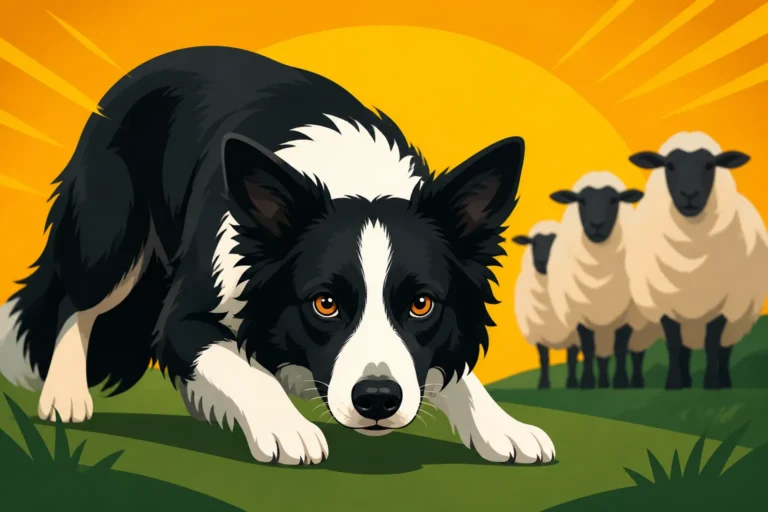
Even before they ever see a sheep, Border Collie puppies will often display rudimentary herding behaviors. You might notice your puppy trying to "gather" family members, gently pushing them together, or circling the cat with a focused gaze. They might stalk toys, dropping into that characteristic low Border Collie crouch, moving with an intense, deliberate focus. This "eye," where they fixate on an object or animal, is a hallmark of the breed and a clear indicator that the instinct is stirring.
These behaviors are more than just cute puppy antics; they are the genetic blueprint manifesting. A puppy might try to control the movement of a rolling ball, using its body to direct it, or show a strong desire to keep other dogs or even children grouped together during play. This is your first peek into their inherent talents. Observing these early signs can give you a clue about the strength and style of their burgeoning instinct, but it doesn't mean they're ready for sheep yet. It simply means the wiring is there, waiting for the right moment and proper guidance to be fully connected.
The Critical Period for Socialization and Early Learning
While you might see those early herding behaviors, the period between 8 weeks and 6 months is far more crucial for fundamental development than for formal stock work. This is the prime time for extensive socialization, where your Border Collie puppy learns about the world in a safe, positive way. Exposing them to different sounds, sights, people, and friendly dogs helps them build confidence and resilience. A well-socialized dog is better equipped to handle new environments and situations, including the potentially overwhelming experience of meeting livestock for the first time.
Beyond socialization, this age is vital for basic obedience. Think of it as building the operating system before you install the complex herding application. Teaching your puppy reliable recall, a solid "stay," and impulse control is paramount. These aren't just polite manners; they are the safety mechanisms that will be critical once they are around moving animals. A dog that can stop, come, and lie down on command, even with distractions, is much safer and more trainable on stock. Many professional handlers often delay formal stock introductions until a solid foundation of obedience and confidence is firmly in place, knowing that a steady, calm dog will learn faster and suffer fewer setbacks. Working an Epileptic Border Collie on Stock is an article that emphasizes the importance of good foundational training for dogs with specific needs, and the same principles apply to every Border Collie.
Preparing for First Stock Encounters: More Than Just Age
Pinpointing an exact age to start a Border Collie on stock is tricky because every dog is an individual. While some general guidelines exist, readiness is far more about mental and emotional maturity, coupled with a solid behavioral foundation, than it is about a specific birth date. Pushing a dog too early, before they have the emotional capacity to handle the pressure and stimulation of livestock, can be detrimental to their confidence and natural working style. It's much like asking a child to perform complex algebra before they've mastered basic arithmetic.
Assessing Your Border Collie's Maturity and Temperament
Most experienced handlers will tell you that the ideal age to introduce a Border Collie to stock is typically between 6 and 18 months, with many preferring closer to 9-12 months. However, this range is broad precisely because individual dogs mature at different rates. What you're really looking for is a dog that demonstrates a reasonable level of emotional maturity. This means they are confident in new environments, don't spook easily, and can maintain focus despite distractions. A fearful or overly anxious dog will struggle immensely, potentially developing bad habits like gripping or running away from the stock due to insecurity.
Observe your Border Collie's temperament closely. Do they have a good "off switch"? Can they settle calmly after excitement, or do they tend to spiral into overstimulation? Are they generally biddable and keen to work with you, or are they still very much in their own world? A dog that is too young mentally might become overwhelmed, shut down, or develop excessive pressure tactics that are hard to undo. On the other hand, a dog with a well-developed confidence and a willingness to engage with their handler is much more likely to have a positive and productive first experience with stock.
Essential Foundation Skills Before Meeting Sheep
Before your Border Collie ever steps foot in a sheep pen, they need to have several critical skills down pat. These aren't just "nice-to-haves"; they are non-negotiable for safety and effective training. First and foremost, a reliable recall is paramount. Imagine your dog chasing a sheep out of the pen or into a fence line – you need to be able to call them back immediately. A long line, easily purchased on Amazon, can be an invaluable tool for practicing this in safe, open spaces, allowing your dog freedom while you retain control.
Secondly, a strong "stop" command (often "lie down" or "wait") is vital. Being able to stop your dog at a distance, even when they're highly stimulated, prevents them from rushing stock or making poor decisions that could injure themselves or the animals. Thirdly, they need to understand basic directional cues, even if it's just a general understanding of "go left" or "go right" around an object. Many owners utilize platforms like BAXTER & Bella for structured online training programs that build these foundational skills incrementally, ensuring the dog is mentally prepared for more complex tasks. Remember, you're not just training a dog; you're building a partnership. Teaching a Border Collie to Lie Down at Distance and Building a Border Collie's Outrun are both skills that rely heavily on these early foundational lessons.
Here's a quick look at key developmental milestones and associated training focuses:
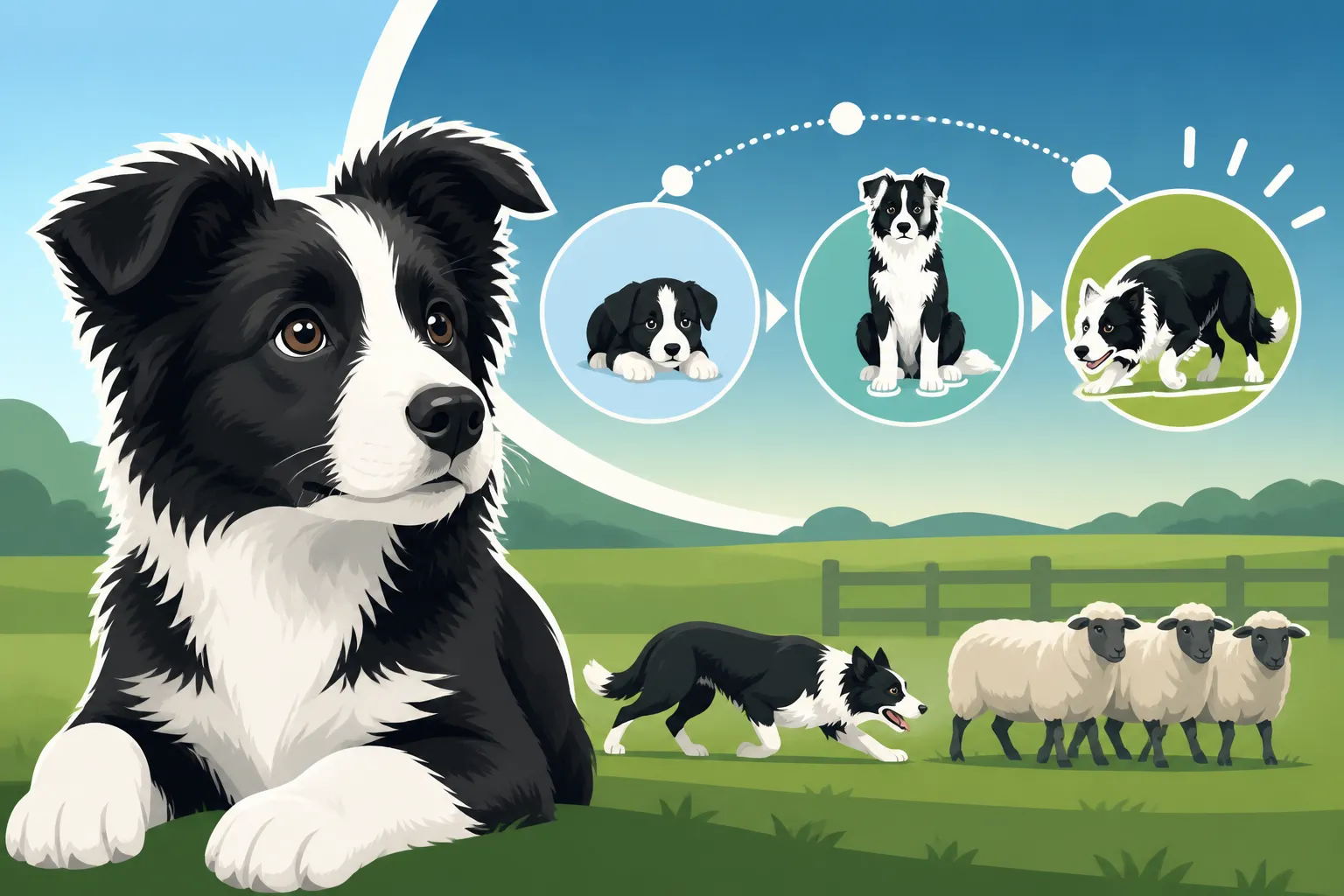
| Age Range | Key Developmental Focus | Recommended Training Activities | Avoid During This Period |
|---|---|---|---|
| 8-16 Weeks | Socialization, confidence building, bite inhibition | Puppy classes, exposure to novel sights/sounds, gentle handling | Intense physical exercise, high-pressure situations, formal stock work |
| 4-8 Months | Basic obedience, impulse control, handler focus | Reliable recall, "sit/down/stay," leash manners, quiet desensitization | Repetitive fetch (can lead to obsession), forceful corrections, rushing stock |
| 8-12 Months | Refining obedience, building drive, problem-solving | Advanced obedience, scent work, short agility runs (low impact), environmental exposure | Jumping obstacles, extended high-impact activity, forced stock work |
| 10-18 Months (Avg.) | Introduction to stock (if ready), consistency, understanding pressure | Supervised stock introductions, short sessions, focus on positive reinforcement | Over-drilling, excessive corrections, long sessions that tire the dog mentally/physically |
The First Introduction to Stock: A Gentle Approach
The moment your Border Collie finally meets stock for the first time is a significant milestone, one that should be handled with utmost care and patience. This isn't about seeing if they're a "natural"; it's about fostering a positive initial experience that encourages their innate abilities without overwhelming or frightening them. Many a promising young dog has had its herding career derailed by an ill-conceived or rushed first introduction. Think of it as a first date – you want it to be relaxed, low-pressure, and leave them wanting more, not running for the hills!
Choosing the Right Stock and Environment
The type of stock you introduce your Border Collie to can make a huge difference. For the very first session, quiet, "dog-broke" sheep or ducks are ideal. These are animals that are accustomed to dogs, don't run wildly, and are less likely to spook or injure a young dog. Avoid flighty, wild sheep or aggressive rams, as a negative encounter can be deeply traumatizing for a sensitive Border Collie puppy. The environment is equally crucial. A small, round pen is often recommended for initial introductions. The circular shape prevents the dog from chasing in long, straight lines and helps them understand the concept of gathering, as the sheep naturally stay in the middle. A small pen also allows the handler to control the situation easily and intervene quickly if needed.
Having an experienced mentor or trainer present for this first introduction is invaluable. They can read your dog's subtle body language, guide your movements, and interpret the sheep's reactions. This isn't the time for trial and error. Their expertise can prevent common mistakes and ensure that your Border Collie's instinct is channeled productively, rather than allowing them to develop bad habits like gripping or chasing uncontrollably. Asking a Border Collie Breeder for Test Results is common, but asking about their experience with starting pups on stock is just as important.
What to Expect During the Initial Introduction
When you first bring your Border Collie into the pen, keep it brief and calm. Put your dog on a long line, letting them observe the sheep from a distance. Watch for signs of interest: a lowered head, intense stare, a creeping gait. Some dogs will show immediate, undeniable interest, dropping into that classic Border Collie crouch and trying to move the sheep. Others might be hesitant or simply curious at first. Both reactions are perfectly normal. The key is to allow them to explore their instinct naturally, without pressure from you.
During these first few minutes, your role is to observe and gently guide, not to demand specific actions. If your dog starts to get too pushy, the long line allows you to easily step on it and interrupt their forward movement, gently redirecting their energy. You might utter a soft "Easy" or "Walk up" to encourage them to move in a desired direction. Keep the session very short – perhaps 5-10 minutes, especially if your dog is showing strong interest. You want to end on a positive note, leaving them wanting more. A good first session plants the seed of understanding and excites their natural drive. The First Time a Border Collie Meets Sheep delves deeper into these initial steps.
Common Pitfalls and How to Avoid Them
Even with the best intentions, it's easy to make mistakes when starting a Border Collie on stock. The sheer power of their instinct can be overwhelming for both dog and handler, and without proper guidance, these early experiences can set negative patterns that are difficult to break. Understanding common pitfalls and how to steer clear of them is just as important as knowing when to start.
Over-Pressuring a Young Border Collie
One of the most common and damaging mistakes is over-pressuring a young Border Collie. This can manifest in several ways: forcing them to work when they're scared, keeping them in the pen for too long, or using harsh corrections. A Border Collie's instinct is often very strong, but their confidence, especially as a youngster, can be fragile. If they feel overwhelmed or repeatedly corrected for actions they don't yet understand, they can shut down, become fearful of stock, or even develop what's known as "hard eye" – a menacing, aggressive stare that intimidates sheep rather than working them gently.
Instead, think of yourself as a facilitator. You are there to create opportunities for their instinct to emerge and guide it softly. Keep sessions short and positive. End before your dog gets tired or frustrated. If they show disinterest or fear, back off immediately. It's perfectly fine to wait a few weeks or even months before trying again. Sometimes, a bit more time to mature mentally is all a dog needs. Remember, you're building a lifetime of partnership and work, not trying to win a national trial on day one. Stopping a Border Collie Before an Episode Starts can sometimes be related to managing over-excitement or over-exertion, which also applies to early stock work.
Recognizing When Your Border Collie Isn't Ready
Sometimes, despite your best efforts and perfect timing, a Border Collie simply isn't ready. This isn't a failure on your part or theirs; it's simply a recognition of individual differences. Signs that a Border Collie isn't ready might include:
- Lack of interest: They ignore the sheep or seem more interested in sniffing the ground.
- Fear or avoidance: They actively shy away from the stock, tuck their tail, or try to escape the pen.
- Over-excitement without focus: They chase wildly, bark excessively, or try to play with the sheep, showing no desire to gather or control.
- Aggression: They might nip, bite, or act aggressively towards the sheep, which is a serious concern and needs immediate intervention by an experienced trainer.
If you observe these signs, the best course of action is to stop and reassess. Don't force it. Focus on strengthening their basic obedience, building their confidence in new environments, and perhaps trying different types of stock or a different pen layout. Sometimes, a change of scenery or a brief break can work wonders. A professional stock dog trainer can also offer invaluable insights and help you identify underlying issues or adjust your approach. There's no shame in waiting; in fact, it's often the smartest thing you can do for your talented Border Collie. Whether a Pet Border Collie Should Learn to Herd explores the broader context of instinct and suitability.
Disclaimer
This article is for general informational purposes only and does not constitute professional advice. Laws, prices and regulations vary by location and change over time. Consult a qualified professional for guidance on your specific situation.