Shedding and Penning With a Border Collie
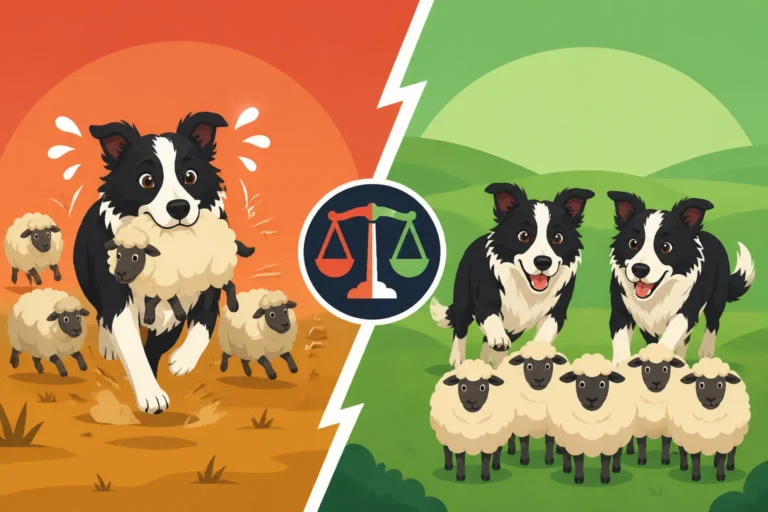
It’s a common frustration for Border Collie handlers: you've got your dog confidently driving a flock, making beautiful outruns, and fetching with precision, but when it comes to the intricate dance of cutting out a single sheep or calmly putting them into a small pen, everything falls apart. This guide is here to walk you through the nuanced world of shedding and penning, breaking down these advanced herding techniques so you and your Border Collie can master them with grace and control, transforming those moments of chaos into showcases of teamwork.
Understanding the Fundamentals of Shedding
Shedding is arguably one of the most sophisticated and challenging maneuvers in sheepdog work, demanding immense precision, focus, and collaboration between handler and dog. It’s a point where many handlers and their Border Collies hit a wall, feeling like they just can't quite get that clean separation. But understanding what "shedding" truly entails is the first step toward unlocking this skill.
What "Shedding" Truly Means in Herding
In its purest form, shedding means separating a single sheep, or a small designated group, from a larger flock. Imagine you have a main flock of ten sheep, and your task is to isolate one specific ewe and drive her away from the others. This isn't about brute force or simply pushing sheep around; it's about subtle pressure, reading the sheep's movements, and a profound understanding of where your dog needs to be to hold the line of separation. It demands an almost balletic coordination, where the dog must exert just enough pressure to keep the desired sheep separate without causing the main flock to scatter or the "shed" sheep to bolt back into the group.
The challenge lies in the dynamic nature of sheep. They constantly try to rejoin their flock members, relying on their strong flocking instinct. Your Border Collie needs to instinctively, or through careful training, know how to counteract this instinct, placing itself strategically to block the escape routes of the sheep you’re trying to shed. This isn't just a physical task for the dog; it's a mental game, requiring them to think several steps ahead of the sheep and maintain unwavering focus on their specific quarry while remaining aware of the larger group.
A real-life scenario might be a ewe with a lame lamb that needs veterinary attention. You bring the flock to the shedding ring, identify the ewe, and then begin the painstaking process of cutting her out. Your Border Collie must understand which sheep to isolate and then diligently work to keep that ewe apart, even as she tries desperately to rejoin her offspring and the safety of the flock. It's a testament to the Border Collie's intelligence and their deep connection with their handler that this is even possible.
The Handler's Role in a Successful Shed
While your Border Collie is doing the heavy lifting out there with the sheep, the handler's role in a successful shed cannot be overstated. You are the conductor of this intricate symphony, and your communication, timing, and clarity of commands are paramount. Without a handler who knows precisely what they want and how to convey it, even the most talented Border Collie will struggle. This isn't just about yelling commands; it's about subtle movements, body language, and sometimes, just a quiet presence.
Effective shedding demands a handler who can anticipate the sheep's movements and direct their dog with precision. You need to be able to read the sheep's intent: are they about to break left or right? Is the shed sheep trying to duck back into the main group? Your body position can greatly influence the dog and the sheep. By moving strategically, you can create a "wall" or an opening, guiding both your dog and the sheep into the desired positions. Think of it as a three-way conversation: you, your dog, and the sheep, all communicating through movement and pressure.
Consider a hypothetical scenario where you're attempting to shed a sheep from the left side of a small group. You might step slightly to the right, subtly closing off that escape route for the target sheep, while simultaneously sending your dog with a gentle "away to me" command to apply pressure from the opposite side. The timing of this movement, combined with your dog's understanding, is what creates the opening for the shed. The dog needs to trust that your movements are part of the plan and that you will support their efforts, even if it means changing your own position quickly to adapt to the sheep's reactions.
Building the Foundation: Prerequisites for Shedding
Before you even think about tackling shedding, your Border Collie needs to have an incredibly solid foundation in basic herding commands and principles. Trying to teach shedding without these fundamental skills is like trying to build a house without a foundation – it’s just going to collapse. You'll only frustrate yourself and your dog if you jump ahead.
First and foremost, your Border Collie must possess a strong outrun, lift, fetch, and drive. The outrun gets them to the sheep; the lift gets them moving calmly; the fetch brings them to you; and the drive moves them away from you in a controlled manner. Without the ability to reliably execute these core elements, you won't have the control necessary for the delicate work of shedding. A dog that rushes its fetch or can't maintain a consistent drive will make shedding nearly impossible.
Equally critical is an excellent stop and a reliable lie down at a distance. Shedding often requires your dog to freeze in position, sometimes quite far from you, to hold a specific line between the sheep. A dog that creeps forward or breaks its "lie down" command will compromise the separation instantly. We've talked extensively about the importance of these controls in articles like Teaching a Border Collie to Lie Down at Distance. Furthermore, the dog needs to understand when to apply pressure and, crucially, when to release it. The intense focus and "eye" that Border Collies possess must be harnessed and directed, not allowed to turn into an uncontrolled surge of energy. Mastering The Drive a Border Collie Learns Last is also crucial, as a controlled drive allows for the nuanced pushing required in shedding.
Mastering the Art of Penning
Once you've wrapped your head around shedding, the next advanced skill in the Border Collie's repertoire is penning. While both require precision, penning presents a different set of challenges, often requiring a calm, steady approach rather than the swift, decisive movements of a shed. It's about containment, often in tight spaces, which can be surprisingly difficult for dogs used to open fields.
Defining "Penning" in Border Collie Work
Penning, simply put, is the act of moving one or more sheep into an enclosed space, such as a small holding pen, a sorting chute, or even a trailer. Unlike shedding, which is about separation, penning is about containment. The objective is to gently and efficiently guide the sheep through an opening and secure them within the enclosure, without causing panic or allowing them to escape at the last minute. This often involves working in closer quarters than in field trials, demanding a different kind of control and sensitivity from your Border Collie.
The real challenge of penning lies in the sheep's inherent reluctance to enter confined spaces. They see the pen as a trap, an unknown, and their instinct is to push away from it. Your Border Collie needs to understand this and apply just the right amount of pressure to overcome their resistance without sending them into a frantic flight response. It’s a delicate balance: too much pressure, and the sheep will explode past the gate; too little, and they’ll simply ignore the opening and stand defiantly.
Imagine a farmer needing to load three lambs into a small trailer for transport. This isn't a task for a high-strung, fast-moving dog. Instead, it requires a Border Collie that can maintain a steady, calm presence behind the sheep, guiding them toward the narrow opening with unwavering focus. The dog needs to be able to hold a tight arc around the pen opening, ensuring no sheep can slip past the gate, while also anticipating their attempts to break back out. It's a testament to the breed's versatility that they can switch from wide-open runs to such close, careful work.
The Dog's Precision and Patience in Penning
The success of penning hinges entirely on the Border Collie's precision and immense patience. This isn't a task where raw speed or aggressive "eye" will serve you well. In fact, those qualities, if not tempered by control, can be detrimental. What you need is a dog that can move slowly, deliberately, and with an almost meditative focus on guiding the sheep exactly where they need to go. They must understand that steady, consistent pressure is far more effective than a sudden rush.
A Border Collie excelling at penning will often work with its head low, applying a calm, almost hypnotic pressure on the sheep. They will instinctively know how to position themselves to block any attempts to circle back out of the pen, maintaining a constant, soft wall behind the sheep as they approach the opening. This requires a strong understanding of flanking commands and the ability to hold an edge, keeping the sheep gathered and moving as a unit towards the target.
Think of a hypothetical scenario: you have a single, stubborn ewe that absolutely refuses to enter a small catch pen. A less patient dog might rush in, bark, or grip, sending the ewe scattering. A Border Collie skilled in penning, however, will slowly advance, applying pressure from behind, then flank softly to cut off a potential escape, and then advance again. This steady, rhythmic application and release of pressure, combined with precise positioning, eventually convinces the ewe that the only way out of the pressure is into the pen. It's a masterclass in psychological manipulation, executed by your dog.
Common Pitfalls in Penning and How to Avoid Them
Even with a well-trained Border Collie, penning can be fraught with challenges. Recognizing these common pitfalls is crucial for troubleshooting your training and ensuring a smoother process. Many of these issues stem from a lack of control or understanding of the sheep's psychology.
One of the most frequent problems is the dog rushing the sheep, especially as they approach the pen opening. This often happens because the dog gets overexcited or anticipates the finish. When a Border Collie rushes, the sheep panic and instinctively blast past the gate, or worse, split and become unmanageable. We've explored how to prevent this in Steadying a Border Collie That Rushes Stock, emphasizing the importance of teaching the dog to work at the speed of the sheep, not their own. Building a solid stop and teaching the dog to work off the sheep, rather than driving directly into them, is vital.
Another pitfall is a lack of steady, consistent pressure. The dog might apply pressure, then back off too much, giving the sheep an opportunity to stand their ground or turn away from the pen. Conversely, some dogs apply too much pressure, making the sheep feel trapped and prone to breaking. The sweet spot is a constant, firm but gentle pressure that allows the sheep to feel the drive without feeling panicked. Finally, over-committing to the pen can be an issue; sometimes a dog gets so focused on the pen entrance that they don't react quickly enough when a sheep tries to turn away, allowing an escape. The dog must remain fluid and ready to adjust its position instantaneously to keep the sheep pointed towards the opening.
Training Techniques for Shedding and Penning
Now that we understand the nuances of shedding and penning, let's dive into some practical training techniques to help you and your Border Collie master these advanced skills. Patience, consistency, and breaking down the complex tasks into smaller, manageable steps are your best friends here.
Step-by-Step Approach to Teaching the Shed
Teaching your Border Collie to shed is a gradual process that requires careful planning and a lot of repetition in controlled environments. Don't expect your dog to get it right away; this is truly advanced work.
Start small, ideally with just two sheep. The goal here is to teach your dog the concept of "splitting" or separating. You, the handler, will stand between the two sheep, and your dog will be on the opposite side. Give your "away to me" or "come bye" commands to flank your dog around one sheep, pushing it gently away from the other, while you use your body to hold the second sheep. The dog is learning to hold a line and apply pressure to move only one animal. Gradually, you can introduce a third sheep, and with the help of a friend, physically hold two sheep while your dog focuses on shedding one. This helps the dog understand the line of separation without the added complexity of the flock instinct.
Once your dog grasps the basic idea with a few sheep, you can start introducing a slightly larger group, perhaps five or six. Begin by shedding one sheep from the main body, ensuring your dog holds the line you've established. A common technique is to use a "shedding ring" – a small, round pen where the sheep have limited space to run, making it easier for the dog to control them. Focus relentlessly on clean breaks and the dog’s ability to maintain the separation. Your verbal commands and whistle signals need to be crystal clear, signaling precisely when to move and when to stop. Remember, patience is key. Every successful shed, no matter how small, builds confidence.
Introducing the Pen: From Wide Open to Narrow Gate
Penning also benefits from a structured, progressive training approach. You wouldn't throw a beginner skier down a black diamond run, and you shouldn't expect your Border Collie to master a tight pen entry on their first try.
Begin with a wide, inviting gate that the sheep can easily walk through. Your objective here is simply to teach your dog to drive the sheep towards and through an opening. Place the pen in an open field, making it as low-pressure as possible. Guide your dog to gently push a small group of sheep (two or three) towards the wide-open gate. Praise calm, steady progress. Your dog should learn that the goal is to get the sheep into that space, not to scatter them around it. As the sheep near the opening, your dog needs to understand to apply steady, firm pressure to keep them moving forward, and perhaps to flank gently to cut off any attempts to turn away.
As your Border Collie gains confidence and consistency, you can gradually narrow the opening of the pen or introduce a more challenging approach. This is where the dog's ability to maintain precise control at the threshold becomes paramount. They need to understand that the moment the first sheep enters, they must continue to apply just enough pressure to encourage the others to follow, without pushing so hard that the lead sheep tries to bolt out the other side. This demands an incredibly strong "lie down" or "stop" command, often at a distance, to ensure the dog can pause its pressure at just the right moment. If your dog can reliably stop even when highly engaged, as discussed in Getting a Border Collie to Stop at Two Hundred Yards, you're well on your way.
Essential Training Tools and Resources
Successful shedding and penning aren't just about technique; they're also about having the right tools and leveraging available resources. While a Border Collie's natural instincts are powerful, human ingenuity and modern training aids can greatly enhance the learning process.
A good quality whistle is absolutely indispensable for precise, long-distance communication, especially when your voice might be lost on a windy day or over a larger field. There are various types, from a simple shepherd's whistle to multi-tone options. Finding one that suits your lung capacity and allows for clear, distinct commands is key. We've explored the different options in Which Whistle a Border Collie Handler Uses. Many handlers find it beneficial to use a long line or a "check cord" when first introducing the pen, to provide a tangible boundary and allow for gentle physical guidance if the dog tries to rush. You can easily find robust long lines on Amazon that stand up to the rigors of farm work.
Beyond physical tools, don't underestimate the power of structured training programs and community support. Online training platforms, like those offered by BAXTER & Bella, can provide step-by-step video tutorials and expert guidance, breaking down complex maneuvers into digestible lessons. Joining local herding clubs or attending clinics with experienced handlers is also invaluable. Observing others, asking questions, and getting direct feedback on your handling and your dog's work can accelerate your progress significantly. Remember, every handler, no matter how experienced, started somewhere, and learning from a supportive community makes the journey far more enjoyable and effective.
Integrating Shedding and Penning into Trial Work
For many Border Collie enthusiasts, the ultimate goal is to compete in sheepdog trials. Shedding and penning are not just fancy tricks; they are integral, high-stakes components of a trial course, often determining the difference between a winning run and one that falls short. Mastering these elements under pressure is where true skill shines.
The Importance of These Skills in USBCHA Trials
In the competitive world of USBCHA (United States Border Collie Handlers' Association) trials, shedding and penning are usually the final, and often the most challenging, elements of a course. A dog might have a stellar outrun, gather, and drive, but if they falter at the shedding ring or the pen, valuable points are lost, and the entire run can be compromised. These sections are designed to test the ultimate control, precision, and partnership between handler and dog, pushing their communication and understanding to their limits.
The shedding phase typically involves separating a specific number of sheep (often one or two) from a small group in a designated shedding ring. Judges are looking for clean, efficient breaks, consistent pressure, and the dog's ability to hold the shed sheep separate without allowing them to rejoin the main flock. Points are deducted for rough work, failure to maintain the separation, or if the main flock is scattered excessively. It's a true test of a dog's calm intelligence under pressure. Similarly, the penning segment requires the dog to calmly and efficiently move a designated group of sheep into a small pen, sometimes with a swinging gate that must be closed once the sheep are inside. Accuracy, patience, and the ability to maintain composure are key. Any signs of rushing, gripping, or allowing sheep to escape the pen result in significant point deductions. We delve deeper into this in articles like The Shed and Pen at the End of a Border Collie's Run.
Practicing Under Pressure and Different Scenarios
Preparing for trial work means going beyond simple repetition. You need to simulate trial conditions as much as possible, exposing your Border Collie to different types of sheep, varying environmental factors, and the inherent pressure of an audience.
One of the biggest variables in herding is the sheep themselves. Different breeds of sheep, and even individual sheep within the same breed, will behave differently. Some are flighty, some are heavy, some are pushy. Practicing shedding and penning with a variety of sheep helps your Border Collie learn to adapt its pressure and approach. A dog that can only work a specific type of sheep will struggle in a trial where the sheep are unknown. You should also vary the training environment. Work on shedding and penning in different sized fields, with different types of ground (grassy, muddy, uneven), and in various weather conditions (windy, rainy, sunny). This builds resilience and ensures your dog isn't reliant on perfect circumstances.
Finally, introduce elements of pressure. This might mean having a friend or another handler present, mimicking the presence of judges or spectators. You could also set up a full mock course, including the outrun, fetch, drive, and then move directly into the shed and pen, just as it would be in a trial. The goal isn't to stress your dog, but to desensitize them to distractions and help them maintain focus even when the stakes feel higher. This also helps you, the handler, learn to manage your own nerves, which your Border Collie will undoubtedly pick up on.
Maintaining Calmness and Focus in Both Dog and Handler
Success in advanced herding tasks like shedding and penning, especially in a trial setting, is as much a mental game as it is a physical one. Both the Border Collie and the handler need to maintain an unwavering sense of calm and focus.
For the dog, this means being able to process instructions, read the sheep, and execute maneuvers without getting over-aroused or losing its cool. A dog that is too excited will rush, grip, or make poor decisions, particularly in the confined spaces of a shedding ring or pen. Consistent, positive reinforcement during training helps build this mental fortitude. Teaching your dog an "off-switch" or a command to relax and disengage is incredibly valuable, allowing them to reset if things get too intense. Maintaining this mental clarity is crucial for a working dog's career and wellbeing, as highlighted in discussions around topics like Medicating a Border Collie Without Dulling It when dealing with conditions that might affect focus.
For the handler, staying calm under pressure is paramount. Your Border Collie is incredibly attuned to your emotions, and if you become anxious or frustrated, your dog will feel it and likely mirror that emotion, leading to mistakes. Practice deep breathing, visualize success, and develop a routine that helps you remain composed. Trust in your training and your dog's abilities. Remember that even the best handlers and dogs have off days; the key is to learn from them and move forward. A calm, confident handler provides the stable leadership that a Border Collie needs to perform at its peak, especially when the final points of a trial hang in the balance during a tricky shed or pen.
Comparison of Shedding vs. Penning Challenges
While both shedding and penning are advanced herding maneuvers, they present distinct challenges and require different approaches from both the Border Collie and the handler. Understanding these differences can help tailor your training methods.
| Feature | Shedding | Penning |
|---|---|---|
| Primary Goal | Separate specific sheep from a larger group. | Guide sheep into a confined enclosure (e.g., pen, trailer). |
| Key Skill for Dog | Precision in holding a line, dynamic flanking, reading individual sheep. | Steady, calm pressure, maintaining a tight arc, preventing escape. |
| Handler's Role | Strategic positioning, clear communication for dynamic adjustments. | Consistent direction, patience, creating a clear path to the opening. |
| Sheep Behavior | Strong flocking instinct to rejoin group, attempts to break separation. | Resistance to entering confined spaces, pushing against pressure. |
| Common Pitfalls | Losing the line, scattering the main flock, dog gripping shed sheep. | Rushing, sheep escaping at the gate, inconsistent pressure, dog over-committing. |
| Pace of Work | Can be fluid and dynamic, requiring quick decisions. | Generally slower, more deliberate, requiring sustained patience. |
| Required Control | High control of flanks and stop, particularly at a distance. | High control of pace, steady drive, precision in close quarters. |
Conclusion
Mastering shedding and penning with your Border Collie is a journey that requires immense patience, consistent training, and a deep understanding of both your dog's instincts and the psychology of the sheep. These aren't skills that happen overnight; they are the culmination of foundational training, meticulous practice, and an unbreakable partnership between handler and dog. By breaking down each complex maneuver into smaller steps, understanding the unique demands of each, and utilizing the right tools and resources, you'll be well on your way to navigating these advanced herding challenges with confidence and precision. The bond you build through this intricate work will be one of the most rewarding aspects of owning such an intelligent and capable companion.
Disclaimer
This article is for general informational purposes only and does not constitute professional advice. Laws, prices and regulations vary by location and change over time. Consult a qualified professional for guidance on your specific situation.