The Shed and Pen at the End of a Border Collie’s Run
A Border Collie’s run may finish with two demanding tasks: the shed, where the dog helps separate sheep from the flock, and the pen, where it guides them into an enclosure. These stages test more than speed or instinct. This guide explains what each task involves, how handlers support the dog, and why calm, precise stock work matters.
What the shed and pen mean in a sheepdog trial
The shed asks the dog to split the flock
In a sheepdog trial, a Border Collie typically gathers sheep and brings them toward the handler before working through the course’s required obstacles. The shed is often one of the final challenges. The dog must help separate a designated number of sheep from the rest of the flock, while the handler stays within the rules for that trial.
The exact setup depends on the competition. Sheep may be marked with collars or another identifying feature, and the handler may need to separate a particular group. The dog works around the flock to influence its movement, while the handler positions themselves to manage the split. It is not simply a matter of sending the dog charging through the sheep: a rushed approach can scatter the flock or cause the wrong animals to peel away.
A good shed tends to look quiet and deliberate. The dog applies pressure from the right direction, adjusts as the sheep shift, and creates an opening between the selected sheep and the rest. The handler may need to step in or use commands, depending on the rules and the dog’s position. To see how this fits into the larger course, read What Happens at a Sheepdog Trial With a Border Collie.
A split that looks clear to a spectator may not meet the judge’s requirements. The designated sheep have to be separated sufficiently and remain identifiable as a group. If the flock bunches back together, or the wrong sheep are moved away, the attempt may be incomplete. Trial rules vary, so handlers learn the specific requirements for the event rather than relying on a single universal definition of a successful shed.
The pen asks for controlled movement into an enclosure
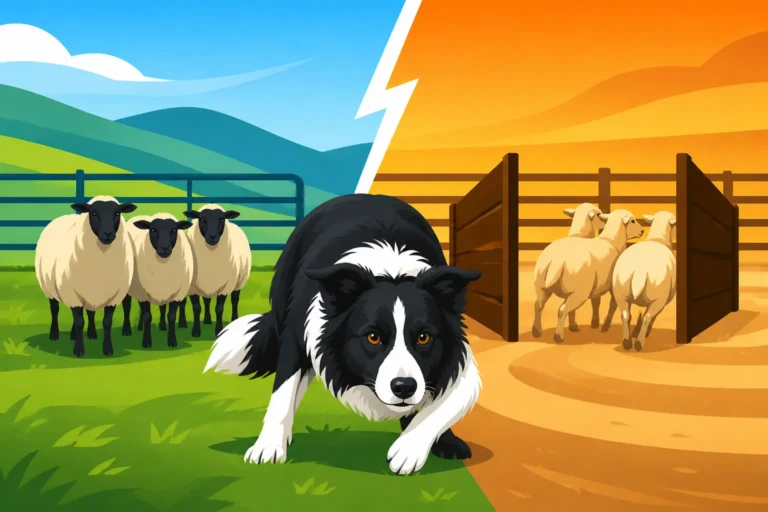
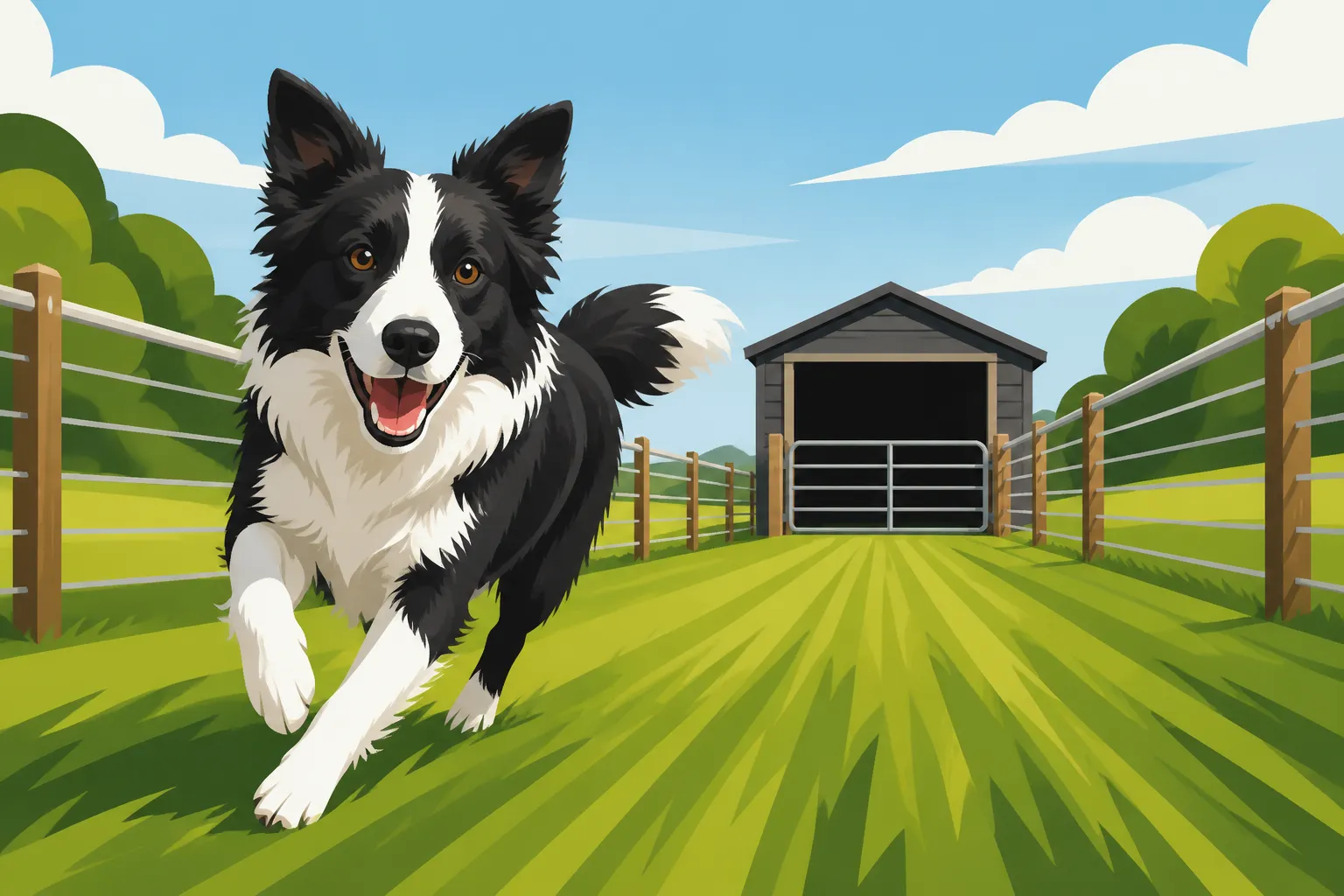
After the shed, the dog and handler may be asked to move sheep into a pen. The task is to guide the sheep through an opening and into the enclosure without losing control of them or creating unnecessary pressure. The pen may be a small, fenced area with a gate that the handler must manage according to the trial’s rules.
The dog’s position matters. Too much pressure from behind can push the sheep past the entrance or make them turn away. Too little pressure can leave them standing, drifting, or looking for an escape route. The dog needs to influence the flock from an effective angle while the handler works near the gate. A handler may hold or operate the gate, but the allowed movements and level of assistance depend on the competition format.
The sheep may test the opening. They can hesitate, bunch at the entrance, or swing away when they feel pressure. A capable dog notices those changes and adjusts rather than repeating the same push. The handler also has to stay patient: crowding the gate or giving rapid, conflicting instructions can make a difficult approach harder.
People sometimes assume the pen is a simple final formality. In practice, it can expose problems that were less obvious earlier in the run. A dog that gathers well but cannot settle sheep near a narrow opening may struggle, while a dog that works calmly and reads the flock can help the handler finish with greater control. For broader context on the course, see The Outrun a Border Collie Runs at a Trial and The Shed and Pen at the End of a Border Collie's Run.
How the dog and handler work together
Position, timing, and pressure matter more than speed
A Border Collie’s job is to influence the sheep’s movement. It does that through position, posture, and controlled pressure—not by physically pushing or biting the animals. At the shed, the dog needs to reach a position that helps divide the flock. At the pen, it needs to apply enough pressure to encourage forward movement while leaving the sheep room to enter.
The handler’s commands help direct the dog, but they are not a remote control for every step. The dog must respond to the flock in front of it. If sheep turn unexpectedly, the handler may need to adjust the dog’s position or change the timing of a command. That exchange is part of what makes sheepdog work a partnership rather than a memorized sequence.
This is why a dog can know its commands and still find the end of a trial difficult. The dog may have learned to move around sheep but not yet learned when to hold position, ease off, or take a different angle. The handler is reading the course, the sheep, the dog, and the rules at the same time. Learning the commands behind that communication is useful; Come Bye and Away to Me on a Border Collie explains two familiar directional cues.
The handler must work within the trial rules
Trial formats differ in how much the handler may move, where they may stand, and how they can assist with the pen. Some courses require a handler to remain in a particular area for part of the run; others permit movement within defined boundaries. The judge evaluates the work under the rules for that specific event.
That means a handler cannot always walk close to the sheep to fix a poor separation or guide them through the gate. The dog may need to solve more of the problem at a distance. In other formats, the handler may have a role at the pen but still be expected to let the dog do the stock work. Before competing, handlers should review the trial’s rules and ask the organizer or an experienced local competitor about anything unclear.
The judge is assessing the quality of the work, not merely whether sheep end up in the enclosure. Control, accuracy, and the dog’s response to the flock all matter. A run that finishes the task in a disorderly rush may not be as strong as one in which the sheep are moved steadily and the required separation is clear. The criteria and deductions vary, so avoid assuming that every trial uses identical scoring.
| Task | Main goal | What makes it difficult | What the dog contributes |
|---|---|---|---|
| Shed | Separate designated sheep from the flock | Sheep may bunch, turn, or rejoin the group | Positioning and pressure that create a clear split |
| Pen | Guide sheep through an opening into an enclosure | Sheep may hesitate or swing away from the entrance | Controlled pressure that encourages forward movement |
| Both | Complete the work within the course rules | Rules, flock behavior, and handler limits vary | Calm responses to the sheep and handler |
What makes these tasks challenging
Sheep do not move like predictable training props
The same dog and handler can have different experiences on different days because sheep vary in how they respond. Some flocks move readily; others are more wary or inclined to bunch together. The ground, weather, noise, and previous handling can also affect how the sheep behave. A dog has to adapt to the actual flock rather than expect every group to respond in the same way.
At the shed, a tight flock can make it hard to find an opening. If the dog pushes too directly, sheep may scatter rather than divide neatly. At the pen, a group may stop just short of the gate, even when the handler and dog appear to be in the right positions. Repeating pressure without changing the angle can increase confusion. Skill comes from noticing what the sheep are telling the dog and handler, then making a thoughtful adjustment.
These unpredictable moments are one reason a trial run is not a simple test of obedience. A dog that performs well on a familiar training field may still need experience with different sheep and layouts. The course’s final tasks ask for judgment under changing conditions, not just energy or enthusiasm. The wider sequence of work is described in What Judges Score on a Border Collie's Lift.
Excitement can undermine precision
Many Border Collies are highly responsive to movement. That can be useful in stock work, but excitement that becomes frantic can make the shed or pen harder. A dog may rush the flock, cut too close, or keep pressing when the sheep need a moment to settle. The goal is not to suppress the dog’s working ability; it is to develop enough control for the dog to use that ability thoughtfully.
A handler may help by building reliable stops, directional cues, and calm approaches in training. The dog also needs to learn that pausing can be part of the job. For example, at the pen, holding a useful position and waiting for sheep to take a step forward may be more effective than circling repeatedly. For a dog that tends to rush, Steadying a Border Collie That Rushes Stock offers relevant training context.
New handlers can find these stages stressful, especially when the flock stalls and there is a crowd watching. It helps to focus on clear, consistent communication rather than issuing several commands in quick succession. If a training session becomes tense, stepping back to an easier setup can be more productive than trying to force a perfect finish. A useful session might practice one calm separation or one approach to a wide gate, then stop before dog and handler become frustrated.
Preparing a Border Collie for shed and pen work
Build skills gradually under knowledgeable supervision
A Border Collie should not be introduced to livestock by simply turning it loose among sheep. Poorly managed exposure can frighten or injure stock and may teach the dog unsafe habits. Work with a qualified stock-dog instructor or experienced handler who can assess the dog, choose suitable sheep, and control the training environment. An instinct test can offer a structured first look at how a dog responds, but it is not a substitute for training. See What Happens at a Border Collie Instinct Test.
Training usually begins with fundamentals such as responding to the handler, moving around stock appropriately, and stopping or slowing when asked. Later, the dog can practice controlled movement through simple setups before facing a more difficult split or a narrow pen entrance. The handler should not rush the dog into trial-like challenges just because it shows natural interest. Interest is a starting point; dependable stock work takes teaching and experience.
Practice should also be appropriate for the dog’s age, fitness, and confidence. A young dog may need short, manageable experiences, while an experienced dog may be ready for more complex work. If the dog becomes overwhelmed or the sheep are showing signs of distress, the session should be adjusted. A safe training plan protects the dog, the handler, and the livestock.
Keep trial-day logistics calm and practical
Preparation includes more than training. The dog needs a secure place to wait, access to water, and a sensible routine that avoids unnecessary excitement before its run. Handlers often pack a lead, water bowl, cleanup supplies, and familiar food or treats. A retailer such as Chewy may be one place owners use to source ordinary items such as bowls or training treats; the important point is to bring familiar supplies and follow the event’s rules about dogs, food, and waiting areas.
Some dogs find busy trial grounds stimulating. They may hear whistles, see unfamiliar dogs, or watch sheep moving on nearby fields. A quiet waiting area and a short settling routine can help the dog focus when it is time to work. Keep treats and other supplies secured so the dog is not rummaging through an open bag or becoming worked up before its turn. Owners who already shop at Chewy may find it convenient to include trial supplies in their usual order, but no special product can replace thoughtful handling.
After the run, give the dog time to cool down and rest, and check its feet and body for discomfort. Trial surfaces and conditions vary, and a dog that has worked hard may not show a small problem immediately. Keep a simple record of how the dog handled the shed and pen: where the sheep hesitated, how the dog responded, and which cues were useful. That record can help guide the next session, whether the notes are kept in a notebook or alongside routine purchases and care planning through a service such as Chewy.
Watch the whole run, not just the final task
The shed and pen are memorable because they come near the end, but they depend on the quality of the work leading up to them. A dog that has been allowed to rush, lose position, or ignore the handler earlier may arrive at the final tasks already out of rhythm. Conversely, a steady gather and controlled movement through the course can set up a clearer finish.
If a dog struggles at the shed, the issue may be its understanding of separation, its position, or the pressure it applies—not simply a lack of drive. If it struggles at the pen, the difficulty may involve the dog’s angle, the handler’s timing, the sheep’s confidence, or the gate setup. A trainer who watches the entire run can help identify the cause rather than treating the last mistake as an isolated failure.
The most satisfying finish is not necessarily the fastest one. It is the finish in which the dog remains responsive, the sheep are handled with care, and the handler follows the rules while helping the dog make good decisions. For a Border Collie, learning to work steadily at the shed and pen is a gradual process—and a strong example of the judgment and partnership that sheepdog trials are designed to test.
Disclaimer
This article is for general informational purposes only and does not constitute professional advice. Laws, prices and regulations vary by location and change over time. Consult a qualified professional for guidance on your specific situation.