Which Whistle a Border Collie Handler Uses
Many Border Collie owners find themselves in a bind, struggling to communicate effectively with their highly intelligent and often distant working dogs, especially when distractions are high or across open fields. This guide will delve into the types of whistles Border Collie handlers traditionally use, why they're so effective, and how you can master this invaluable communication tool to enhance your relationship and training with your own Border Collie.
The Purpose of a Whistle in Border Collie Training
You might wonder why, with all the words a Border Collie can learn, a simple whistle is so vital. It boils down to their incredible drive, their ability to work at immense distances, and the need for absolute clarity in commands. Voice can only carry so far, and the nuances of human speech can be lost in the wind or over the bleating of sheep. This is where the whistle shines, providing a precise, unmistakable signal that cuts through noise and distance.
Why Voice Commands Aren't Always Enough
Think about trying to call your Border Collie back from an exhilarating run across a large park, or even a smaller pasture where they've locked onto something interesting. Your voice, no matter how loud or familiar, can easily be swallowed by the environment. Wind, traffic noise, the rustle of leaves, or even the sheer excitement of the chase can render your verbal commands ineffective. For a dog bred to work hundreds of yards away from its handler, relying solely on your voice is simply impractical. Many owners experience the frustration of a dog that seems "deaf" outdoors, only to realize indoors they're perfectly attentive. It's not usually selective hearing; it's a limitation of the medium.
Furthermore, the emotional tone in our voices can inadvertently confuse our dogs. Are we happy? Annoyed? Frustrated? A Border Collie is incredibly attuned to our moods, and sometimes a command given with a slight edge of panic might be interpreted differently than a calm, neutral one. A whistle, by its very nature, bypasses these vocal inflections, delivering a pure, consistent sound that means one thing and one thing only. It provides a level of objectivity that our human voices often cannot maintain, especially in high-pressure situations or when we're trying to achieve precision in their work. For those deeply involved in working trials, for example, the subtle differences in vocal commands simply don't offer the control needed.
Consistency and Clarity in Communication
The beauty of a whistle lies in its inherent consistency. Once you've learned to produce a specific tone or sequence of notes, that sound will always be the same, regardless of your mood, the weather, or how tired your vocal cords might be. This unwavering consistency is paramount for a Border Collie, a breed that thrives on predictability and clear signals. Imagine trying to teach your dog Come Bye and Away to Me on a Border Collie using only your voice across a vast field. If your "come bye" sounds slightly different each time – perhaps a bit higher pitched when you're excited, or more drawn out when you're tired – your dog has to process that variation every single time.
With a whistle, a specific command like a short burst or a rising trill always means the same thing. This reduces confusion and speeds up learning. Your dog doesn't have to interpret your tone; it just has to react to the tone. This is especially critical when teaching complex sequences of commands that require immediate and precise execution. For a dog that's bred to gather, drive, and pen livestock, there's no room for ambiguity. The whistle removes that ambiguity, making it an incredibly powerful training tool. It creates a universal language between you and your dog that transcends the limitations of human speech.
Distance Work and Environmental Factors
Border Collies are renowned for their ability to work sheep at incredible distances, often out of sight or at least too far away for voice commands to be heard. This is precisely why the whistle became such an integral part of their training and working life. A well-blown whistle can carry much further than the human voice, cutting through wind, rain, and the natural sounds of a working farm. If you've ever stood on a hillside and tried to yell to someone a quarter of a mile away, you know the challenge. Now imagine trying to give nuanced commands to a dog.
Beyond just distance, environmental factors like dense brush, uneven terrain, or even simply the wide-open spaces of a trial field can make voice communication nearly impossible. The sharp, piercing sound of a shepherd's whistle can penetrate these obstacles far more effectively. It's not just about volume; it's about the unique frequency and clarity that these whistles produce. They are designed to stand out against background noise, ensuring your Border Collie receives your instructions, whether they're just fifty yards away or five hundred. This capability is absolutely essential for any serious herding work, and even for pet owners who enjoy giving their Border Collie ample space to run.
Types of Whistles Border Collie Handlers Prefer
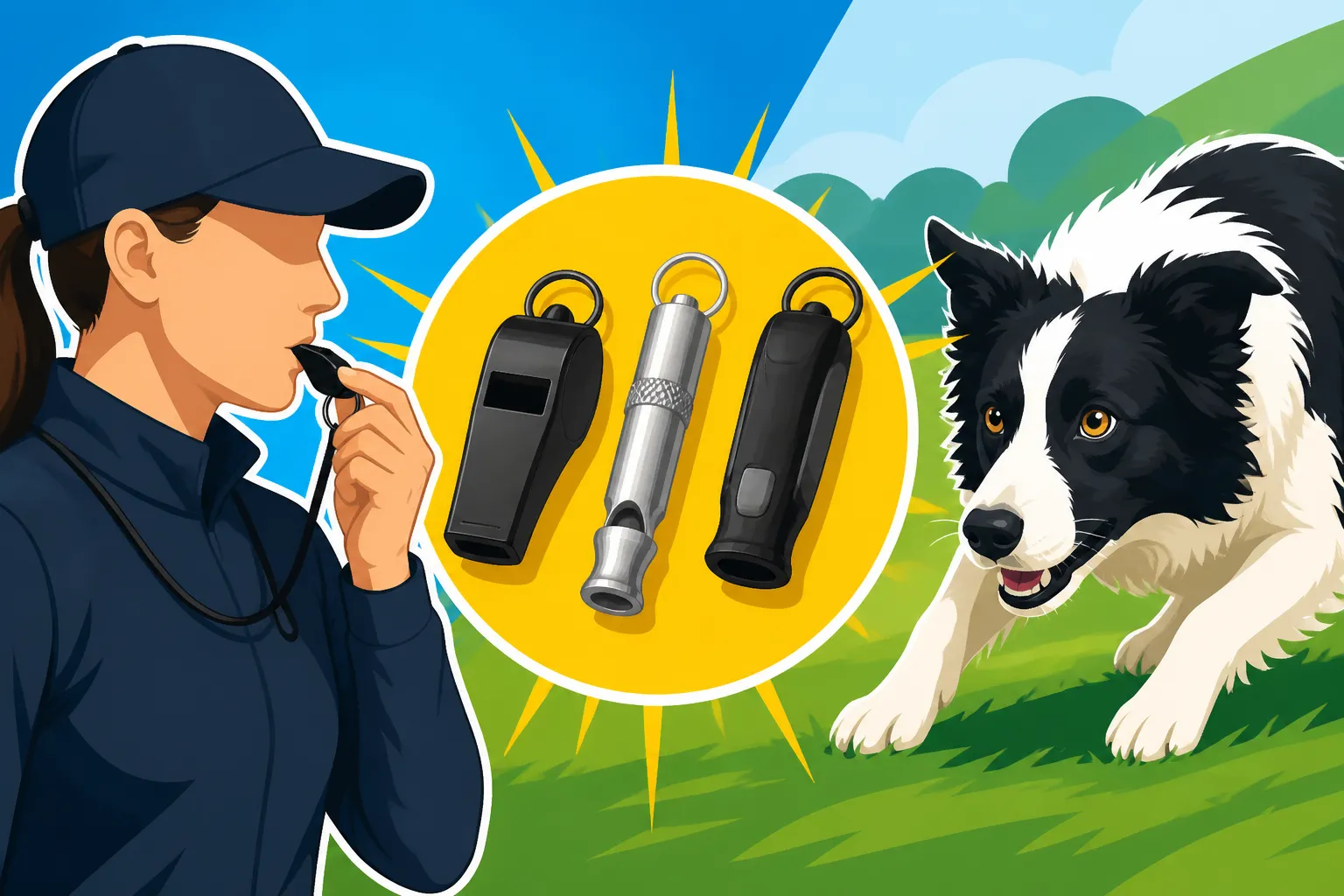
When it comes to whistle types, there isn't just one "right" answer, but certainly some clear preferences born out of generations of working with Border Collies. The shepherd's whistle, often called a "flute whistle" or "lip whistle," stands out as the traditional and most versatile choice. However, other options exist, each with its own set of advantages and disadvantages.
The Classic Sheepdog Whistle (Shepherd's Whistle)
This is the gold standard for Border Collie handlers, and for good reason. It's a small, typically metal or plastic whistle that's designed to be held in the mouth, usually between the tongue and the roof of the mouth, or against the lower lip. The magic of this whistle is that it requires your tongue to shape the airflow, allowing you to produce a vast range of sounds – short pips, long drawn-out notes, trills, rising and falling tones – simply by changing your tongue position and breath pressure. This versatility means a single whistle can convey a huge vocabulary of commands. Imagine Teaching a Border Collie to Lie Down at Distance with a distinct, unambiguous whistle command that sounds different from its "come here" or "go left" signal.
Working sheepdog handlers have developed a complex "language" of whistle commands, assigning specific sounds to actions like "come by" (go clockwise), "away to me" (go counter-clockwise), "lie down," "walk up," and "that'll do" (stop working). The subtlety and range of sounds you can produce with a shepherd's whistle make it unparalleled for this kind of intricate work. Brands like ACME (specifically their 210 or 211.5 whistles) are famous worldwide and can be found easily on platforms like Amazon, offering a reliable starting point for anyone looking to try this type of whistle. It takes practice, yes, but the reward is a truly sophisticated communication system with your dog.
Other Whistle Options and Their Pros and Cons
While the shepherd's whistle reigns supreme for serious work, other whistles might be suitable for pet owners or those just starting out.
Pea Whistles: These are the common "referee" whistles you find. They contain a small pea that rattles inside, creating a loud, trilling sound.
* Pros: Very loud, easy to produce a sound, widely available.
* Cons: Limited range of sounds. You can really only get a consistent, loud blast. This might be okay for a simple "come" command, but it's not conducive to a broad vocabulary of precise instructions. The sound is also quite harsh, which some dogs might find jarring over time.
* Best Use: Emergency recall for a pet Border Collie in a non-working environment, or for a single, distinct signal.
Whistle-less Whistles (Silent Whistles): These whistles produce a high-frequency sound, often above the range of human hearing, but audible to dogs.
* Pros: Can be effective for very sensitive dogs or in situations where you don't want to disturb others with loud noise.
* Cons: "Silent" is a bit of a misnomer; you can often hear a faint hiss. The main issue is that you can't hear the exact tone you're producing, making it hard to ensure consistency or create varied commands. You're flying blind, relying on your dog's reaction rather than your own auditory feedback. This can be frustrating for the handler and confusing for the dog if the sound varies without your knowledge.
* Best Use: Niche situations where sound discretion is critical, but generally not recommended for primary training due to lack of handler feedback.
Electronic Whistles: Some devices offer electronic tones, often with adjustable frequencies.
* Pros: Consistent sound output, sometimes programmable with different tones.
* Cons: Reliance on batteries, can be bulky, and doesn't offer the subtle, instantaneous control that a mouth-held whistle does.
* Best Use: Very specific training scenarios, but less practical for dynamic field work.
Choosing the Right Whistle for Your Needs
Ultimately, the choice of whistle largely depends on your aspirations with your Border Collie. If your goal is to have a robust, versatile communication system for herding, agility, or advanced obedience, investing time in learning a shepherd's whistle is invaluable. The sheer range of commands you can teach – short, sharp pips for "stop," a rising two-note call for "come here," or a steady trill for "walk up" – will dramatically enhance your dog's understanding and performance. Many online training resources, including those from providers like BAXTER & Bella, often touch upon whistle training as an advanced skill.
If you're a pet owner primarily looking for a reliable recall or a few basic commands across a large yard, a simple pea whistle might suffice to begin with, but you will quickly hit its limitations for complex work. Remember, the true power of the whistle for a Border Collie lies in its capacity for a varied, precise vocabulary. Consider where you plan to take your Border Collie's training. Will you be Working an Epileptic Border Collie on Stock? Will you be Doing Agility With an Epileptic Border Collie? For such activities, precision in communication, often achieved with a well-used whistle, becomes critical for safety and performance.
| Whistle Type | Key Feature | Pros | Cons | Best for |
|---|---|---|---|---|
| Shepherd's Whistle | Mouth-held, tongue-controlled | High versatility, wide range of sounds | Steep learning curve, takes practice | Herding, advanced obedience, complex command sets |
| Pea Whistle | Internal pea for trilling | Very loud, easy to produce sound | Limited sound variation, can be harsh | Simple recall, single distinct commands, emergency |
| Whistle-less (Silent) | High-frequency sound | Discreet, useful for sensitive dogs | Handler cannot hear exact tone, inconsistent | Niche situations, highly noise-sensitive dogs |
| Electronic Whistle | Battery-powered, electronic tones | Consistent sound, programmable | Battery dependence, less nuanced control | Specific training scenarios, not field-ready |
Learning to Use a Border Collie Whistle
Now that you understand the "why" and "what" of Border Collie whistles, let's talk about the "how." Learning to blow a shepherd's whistle effectively isn't something that happens overnight, but with dedication, anyone can master it. It's a skill that pays dividends in your communication with your dog.
Mastering the Sounds and Commands
The first step is simply learning to make a sound. Most shepherd's whistles come with basic instructions, but essentially, you're directing air across an edge while manipulating your tongue. Think about making a "T" sound or shaping your tongue to create different pitches. Many people find it helpful to watch videos of experienced handlers or use online tutorials. Start with a simple, consistent pip. Then try to vary the length, the pitch (higher or lower), and eventually create short sequences.
You'll want to establish a small, clear vocabulary of whistle commands, each distinct from the others. For example:
- Recall: A series of short, sharp pips (e.g., pip-pip-pip).
- Stop/Lie Down: A long, sustained note.
- Turn Left (Away to Me): A rising two-note sequence.
- Turn Right (Come By): A falling two-note sequence.
The key is repetition and consistency on your part. Practice in front of a mirror, or record yourself, to ensure the sounds you make are always the same for each command. This mastery of sound production is crucial before you even introduce it to your dog, because Moving a Border Collie From Voice to Whistle requires the whistle signals to be just as clear and reliable as your verbal ones. Don't be discouraged if it sounds a bit like a dying duck at first; everyone starts there! Consistency is key when deciding Which Whistle a Border Collie Handler Uses for different commands, building a clear vocabulary.
Introducing the Whistle to Your Border Collie
Once you can reliably produce your chosen whistle sounds, it's time to introduce them to your Border Collie. This process should be calm, positive, and paired directly with commands your dog already knows.
- Start with Known Commands: Choose a command your dog knows perfectly, like "sit" or "come." Say the verbal command, immediately follow it with the corresponding whistle sound, and then reward your dog when they perform the action. For instance, say "Come!" (verbal), blow your recall whistle sequence, and then lavish praise and treats when they arrive.
- Pairing and Repetition: Repeat this pairing process many, many times over several days or weeks, always ensuring the whistle immediately follows the verbal command. Your dog will begin to associate the whistle sound with the verbal command and the action.
- Fading the Verbal Cue: Once your dog is consistently responding, start to fade out the verbal command. Give the whistle command first, wait a beat, and if your dog doesn't respond, then give the verbal command. Eventually, your dog should respond solely to the whistle.
Keep training sessions short, positive, and fun. Use high-value treats and enthusiastic praise. Remember, the goal is to build a strong, positive association with the whistle. If your Border Collie is new to training, you might even consider enrolling in a program like those offered by BAXTER & Bella, which can guide you through positive reinforcement techniques for any command, including those you plan to transition to a whistle.
Practice, Patience, and Progression
Whistle training is a journey, not a sprint. Your Border Collie is smart, but they still need time and consistent exposure to generalize these new signals.
- Vary the Environment: Once your dog responds reliably in a quiet environment, gradually introduce distractions. Start in your backyard, then a quiet park, and eventually busier areas. This helps solidify the commands regardless of external stimuli.
- Increase Distance: Slowly increase the distance between you and your dog when giving whistle commands. Start with a few feet, then ten, then twenty, and so on. This is where the true benefit of the whistle begins to shine.
- Build Complexity: As your dog masters individual commands, you can start to combine them. For example, a "go out" whistle followed by a "stop" whistle. This is where the depth of the shepherd's whistle really proves its worth.
- Troubleshoot: If your dog isn't responding, go back a step. Is your whistle sound consistent? Is the environment too distracting? Are you rewarding enthusiastically enough? Don't get frustrated; simply adjust your approach. A common issue is the handler not making the sound consistent enough, which can lead to confusion for the dog.
Remember that How Few Repetitions a Border Collie Needs is often fewer than other breeds, but consistency in your signals is still paramount. The foundation of clear, unambiguous signals, consistently delivered, will build a reliable working partnership.
Integrating Whistle Commands into Daily Life and Work
A well-trained whistle command system isn't just for the sheep field or the trial ring; it can dramatically improve your daily life with your Border Collie, offering an enhanced level of control and communication that a verbal system often struggles to match.
From the Field to the Backyard
Even if your Border Collie isn't herding sheep, whistle commands are incredibly practical. Imagine your dog chasing a squirrel across a large open space. A sharp, distinct recall whistle cuts through the excitement and signals an immediate return, far more effectively than a strained shout. This enhanced recall can be a literal lifesaver, especially if your Border Collie has a strong prey drive. Likewise, a "stop" or "lie down" whistle can be invaluable for safety, whether you need them to freeze before running into a road or to settle quickly when visitors arrive.
For dogs involved in sports like agility or flyball, whistle commands can provide the precision needed for rapid direction changes, stops, and starts, without the handler needing to yell over crowd noise. If you're wondering Whether an Epileptic Border Collie Can Still Trial or Working an Epileptic Border Collie on Stock, having a clear, concise communication method like a whistle can be even more important for ensuring their safety and managing their energy levels during runs, allowing you to direct them with minimal fuss. This integration makes your life easier and your dog's understanding clearer, fostering a deeper bond rooted in effective communication.
Troubleshooting Common Whistle Training Hurdles
Even with the smartest of dogs, you'll likely hit a few bumps in the road during whistle training. Don't worry, these are common and solvable!
- Inconsistent Response: If your dog sometimes responds and sometimes doesn't, revisit your own whistle sounds. Are they truly consistent every time you make them? Are you accidentally adding vocal cues sometimes and not others? Sometimes, the issue is that the dog only responds when the whistle is given in a specific context. Go back to basics in a quiet environment and ensure your whistle production is rock solid.
- Lack of Motivation: Is your dog less keen to respond to the whistle than to verbal commands? You might need to raise the value of the reward for whistle responses. Use super high-value treats or their favorite toy exclusively for whistle training for a while.
- Distraction Overload: If your dog falls apart with distractions, you've likely progressed too fast. Scale back to a less distracting environment and slowly reintroduce distractions at a lower level. Remember, every successful response in a distracting environment builds confidence. You can't expect a dog to come off A Border Collie That Has Locked On to a deer with minimal training.
- Handler Frustration: This is a big one! If you're getting frustrated, your dog will pick up on it. Take a break, revisit your own practice without the dog, and come back to training with a fresh, positive mindset.
The most common hurdle is often the handler's own consistency and patience. Just like learning any new skill, it takes time and dedication.
When to Seek Professional Guidance
While whistle training is something many owners can tackle on their own, there are times when professional help can be invaluable.
- Persistent Problems: If you're consistently struggling with a specific command, or if your dog seems to misunderstand the whistle despite your best efforts, a professional trainer specializing in Border Collies or working dogs can offer tailored advice. They can observe your technique and your dog's response, identifying subtle issues you might be missing.
- Advanced Work: If you have aspirations for serious herding or competitive dog sports, working with a experienced stock dog trainer is highly recommended. They can help you develop a comprehensive whistle vocabulary and teach you how to apply it in complex scenarios, such as Building a Border Collie's Outrun or Shedding and Penning With a Border Collie. These are skills that are best learned from those who have mastered them.
- Behavioral Issues: If your dog's lack of whistle response is tied to deeper behavioral issues like anxiety, extreme reactivity, or compulsive behaviors, a certified professional dog behaviorist can provide a holistic approach that includes behavior modification alongside training.
Investing in professional guidance, whether through local classes or online mentorship, can accelerate your learning and solidify your bond with your amazing Border Collie. Remember, they want to work with you; sometimes, we just need a little help translating our intentions into their language.
Disclaimer
This article is for general informational purposes only and does not constitute professional advice. Laws, prices and regulations vary by location and change over time. Consult a qualified professional for guidance on your specific situation.