A Border Collie That Panics When You Leave
It's absolutely heartbreaking to come home to a house turned upside down, or worse, to find your beloved Border Collie distressed, panting, and perhaps even injured. That crushing guilt and confusion over why your dog can't seem to cope when you're away is a struggle many Border Collie owners face. This guide is here to shed light on why your highly intelligent companion might be panicking when left alone and, more importantly, to offer practical, empathetic strategies to help them find peace in your absence.
Understanding Why Your Border Collie Panics
When a Border Collie panics upon your departure, it's not just "naughtiness" or spite. This is often a genuine manifestation of severe anxiety, and understanding its roots is the first step toward helping your dog. Border Collies are a unique breed, bred for intense focus and a strong partnership, which can contribute to their challenges with solitude.
The Intense Drive and Attachment of a Border Collie
Border Collies are renowned for their incredible intelligence, intense work ethic, and profound bond with their handlers. They are dogs designed to partner and work, constantly seeking direction and engagement. This inherent drive for connection and purpose means they often struggle when that primary relationship is suddenly removed. They're not just pets; they're collaborators. When you leave, it's not just a quiet house; it can feel like a sudden, inexplicable cessation of their world's purpose.
Think about it from their perspective: their entire day revolves around you, or at least around the potential for interaction and direction from you. Suddenly, you're gone. For a dog hardwired for constant mental and physical engagement, this void can be terrifying. It's not just boredom; it's a deep-seated feeling of being adrift, without their anchor. This strong attachment, while wonderful for building a working relationship, can be a double-edged sword when it comes to independent living. For more on their daily needs, consider What a Border Collie Does With Its Whole Day.
Environmental Triggers and Past Experiences
Sometimes, a Border Collie's panic isn't purely innate but is triggered or exacerbated by environmental factors or past experiences. A sudden change in routine, like a new job schedule that leaves them alone for longer periods, can be a huge shock. For rescued Border Collies, particularly those with an unknown history, past abandonment or inconsistent care can leave deep scars. They might associate your departure with a feeling of being left permanently.
Even seemingly minor events can become triggers. A new sound outside, a brief moment of being accidentally locked in a room, or even just feeling unwell when left alone once can begin to build an association between being by themselves and feeling vulnerable. These experiences, especially if they happened during critical developmental stages, can wire them to anticipate distress every time you prepare to leave, fueling their panic.
Learned Helplessness and Anticipatory Anxiety
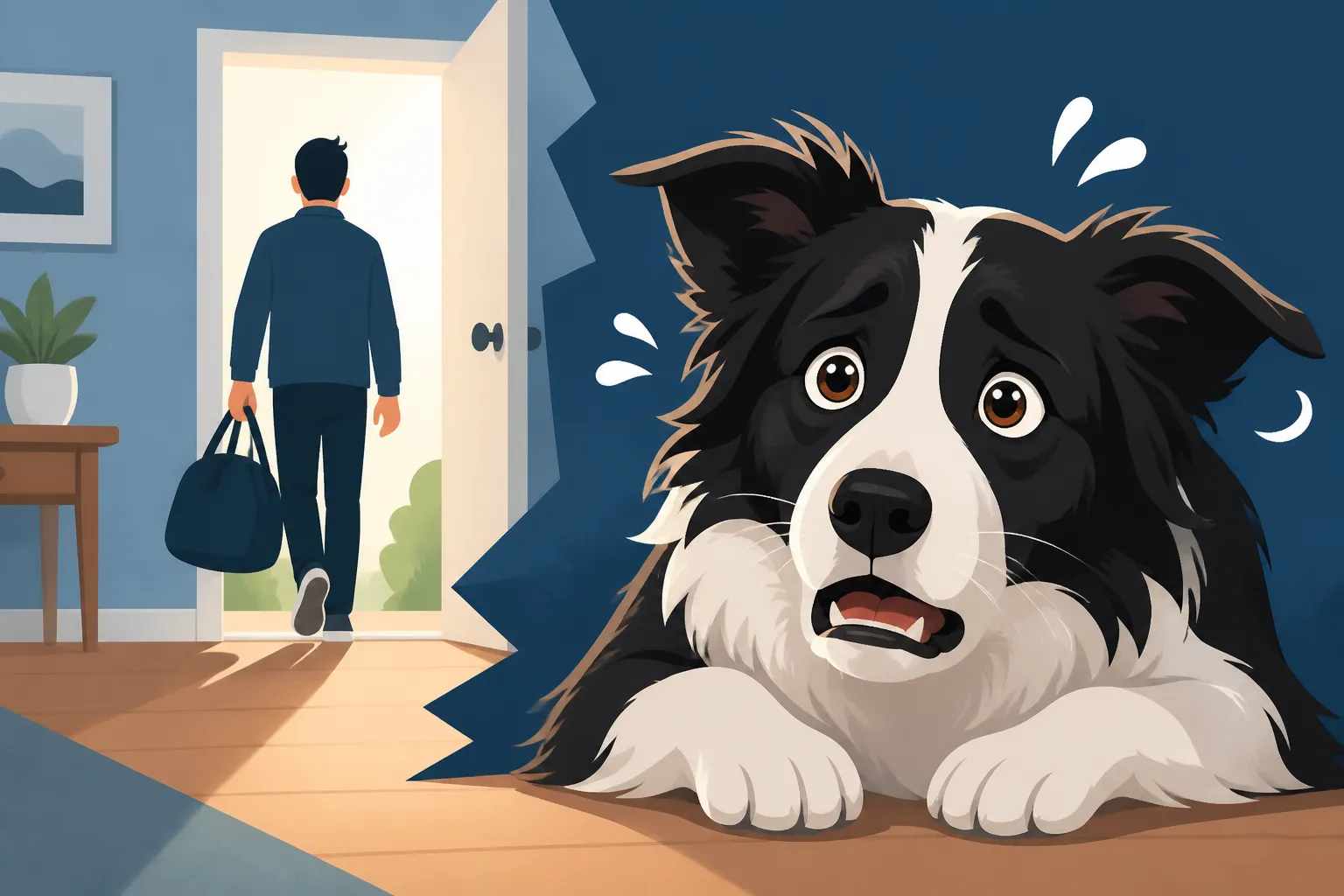
A very common and challenging aspect of separation anxiety is the anticipatory anxiety your Border Collie develops. They learn your "departure cues" – the jingle of keys, putting on your shoes, grabbing your bag, even just walking towards the door. Before you've even left, their anxiety is already spiking. They might start pacing, whining, or even trying to block your exit, having learned that these cues predict the terrifying experience of being left alone.
This isn't manipulation; it's a desperate attempt to control their environment and prevent the onset of panic. When their efforts inevitably fail, and you do leave, it reinforces their sense of helplessness. This cycle can quickly escalate, making each departure more stressful for both you and your dog. Understanding these pre-departure behaviors is crucial because intervention needs to start long before you step out the door.
Recognizing the Signs of Separation Anxiety
It's easy to misinterpret a Border Collie's frantic behaviors as simply "bad" or destructive. However, for a dog suffering from separation anxiety, these actions are often desperate attempts to cope with overwhelming fear and distress. Learning to distinguish true anxiety from general naughtiness is key to effective intervention.
Destructive Behaviors and Escape Attempts
One of the most common and often financially costly signs of separation anxiety is destructive chewing, digging, and scratching. Your Border Collie might target doorframes, window sills, crates, or even furniture. They might try to chew through drywall or dig at carpets near exit points. This isn't because they enjoy ruining your home; it's often a frantic effort to escape the confinement and reunite with you.
In severe cases, dogs will injure themselves in these escape attempts, breaking nails, damaging teeth, or scraping paws and noses. If your dog only engages in these behaviors when you're gone, and they're typically well-behaved otherwise, it's a strong indicator of separation anxiety. Compare this to a Border Collie that chews inappropriate items even when you are home, which might point more towards boredom or a lack of appropriate chew toys. The Border Collie That Chews Itself When Bored might be experiencing something similar, but the context is vital.
Excessive Vocalization
Coming home to a neighbor's complaint about constant barking or howling is a classic sign. Your Border Collie might bark, howl, or whine incessantly from the moment you leave until you return. This vocalization is often a distress call, an attempt to summon you back or communicate their panic. It's not just a few barks at the mailman; it's a sustained, often high-pitched vocalization that speaks volumes about their internal state.
While some barking is normal for any dog, particularly when they hear something outside, anxious vocalization is typically relentless and does not stop unless you return. If you've ever used a pet camera, you might witness them panting, drooling, or exhibiting other stress signals during these barking fits. This is why addressing A Border Collie That Barks at Every Sound needs a nuanced approach, differentiating between alert barking and anxiety-driven cries.
Inappropriate Elimination and Pacing
Finding urine or feces inside the house when your Border Collie is otherwise housetrained is another distressing symptom. This isn't a protest or a lack of training; it's a physiological response to extreme stress. When dogs are highly anxious, their bodies can lose control of their bladder and bowels, similar to how humans might feel nauseous or need to use the restroom when terrified.
Alongside elimination, frantic pacing, circling, or repetitive movements are also common. You might see your dog moving restlessly, unable to settle, sometimes leaving visible tracks on carpets or floors. The Border Collie That Paces the House is exhibiting a classic sign of internal turmoil, where their body is flooded with adrenaline and they can't find a way to calm down. This constant movement is an attempt to release that nervous energy, but it often only escalates their distress.
Here's a quick table to help differentiate typical "naughtiness" from true separation anxiety:
| Behavior Aspect | Typical "Naughtiness" or Boredom | Separation Anxiety |
|---|---|---|
| Timing | Can occur when owners are home or away. | Primarily occurs only when the owner is absent. |
| Motivation | Seeking attention, lack of training, insufficient enrichment. | Overwhelming fear/distress, frantic attempts to reunite. |
| Destruction | Chewing random items, usually not near exit points. | Targeted destruction near doors, windows, crates. |
| Vocalization | Intermittent barking at stimuli, attention-seeking whines. | Constant, high-pitched barking, howling, whining. |
| Elimination | Inconsistent housetraining, marking, submissive urination. | Fully housetrained dog eliminates only when alone. |
| Body Language | Confident, playful, or defiant. | Pacing, panting, drooling, trembling, self-harm. |
| Reaction to Return | Happy, but might avoid eye contact if they know they were "bad." | Exaggerated greeting, takes a long time to calm down. |
Practical Strategies for Helping Your Border Collie Cope
Addressing separation anxiety requires patience, consistency, and a multi-faceted approach. There's no quick fix, but with dedication, you can help your Border Collie build confidence and feel safer when you're not around.
Desensitization and Counter-Conditioning
The cornerstone of treating separation anxiety is desensitization and counter-conditioning. This means gradually exposing your Border Collie to your departure cues and increasing alone time, while simultaneously creating positive associations. Start by picking up your keys, jiggling them, then immediately sitting back down. Do this repeatedly, without actually leaving, until the keys become a neutral signal. Do the same with putting on your shoes or grabbing your bag. The goal is to strip these cues of their predictive power.
Once the cues are neutral, begin very short absences. Leave for literally 10 seconds, then return. Don't make a big fuss when you leave or return; keep it calm and low-key. Slowly, incrementally, increase the duration. If your dog shows any signs of anxiety, you've gone too fast. You must always stay below their anxiety threshold. This process can take weeks or months, and it requires immense patience. Programs like those offered by BAXTER & Bella often include detailed step-by-step guides for this process, which can be invaluable for consistent application.
Creating a Safe, Engaging, and Calming Environment
While you're working on desensitization, ensure your Border Collie has a truly safe and comforting space for when you are gone. For some, a well-introduced crate can be a den of security. Make it inviting with soft bedding, your scent (an old t-shirt), and always associate it with positive experiences. For others, a small, dog-proofed room works better. Consider using calming diffusers, which release dog-appeasing pheromones, or soothing music specifically designed for anxious dogs, easily found on platforms like Amazon.
Crucially, provide engaging, long-lasting enrichment that your dog only gets when you leave. Think high-value Puzzle Feeders That Hold a Border Collie, KONGs stuffed with frozen treats, or durable chew toys. These not only distract them but also create a positive association with your departure. These items should be too engaging to ignore, helping to redirect their focus during those initial moments of solitude. Learning to encourage calm behavior can also be supported by practicing commands like Settling a Border Collie on a Mat when you are home, reinforcing the idea of a designated calm spot.
Establishing a Predictable Routine and Building Independence
Border Collies thrive on routine and predictability. A consistent schedule for meals, potty breaks, exercise, and training can significantly reduce anxiety. They learn what to expect, which can alleviate some of the uncertainty that fuels panic. Before you leave, ensure they've had ample physical exercise and mental stimulation. A tired Border Collie is a calmer Border Collie. This doesn't mean just endless fetch; it means engaging their minds with training, scent work, or a good walk with varied stimuli.
Beyond routine, actively build their independence when you are home. Don't let your Border Collie be Velcroed to you 24/7. Encourage them to settle in another room while you work, or practice short "stays" where they are not constantly in your line of sight. Reward calm, independent behavior. You can also teach them to self-entertain with appropriate toys, reducing their reliance on your constant presence for stimulation. This gradual building of resilience is vital.
When to Seek Professional Help and Resources
There are times when even the most dedicated owners need an extra hand. Separation anxiety, especially in a high-drive breed like the Border Collie, can be incredibly complex and resistant to at-home solutions. Knowing when and where to seek professional guidance can make all the difference.
Consulting a Qualified Dog Behaviorist or Trainer
If your Border Collie's anxiety is severe, causing self-harm, extreme destruction, or is simply not improving with your consistent efforts, it's time to call in the experts. A Certified Professional Dog Trainer (CPDT) or, ideally, a Certified Applied Animal Behaviorist (CAAB) or a Veterinary Behaviorist (Dip. ACVB) can provide an individualized assessment and create a tailored behavior modification plan. They can observe your dog's specific triggers and reactions, and guide you through the desensitization and counter-conditioning process more effectively.
These professionals can help you identify subtle cues you might be missing and refine your techniques. They understand the nuances of canine body language and the underlying psychological factors at play. Don't view seeking professional help as a failure on your part; it's a proactive and responsible step toward helping your dog live a happier, less anxious life. The cost of such services, while an investment, can save you significant money in future home repairs and vet bills for stress-related issues. For a rescued Border Collie, professional help can be particularly important to undo past trauma; read more at The Cost of Retraining a Rescued Border Collie.
The Role of Veterinary Care and Medication
It's always a good idea to consult your veterinarian if your Border Collie is showing signs of separation anxiety. First, they can rule out any underlying medical conditions that might be contributing to the behavior, such as pain, bladder issues, or even cognitive decline in older dogs. These physical ailments can exacerbate anxiety or mimic its symptoms.
Beyond ruling out medical issues, your vet might discuss anti-anxiety medication. For severe cases, medication can be a crucial tool to help your Border Collie get below their anxiety threshold, allowing them to learn and respond to behavior modification more effectively. It's not a magic bullet and should always be used in conjunction with a behavior plan, but it can provide much-needed relief for a dog in deep distress. Your vet can advise on suitable options and monitor your dog's response, making sure they are not dulling your dog unnecessarily, which is a common concern for Border Collie owners. For more on this, check out Whether Medication Helps a Compulsive Border Collie.
Utilizing Online Training Platforms and Support Networks
While professional in-person help is ideal for severe cases, there are also fantastic online resources and support networks that can provide guidance and a sense of community. Websites like the BAXTER & Bella Online Puppy School often have modules on common behavioral issues, including separation anxiety, offering structured courses that you can follow at your own pace. These platforms can be a great starting point for understanding foundational training principles and building confidence in your handling skills.
Additionally, online forums and social media groups dedicated to Border Collies or dog behavior can connect you with other owners facing similar challenges. Sharing experiences, tips, and simply knowing you're not alone can be incredibly validating. You can also find a wide range of specialized calming aids, enrichment toys, and even pet cameras on Amazon to monitor your dog's progress and ensure their safety while you're away. Remember, every little bit of support and information helps create a more peaceful environment for your panicking Border Collie.
Disclaimer
This article is for general informational purposes only and does not constitute professional advice. Laws, prices and regulations vary by location and change over time. Consult a qualified professional for guidance on your specific situation.