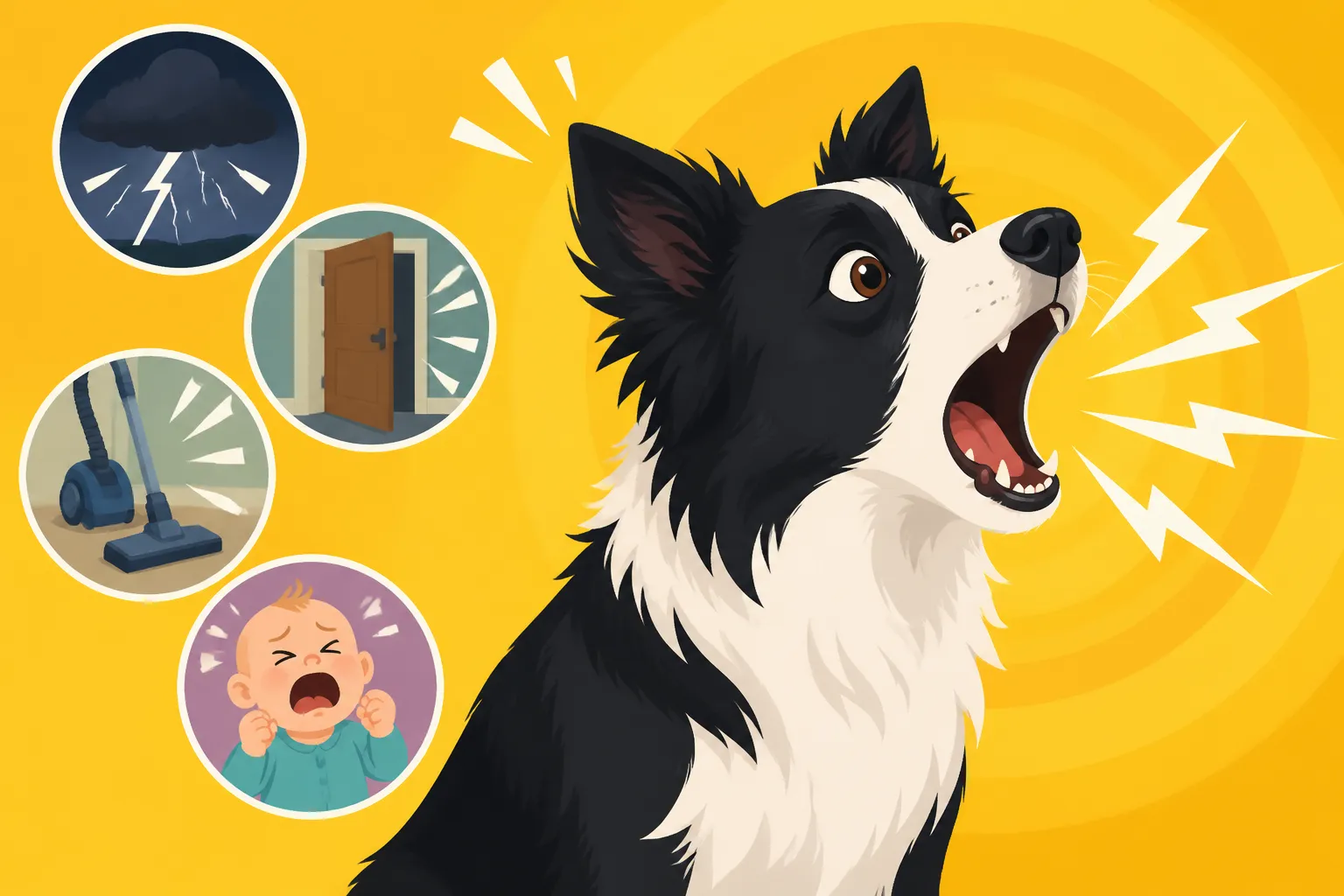
A Border Collie That Barks at Every Sound
It’s a scenario many Border Collie owners know all too well: you’re trying to enjoy a quiet moment, perhaps a cup of tea, and suddenly, the world outside your window seems to declare war. A leaf flutters, a squirrel twitches its tail, or a neighbor’s car door thunks shut a block away, and your otherwise calm Border Collie transforms into a barking alarm system. This relentless alert barking at every single sound isn't just annoying; it’s exhausting for both you and your dog, leaving you wondering if you’ll ever have a peaceful moment again. This guide is here to help you understand why your highly intelligent companion is so vocal and offers practical, empathetic strategies to bring some much-needed quiet back into your home.
The Border Collie's Deep-Rooted Need to Alert
Border Collies are renowned for their keen intelligence, intense focus, and incredible working drive. These traits, while fantastic in a working capacity, can often translate into heightened sensitivity and a strong instinct to alert their surroundings. When you have a Border Collie that barks at every sound, it's not usually out of naughtiness or spite, but rather a deeply ingrained part of their genetic makeup and a reflection of their acute awareness.
Historically, Border Collies were bred to be vigilant partners to shepherds. They needed to be aware of every movement, every shift in the flock, and every potential threat in their environment. This meant being highly attuned to subtle sounds and changes – a skill that was vital for protecting sheep. In a modern pet home, this innate vigilance often gets misdirected. The distant rumble of a delivery truck, the high-pitched squeal of children playing two streets over, or even the subtle creak of your house settling can trigger their "alert" button. They genuinely believe they are doing their job, keeping their "flock" (you, your family, the house) safe from perceived intruders or anomalies. This is why simply yelling "Quiet!" often doesn't work; they're convinced they are being quiet by telling you about the danger.
Furthermore, Border Collies often possess a heightened sensitivity to their environment. Their hearing is incredibly sharp, picking up frequencies and nuances that we humans barely register. Imagine living in a world where every rustle, every distant siren, and every faint vibration is amplified. For a highly observant and intelligent dog like a Border Collie, these constant stimuli can be overwhelming, leading to a state of perpetual vigilance. This isn't just about protecting; it can also stem from anxiety or overstimulation. When they bark, it might be their way of saying, "I hear it! Are you going to do something about it?" or even "I don't like that sound!" Understanding this fundamental drive is the first step toward addressing the behavior with patience and effective training. For many Border Collies, the idea of just relaxing and letting things go isn't natural; it has to be taught.
Pinpointing the Specific Triggers for Your Barking Border Collie
Before you can effectively address the barking, you need to become a detective. While it might feel like your Border Collie barks at everything, there are almost always specific triggers, even if they seem minor or illogical to us. Identifying these patterns is crucial for developing a targeted training plan. You need to observe, record, and really listen to what sets them off.
The Subtle and Obvious Noise Makers
Think beyond the obvious. Of course, the mail carrier or a passing dog will likely get a reaction. But what about the more subtle culprits? Is it the clink of your keys as you put them on the hook, anticipating your departure? Is it the distinct sound of a specific neighbor's car pulling in, or the distant thrum of construction work on a Tuesday morning? Perhaps it's the sudden burst of laughter from kids down the street, or the high-pitched whine of a bicycle brake. Even something as seemingly innocuous as a leaf skittering across the driveway in the wind can set off a highly sensitive Border Collie. Some dogs react more to visual cues combined with sound, such as seeing a shadow pass the window followed by a distant car horn.
Keep a log for a few days, noting down:
- Time of day
- Specific sound or visual trigger (as accurately as you can identify it)
- Duration and intensity of barking
- Your Border Collie's body language before, during, and after the barking
- Your reaction
This log will start to paint a picture of when and what really gets under their skin. You might find that early mornings are worse because of increased traffic, or evenings when the neighborhood children are out. Sometimes, it's not even a new sound, but a familiar sound that signals a change in routine, like the ice cream truck bringing its predictable jingle. Recognizing these patterns is the bedrock of managing Noise Fear in a Border Collie.
Environmental Factors and Barking Intensifiers
Beyond specific sounds, environmental factors can exacerbate barking. A dog that is under-exercised or under-stimulated mentally is far more likely to resort to barking out of boredom or pent-up energy. If your Border Collie isn't getting adequate physical activity or enough engaging mental work, that excess energy has to go somewhere, and barking often becomes the default outlet. Think about their drive; these dogs are designed for hours of focused work. If they're not working, they're often looking for work, and sometimes, "alerting" the household becomes their perceived job.
The layout of your home can also play a role. Is your dog positioned near a window that offers a prime view of all neighborhood activity? Is their crate in a high-traffic area, or a quieter, more secure space? Even the acoustics of your home can contribute. A house with lots of hard surfaces might echo more, making sounds seem louder and more jarring to your dog. During certain seasons, like spring, increased outdoor activity, new smells, and changes in weather can also amp up a Border Collie's general level of alertness. For example, a sudden thunderstorm can cause a spike in Sound Sensitivity in a Working Border Collie. Pay attention to these broader factors as well as the immediate triggers.
Proactive Management Strategies for a Quieter Home
Once you have a better understanding of what is triggering your Border Collie's barking, you can start implementing management strategies. These aren't necessarily training solutions to stop the barking in the long run, but rather ways to reduce the immediate opportunities for barking and create a calmer environment. Think of it as putting a pause button on the barking while you work on the underlying behavior.
Creating a Serene Environment
The first step is to manage the environment. If your Border Collie is constantly barking at things outside the window, simply removing access to the visual trigger can be incredibly effective. Consider using frosted window film, curtains, or blinds to block their view of the street. For a temporary solution, you can even put up a tall baby gate to keep them away from prime viewing spots. If the barking is triggered by sounds from an adjacent yard, strategic placement of outdoor decor or fencing can help muffle some noise.
For auditory triggers, white noise machines or even just turning on a fan or radio can help mask external sounds. Think about placing a white noise machine, easily found on Amazon, near windows or doors where your dog tends to react most. This creates a consistent, calming hum that can blend out the sudden, jarring noises that set your dog off. Similarly, having a TV or radio on a talk station can provide ambient noise that is less startling than sudden outdoor events. The goal here isn't to completely silence the world, but to reduce the impact of sudden or alarming sounds, making them less distinct and therefore less likely to trigger a full-blown barking frenzy. This is especially helpful if you have a Border Collie that is known to bark A Border Collie That Barks Through the Wall.
Strategic Use of Space and Enrichment
Creating a "safe space" or a designated quiet zone for your Border Collie can also work wonders. This might be a comfortable crate in a quieter part of the house, a mat in a low-traffic room, or a bed tucked away from windows. Teach your Border Collie that this is a place for calm and relaxation. Regular "settle" practice in this spot can help them associate it with peace, giving them an alternative to patrolling the house. Teaching a Border Collie to Stay on Its Bed is a foundational skill for this.
Enrichment is another powerful management tool. A bored Border Collie is a vocal Border Collie. Provide plenty of appropriate mental and physical outlets throughout the day. This could include puzzle feeders, interactive toys, scent work games, or short training sessions. If your dog is mentally engaged, they're less likely to be scanning the environment for things to bark at. Consider rotating toys to keep things fresh and exciting. A long-lasting chew or a KONG toy stuffed with treats can keep them occupied for a significant period, especially during times when you know triggers are likely, such as during the peak hours for neighborhood activity. Regular, structured exercise that truly tires your Border Collie is also non-negotiable. Exercise, Work and What Actually Settles a Border Collie is essential reading for understanding their profound need for activity.
| Barking Trigger Category | Examples of Triggers | Management Strategies | Training Strategies (Long-term) |
|---|---|---|---|
| Auditory | Mail carrier, car doors, distant sirens, wind chimes, distant dogs | Close windows, use white noise machine (Amazon), play calming music/radio | Desensitization & Counter-conditioning to specific sounds, "Quiet" command |
| Visual | People walking by, other dogs, squirrels, delivery trucks, shadows | Block window views (film, curtains), use baby gates to limit access | Desensitization to visual movement, "Look at me" command |
| Anticipatory | Sound of keys, putting on shoes, opening the treat cupboard | Change routine order, introduce sound randomly without action | Teach "settle" for anticipation, reward calm behavior |
| Internal (Boredom/Anxiety) | Pacing, whining, destructive chewing, excessive self-grooming | Increase mental and physical enrichment, dedicated chew time, safe space | Address underlying anxiety with vet/trainer, build confidence, teach relaxation |
Training Solutions to Quiet the Canine Alarm
While management helps in the short term, true peace comes from training your Border Collie to respond differently to sounds. This involves a combination of desensitization, counter-conditioning, and teaching alternative, desirable behaviors. It requires patience and consistency, but the results are incredibly rewarding.
Desensitization and Counter-Conditioning
This is the cornerstone of addressing barking that stems from reactivity to sounds. The goal is to change your Border Collie's emotional response to the trigger from negative (fear, excitement, alert) to neutral or even positive.
- Identify a "Baseline" Distance/Volume: Start by identifying a distance from the trigger (or a volume for recordings of the sound) where your dog notices the sound but doesn't react with barking. This might mean playing a recording of a doorbell at a very low volume, or practicing outside when the mail truck is two blocks away.
- Pair with Positive Reinforcement: As soon as your Border Collie hears the sound (at that low, non-reactive level), immediately give them a high-value treat. The timing here is critical: the sound predicts the treat. Repeat this many, many times. The goal is for your dog to associate the sound with something wonderful.
- Gradually Increase Intensity: Over many sessions (days, weeks, or even months), slowly increase the volume or move closer to the real-life trigger. If your dog barks, you've gone too fast. Go back a step. The process is slow and incremental. This methodical approach can be learned through structured online courses, with resources like BAXTER & Bella offering comprehensive guides that walk you through each step of Desensitizing a Border Collie to Gunfire, which can be adapted for other noises.
- Reward Calm: Continually reward your dog for not barking when they hear the sound. If they look at you calmly instead of lunging at the window, that's a jackpot moment!
This process effectively rewires their brain: instead of "Mailman! Must bark!", they learn "Mailman! Treat is coming!"
Teaching a "Quiet" Command
Teaching a "quiet" command can be incredibly useful once your dog already knows how to bark on cue (which sounds counterintuitive, but works!).
- Teach "Speak": Encourage your dog to bark (perhaps by ringing a doorbell or knocking). As they bark, say "Speak!" and reward them. Repeat.
- Introduce "Quiet": Once they reliably "speak" on cue, trigger a bark. After a few barks, hold a high-value treat to their nose. Most dogs will stop barking to sniff the treat. The instant they are quiet, say "Quiet!" and give the treat.
- Practice and Generalize: Practice this in various locations and with different mild triggers. The key is to reward the absence of barking after the cue. Over time, you can fade the treat from their nose, rewarding them for stopping barking more quickly on cue.
This gives you a tool to interrupt barking and guide your dog towards a calmer state.
Providing Mental and Physical Outlets
Remember, a tired Border Collie is often a quiet Border Collie, but not just physically tired. These dogs crave mental stimulation just as much, if not more, than physical exercise. Incorporate activities that challenge their brilliant minds. Scent work, such as hide-and-seek with treats, or teaching new tricks using positive reinforcement methods, can be incredibly draining in a good way. Mental Work That Tires a Border Collie Faster details how these activities satisfy their innate drive. Regular training sessions, even short ones, can fulfill their need to "work" and focus.
Ensure your Border Collie is also getting adequate, breed-appropriate physical exercise. This doesn't just mean a quick walk around the block. They need opportunities to run, chase, and engage their bodies in meaningful ways. If your dog is A Border Collie That Paces the House when you're home, it might be a sign of insufficient stimulation. When their physical and mental needs are consistently met, you'll often find a significant reduction in stress-related behaviors like excessive barking. Investing in durable, interactive toys or even looking into local dog sports can make a huge difference in managing their overall energy levels and reducing the need to invent "jobs" like constant alerting.
The journey to a quieter home with a Border Collie is rarely instant. It involves a lot of observation, patience, and consistent effort. But by understanding their nature, managing their environment, and implementing thoughtful training, you can help your Border Collie feel more secure and less compelled to bark at every single sound.
Disclaimer
This article is for general informational purposes only and does not constitute professional advice. Laws, prices and regulations vary by location and change over time. Consult a qualified professional for guidance on your specific situation.