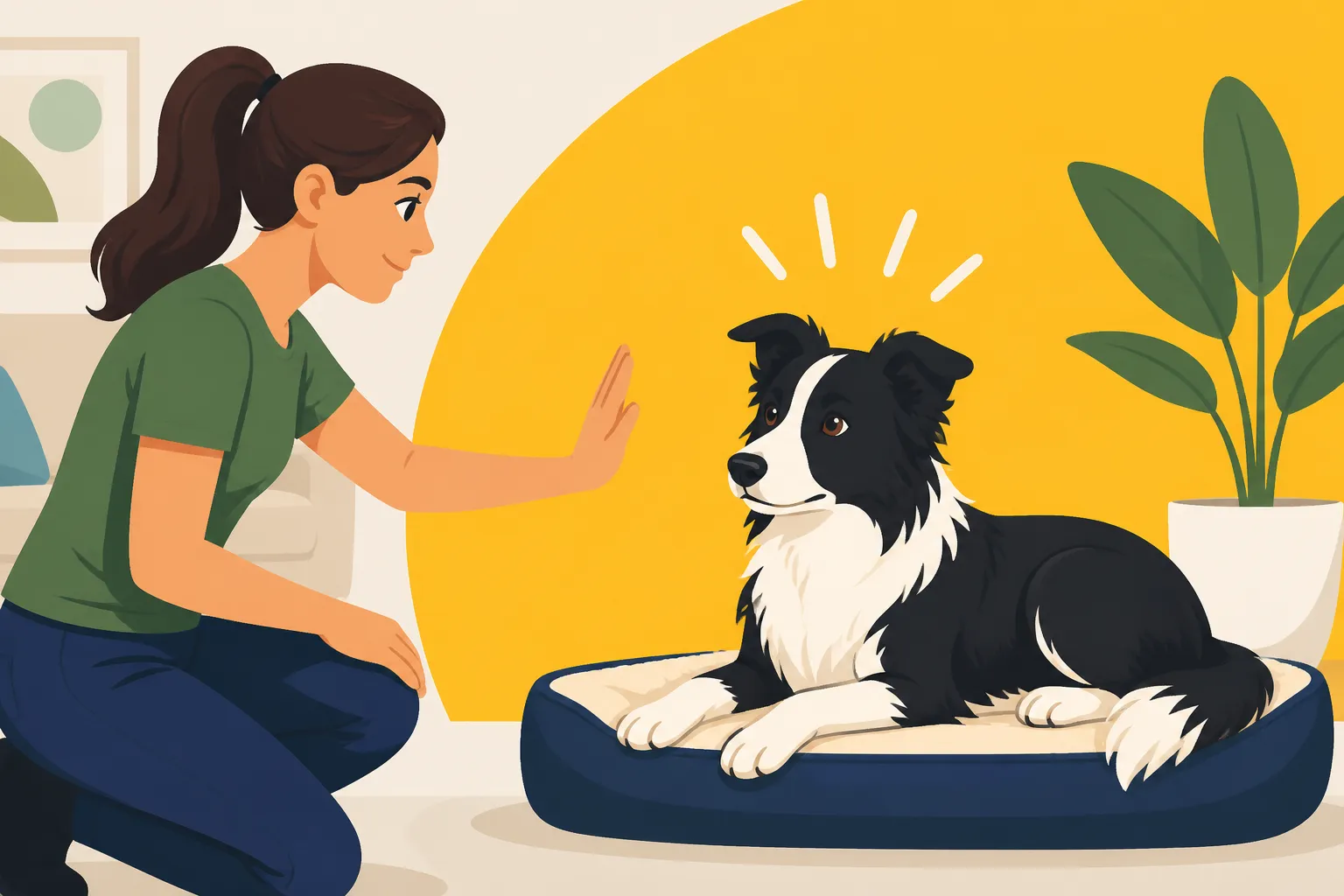
Teaching a Border Collie to Stay on Its Bed
Many Border Collie owners find themselves constantly redirecting their dog's boundless energy, especially indoors, struggling with a dog that just can't seem to relax. It’s a common frustration, feeling like your brilliant companion is always on the go, sometimes even underfoot. This guide will walk you through the process of teaching your Border Collie a solid "place" or "bed" command, a fundamental skill that provides an invaluable "off-switch" and brings much-needed calm into your home.
Understanding the "Off-Switch" for Your Border Collie
It's easy to assume that because Border Collies are so intelligent and energetic, they should naturally know how to settle down. But the reality is often quite different. These dogs are hardwired to work, to observe, and to react. Their brains are constantly scanning the environment for something to do, something to herd, or a problem to solve. This incredible drive, while fantastic for performance, can become overwhelming in a home environment if not managed with clear boundaries and training. Learning a "place" command isn't about stifling their spirit; it's about channeling their energy and teaching them how to relax on command, offering them a clear expectation for calm behavior.
Why "Place" is Crucial for High-Drive Dogs
Imagine trying to focus on cooking dinner while your Border Collie is weaving through your legs, or having guests over only for your dog to "herd" them into a corner with intense stares and nudges. This isn't naughtiness; it's often a dog trying to find a job, any job, to do. The "place" command provides a designated area where your dog learns to go and stay, essentially creating a personal calm zone for them. For a breed like the Border Collie, which excels at understanding complex commands and thrives on structure, this command becomes a vital tool in managing their inherent drive. It gives them a specific directive when there isn't an appropriate "job" for them to do, like moving sheep or navigating an agility course. Without this structured downtime, many Border Collies struggle to regulate their own arousal levels, leading to hyper-vigilance, pacing, or even destructive behaviors born from undirected energy. This command is a gift to both you and your dog, offering mental clarity and a quiet reprieve from the constant need to be "on."
The Mental Benefits of Structured Relaxation
When we talk about settling a Border Collie, it's not just about physical exhaustion; it's deeply rooted in mental discipline and teaching them emotional regulation. The "place" command encourages self-control and patience. Think about it: a Border Collie is bred to observe a flock of sheep, hold them, move them, and then stop on a dime, all while maintaining intense focus. This requires immense mental control. The "place" command taps into this innate ability for focus but redirects it towards stillness. It teaches them that being calm and stationary is also a valuable "job."
This mental engagement is just as tiring, if not more so, than a long walk, and it helps them build a crucial skill: the ability to switch off. Many Border Collies, particularly those with high drive, don't naturally possess an "off-switch." They might run for miles, but still be mentally buzzing. Mental Work That Tires a Border Collie Faster often involves problem-solving, but sometimes, the best "mental work" is simply learning to be still. It reduces anxiety, prevents over-stimulation, and builds confidence in your dog, knowing exactly what's expected of them when they're asked to go to their bed.
Choosing the Right "Place" for Success
The "place" isn't just any spot; it needs to be a clear, defined area that your Border Collie associates only with settling down. This could be a dog bed, a raised cot, a mat, or even a designated rug. Consistency is key here. Avoid choosing a spot that's too small or uncomfortable, as this will hinder their ability to relax. For a Border Collie, who often stretches out, a generously sized mat or bed is ideal. Consider a sturdy, washable bed that can withstand their digging or circling, especially if they’re prone to nest-building. Brands like Kuranda or Big Barker offer durable options that can stand up to repeated use and provide good support.
Here’s a quick comparison of popular "place" options:
| Place Type | Pros | Cons | Ideal for |
|---|---|---|---|
| Dog Bed | Comfortable, familiar, portable. | Can be chewed, may not be clearly defined. | General household use, comfort. |
| Raised Cot | Clearly defined, durable, easy to clean, promotes cooling. | Less plush comfort, takes up more space. | Dogs that get hot, easy definition, active homes. |
| Mat/Rug | Highly portable, can be used anywhere. | Less support, can be bunched up. | Travel, generalization, easy storage. |
| Crate | Ultimate defined space, secure. | Can feel restrictive if not properly trained. | Dogs with strong crate training, security. |
The "place" should ideally be slightly elevated or distinct from the floor, making it visually and physically different from just lying on the carpet. This helps the dog understand that this isn't just any lie-down, but a specific command to a specific spot. You can even create a mobile "place" by using a specific blanket or mat that you can move from room to room or take with you when visiting friends, further cementing the behavior regardless of location.
Step-by-Step Guide to Teaching "Place" and "Stay"
Teaching "place" isn't a race; it's a gradual process that builds confidence and understanding. Remember, Border Collies are quick learners, but consistency and clear communication are paramount. Don't rush through the steps, and always end on a positive note. Breaking the training into small, manageable chunks will make it less overwhelming for both you and your dog.
Introducing the Concept and Building Value
Start by introducing your Border Collie to their designated "place" in a low-distraction environment. With a handful of high-value treats and a calm demeanor, lure your dog onto the bed. As soon as all four paws are on the mat, mark the behavior with a verbal cue like "Yes!" or a clicker, and reward them generously. Repeat this several times. Once they readily step onto the mat, introduce your verbal cue: "Place." Say "Place," lure them on, mark, and reward. Practice this until they reliably go to the mat when you say "Place."
The next step is to build value for staying on the mat. Once they are on their "place" and have received a treat, wait a second or two before delivering another treat. If they stay, reward again. If they get off, don't scold them; simply restart the process. We want them to understand that good things happen on the mat. Slowly increase the duration they must stay before getting a reward. Keep the treats coming fairly frequently at first to maintain their interest. You can even use a sustained reward like a Kong stuffed with peanut butter or a durable chew toy (like those found on Amazon) once they're reliably staying for short periods. This helps create a positive association with the "place" and reinforces the idea that staying there is highly rewarding.
Extending Duration and Distance
Once your Border Collie understands "Place" and can stay for a few seconds with you standing right there, it's time to increase the challenge. This is where the "stay" aspect truly begins. Start by taking one small step away from the mat while your dog is on it. If they remain, step back, mark, and reward. Gradually increase the number of steps you take away. If they break their stay, simply lead them back to the mat with a neutral "Uh-oh, let's try again" and restart from a closer distance. Never punish them for making a mistake; just use it as an opportunity to clarify expectations.
After you've built up distance, start working on duration. Ask them to "Place," reward, then slowly count to five before rewarding again. Then ten, then fifteen. Mix up the duration so they don't anticipate always getting a treat at a specific interval. You want them to understand that the stay ends only when you release them. Introduce a release cue, such as "Okay!" or "Free!" Once you give the release cue, they are allowed to leave the mat. Make the release a positive experience by perhaps tossing a treat off the mat, so they learn to wait for that signal. Remember, a Border Collie's natural inclination is to move and react, so teaching them to hold still for extended periods is a significant achievement. This will also help them immensely when you're working on something like Recall on a Border Collie That Has Locked On, as it reinforces the idea of listening to your commands even when their instincts are pulling them elsewhere.
Adding Distractions and Generalizing the Command
This is often the most challenging but crucial phase, especially for a Border Collie. Start with very minor distractions. For example, ask your dog to "Place," then walk past them. If they stay, reward. Then, maybe jingle your keys, or open a cupboard. Each time, ensure they remain on the mat, then reward. Gradually increase the level of distraction. This could involve having a family member walk by, dropping a toy, or even having a child quietly play nearby. For more structured guidance on this, online training platforms like BAXTER & Bella offer excellent modules on incorporating distractions in a controlled manner. Their step-by-step videos can be incredibly helpful for visualizing how to build up these scenarios effectively.
Generalization means teaching your Border Collie that "Place" applies everywhere, not just in your living room. Start by practicing in different rooms of your house. Then, move to the backyard, then a friend's house (if they have a calm environment), and eventually, public spaces if appropriate and safe. Each new environment is a new teaching opportunity. Begin again with short durations and minimal distractions in the new location, gradually building up as you did at home. This helps your Border Collie understand that the command is universal, strengthening their impulse control no matter where they are. This skill is critical for any Border Collie, especially if they are expected to remain calm during activities or when Living With a Border Collie in an Apartment.
Troubleshooting Common "Place" Training Hurdles
Even with the most dedicated training, Border Collies, with their unique intelligence and drive, can present some specific challenges during "place" training. Don't get discouraged! These hurdles are opportunities to refine your technique and deepen your understanding of your dog.
Dealing with Breakaways and Anticipation
One of the most common frustrations is when your Border Collie breaks their "stay" early, or anticipates the next step in the training, jumping off the mat before you even give the release cue. This usually means you've either moved too fast in your training, or you're being too predictable with your rewards.
If your dog is breaking away, go back a step or two. Reduce the distance you're moving or the duration you're asking for. Ensure your rewards are coming before they even think about getting up. Randomize your reward schedule once they're reliably staying. Instead of always rewarding at 10 seconds, sometimes reward at 5, sometimes 12, sometimes 8. This keeps them guessing and reinforces that staying until released is the only way to earn the reward. Another trick is to use a very light, long line (you can find these on Amazon) attached to their collar while they are on their "place." If they get up, you can gently guide them back to the mat without any verbal correction, simply restarting the exercise. This physical guidance without pressure helps clarify the boundary without making it a negative experience. Patience is your best friend here, as their keen intelligence can sometimes lead them to try and outsmart the system!
When Your Border Collie Won't Settle
Some Border Collies, particularly those who are highly aroused or under-exercised, may struggle to truly settle on their "place." They might pace on the mat, whine, or refuse to lie down. This is where understanding your dog's deeper needs comes into play. Is your dog getting enough appropriate physical and mental exercise? Exercise, Work and What Actually Settles a Border Collie emphasizes that physical exertion alone often isn't enough; mental stimulation is crucial. Before a "place" session, engage your dog in some brain games, a brisk walk, or a short training session focusing on other obedience skills. A tired Border Collie (both physically and mentally) is much more likely to settle.
You can also use a "calming" strategy. When they go to their place, immediately give them a long-lasting chew or a stuffed Kong. This provides a positive outlet for their energy and helps them associate the mat with a calm activity. Make sure the mat itself is comfortable. If it's a hard floor, a plush bed or mat is essential. Sometimes, a dog finds comfort in a specific texture or scent. Consistency in location and routine also helps. If they know what to expect, they are more likely to relax into it.
Maintaining Consistency Across Environments
One of the biggest challenges for Border Collie owners is ensuring the "place" command holds up everywhere. Your dog might be a pro in the living room but completely ignore the command at the park or when guests arrive. This isn't a failure in training; it's a lack of generalization. Remember, a dog doesn't automatically transfer a learned behavior from one context to another.
To overcome this, you need to deliberately practice "place" in a variety of settings, starting with low-distraction versions of those settings and gradually increasing the difficulty. For example, if you want your Border Collie to go to their place when the doorbell rings, first practice with no doorbell, then a quiet ring, then a normal ring. When visitors come, start with your dog on a tether by their mat, so you can gently guide them back if they break. The Border Collie That Will Not Break Its Stare often struggles with external distractions, and a solid "place" command is a fantastic tool to help them manage their focus.
Make "place" part of your daily routine. When you eat dinner, ask your dog to go to their place. When you watch TV, ask them to go to their place. The more integrated it becomes into their daily life, the stronger the behavior will be, regardless of the environment or the level of excitement.
Integrating "Place" into Everyday Border Collie Life
The true power of the "place" command isn't just in the training itself, but in how it transforms your daily life with your intelligent companion. It's a foundational skill that impacts everything from meal times to managing visitors, fostering a calmer, more predictable environment for everyone.
Practical Applications for a Calm Household
Once your Border Collie has mastered the "place" command, you'll find countless opportunities to use it to bring order and peace to your home. Think about all those moments when your dog's enthusiasm gets a bit much: mealtimes, cooking in the kitchen, or just wanting a quiet moment to read. Instead of constantly telling them "no" or shooing them away, you can simply direct them to their "place." This gives them a clear, positive instruction, rather than a negative one.
For example, when preparing food, ask your Border Collie to go to their mat. This prevents them from begging, counter-surfing, or getting underfoot, turning what could be a stressful activity into a calm one. If you have children, "place" can create a safe zone for your dog during playtime, preventing accidental bumps or unwanted herding attempts. It's an active way of managing their behavior, engaging their incredible minds in a task of stillness, which is especially important for a breed that struggles with Why a Border Collie Cannot Stop on Its Own. Using their "place" consistently helps them understand household rules and boundaries without constant supervision.
Using "Place" to Manage Visitors and Excitement
Visitors can be a huge source of excitement and anxiety for many Border Collies. The doorbell rings, people enter, and suddenly your dog is jumping, barking, and attempting to "herd" everyone. This is where "place" shines as an invaluable management tool. Before guests arrive, have your Border Collie go to their designated spot. You can even pre-empt the doorbell by asking them to "place" a few minutes before you expect someone.
As guests enter, your Border Collie remains on their mat, observing calmly. This prevents unwanted jumping and allows your dog to greet people in a more controlled, polite manner once they are released. Initially, you might need to keep them on a short tether to their bed, especially if they are highly aroused by new people. Over time, as they learn that calm behavior on their mat leads to positive interactions (perhaps a quiet greeting from a guest or a treat from you), they will voluntarily choose to settle there. This is a game-changer for many owners, turning stressful social situations into relaxed ones. It teaches your dog to manage their excitement and understand that calm behavior is rewarded.
The Long-Term Impact on Your Border Collie's Well-being
Beyond the immediate benefits of a calmer home, teaching a Border Collie to stay on its bed has profound long-term impacts on their overall well-being. It provides a structured way for them to cope with daily stressors, builds their confidence by giving them a clear role, and enhances their ability to self-regulate. A Border Collie who understands and respects the "place" command is generally a more balanced, happier dog because they know what's expected of them and have a reliable way to decompress.
This foundational skill translates into better behavior in other areas too. A dog with good impulse control learned through "place" training will likely have better recall, be easier to manage on a leash, and adapt more readily to new training challenges. It reinforces your role as a consistent, trustworthy leader, further strengthening the bond between you and your intelligent companion. Ultimately, "place" isn't just about controlling your Border Collie; it's about empowering them with the mental tools to navigate our human world with grace and calm, leading to a richer, more harmonious life together.
Disclaimer
This article is for general informational purposes only and does not constitute professional advice. Laws, prices and regulations vary by location and change over time. Consult a qualified professional for guidance on your specific situation.