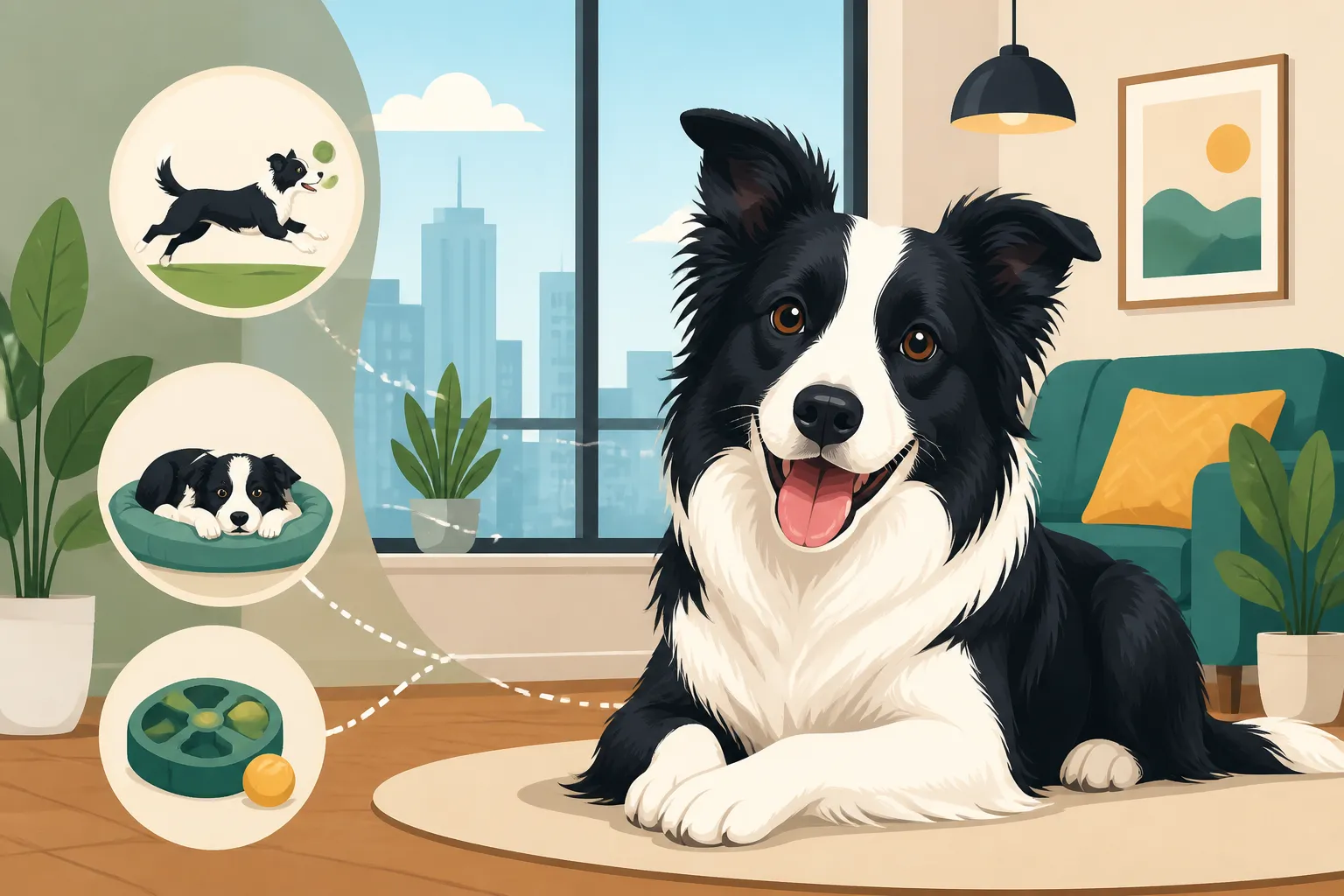
Living With a Border Collie in an Apartment
Let's be real for a moment: when you picture a Border Collie, you probably envision them racing across vast green fields, herding sheep with intense focus, not curled up in a city apartment. This common misconception often leads potential owners to believe that apartment living is an automatic "no-go" for this intelligent, high-energy breed, causing a lot of unnecessary worry and sometimes deterring otherwise wonderful homes. But I'm here to tell you that with the right understanding, commitment, and a proactive approach to their unique needs, a Border Collie can absolutely thrive in an apartment setting. This guide will walk you through exactly how to make it work, ensuring both you and your loyal companion lead a happy, fulfilling life, no matter your square footage.
The Apartment Myth: Why Space Isn't the Only Factor
It's a tale as old as time, or at least as old as canine breed descriptions: "Border Collies need a large yard." While it's true that a sprawling estate might seem ideal for a dog bred to cover miles in a day, the actual square footage of your living space is far less critical than many people assume. The real determinant of a Border Collie's happiness and good behavior isn't the size of your backyard, but the size of their world – meaning the quality and quantity of mental and physical engagement you provide.
Misconceptions About Space and Happiness
So many folks come to me worried that their modest apartment simply won't cut it for a Border Collie. They picture their dog bouncing off the walls, digging up carpets, and barking incessantly out of sheer frustration. This image, while a valid concern, often stems from a misunderstanding of what truly satisfies a Border Collie. They are not simply "outdoor dogs" who need to roam freely all day. They are working dogs whose satisfaction comes from having a job, from engaging their brilliant minds and powerful bodies in meaningful ways, regardless of whether that "work" is performed on a thousand-acre ranch or a small patch of urban green.
The truth is, a Border Collie left alone in a massive backyard for eight hours a day with nothing to do will be far more destructive and unhappy than one living in a small apartment whose owner dedicates time to daily structured exercise, training sessions, and mental puzzles. The yard itself doesn't provide the mental stimulation or directed physical outlet a Border Collie craves; a dedicated owner does. A big yard can even become a source of trouble, allowing a bored Border Collie to develop self-reinforcing habits like fence fighting, digging, or obsessive shadow chasing.
The True Needs: Engagement Over Acreage
What a Border Collie genuinely needs, more than boundless acreage, is engagement. Think of it this way: their minds are always "on," constantly observing, analyzing, and seeking patterns. This incredible intelligence is both their greatest asset and, if mismanaged, their greatest challenge for an owner. If you don't give them appropriate outlets for that brainpower, they will invent their own, and trust me, those self-invented jobs rarely align with your ideal apartment living scenario.
Their heritage as a herding dog means they have an innate drive to move, to control, and to solve problems. This translates into a strong desire for structured activity. A brisk walk around the block, while nice, is often just a warm-up for a Border Collie. They need activities that challenge both their bodies and their minds simultaneously, like agility, scent work, or advanced obedience. In an apartment, these activities become even more crucial because your indoor space won't provide spontaneous opportunities for them to burn off energy or focus their drive. It's about consciously integrating these elements into their daily life, turning your city into their playground and your home into their sanctuary.
Understanding the Border Collie's Apartment Needs
Bringing a Border Collie into an apartment isn't just about managing space; it's about understanding the core instincts of the breed and adapting your lifestyle to meet them within that environment. Their intelligence, drive, and sensitivity are amplified in a close-quarters setting, demanding a thoughtful approach to their care.
The Border Collie's Innate Drive and How It Manifests Indoors
Border Collies were bred for a specific job: to gather and control livestock. This work requires immense focus, quick decision-making, and incredible stamina. This powerful heritage doesn't simply disappear when they step through your apartment door. Instead, it often manifests in ways that can be challenging if you're not prepared. That intense focus might turn into an obsession with the reflection on the wall, the neighbor's cat through the window, or even your children's toys. They might try to "herd" family members, especially children or other pets, by nipping at heels or circling them. This isn't malice; it's their ingrained drive seeking an outlet.
When a Border Collie doesn't have an appropriate job, their energy doesn't just vanish. It gets redirected. Indoors, this can lead to excessive barking at every hallway sound, destructive chewing of furniture, or incessant pacing and whining. I've seen countless apartment-dwelling Border Collies whose owners mistakenly believe they are "hyper" or "naughty" when, in fact, they are simply expressing deeply ingrained needs that aren't being met. Understanding that these behaviors are often a cry for mental and physical engagement, rather than a sign of defiance, is the first step to successful apartment living.
Intelligence, Sensitivity, and the Urban Environment
Beyond their physical drive, Border Collies are renowned for their extraordinary intelligence and sensitivity. They are incredibly observant, picking up on the slightest changes in their environment, your mood, and daily routines. In a busy apartment building, this can be both a blessing and a curse. Their intelligence means they can learn complex commands and routines quickly, making them highly trainable for apartment life. You can teach them to settle on a mat, to ignore doorbells, or to engage with specific toys on command.
However, their sensitivity also means they can be easily overwhelmed by the constant stimuli of urban living. The sounds of neighbors walking overhead, doors slamming, sirens outside, or the buzz of the elevator can be stressful for a sensitive Border Collie. Unlike a dog bred for a calmer temperament, a Border Collie often processes these inputs with an intensity that can lead to anxiety or reactivity. A quiet house in the country allows them to tune out the world, but in an apartment, you need to actively work on helping them manage and cope with a much higher baseline of environmental noise and activity. This often involves proactive training and creating a secure, quiet space where they can truly decompress.
Crafting a Daily Schedule for Apartment Living
A consistent and structured daily routine is absolutely paramount for a Border Collie living in an apartment. These dogs thrive on predictability, and without the natural ebb and flow of farm life, it's up to you to create a rhythm that meets their deep-seated need for purpose and activity.
The Power of Routine and Predictability
Imagine you're a Border Collie, living in an apartment. Every day is a puzzle you need to solve. When will you eat? When will you go outside? What "job" do you have today? If these answers are inconsistent, it can create anxiety and frustration, often manifesting as unwanted behaviors like incessant barking or destructive chewing. A predictable routine acts like a comforting blanket for your Border Collie's highly analytical mind, telling them exactly what to expect and when. This reduces stress, conserves their mental energy, and helps them settle more easily between activities.
For example, a solid routine might involve an early morning walk, followed by breakfast and a short training session before you leave for work. Upon your return, it's time for their main physical and mental exercise outing, followed by dinner, a quiet chew toy, and then settling down for the evening. Sticking to this schedule, even on weekends, helps them understand the structure of their day. When they know that a big walk or a fun training game is coming at a specific time, they are more likely to relax and conserve their energy during quiet periods. This is key to preventing them from becoming restless and disruptive in an apartment setting.
Balancing Activity and Rest Throughout the Day
One of the biggest mistakes apartment owners make with Border Collies is thinking that endless activity is the answer. While they need a lot of exercise and mental stimulation, they also desperately need to learn how to switch off and rest. A Border Collie that is constantly stimulated and never taught to settle can become over-tired, over-aroused, and even more prone to anxiety and reactivity. Think of it as a finely tuned engine: you can't run it at full throttle all day long without consequences.
Your daily schedule should intentionally intersperse periods of high activity and intense mental work with periods of calm rest. This means that after a vigorous fetch session at the park or a challenging scent work exercise, your Border Collie needs dedicated downtime. This might involve a quiet chew toy, a period in their crate, or simply relaxing on their mat while you go about your business. Teaching them an "off-switch" is critical. You can encourage this by using a "place" command or Settling a Border Collie on a Mat after an activity, rewarding them for remaining calm and still. Without this balance, you'll find yourself with a dog that is perpetually wound up, struggling to relax even when there's nothing left to do, which is a recipe for disaster in close living quarters.
Mastering Mental Stimulation in Limited Spaces
If physical exercise is the body fuel for a Border Collie, mental stimulation is the rocket science that really gets their engines going. In an apartment, where physical space might be limited, engaging their brilliant minds becomes your most powerful tool for a happy, well-adjusted dog.
The Power of Puzzle Toys and Brain Games
Forget simply throwing a ball. For a Border Collie, a good puzzle toy is like a mini-PhD program. These dogs thrive on solving problems, and interactive feeders or puzzle toys can keep them engaged and thinking for significant periods. Instead of simply putting their dinner in a bowl, try using a slow feeder, a snuffle mat, or a puzzle toy that requires them to manipulate pieces to get their kibble. Brands like Kong and Nina Ottosson offer a fantastic range of difficulty levels, from beginner to expert, that you can find easily on Amazon.
Beyond food puzzles, there are countless brain games you can play. Hide-and-seek with treats or toys, teaching them to fetch specific named items, or even learning complex trick sequences can be incredibly tiring for them. Just like a human student after a long day of exams, a Border Collie who has been intensely focused on solving mental challenges will often be more ready for a nap than one who has just run five miles aimlessly. This kind of focused mental work builds their confidence, strengthens your bond, and provides a much-needed outlet for that famous Border Collie intelligence. You'll be amazed at how quickly Mental Work That Tires a Border Collie Faster can lead to a calm dog.
Integrating Training and Scent Work Indoors
Formal training sessions don't need a massive field; they can happen right in your living room! Short, focused training sessions several times a day are far more effective than one long, tedious one. Work on advanced obedience cues like "stay" with distractions, teaching them to go to a specific "place," or even fun tricks like "tidy up their toys." The beauty of Border Collies is their eagerness to learn and their ability to string behaviors together. Consider looking into online courses or virtual training platforms like BAXTER & Bella which can provide structured guidance and exercises perfect for apartment dwellers. They can help you break down complex skills into manageable steps, keeping your dog's mind sharp without ever leaving your home.
Scent work is another fantastic activity perfectly suited for small spaces. It taps into a dog's most powerful sense and mimics their natural instincts to forage and track. You can start simply by hiding treats around the room and encouraging your Border Collie to "find it." As they get better, you can increase the difficulty, hide more valuable rewards, or even introduce specific scents. This activity is incredibly rewarding for them, builds confidence, and tires them out in a profoundly different way than physical exercise. Plus, it requires very little equipment and can be done almost anywhere, making it ideal for apartment life. You can also explore teaching them to find specific toys by name, a skill that showcases their incredible memory and intelligence, as explored in Teaching a Border Collie the Names of Its Toys.
Maximizing Physical Exercise for Your Apartment Border Collie
While mental stimulation is crucial, we can't forget that Border Collies are still athletes at heart. Apartment living means you need to be intentional and creative about providing sufficient physical exercise, making every outdoor excursion count.
Structured Walks vs. Aimless Wandering
A quick trot around the block to potty is not "exercise" for a Border Collie; it's barely a stretch. While those sniffy walks are important for mental decompression and exploring their world, they need more structured, higher-intensity activity. Think about Why Walking a Border Collie Is Not Enough for this breed. This doesn't mean you need to run a marathon every day, but it does mean your walks should have a purpose beyond a leisurely stroll.
Incorporate bursts of jogging, power walking, or even short sprints during your walks if your environment allows. Utilize parks for focused fetch sessions (with a retrieve, not just chasing!) or practice directional commands like "left" and "right" to keep their minds engaged while moving. Long lines are your friend here, especially in open fields or safe, unfenced areas. A 30-foot long line allows them to stretch their legs and gallop without you needing to worry about an immediate recall to a busy street. Remember, a tired Border Collie is often a well-behaved Border Collie, and consistent, purposeful physical activity is non-negotiable for apartment dwellers.
Exploring Dog Parks, Urban Agility, and Specialized Activities
Dog parks can be a double-edged sword for Border Collies. While they offer space to run, many Border Collies don't do well with unstructured play with random dogs. Their herding instinct can kick in, causing them to try and "control" other dogs, which isn't always appreciated. If you do use a dog park, choose off-peak hours, observe your dog's interactions closely, and be ready to intervene or leave if it becomes overstimulating. Ideally, a dog park is best for one-on-one play with a known, appropriate playmate, or for a focused fetch session in a quieter area.
Consider looking for specialized dog sports clubs in your area. Urban agility classes, flyball, or disc dog activities are fantastic ways to combine physical exertion with mental challenge. These sports are often held in designated outdoor or indoor facilities, making them perfect for apartment dogs. Even if you don't compete, the training itself provides an incredible outlet. If formal classes aren't an option, you can create your own "urban agility" course with benches to jump over, stairs to run up and down, and lampposts to weave around. Just be mindful of surfaces and safety, ensuring you're not putting undue stress on their joints, especially when young. Exercise, Work and What Actually Settles a Border Collie is a great resource for understanding the holistic approach to their exercise needs.
Navigating Sensory Overload: Quieting the Apartment Experience
The constant hum of city life, the sudden noises, and the close proximity to neighbors can be incredibly challenging for a Border Collie's sensitive nature. Managing this sensory input is a key part of ensuring they are comfortable and calm in an apartment.
Understanding Noise Sensitivity in Border Collies
Border Collies are highly attuned to their environment. This acute awareness, so valuable in the field for detecting subtle shifts in livestock, can become a source of stress in a noisy apartment building. Every door slam, every muffled conversation, every siren outside, and even the vibration of footsteps from upstairs can trigger their alert system. This isn't just about startling; for some Border Collies, it can lead to chronic anxiety, excessive barking, or even fear-related aggression. Noise Fear in a Border Collie is a very real challenge many owners face.
It's crucial to acknowledge that their reaction isn't "bad behavior" but often a physiological response to overwhelming stimuli. Trying to punish barking only suppresses the symptom without addressing the underlying stress. Instead, your goal should be to help them cope, desensitize them to common sounds, and create a buffer against the constant urban din. This takes patience and a strategic approach, but it's vital for their well-being and your peace of mind in apartment living.
Creating a Quiet Oasis and Desensitization Techniques
Your apartment needs a designated "safe zone" or quiet oasis where your Border Collie can retreat from the world. This could be their crate covered with a blanket, a comfy bed in a quiet corner, or even a small room where they can feel secure and undisturbed. Using a white noise machine, a fan, or soft classical music can help mask external noises and create a calming auditory environment. You can find excellent, affordable sound machines on Amazon that make a real difference. This isn't just for when they're alone; it's a place they can go to decompress after an exciting outing or when the apartment building is particularly lively.
Beyond creating a quiet zone, you can work on desensitization to common apartment noises. Start with very low-volume recordings of typical sounds – doorbells, children playing, muffled voices, traffic. Play them quietly while your Border Collie is relaxed and engaged in a calm activity (like chewing a treat). Gradually increase the volume over days and weeks, always ensuring your dog remains relaxed. If they show signs of stress, lower the volume or take a break. The goal isn't to make them love the sounds, but to teach them that these noises are normal parts of the environment and don't require an alarmed response. This proactive training can significantly reduce anxiety and reactivity, helping your Border Collie cope with The Border Collie That Barks at Every Sound.
The Importance of a Designated Safe Space: Crates and Calm Zones
Even the most well-exercised and mentally stimulated Border Collie needs a place to call their own, especially in the close quarters of an apartment. A properly introduced crate or a designated calm zone isn't a punishment; it's a sanctuary and an invaluable tool for successful apartment living.
Crate Training: A Sanctuary, Not a Jail
Many people view crates as a cage, but for a Border Collie, a crate can become their personal den, a safe haven where they can truly relax without constant vigilance. Crate training is absolutely vital for apartment dogs for several reasons. Firstly, it provides a secure space where they can't get into trouble when you're not directly supervising them, preventing destructive chewing or inappropriate elimination. Secondly, it helps manage their instinct to "guard" the entire home, allowing them to relax in a smaller, controlled area. Thirdly, it teaches them to settle and be calm, a skill that many Border Collies, with their always-on brains, struggle with naturally.
Introduce the crate slowly and positively, making it a comfortable, inviting space with soft bedding and high-value chew toys. Never use the crate for punishment. The goal is for your Border Collie to want to go into their crate, seeing it as a safe, peaceful retreat. Feed meals in the crate, give them special chews only in the crate, and practice short periods of confinement, gradually increasing the duration. A well-crate-trained Border Collie is a calmer, more confident apartment dweller, and it provides you with peace of mind knowing they are safe and comfortable when you can't be right there. For comprehensive guidance on integrating a new dog or puppy, including crate training, consider resources like BAXTER & Bella.
Preventing Destructive Behavior and Teaching Relaxation
One of the most common complaints from apartment owners with Border Collies is destructive behavior – chewed furniture, gnawed baseboards, torn up rugs. This is almost always a symptom of boredom, anxiety, or unmet needs. A Border Collie's intelligence and strong jaws mean they can be incredibly efficient at destroying things when under-stimulated or stressed. A designated safe space, combined with appropriate mental and physical outlets, is your best defense.
By utilizing the crate or calm zone, you control their environment when you can't actively supervise. When they are out, ensure they are engaged in appropriate activities. Provide a variety of durable chew toys (again, Amazon has a huge selection of highly-rated tough toys), puzzle toys, and appropriate outlets for their energy. Teach them what they can chew, and reward them lavishly for choosing those items. Crucially, teach them to relax. This isn't innate for many Border Collies. Practice "settle" commands, reward calm behavior, and ensure they have a comfortable, quiet space to decompress. Without teaching relaxation, you're constantly fighting an uphill battle against their natural drive, which, in an apartment, can quickly lead to a stressed dog and a damaged home. This also ties into understanding why The Border Collie That Chews Itself When Bored does what it does.
| Activity Type | Examples (Apartment-Friendly) | Benefits for Border Collie | Owner Effort Level |
|---|---|---|---|
| Physical Exercise | Brisk walks/jogs, structured fetch, urban agility, long-line sprints | Muscle building, cardiovascular health, energy release | High (Daily) |
| Mental Stimulation | Puzzle feeders, scent games, advanced trick training, named toy retrieval | Brain engagement, problem-solving, cognitive fatigue | Medium (Daily) |
| Structured Training | Obedience cues, "place" command, settle work, leash manners | Impulse control, communication, mental focus, bond building | Medium (Daily) |
| Passive Enrichment | Durable chew toys, lick mats, KONGs stuffed with food | Self-soothing, appropriate chewing outlet, occupies time | Low (As needed) |
| Decompression | Crate time, quiet bed, white noise, gentle massage | Reduces stress, encourages relaxation, prevents overstimulation | Medium (Daily) |
Solving Common Apartment Border Collie Challenges
Living with a Border Collie in an apartment isn't without its unique challenges. However, most common issues stem from predictable causes and can be effectively managed with consistent training and a deep understanding of your dog's needs.
Managing Excessive Barking and Reactivity
One of the biggest struggles for apartment dwellers with Border Collies is barking. Whether it's at every hallway sound, people walking past the window, or the ever-present drone of city noise, excessive barking can quickly make you unpopular with your neighbors and lead to a very stressed dog. This often stems from their high sensitivity and their natural instinct to alert. For Border Collies, The Border Collie That Barks at Every Sound is a common issue.
The key to managing barking and reactivity is multi-faceted. First, ensure their core needs for exercise and mental stimulation are met – a bored or under-stimulated Border Collie is more likely to bark. Second, identify the triggers. Is it the doorbell? Footsteps outside? The dog next door? Once identified, you can work on desensitization and counter-conditioning. For example, if it's the doorbell, start by playing a recording of the doorbell at a very low volume and reward your dog for not barking. Gradually increase the volume while always rewarding calm behavior. Third, teach an alternative behavior, such as a "go to mat" command when the doorbell rings, and reward them for choosing to settle instead of bark. Management strategies like closing blinds, using white noise, and teaching a solid "quiet" cue are also essential.
Addressing Separation Anxiety and Destructive Chewing
Separation anxiety can be particularly pronounced in Border Collies, who thrive on companionship and have a strong desire to be "with their person." In an apartment, where you might be leaving for eight hours a day, this can manifest as destructive chewing, inappropriate elimination, self-harm, or frantic barking and howling when left alone. A Border Collie That Panics When You Leave needs a carefully structured approach.
Addressing separation anxiety requires patience and a gradual desensitization process. Start with very short absences – just seconds – and slowly build up the duration. Practice "pretend" departures (picking up keys, putting on your coat) without actually leaving, to help desensitize them to these triggers. Ensure they have appropriate, long-lasting chew toys or puzzle feeders before you leave, which can help associate your departure with a positive experience. A properly crate-trained Border Collie often feels more secure when left in their den. For more severe cases, professional help from a certified dog trainer or veterinary behaviorist is highly recommended. They can guide you through tailored protocols and, if necessary, discuss medication to help your dog cope. Remember, destructive chewing is often a symptom of underlying stress or boredom, so addressing the root cause is far more effective than simply trying to stop the chewing itself.
The Border Collie's Social Needs in an Apartment
Border Collies are often intensely bonded with their family members and, while sometimes aloof with strangers, usually enjoy appropriate social interaction. In an apartment, you need to be mindful of their social needs, both with people and with other dogs. Isolation can be detrimental to their emotional well-being. Regular, positive interactions are key.
This means not just walks, but opportunities to meet calm, friendly dogs (if your Border Collie enjoys dog-dog interactions). Organized playdates with known, compatible dogs can be a great outlet. Taking them to dog-friendly cafes or stores (if they are well-behaved and comfortable) provides controlled socialization and exposure to different environments. However, be vigilant for signs of overstimulation or stress. The intense The Border Collie Stare and Where It Comes From can sometimes be misinterpreted by other dogs or people, so managing interactions and advocating for your dog is crucial. Ultimately, apartment living doesn't mean your Border Collie lives a solitary life; it means you're actively seeking and providing enriching social connections that align with their temperament, ensuring that What a Border Collie Does With Its Whole Day includes meaningful interaction.
Disclaimer
This article is for general informational purposes only and does not constitute professional advice. Laws, prices and regulations vary by location and change over time. Consult a qualified professional for guidance on your specific situation.