A Border Collie That Cuts Off a Passing Cyclist
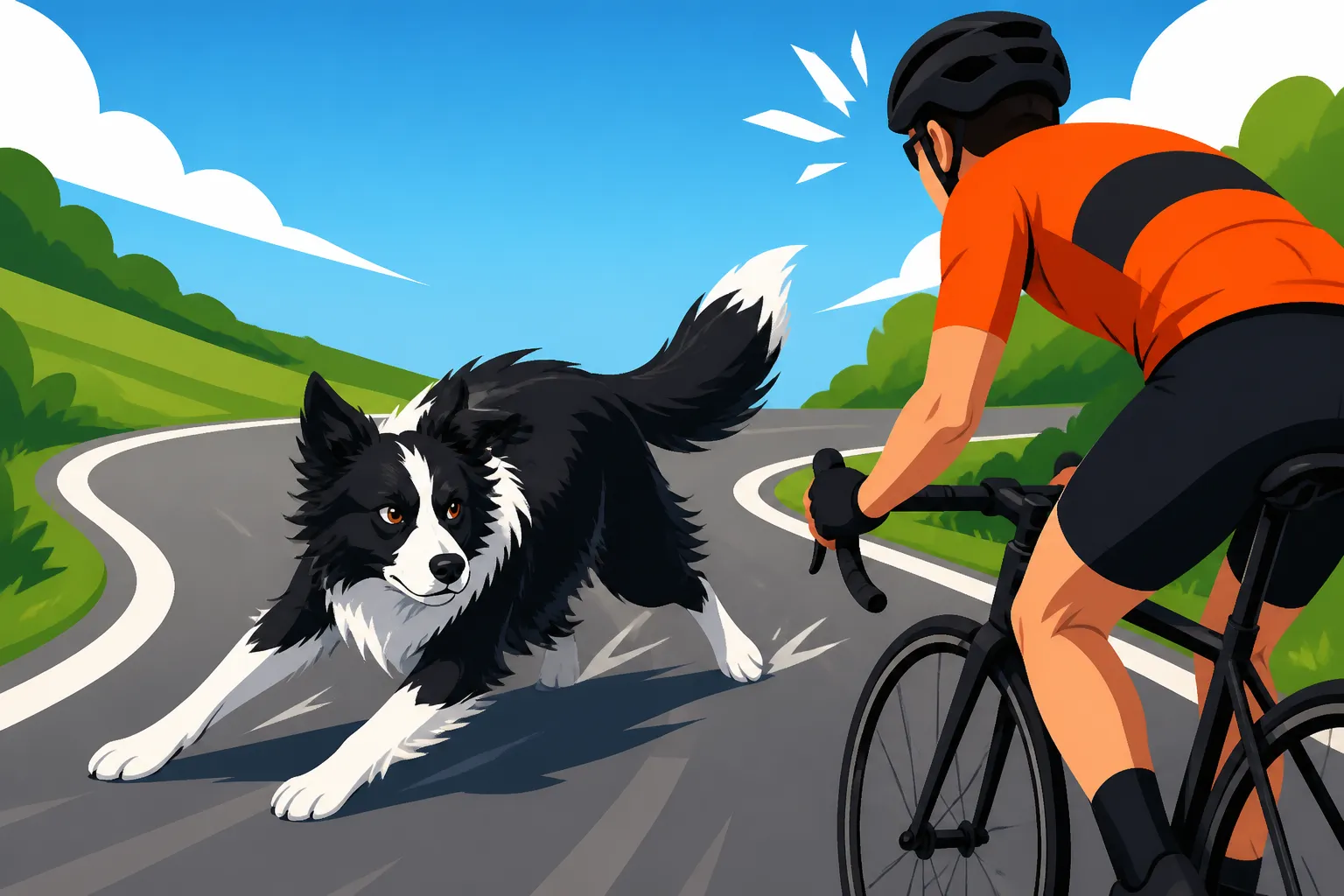
Few things are more alarming than seeing your beloved Border Collie suddenly dart into the road, cutting off a passing cyclist. It's a heart-stopping moment that leaves you breathless, apologizing profusely, and wondering how to stop this intense, instinctive behavior before someone gets hurt. This guide will help you understand why your Border Collie does this, the very real dangers involved, and practical steps you can take to manage and retrain this deeply ingrained herding drive.
Understanding the Herding Instinct Behind the Behavior
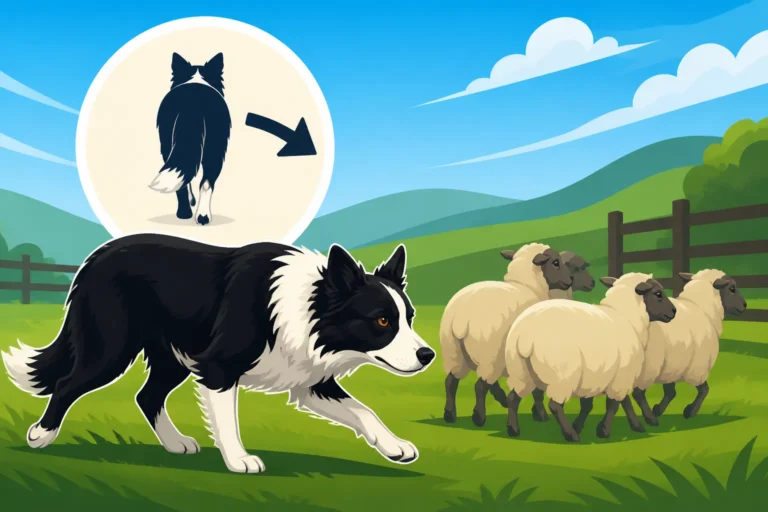
Let's be real, Border Collies are bred for one thing: to work stock. They live to control movement, to gather, to push, and to bring things back to a central point. When you see your dog "herding" a cyclist, it's not being malicious or aggressive in the typical sense. It's simply doing what its genetics scream at it to do, but in a completely inappropriate and dangerous context.
Why Cyclists Trigger the Herding Drive
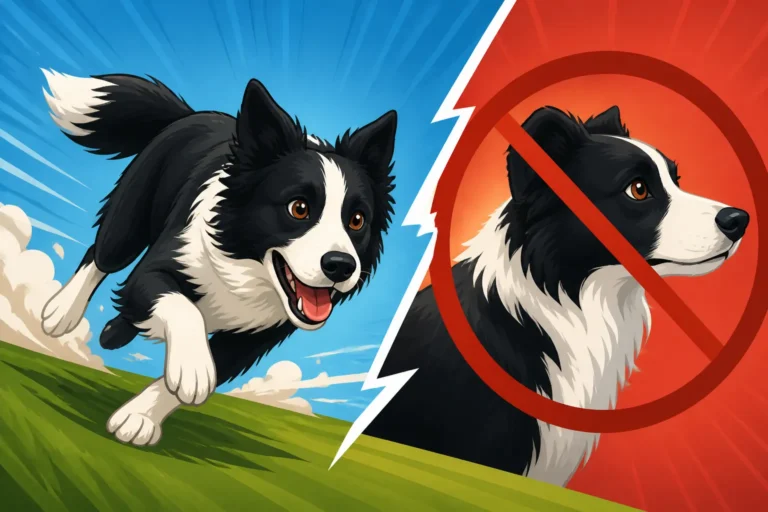
Think about a cyclist. They're moving quickly, often in a predictable direction, and then suddenly they might swerve, speed up, or slow down. To a Border Collie, this erratic or swift movement is incredibly similar to a sheep breaking from the flock or a herd moving across a field. The dog's brain sees a moving object that needs to be "controlled" or "gathered." The low crouch, the intense stare, the sudden dart – these are all classic herding maneuvers. The cyclist's quick movements stimulate that primal chase instinct, and your dog interprets it as an invitation to "work." It's not about malice; it's about an overwhelming, instinctual job that they feel compelled to do.
Sometimes, the bright colors of cycling gear or the flashing lights on a bike can also act as powerful visual stimulants, further drawing your Border Collie's attention and activating their prey or herding drive. This isn't just a simple distraction; it's a deep-seated command from their ancestors, compelling them to intervene and direct the perceived "errant" object. The focus becomes absolute, and it can be incredibly difficult to break their concentration once they've locked onto a target.
The Border Collie's Natural Job Description
The Border Collie's entire being is wired for herding. Their ancestors were selectively bred over centuries to manage livestock with precision, using their intense "eye" and lightning-fast movements. When they cut off a cyclist, they are, in their own minds, simply performing their job. They might be trying to turn the cyclist back, prevent them from going a certain direction, or simply attempting to stop the movement altogether. It's a desire to bring order to what they perceive as chaos, and that desire is incredibly powerful. They aren't thinking about traffic laws or personal safety; they're thinking about moving that "sheep" where it needs to go. This deep-seated instinct is why managing a Border Collie requires so much thought and deliberate training, especially when living in an environment far removed from a working farm. It's not just a hobby for them; it's their identity. You might also notice them trying to gather family members or even other pets into one room.
Assessing the Risk and Potential Consequences
While understanding the root cause is important, it doesn't diminish the very real dangers this behavior poses. It's crucial to acknowledge the seriousness of a Border Collie cutting off a cyclist, for everyone involved.
Safety Concerns for Cyclists and Your Dog
Let's be frank: a dog darting into the path of a moving bicycle can have catastrophic results. For the cyclist, it could mean a sudden fall, potentially leading to scrapes, broken bones, head injuries, or worse. Imagine the terror of being on a bike and having a fast-moving dog unexpectedly appear in your path. The dog itself is also in immense danger, facing the risk of being hit by the bicycle, or worse, veering into actual road traffic. Even if a direct collision is avoided, the sudden swerve a cyclist makes to avoid your dog could cause them to lose control and crash.
Beyond the immediate physical harm, there are significant legal and financial implications for you as the owner. Depending on your location, you could be held liable for the cyclist's medical bills, property damage to their bike, and even pain and suffering. A single incident could lead to a dog being deemed dangerous, with severe consequences including forced euthanasia in extreme cases. It's a terrifying thought, but it's a very real possibility when a strong herding instinct collides with public safety. This isn't just about inconvenience; it's about life and limb, for both your beloved companion and innocent bystanders.
Escalation and Reinforcement of the Behavior
The tricky thing about herding behaviors is that they are often self-reinforcing for the dog. If your Border Collie cuts off a cyclist and the cyclist slows down, swerves, or stops, your dog might interpret this as a "success." In their mind, they've effectively "worked" that "sheep." Every time this happens, the behavior becomes more ingrained, making it even harder to break. It's like giving them a treat for doing exactly what you don't want them to do. The thrill of the chase, the feeling of control, and the positive "outcome" (from the dog's perspective) can create a deeply habitual pattern.
What starts with cyclists might escalate to other moving objects, like joggers, cars, or even children playing. The more your dog practices this behavior, the stronger the neural pathways become, leading to a dog that's constantly scanning for opportunities to "herd." This isn't a problem that will just fade away; it's one that will likely worsen without consistent, deliberate intervention. It creates a dog that is always "on," always looking for a job, and always ready to make its own rules about what needs to be moved.
Practical Strategies to Prevent and Manage the Behavior
Addressing this behavior requires a multi-pronged approach, focusing on control, training, and redirection. It's not a quick fix, but with consistency, you can teach your Border Collie appropriate responses.
Leash Management and Equipment
For a Border Collie with a history of chasing cyclists, off-leash privileges near roads or trails frequented by bikes should be suspended immediately and indefinitely until significant progress has been made. This isn't punitive; it's for safety. A sturdy, non-retractable leash is your best friend here. Consider a longer training line, say 15-30 feet, which allows for some freedom of movement in open, safe areas while still maintaining control. This allows you to practice recall and impulse control from a greater distance.
When walking, always be aware of your surroundings. Scan ahead for approaching cyclists, and as soon as you spot one, gain control of your dog. A hands-free leash that attaches around your waist can be useful, especially if you're also an active person, but ensure it has a quick-release mechanism for safety. For dogs with a very strong pull, a front-clip harness can help redirect their momentum, making it harder for them to lunge forward with full force. Always check your Fencing Heights a Border Collie Will Not Clear at home to ensure they cannot escape and practice this behavior on their own. Similarly, if you have a yard, ensure any gates or weak spots are completely secure. You might even consider a double-gating system if your dog is particularly clever at escapes.
Training for Impulse Control and Desensitization
This is where the real work happens. You need to teach your Border Collie that moving objects are not for herding, and that focusing on you is far more rewarding. Start with basic obedience commands in low-distraction environments and gradually increase the difficulty. Commands like "leave it," "watch me," and "heel" are paramount.
- "Leave It": Practice this with tempting items on the ground, then with people walking by, then slowly introduce very distant, slow-moving objects. The goal is for your dog to disengage from the target and look to you for a reward.
- "Watch Me": This teaches your dog to make eye contact with you on cue, shifting their focus away from distractions.
- Structured Walks: Instead of letting your dog randomly sniff and pull, keep them engaged. Change directions frequently, practice sudden stops, and reward them heavily for staying by your side. This teaches them to pay attention to you rather than scanning the environment for "work."
For desensitization, begin by observing cyclists from a very safe distance where your dog barely notices them. Reward calmly. Gradually, over many sessions, decrease the distance, always staying within the threshold where your dog can remain calm and focused on you. The idea is to change their emotional response from "I must herd!" to "Oh, a bike, ho-hum, where's my treat for looking at Mom/Dad?" Consider an online training program like those offered by BAXTER & Bella, which provide structured lessons and support for impulse control and leash manners, helping you apply these techniques systematically. They can guide you through the steps to build Building a Border Collie Recall Against Moving Things, which is crucial when distractions are high.
Providing Appropriate Outlets for Herding Drive
Since the urge to herd is so strong, it's often more effective to redirect it into appropriate channels rather than trying to suppress it entirely. This means giving your Border Collie a "job" that satisfies their genetic wiring without endangering anyone.
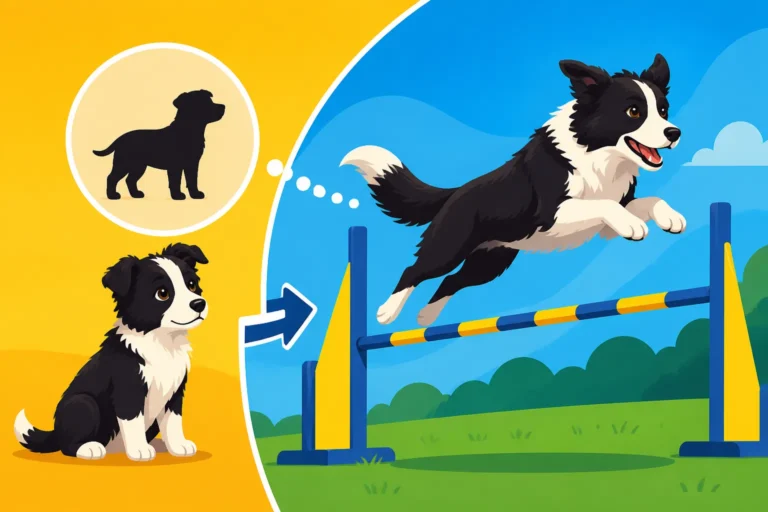
- Dog Sports: Agility, flyball, disc dog, or even rally obedience can provide excellent mental and physical stimulation. These sports require focus, quick movements, and problem-solving, all of which tap into the Border Collie's natural intelligence and drive.
- Herding Instinct Tests and Lessons: If you have access to a facility that offers herding, this can be an incredible outlet. Allowing your dog to work actual sheep or ducks in a controlled environment can be deeply satisfying for them and can reduce their desire to "herd" inappropriate objects. Even if you don't plan to trial, a few introductory sessions can make a huge difference in their overall demeanor.
- "Big Ball" Herding: For those without access to livestock, a large, sturdy herding ball (like a Jolly Ball) can be a great substitute in a securely fenced area. This allows them to push, gather, and control an object safely. Read more about Big-Ball Herding Games for a Border Collie to see if it's a good fit for your dog.
- Scent Work or Treibball: These activities also channel their energy and intelligence. Scent work engages their nose and problem-solving skills, while Treibball (where dogs herd large exercise balls into a goal) offers a different kind of herding outlet.
Remember, a tired Border Collie, both mentally and physically, is a well-behaved Border Collie. Providing ample mental stimulation throughout their day, perhaps using puzzle toys available on Amazon or engaging in trick training, can make a huge difference in managing their overall drive. Understanding What a Border Collie Does With Its Whole Day will help you realize the sheer amount of engagement they truly require.
Environmental Management
Sometimes, the simplest solution is to change the environment to prevent the behavior from occurring.
- Choose Different Walking Routes: Avoid known cycling paths or busy roads during peak cycling times. Opt for quieter residential streets, parks without bike trails, or even an empty school field during off-hours. Explore new areas where you know there will be fewer triggers.
- Visual Barriers: If your dog is in a fenced yard and is still reacting to cyclists passing by, consider adding visual barriers to the fence. Privacy slats, dense shrubbery, or even tarps can block their line of sight, preventing them from getting triggered. This reduces the constant vigilance and reactivity.
- Secure Containment: Ensure your yard is truly escape-proof. A Border Collie can be an escape artist if motivated. Double-check gates, fence lines, and any potential digging spots. Reinforce any areas where they might be able to squeeze through or jump over. You might be surprised at Fencing Heights a Border Collie Will Not Clear but many can easily jump a standard four-foot fence.
By being proactive about where and when you walk your dog, you can significantly reduce their exposure to triggers and give yourself more opportunities to practice calm, focused behavior. This isn't about hiding your dog away, but about strategically setting them up for success.
When to Seek Professional Help
While these strategies are effective, sometimes the behavior is too ingrained, or the owner feels overwhelmed. There's no shame in seeking expert guidance.
Recognizing When You're Overwhelmed
It's completely normal to feel frustrated or even scared when your Border Collie exhibits dangerous behaviors like cutting off cyclists. If you've been consistently applying training methods and seeing little to no improvement, or if the behavior is escalating, it's a clear sign that you might need a professional's help. Other indicators include:
- Safety Concerns: If you fear for the safety of your dog, yourself, or the public every time you go for a walk.
- Lack of Control: If your dog completely ignores your commands when a cyclist approaches, despite extensive practice in calmer settings.
- Stress and Anxiety: If the situation is causing you significant stress or anxiety, making you dread walks or outdoor activities.
- Aggression: If the herding behavior is accompanied by growling, snapping, or lunging that could be interpreted as aggression rather than just an intense desire to herd.
These are all valid reasons to reach out to an expert who can provide a fresh perspective and tailored solutions. Don't let the problem fester; early intervention is always best.
Choosing a Qualified Trainer or Behaviorist
Finding the right professional is key. Look for trainers or certified applied animal behaviorists who have specific experience with herding breeds and a deep understanding of their unique drives. They should employ positive reinforcement methods, focusing on rewarding desired behaviors rather than punishing unwanted ones. Avoid anyone who suggests harsh corrections or dominance-based techniques, as these can damage your relationship with your dog and exacerbate anxiety or fear.
When researching, ask about their experience with Border Collies and similar high-drive breeds. Inquire about their methodologies and what a typical training plan would look like. A good professional will often start with a thorough assessment of your dog's behavior, your household environment, and your training goals. They should be able to provide you with practical, step-by-step guidance and support. Don't be afraid to ask for references or watch a session with another client. Sometimes, Retraining a Rescued Border Collie With No Rules can be particularly challenging, and a professional can offer invaluable insights into managing ingrained habits.
A professional might recommend a combination of behavior modification techniques, management strategies, and perhaps even some medication in severe cases of anxiety or compulsive behavior, though this is usually a last resort. They can help you build a stronger bond with your dog, establish clear communication, and create a safer, more harmonious life for both of you.
| Strategy | Description | Immediate Impact | Long-Term Goal |
|---|---|---|---|
| Leash Management | Always use a sturdy, non-retractable leash in triggering areas. | Prevents immediate incidents and ensures physical control. | Establishes safety protocols; allows controlled exposure. |
| Impulse Control Training | Practice "leave it," "watch me," and "stay" with increasing distractions. | Redirects dog's focus to handler; builds mental discipline. | Dog chooses to ignore distractions and look to handler naturally. |
| Desensitization | Gradually expose dog to triggers (cyclists) from a distance, rewarding calm. | Reduces reactivity and emotional intensity around triggers. | Dog views triggers as neutral background noise, not something to herd. |
| Redirection of Drive | Engage in dog sports (agility, herding ball, scent work) or actual herding. | Satisfies innate herding instinct in a controlled, appropriate manner. | Decreases desire to herd inappropriate targets; dog is mentally and physically fulfilled. |
| Environmental Management | Avoid busy cycling routes; use visual barriers in yards. | Minimizes exposure to triggers; prevents rehearsal of unwanted behaviors. | Creates a safe, predictable environment; reduces dog's overall stress. |
| Professional Help | Consult a qualified trainer or behaviorist for complex or persistent issues. | Provides expert assessment, tailored strategies, and ongoing support. | Resolves deep-seated behavioral patterns; ensures long-term success and safety. |
Dealing with a Border Collie's intense herding instinct towards cyclists is undoubtedly a challenge, but it's one that can be managed with patience, consistency, and the right approach. By understanding their motivations, proactively managing their environment, and engaging in deliberate training, you can transform a dangerous habit into a manageable, even enjoyable, aspect of life with your incredible dog. Remember, their drive isn't a flaw; it's a gift that needs careful guidance.
Disclaimer
This article is for general informational purposes only and does not constitute professional advice. Laws, prices and regulations vary by location and change over time. Consult a qualified professional for guidance on your specific situation.