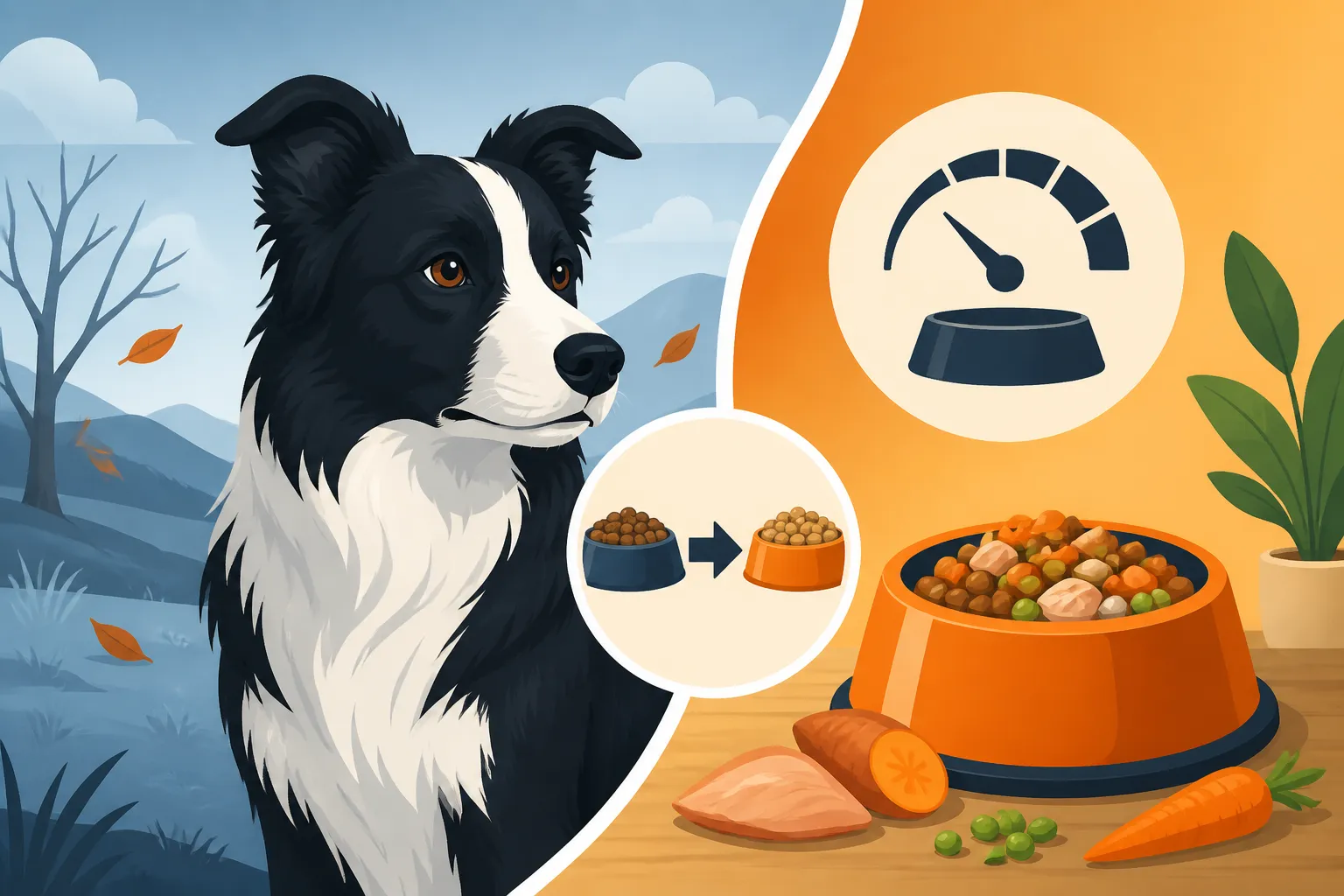
Adjusting a Border Collie’s Food in the Off Season
It's a familiar scenario for many of us with high-drive Border Collies: the trial season ends, the sheep are put away, or maybe those intense agility classes take a break for winter. Suddenly, our four-legged athletes go from burning thousands of calories a day to a much more sedentary routine. This drastic shift can lead to unwanted weight gain, lethargy, and a host of other health issues if their diet isn't adjusted accordingly. This guide will walk you through how to smartly adapt your Border Collie's feeding regimen to match their lower activity levels during the off-season, ensuring they stay healthy, happy, and ready to spring back into action when work resumes.
Understanding the Shift in Your Border Collie's Energy Needs
When your Border Collie is in the thick of competition or working stock daily, their metabolism is a roaring furnace, efficiently converting high-calorie food into the boundless energy we admire. The off-season, however, brings a significant slowdown, and failing to acknowledge this can quickly throw their delicate energy balance out of whack.
The Metabolic Slowdown of Reduced Activity
Think about yourself: if you stopped running marathons every weekend but kept eating like you were, you'd quickly see the numbers on the scale climb. The same goes for our Border Collies. During peak season, they're often burning through an incredible amount of calories, sometimes as much as twice the ration of a pet dog, as detailed in How Many Calories a Border Collie Burns Herding. Their bodies are conditioned to high output, utilizing fats and proteins for sustained energy. When this intense activity ceases, or even just significantly reduces, their metabolic rate naturally slows down. Their bodies are no longer demanding that constant fuel, and if you continue to offer it, those excess calories have nowhere to go but into fat reserves. This isn't just about looking chubby; it puts strain on their joints, internal organs, and overall cardiovascular system, potentially shortening their lifespan and making them less capable when the on-season eventually rolls around again.
Psychological Impact and Boredom Eating
Beyond the physical, there's a significant psychological component to a Border Collie's off-season. These are incredibly intelligent and driven dogs, bred for purpose and constant mental engagement. When their usual outlets for intense physical and mental work are reduced, boredom can set in. For some dogs, just like some people, boredom can lead to increased eating. They might seek out food more often, become more persistent in begging, or simply eat more quickly if their food isn't appropriately portioned. This isn't necessarily a sign of true hunger, but rather a way to fill time or seek comfort. It's crucial to distinguish between genuine caloric need and a dog trying to occupy itself. Providing mental stimulation through puzzle toys (many excellent options are available on Amazon) or training sessions can help alleviate this boredom, but adjusting their food intake remains paramount.
Evaluating Your Border Collie's Body Condition
Before you make any changes to your Border Collie's diet, you need an accurate baseline. Knowing what a healthy weight looks like and how to assess it is fundamental. After all, if you don't know where you are, how can you know where you're going?
Hands-On Assessment: The Rib Test and Waistline Check
The visual assessment of a Border Collie's body condition can be tricky, especially with their varied coat types. A rough-coated dog might look perfectly fine even when carrying extra weight, hiding a multitude of sins under all that fur. That's why a hands-on assessment is absolutely critical.
First, the rib test: gently run your hands along your dog's sides. You should be able to feel their ribs easily, like feeling the knuckles on your hand, without having to press hard. If you have to dig your fingers in to feel them, your dog is likely overweight. Conversely, if the ribs are prominently visible and feel sharp with no fat covering, they might be too thin.
Next, examine their waistline and abdominal tuck. From above, your Border Collie should have a distinct waist, narrowing behind their ribcage before flaring out slightly at the hips. When viewed from the side, their abdomen should tuck up, not hanging low or forming a straight line from chest to hind legs. This "tuck" is a key indicator of leanness. A good resource for understanding these benchmarks is The Body Condition a Sport Border Collie Carries. These aren't just aesthetic concerns; a proper waistline and tuck indicate appropriate fat distribution, which is vital for joint health and agility.
Regular Weigh-Ins and Documentation
While visual and tactile assessments are excellent, nothing beats objective data. Regular weigh-ins are your best friend, especially during the off-season. Ideally, you should weigh your Border Collie weekly or bi-weekly. Use the same scale if possible (a good quality human scale might work for smaller dogs, or a pet scale if your vet has one you can use, or you might consider investing in one for home if you have a larger dog or multiple dogs).
Keep a journal or a simple spreadsheet to record their weight, along with notes on their activity levels and food intake. This documentation allows you to spot trends early. A gradual creep of a pound or two might not seem like much, but over a few months, it can add up significantly. Early detection means you can make small, manageable adjustments to their food before it becomes a major problem. It’s about being proactive, not reactive, which is a lesson many of us learn the hard way after a dog has already gained too much weight.
Making the Dietary Adjustments
Once you've assessed your Border Collie's current condition and acknowledged their reduced energy needs, it's time to implement changes. This isn't about drastic cuts but smart, gradual adjustments.
Reducing Portions, Not Quality
The first and most straightforward step is often to reduce the quantity of food. This sounds simple, but it needs to be done carefully. You don't want to switch to a lower quality food just to save calories, as this can deprive your dog of essential nutrients. Instead, focus on slightly decreasing the portion size of their regular, high-quality performance food. If your dog was getting, say, three cups a day during peak season, try reducing it by about 10-15% initially, perhaps to 2.5 cups. Observe for a couple of weeks, re-assess their body condition, and adjust further if needed. This gradual approach prevents sudden hunger pangs or nutritional deficiencies.
Consider using a slow feeder bowl, which can make a smaller portion last longer and feel more satisfying. You can find many effective and durable options for slow feeder bowls on Chewy. Also, remember to factor in any treats they receive. If your Border Collie is getting training treats, those calories count! Opt for low-calorie training treats or even small pieces of plain cooked vegetables like carrots or green beans, which can add bulk and fiber without excessive calories. Remember, the goal isn't to starve them, but to match their energy intake to their energy output.
Considering Lower-Calorie or Weight Management Formulas
For some Border Collies, especially those prone to gaining weight easily or older dogs whose metabolism has naturally slowed, simply reducing portions of their high-performance food might not be enough. In these cases, transitioning to a dedicated "weight management" or "light" formula could be beneficial. These foods are designed with fewer calories and often higher fiber content to help dogs feel full on fewer calories.
When considering such a switch, always do it gradually over 7-10 days to avoid upsetting your dog's stomach. Mix a small amount of the new food with their old food, slowly increasing the proportion of the new food each day. Popular brands offer excellent weight management formulas; you can explore options from reputable brands on platforms like Chewy or consult with your vet. Another option could be incorporating more fresh food elements, like those offered by Ollie, which can often be tailored to specific caloric needs with nutrient-dense, less processed ingredients, making it easier to manage weight while ensuring high quality nutrition. Always check the ingredient list for fillers and ensure the protein sources are high-quality. Feeding a Border Collie on a Performance Diet touches on this during peak season, but the principles of quality remain.
Adjusting Training Treats and Chews
During the off-season, your Border Collie might still be engaging in training, but perhaps with less intensity or frequency. This means the calorie contribution from treats can become disproportionately higher. Those handfuls of delicious, high-value training treats add up rapidly.
Make a conscious effort to use much smaller pieces of treats. A pea-sized piece is often just as motivating for a Border Collie as a large chunk. As mentioned, incorporate healthy, low-calorie alternatives like small carrot pieces, green beans, or even air-popped popcorn (without butter or salt). For longer-lasting chews, consider alternatives that are lower in calories than traditional rawhide or high-fat dental sticks. Natural chews like dehydrated sweet potato can be a good option. If your dog gets recreational chews, make sure to adjust their mealtime calories to account for these as well. It’s all part of a holistic approach to managing their caloric intake during a less active period.
Monitoring and Fine-Tuning
Making initial changes is just the beginning. The real art of off-season feeding is in constant observation and adjustment. Your Border Collie is an individual, and what works for one might not work for another.
Regular Body Condition Checks
You've already learned how to perform hands-on body condition checks. Now, make them a regular habit. Every week, or at least every two weeks, run your hands over your dog's ribs, check their waistline, and look at their abdominal tuck. Compare what you feel and see to the previous week. Are the ribs becoming harder to feel? Is the waistline starting to disappear? These are early warning signs that you need to make further adjustments. It's much easier to correct a half-pound gain than a five-pound gain.
This consistent monitoring also helps you understand how different activity levels impact your individual dog. Maybe you thought your off-season routine was quite low-key, but your dog is still maintaining a good weight, suggesting their metabolism is naturally higher. Or perhaps even a slight reduction in activity causes them to pack on pounds easily. This personalized understanding is invaluable for their long-term health and for preventing issues that are expensive to fix down the line, as discussed in Fourteen Years of Border Collie Bills.
Seeking Veterinary Guidance
Never hesitate to consult your veterinarian, especially if you're unsure about how to adjust your Border Collie's diet or if you notice significant weight changes that don't respond to your adjustments. Your vet can provide tailored advice based on your dog's age, overall health, and specific breed characteristics. They can also rule out any underlying medical conditions that might be contributing to weight gain or loss, such as a sluggish thyroid or other metabolic issues, which can sometimes masquerade as simple dietary problems. Regular check-ups, like The Annual Exam a Border Collie Needs, are crucial for catching these things early.
A vet can also recommend specific prescription weight-management diets or supplements if needed. For example, some joint supplements (often available through Chewy or Amazon, but vet-recommended) can be beneficial if weight gain puts extra stress on joints, as discussed in Joint Supplements for a Border Collie Doing Agility. Don't be afraid to ask for their professional opinion; they are your best partner in ensuring your Border Collie's health.
The Long-Term View: Preventing Yo-Yo Weight
The goal of adjusting your Border Collie's food in the off-season isn't just to manage their weight for a few months. It's about instilling healthy habits that contribute to their overall longevity and well-being. Preventing the "yo-yo effect"—where a dog gains weight in the off-season only to lose it again rapidly when work resumes—is crucial. Such fluctuations are tough on their bodies and can contribute to metabolic stress.
By consistently managing their diet through varying activity levels, you help maintain a healthy, stable weight year-round. This reduces the risk of joint issues like Osteoarthritis in a Border Collie by Eight, keeps their cardiovascular system in top shape, and ensures they are always ready to return to their peak performance. It's an investment in their future, ensuring they stay sound and active for as long as possible, whether they're gathering sheep, flying through an agility course, or simply enjoying a focused walk with you.
| On-Season (High Activity) | Off-Season (Reduced Activity) | |
|---|---|---|
| Calorie Intake | Higher (Performance food, frequent meals) | Lower (Reduced portions, possibly lower-cal formula) |
| Protein Content | Crucial for muscle repair and maintenance | Still important, but overall volume may decrease |
| Fat Content | Higher for sustained energy | Moderate to lower to prevent weight gain |
| Fiber Content | Good for digestion | Can be increased for satiety on fewer calories |
| Treats | Can be higher value/frequency for training | Low-calorie, smaller portions, healthy alternatives |
| Feeding Frequency | May benefit from multiple smaller meals | Standard 1-2 meals, adjusted portions |
| Monitoring | Focus on performance and stamina | Focus on body condition and preventing weight gain |
Disclaimer
This article is for general informational purposes only and does not constitute professional advice. Laws, prices and regulations vary by location and change over time. Consult a qualified professional for guidance on your specific situation.