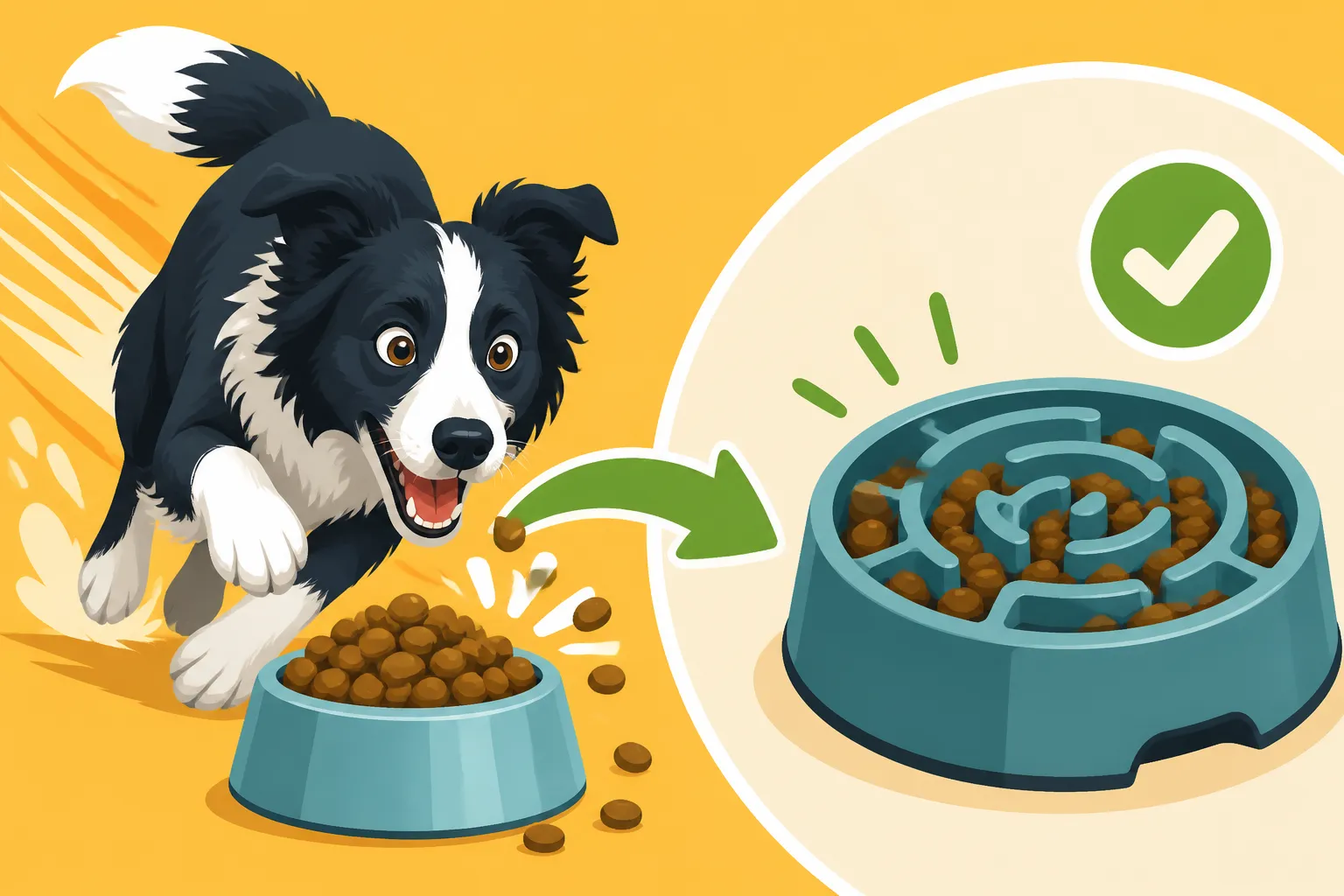
Bowls That Slow a Border Collie Bolting Dinner
If you've ever watched your Border Collie inhale their dinner in what feels like mere seconds, leaving you wondering if they even tasted it, you're certainly not alone. Many Border Collie owners grapple with this exact issue, which isn't just a quirky habit but can lead to real health concerns like choking, indigestion, or even life-threatening bloat. This comprehensive guide will delve into why our intelligent, driven companions eat so fast and, more importantly, how specially designed slow feeder bowls can be a game-changer for safer, more enjoyable mealtimes.
Why Border Collies Devour Their Meals So Quickly
It's easy to assume your Border Collie is just being greedy when they bolt their food, but there's often a deeper, instinctual reason behind this frantic eating behavior. Understanding these roots can help us approach the problem with more empathy and effective solutions.
The Instinctive Drive to Compete
Border Collies, even those far removed from a working farm, carry strong genetic traits from their ancestors. In a pack environment, especially one where resources might have been scarce or shared among multiple dogs, eating quickly was a survival mechanism. The faster you ate, the more you got, and the less chance another dog had to steal your portion. This isn't about conscious greed; it's a deep-seated impulse to secure nourishment efficiently. Even if your Border Collie is an only dog in a safe, loving home, that primal urge can still surface at meal times.
Think about how quickly a litter of puppies learns to scramble for a spot at their mother's milk bar. That competitive drive starts incredibly young, and it's reinforced every time there's food involved. Even in a household with multiple dogs, where each has their own bowl, the sheer presence of another canine can trigger this "eat fast before it's gone" mentality. It's not personal; it's just how their brains are wired to react to perceived competition, however mild. This can be especially true if they grew up in a busy kennel environment or were rescued and experienced food insecurity.
High Energy Levels and Metabolism
Border Collies are renowned for their incredible energy levels and often, a lightning-fast metabolism to match. A dog that burns through calories like kindling needs efficient refueling. While this doesn't directly cause them to bolt their food, it certainly contributes to their intense focus and urgency when a meal is presented. They've spent hours working, training, or simply being incredibly active, and their bodies are signaling a profound need for sustenance.
When a Border Collie comes in from a vigorous training session, whether it's agility, herding, or just an epic game of fetch, their internal systems are primed for recovery and replenishment. They're not just hungry; their entire body is in a state of high demand for nutrients. Presenting a bowl of food at this point can feel like hitting a "go" button, and they dive in with the same intensity they bring to their work or play. Consider How Many Calories a Border Collie Burns Herding—it's a lot, and they know it!
Conditioned Behavior and Excitement
Sometimes, the fast eating is less about instinct and more about learned behavior and sheer excitement. If every meal has been a race since puppyhood, they've been inadvertently trained to eat quickly. The sight and smell of food become a huge trigger, leading to an adrenaline rush that makes them gulp rather than chew.
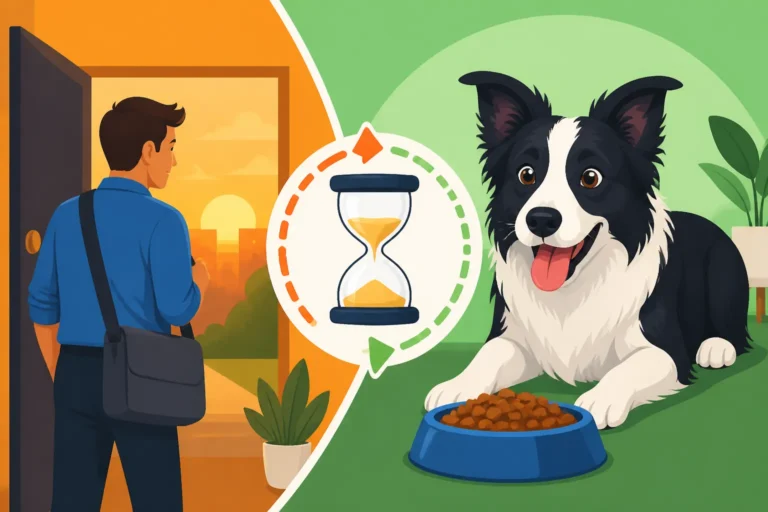
Imagine the routine: you pick up the food bag, the kibble rattles, the bowl clinks, and your Border Collie starts doing zoomies or barking with anticipation. This build-up of excitement, while endearing, can translate directly into a frenzied eating pace. It's a cascade of positive reinforcement: food appears, they eat it fast, they feel satisfied (at least temporarily), and the cycle continues. Breaking this conditioned response requires a deliberate effort to change the mealtime routine and introduce tools that force a slower pace.
The Real Risks of Fast Eating for Your Border Collie
Beyond the messy eating and the feeling that your dog didn't even enjoy their meal, bolting food can lead to several serious health problems for your Border Collie. These aren't minor inconveniences; some can be life-threatening and require immediate veterinary intervention.
Choking and Aspiration Pneumonia
When a Border Collie eats too fast, they tend to swallow large, unchewed chunks of food. This dramatically increases the risk of choking, especially if they try to gulp down water immediately after or during their meal. A piece of kibble can easily get lodged in their windpipe, causing distress, coughing, and potentially a full airway obstruction.
Even if they don't fully choke, the rapid ingestion can lead to aspiration. This means food particles, water, or even stomach acid can be inhaled into the lungs, leading to a severe infection called aspiration pneumonia. Symptoms can include coughing, difficulty breathing, lethargy, and a fever. It's a serious condition that requires prompt veterinary care and can be particularly dangerous for a highly active dog like a Border Collie, potentially sidelining them from their beloved activities.
Indigestion, Vomiting, and Diarrhea
Rapid eating often means insufficient chewing and a lot of air being swallowed along with the food. This excess air can lead to uncomfortable bloating, gas, and an upset stomach. Your Border Collie might experience indigestion, characterized by burping, flatulence, or discomfort after eating.
It's also common for dogs who eat too fast to regurgitate or vomit their food shortly after eating. This isn't true vomiting, which involves stomach contractions; it's more like the food simply comes back up because their stomach couldn't process it quickly enough or they swallowed too much air. This can be frustrating for owners and uncomfortable for the dog, potentially leading to nutrient deficiencies if it happens regularly. Chronic indigestion can also manifest as loose stools or diarrhea, further impacting their ability to absorb nutrients and maintain their energy.
Gastric Dilatation-Volvulus Bloat
This is arguably the most frightening and life-threatening risk associated with fast eating, particularly in deep-chested breeds like Border Collies. Gastric Dilatation-Volvulus, or GDV, commonly known as bloat, occurs when the stomach fills with gas, food, or fluid (dilatation) and then twists upon itself (volvulus). This twisting cuts off blood supply to the stomach and often the spleen, creating a medical emergency that can be fatal within hours without immediate surgery.
While the exact causes of bloat are complex and multifactorial, rapid eating, especially followed by exercise or drinking large amounts of water, is considered a significant risk factor. The swallowed air contributes to stomach distension, and the subsequent movement can encourage twisting. Preventing bloat is paramount, and slowing down meal consumption is a key preventative measure. Seeing Whether a Border Collie Bloats After Running Hard highlights just how serious this condition can be for our active companions.
Types of Slow Feeder Bowls for Border Collies
Thankfully, the pet product market has evolved to address the issue of fast eating, offering a variety of slow feeder bowls designed to make mealtimes a safer, more engaging experience for your Border Collie. Each type works a little differently, but they all share the common goal of making your dog work a bit harder for their kibble.
Maze and Labyrinth Designs
These are perhaps the most common and recognizable types of slow feeder bowls. They feature various ridges, valleys, and patterns that create a maze-like structure within the bowl. Instead of a flat surface where food can be scooped up easily, your Border Collie has to navigate their tongue and nose around the obstacles to get to each piece of kibble.
The effectiveness of maze bowls comes from their simple yet clever design. They don't require your dog to solve a complex puzzle, but they do physically obstruct large mouthfuls of food. This forces them to take smaller bites and slows down the overall eating process significantly. You can find these in various materials, from durable plastic to ceramic, and with different levels of complexity in their maze patterns. Some popular designs are shaped like swirls, waves, or geometric patterns. Many pet supply stores, including large online retailers like Chewy and Amazon, offer a vast selection of these.
Puzzle Feeders and Interactive Bowls
Taking the concept of slow feeding a step further, puzzle feeders and interactive bowls require your Border Collie to actively solve a mini-challenge to release their food. These are often more engaging and can provide mental stimulation along with slowing down eating. They might involve sliding covers, lifting compartments, or rotating sections.
For a highly intelligent breed like the Border Collie, these feeders can be particularly beneficial, tapping into their natural problem-solving abilities. Instead of just eating, they're engaging their minds, which can contribute to a more settled and satisfied dog overall. A simple example might be a ball that dispenses kibble as your dog nudges it around, or a tray with small nooks that they have to investigate with their nose and tongue. These can be a great way to incorporate Puzzle Feeders That Hold a Border Collie into their daily routine, providing both physical and mental enrichment.
Textured and Elevated Bowls
While not as common as maze bowls, textured bowls offer a subtle way to slow down eating. These bowls might have small bumps, grooves, or divots on the bottom that simply make it harder for the dog to get a full scoop of food. They're less about creating a labyrinth and more about creating an uneven surface.
Elevated bowls, sometimes called raised bowls, don't inherently slow eating, but they can improve posture and digestion for some dogs, which might indirectly help with comfortable, slower eating. For very large or elderly dogs, an elevated bowl can reduce strain on their neck and joints. However, for a healthy, athletic Border Collie, the primary benefit for slowing down will still come from the design of the bowl itself, not just its height. Always ensure that if you opt for an elevated bowl, the slow-feeder insert or design is still present and effective.
Choosing the Right Slow Feeder for Your Individual Dog
With so many options available, picking the perfect slow feeder for your Border Collie can feel a bit overwhelming. The "right" choice depends on several factors, including your dog's personality, their eating habits, and even the ease of cleaning.
Considering Material and Durability
Slow feeder bowls come in various materials, each with its own pros and cons:
- Plastic: Often the most affordable and lightweight. Look for BPA-free, food-grade plastic. The downside is that some plastics can scratch over time, potentially harboring bacteria, and a determined chewer might damage them. They are generally easy to clean, but some might retain food odors.
- Ceramic: Heavier and more stable, making them harder for a dog to push around. They are usually dishwasher safe and easy to keep clean, and they don't scratch easily. The main drawback is their fragility—a ceramic bowl can chip or break if dropped.
- Stainless Steel: Extremely durable, hygienic, and easy to clean. Stainless steel is resistant to bacteria, odors, and chewing. While there are fewer complex maze designs in pure stainless steel, some brands offer stainless steel bowls with plastic inserts that create the slow-feeding obstacles. This can be a great combination of durability and functionality.
When making your choice, think about how rough your Border Collie is with their bowls and how often you'll be cleaning it. For a dog that might try to "solve" the bowl with their teeth, a sturdy material is essential.
Level of Difficulty and Engagement
Slow feeders vary widely in the challenge they present. Some are simply designed to make it physically harder to scoop food, while others require active problem-solving.
- Beginner Levels: Start with a simpler maze design if your Border Collie is new to slow feeders. These typically have wider channels and shallower obstacles. The goal here is just to break the habit of gulping, not to frustrate them.
- Intermediate Levels: As your dog gets used to it, you can move to more intricate maze patterns or simple puzzle feeders that require a little nudge or slide. These offer a bit more mental engagement.
- Advanced Levels: For the super-smart and persistent Border Collie, advanced puzzle feeders can provide significant enrichment. These might have multiple steps or require different actions to get to the food. However, be cautious not to choose something so difficult that your dog gives up or becomes overly frustrated. The aim is to make mealtime a positive, engaging experience, not a source of stress. Observe your dog's reaction; if they're constantly whining or pawing aggressively, it might be too hard.
A good strategy is to have a couple of different slow feeders and rotate them to keep things interesting. This prevents your Border Collie from getting bored with one design or figuring out the "cheat code" too quickly.
Cleaning and Maintenance
This might seem like a minor point, but a difficult-to-clean slow feeder can quickly become a hassle. The nooks and crannies that slow down eating can also trap food debris, which needs to be thoroughly cleaned to prevent bacterial growth.
Look for bowls that are dishwasher safe or have smooth, easily accessible surfaces for handwashing. Some designs have removable inserts, which can make cleaning easier. If you feed wet food or a mixture, cleaning complexity becomes even more important. A plastic bowl with deep, narrow channels might be a nightmare to clean by hand compared to a ceramic one with wider, smoother curves. Regular, thorough cleaning is crucial for your Border Collie's health, ensuring they're not eating from a dirty bowl, especially if they are already prone to Sensitive Skin in a Border Collie.
| Slow Feeder Type | Key Feature | Pros | Cons | Ideal For |
|---|---|---|---|---|
| Maze/Labyrinth Bowls | Internal ridges/patterns | Effectively slows eating, widely available | Can be hard to clean deep crevices, less engaging | Most Border Collies, good starting point |
| Puzzle Feeders | Interactive compartments | High mental stimulation, highly engaging | Can be frustrating if too hard, more expensive | Intelligent, food-motivated Border Collies, prevents boredom |
| Textured Bowls | Uneven surface | Subtle slowing, simple, easy to clean | Less effective for severe bolters, limited designs | Mild bolters, supplementing other methods |
| Elevated Bowls (with slow-feeder insert) | Raised height | Good posture, can reduce neck strain (indirect) | Height alone doesn't slow eating, larger footprint | Older/arthritic Border Collies with slow-eating needs |
Beyond the Bowl: Other Strategies to Slow Down Mealtimes
While slow feeder bowls are an excellent tool, they're not the only solution. Combining them with other strategies can create a holistic approach to ensuring your Border Collie eats at a healthy pace.
Spreading Food Out
One of the simplest ways to slow down eating, particularly if you have a flat, washable surface, is to simply spread your Border Collie's kibble out over a wider area. A baking sheet, a clean floor, or a snuffle mat can turn mealtime into a scavenger hunt.
This method forces your dog to move around, sniffing and picking up individual pieces of food, rather than scooping up large mouthfuls. It engages their natural foraging instincts and can be incredibly satisfying for them. A snuffle mat, which is a fabric mat with many strands or pockets where you can hide kibble, is fantastic for this. It adds an element of scent work and makes them use their nose, which is wonderfully tiring for a Border Collie's brain. Foraging for food this way can also reduce the frantic energy associated with a full bowl, making the experience calmer.
Multiple Small Meals Throughout the Day
Instead of one or two large meals, consider breaking your Border Collie's daily food allowance into three or four smaller meals. This reduces the amount of food available at any one time, naturally slowing down the overall consumption and lessening the risk of digestive upset from over-eating quickly.
This approach aligns well with a Border Collie's active lifestyle. Smaller, more frequent meals can help maintain consistent energy levels throughout the day, preventing extreme hunger that can trigger frantic eating. It can also aid digestion, as their system isn't suddenly overwhelmed by a large volume of food. This method requires a bit more planning from your end but can yield significant benefits for your dog's health and well-being. It can also be beneficial in managing a Border Collie's weight, especially when you're focusing on Keeping a Border Collie Lean Enough to Work.
Incorporating Training and Enrichment
Mealtime doesn't just have to be about eating; it can also be an opportunity for training and mental enrichment. By making your Border Collie "work" for their food, even for a few minutes, you can shift their mindset from frantic gulping to thoughtful engagement.
Start by making them perform a few basic commands like "sit," "stay," or "down" before putting the bowl down. This establishes a calm routine. You can also use parts of their meal as rewards during short training sessions. This way, they're consuming food more slowly, piece by piece, and getting valuable mental stimulation at the same time. Using a training session to distribute a portion of their meal helps to tire out their active minds, which can sometimes be more effective than purely physical exercise in calming them down. Remember, a mentally stimulated Border Collie is often a calmer Border Collie.
Disclaimer
This article is for general informational purposes only and does not constitute professional advice. Laws, prices and regulations vary by location and change over time. Consult a qualified professional for guidance on your specific situation.