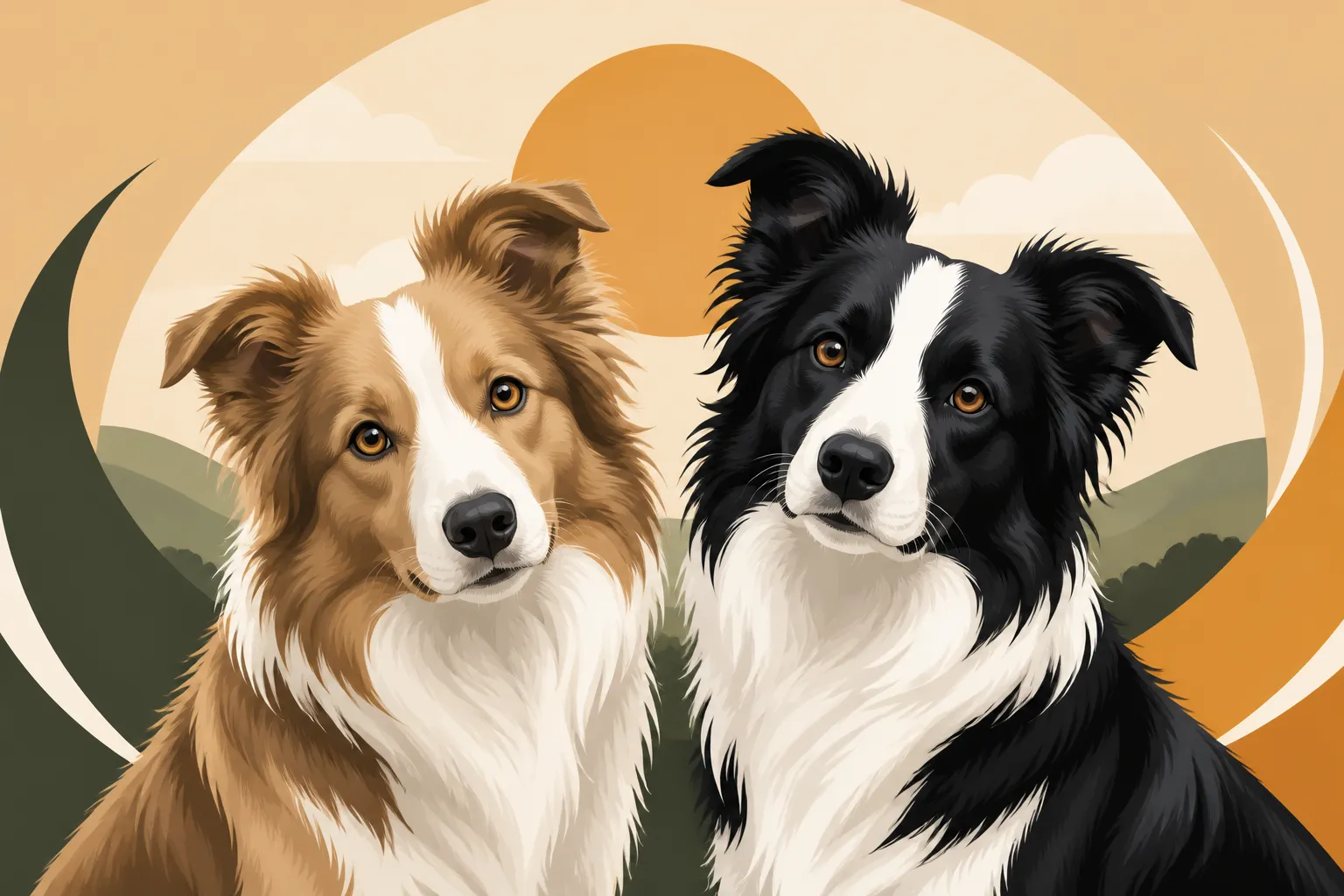
Sable and Saddleback Border Collies
It's incredibly exciting to welcome a Border Collie into your home, isn't it? As you dive into the world of this amazing breed, you'll quickly discover that while many picture the classic black and white, there's a whole rainbow of coat colors and patterns out there. It can be a bit confusing trying to understand them all, especially when you encounter terms like "sable" or "saddleback." You might see a beautiful puppy and wonder how its color will mature, or try to understand a dog's pedigree and scratch your head over the coat descriptions. This guide is here to unravel the mystery of sable and saddleback Border Collies, helping you understand what these patterns look like, how they differ, and what they mean for your furry friend.
What Even Is Sable in a Border Collie?
When you hear "sable," you might immediately think of a beautiful, rich brown or reddish color, and you wouldn't be far off! In Border Collies, sable is a fascinating coat pattern that gives the dog a unique, shaded appearance. Genetically, sable is often linked to the A-locus, specifically the Ay allele, which is responsible for producing varying degrees of reddish-brown or fawn coats with black tips on the individual hairs. It's essentially a red dog with black shading.
Imagine your Border Collie's coat as a collection of many individual hairs. With sable, each hair isn't just one solid color. Instead, the base of the hair might be a lighter fawn, cream, or red, but the tip of that same hair is black. This black tipping creates a beautiful, smoky, or shaded effect over the dog's body. The intensity of this shading can vary wildly, from a very light, almost golden sable with just a hint of black on the tips, to a much darker, richer sable that can look almost black in certain lights or on certain parts of the body. You'll often notice the most prominent shading along the back, ears, and tail, while the legs and underside might be lighter. It's a pattern that can truly transform as a puppy grows, sometimes appearing quite dark and then lightening considerably, or vice-versa. Border Collie Colors and Coat Types covers the full spectrum of possibilities!
Understanding the Sable Spectrum
The beauty of sable lies in its variability. A "clear sable" Border Collie might have very little black tipping, appearing as a warm golden or tan dog with just a faint wash of black. On the other hand, a "tipped sable" or "shaded sable" will display a much heavier overlay of black, giving the coat a deeper, more dramatic look. These black tips are what really define the sable pattern. This can sometimes lead to confusion, especially with puppies, because their coats are still developing. A sable puppy might be born looking quite dark, only for the black tips to recede or become less prominent as the softer puppy coat is replaced by the adult guard hairs. Conversely, some lighter sable puppies might develop more noticeable tipping as they mature. The genetic modifiers at play mean no two sables look exactly alike, which is part of their charm!
Genetics Behind the Sable Look
Without diving too deep into complex genetics, the sable pattern primarily comes from the dominant Ay allele at the A-locus. This allele is responsible for depositing pheomelanin (red pigment) throughout the hair shaft but allows eumelanin (black pigment) to be expressed at the tips of the hairs. Other genes can influence the richness of the red base color, making it anything from a pale cream to a deep mahogany, and still others can modify how much black tipping is visible. This is why you see such a range in sable Border Collies. Sometimes, sable can be combined with other patterns, like merle, creating unique "sable merle" dogs where the merle pattern acts on the black tips, giving them a diluted or mottled appearance. If you're really interested in the genetic underpinnings of your dog's coat, discussing Which DNA Tests a Border Collie Breeder Should Have Run can be incredibly insightful.
Unpacking the Saddleback Pattern in Border Collies
Now, let's talk about saddleback. This is a pattern that often gets confused with sable, but once you know what to look for, it's quite distinct. A saddleback Border Collie typically presents as a tri-color or bi-color dog where the black (or other eumelanin-based color like blue or chocolate) pigment covers the dog's back in a "saddle" shape, while the tan (pheomelanin) points are clearly visible on the face and legs.
Think of it like this: if sable is a red dog with black shading, saddleback is a black and tan dog where the black has receded to form a "saddle." Unlike sable, where the black is on the tips of the hairs, in a saddleback dog, the black areas are solid black hairs, and the tan areas are solid tan hairs. The key characteristic is the clearly defined "saddle" of black on the back, with distinct tan markings on the muzzle, eyebrows, chest, and legs. These tan markings are often much clearer and less "smoky" than what you'd typically see in a sable. It's a very striking and neat pattern, giving the dog a tailored, almost aristocratic look.
The Distinctive Markings of a Saddleback
The saddleback pattern is essentially a modified form of the black and tan pattern (at/at at the A-locus). While a classic black and tan dog has very defined, sharp tan points, the saddleback pattern results from a genetic modifier that causes the black pigment to recede more significantly as the dog matures. This recession leaves a large "saddle" of black over the back and sides, contrasting sharply with the clear tan markings on the lower legs, chest, and face. The tan points are distinct, almost as if they were painted on, rather than blended or shaded. You won't usually find the black tipping on individual tan hairs that is characteristic of sable. The black areas are solid black, and the tan areas are solid tan.
This pattern is often stable once the adult coat comes in, meaning it won't change as drastically as some sables might. It gives the impression of a vest or blanket of black laid over a tan dog. This crisp demarcation between colors is a key identifier.
How Saddleback Develops
Puppies destined to be saddleback might initially look like typical black and tan puppies, with very clear tan points and extensive black. However, as they mature, typically between a few weeks and a few months old, the black pigment on their sides and legs will gradually recede, allowing the underlying tan pigment to expand. This process continues until the characteristic "saddle" pattern is fully formed. It’s a fascinating transformation to witness! This is a genetic trait often tied to the agouti series, similar to the gene for What Makes a Border Collie Lilac or Slate or other color variations. For breeders, understanding these genetic nuances is crucial for predicting litter outcomes and knowing what to look for in puppies.
Identifying Sable vs. Saddleback: Spotting the Differences
Okay, so you've heard the descriptions, but how do you tell these two beautiful patterns apart when you're looking at a real-life Border Collie? This is where a keen eye and a bit of knowledge come in handy. It can be tricky, especially with puppies or dogs with very heavy sable shading, but there are distinct clues that will help you differentiate between them.
The fundamental difference lies in how the black and red/tan pigments are distributed on the hair shaft and across the body. Sable is about black tipping on a red/tan hair, creating a shaded look. Saddleback is about solid black areas contrasting with solid tan areas, with the black receding into a "saddle" shape.
Let's break down the key indicators in a handy table:
| Feature | Sable Border Collie | Saddleback Border Collie |
|---|---|---|
| Primary Appearance | Red/tan dog with black shading/tips | Black "saddle" over a tan dog |
| Hair Structure | Individual hairs are red/tan at base, black at tip | Hairs in black areas are solid black, hairs in tan areas are solid tan |
| Color Definition | Shaded, blended, smoky appearance; less crisp | Clear, distinct lines between black and tan; crisp |
| Tan Points | Often present but may be blended or diffused by tipping | Very clear, well-defined tan points on muzzle, brows, legs |
| Development | Shading can lighten or darken with age/coat change | Black recedes to form saddle shape as puppy matures |
| Genetic Basis | Typically Ay (dominant yellow/sable) allele | Typically at (tan point) allele with modifier that causes black recession |
The "Smoky" vs. "Clean" Look
One of the easiest ways to distinguish them is by looking at the overall "feel" of the color. Sable dogs often have a "smoky" or "dusty" appearance due to the black tips mingling with the lighter base color. It's not a sharply defined pattern; the colors seem to blend and fade into each other. You might even call it a "dirty" red or tan, though that's not exactly fair to its beauty! The black isn't just a solid patch; it's interwoven throughout the lighter color.
Saddleback dogs, on the other hand, have a much "cleaner" and more clearly delineated pattern. The black "saddle" stands out sharply against the tan. The tan points on the face, chest, and legs are usually very clear, without the black tipping interfering. Think of a classic black and tan German Shepherd – that's a good mental image for the clarity of the tan points, even though the overall pattern is different. If you compare a saddleback dog to a sable, the sable will appear much less distinct in its color boundaries. This is especially noticeable on the face and legs.
Coat Changes Over Time
Another crucial factor is how the coat changes as the dog grows. Sable puppies can be a real mystery box! They might start quite dark, almost like a black and tan, but then lighten up as the black tipping recedes, leaving a beautiful gold or red adult coat with subtle shading. Or, a lighter puppy might develop more pronounced tipping. The coat can look different season to season, or even depending on how recently they've shed their undercoat.
Saddleback puppies typically start with more extensive black, resembling a regular black and tan. But over the first few months, the black will gradually recede from the legs and sides, forming that distinct saddle. Once the saddle is formed, it tends to be quite stable, though the tan areas might deepen in richness over time. This makes understanding The Rough and Smooth Border Collie Coats even more important, as coat length can affect how these patterns appear visually.
Why Does It Matter? Beyond Aesthetics
While aesthetics are a big part of appreciating these colors, understanding sable and saddleback can also be important for breeders who are trying to predict the genetic outcomes of litters. Knowing the difference helps in identifying the underlying genetics. For pet owners, it's mostly about appreciating the unique beauty of your dog. It doesn't impact their health or temperament directly, but it's part of what makes each Border Collie an individual. Whether your dog is a stunning sable or a striking saddleback, what truly matters is the bond you share. Speaking of unique traits, the Eye Color in a Border Collie can also be quite variable and captivating, sometimes even linked to dilute colors or merle patterns.
Living with a Sable or Saddleback Border Collie
Beyond their beautiful coats, sable and saddleback Border Collies are, at their heart, still Border Collies. This means they come with all the incredible intelligence, boundless energy, and intense drive that the breed is famous for. Their coat color won't change their fundamental needs for mental stimulation, physical exercise, and a strong partnership with their human. However, there are a few considerations related to their coat type that are worth discussing.
No matter the color, a Border Collie needs a purpose. Whether it's herding sheep, excelling in agility, or being a dedicated companion in an active home, these dogs thrive when their minds and bodies are engaged. You'll find plenty of high-quality food options at places like Chewy that support an active lifestyle, helping maintain their vibrant coat and overall health.
Coat Care for All Border Collie Colors
Whether your Border Collie is sable, saddleback, or classic black and white, the care of their coat will largely depend on its length and texture, not its color pattern. Grooming a Rough-Coated Border Collie requires a different approach than a smooth-coated one.
- Rough-Coated Sables/Saddlebacks: These dogs have longer hair, often with feathering on their legs, belly, and tail. This coat type is prone to matting, especially behind the ears, in the armpits, and on the feathering. Regular brushing, at least 2-3 times a week, is essential to prevent tangles and remove loose undercoat. During shedding season, you might find yourself brushing daily! Investing in a good slicker brush, an undercoat rake, and a comb is crucial. You can find excellent grooming tools and shampoos at Chewy to keep their beautiful coats in top condition.
- Smooth-Coated Sables/Saddlebacks: While they shed just as much (sometimes more, in terms of volume of hair released!), smooth-coated Border Collies require less intensive grooming. A weekly brush with a rubber curry brush or a shedding blade is usually sufficient to remove loose hair and keep their coat shiny. They don't typically develop mats like their rough-coated counterparts. How a Smooth Border Collie Differs to Groom is quite an eye-opener if you're used to rough coats.
Regardless of coat length, all Border Collies benefit from regular checks for skin irritations, especially if they spend a lot of time outdoors. Their double coats are designed to protect them from the elements, but also need to be kept clean and healthy.
Health and Genetics: Beyond Coat Color
It's important to remember that coat color and pattern are primarily aesthetic traits and generally don't correlate with specific health issues in Border Collies, unless the color is associated with a dilution gene or a merle gene. For example, merle can be associated with certain eye and ear issues, especially in "double merles" (dogs inheriting two copies of the merle gene). However, sable and saddleback patterns themselves are not typically linked to unique health concerns.
The overall health of your Border Collie, regardless of its coat, will depend on good breeding practices, genetics, and proper care throughout its life. Reputable breeders will always prioritize health and temperament over specific coat colors. They will conduct health screenings for common Border Collie issues such as hip and elbow dysplasia, Collie Eye Anomaly in a Border Collie Puppy, and various genetic conditions. Looking into The Border Collie Genetic Panel and What It Screens can offer peace of mind.
Regular veterinary check-ups, a balanced diet (again, Chewy offers a fantastic selection for all life stages and activity levels!), and appropriate exercise are key to ensuring your sable or saddleback Border Collie lives a long, happy, and healthy life. Always discuss any health concerns with your veterinarian, and remember that while their coat is stunning, it's the intelligent, loving dog underneath that truly captures our hearts.
Disclaimer
This article is for general informational purposes only and does not constitute professional advice. Laws, prices and regulations vary by location and change over time. Consult a qualified professional for guidance on your specific situation.