Tail Carriage and Set on a Border Collie
One of the most expressive parts of a Border Collie, often overlooked until something seems "off," is its tail. You might notice it tucked low, flagged high, or wagging furiously, and each position tells a story. For new owners, or even seasoned handlers, deciphering these subtle cues and understanding what’s considered typical versus a sign of trouble can be a real head-scratcher. This guide aims to demystify the nuances of tail carriage and set in Border Collies, helping you understand this intelligent breed a little better.
Understanding the Border Collie Tail: More Than Just a Wag
The Border Collie's tail is far more than just a fluffy appendage; it's a vital communication tool, a counterbalance, and a key indicator of their physical and emotional state. From the moment they're born, their tails are active, conveying everything from joyful greetings to subtle anxieties. Getting to know what "normal" looks like for your particular Border Collie is the first step in noticing when things might be amiss.
The Function of a Border Collie's Tail
Think of a Border Collie's tail as an extension of its spine, intricately connected to its balance and movement. When your dog makes those sharp, agile turns while working stock or weaving through an agility course, that tail acts like a rudder, helping them maintain equilibrium at high speeds. It's a testament to The Athletic Build a Border Collie Standard Describes. Without it, their ability to execute those precise movements would be severely compromised, leading to clumsiness and potential injury.
Beyond balance, the tail is a crucial part of canine communication. A Border Collie uses its tail to signal intentions and emotions to other dogs, people, and even the sheep they are working. A high, stiff tail might indicate alertness or a challenge, while a low, tucked tail usually signifies fear or submission. A broad, sweeping wag is almost universally understood as friendliness and excitement. Observing these signals can help you understand your dog's mood and reactions in various situations, whether they're meeting a new dog at the park or assessing a flock of sheep. It's a silent language that, once learned, deepens your bond and understanding of your companion.
General Description of Ideal Tail Carriage
In the world of Border Collies, particularly for those interested in breed standards, there are specific guidelines for how a tail should be "set" and "carried." The "set" refers to where the tail attaches to the spine, ideally being a natural extension of the topline. A high-set tail might look like it's perpetually held too high, while a low-set tail can give a perpetually dejected appearance. Both can be a genetic trait.
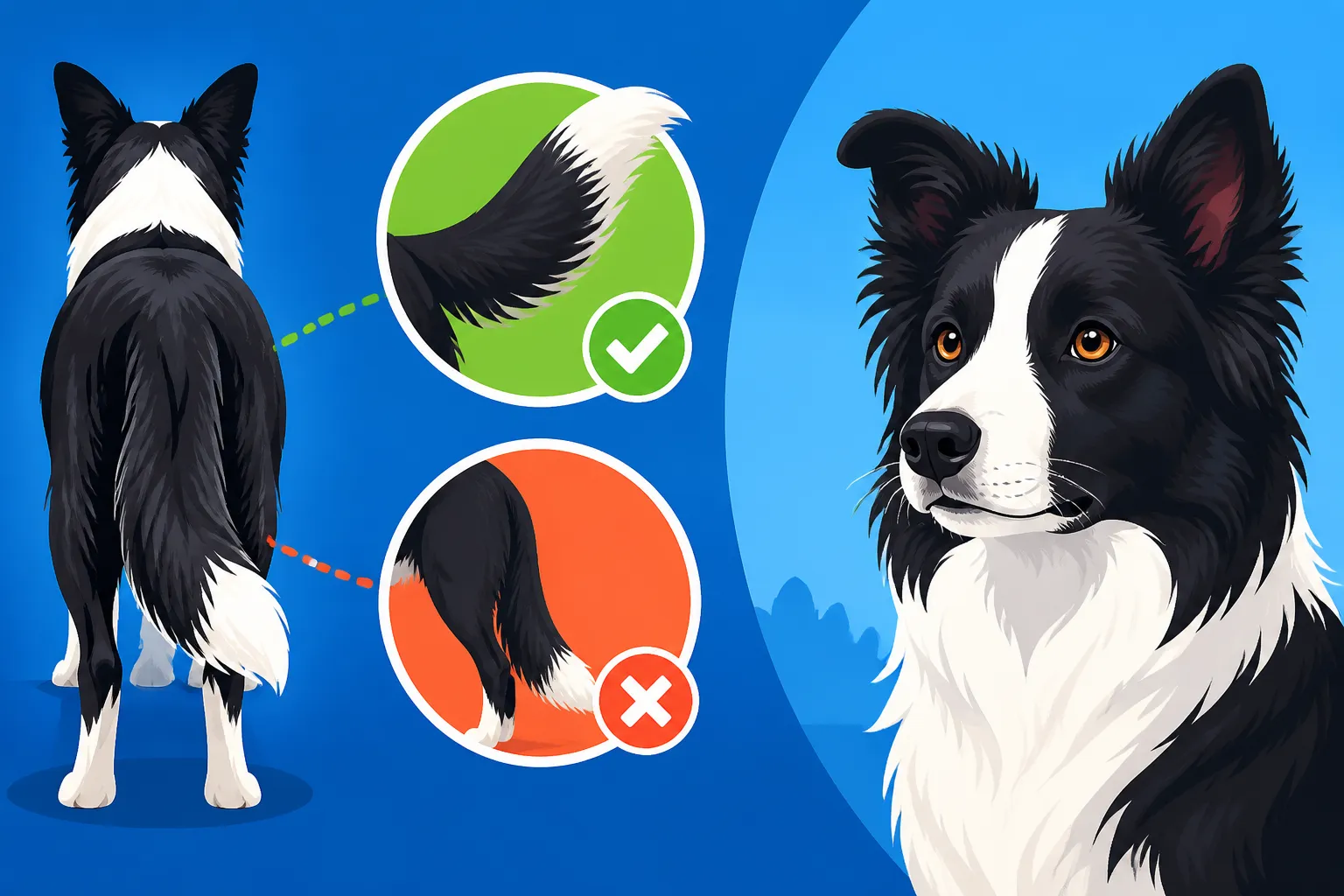
"Carriage" describes how the dog holds its tail in various situations. Generally, a Border Collie's tail is moderately long, reaching at least to the hocks, with some feathering (longer hair) that is more pronounced in rough-coated varieties. At rest, you'll typically see it carried low, with a slight upward curve at the tip, never really touching the ground. When the dog is alert, excited, or working, it might rise to just above the horizontal, sometimes forming a gentle saber-like curve. It should never curl over the back like a Spitz breed's tail. This gentle rise, rather than a frantic flagging, is often a hallmark of a focused working dog. If you ever wonder about your dog's "expression," remember to include the tail as part of The Border Collie Expression a Judge Looks For.
Variations in Tail Set and Carriage
While there's an "ideal," dogs are individuals, and there can be natural variations. Sometimes these variations are just quirks of genetics, and other times, they can point to something more significant. Knowing what's within the realm of normal can prevent unnecessary worry, but also alert you to potential issues.
Common Deviations from the Standard
Not every Border Collie will have the perfectly curved, low-slung tail described in breed standards, and that's perfectly fine for most pet owners. You might see tails that are a bit shorter or longer, or perhaps those with less feathering. Some dogs naturally carry their tails a little higher even at rest, or hold a more pronounced curl when excited, without it fully looping over their back. These are often just individual variations and don't necessarily impact the dog's health or ability to work.
However, certain persistent deviations can be a cause for closer inspection. A tail that is constantly tucked tight between the legs, even in familiar and comfortable environments, might suggest chronic anxiety or pain. Conversely, a tail that is rigidly held high and flagged constantly, even when the dog is not particularly stimulated, could be a sign of tension or a lack of confidence. It's important to differentiate between a natural, happy high wag and a tense, stiff high carriage. Understanding these nuances helps us interpret our dogs' comfort levels and address any underlying issues.
How Emotion Influences Tail Carriage
A Border Collie's tail is a dynamic barometer of its emotional state. Happy and excited dogs often exhibit a broad, sweeping wag, where the tail moves freely from side to side, sometimes even causing a full-body wiggle. When they're focused on a task, like during What Happens at a Sheepdog Trial With a Border Collie, the tail might be held low, almost still, or with a very slight, controlled wag, reflecting intense concentration. This stillness isn't a sign of unhappiness but rather a signal of mental engagement.
Fear or anxiety can manifest as a tail tucked low between the legs, often tightly pressed against the belly. This is an attempt to appear smaller and less threatening. Sometimes, an unsure or submissive dog might hold its tail low and still, with just the very tip wagging in a small, tentative motion. Over-arousal or frustration might see the tail held high and stiff, with rapid, small vibrations, indicating a dog on the edge of its emotional control. Paying attention to these subtle shifts can help you understand what your Border Collie is experiencing and allow you to intervene or provide reassurance when needed. For instance, if your dog is exhibiting a perpetually tucked tail in new situations, you might need to work on building confidence, perhaps with high-value treats from retailers like Chewy during desensitization exercises.
The Border Collie Tail in Action: Working vs. Resting
The life of a Border Collie is often one of intense activity, whether it's herding sheep, excelling in dog sports, or simply tearing around the yard. Their tail carriage will reflect this activity, changing dramatically from moments of rest to bursts of high-intensity work.
Tail Carriage During Herding and Sport
When a Border Collie is working sheep, its tail becomes an integral part of its body language, often held low and still, acting as a counterbalance and a subtle steering mechanism. This focused posture minimizes any unnecessary movement that might distract the sheep or signal an aggressive intent. A rapid, frantic wag during a herding task would be inefficient and could disrupt the delicate balance between dog and stock. Instead, you'll see a quiet, purposeful carriage, perhaps with the slightest twitch at the tip, indicating intense concentration. This controlled use of the tail is part of what makes them such effective and precise workers.
In dog sports like agility, disc dog, or flyball, the tail is again a critical component of their athleticism. As they leap over obstacles, make tight turns, or launch themselves for a frisbee, the tail is constantly adjusting, providing dynamic balance. You'll often see it held out relatively straight, or with a slight curve, actively working to keep the dog upright and stable during quick directional changes. A Border Collie can achieve incredible feats of agility, and much of that comes down to their lean, muscular build and the powerful, expressive tail working in concert. Any injury, even a minor one like a "limber tail," could severely impact their performance and comfort. Shoulder Injuries in an Agility Border Collie are well-known, but tail injuries, though less common, can be equally debilitating.
Relaxed Tail Carriage and Its Significance
When a Border Collie is truly relaxed and comfortable, its tail typically hangs low, almost like a natural continuation of their topline, often with a gentle curve upwards at the very tip. It shouldn't be tucked under, nor should it be rigidly held high. This is the posture you'll see when they're snoozing on their bed, calmly observing their surroundings, or gently greeting family members they know and trust. The muscles in the tail are loose, and it might give a slow, soft wag in acknowledgement if you speak to them.
This relaxed carriage is an important indicator of a dog that feels secure and at ease in its environment. If your Border Collie rarely exhibits this relaxed posture, always holding its tail stiffly or tucked, it might be a sign of underlying stress, discomfort, or an undiagnosed issue. Observing this baseline "resting state" can be very helpful in identifying changes that might signal pain or anxiety. A dog that is The Border Collie That Stays Sound Into Its Teens will often have a consistent, relaxed tail carriage even as they age, barring any specific injuries.
Here's a quick reference table for common Border Collie tail postures:
| Carriage Position | Common Interpretation | Context | Notes |
|---|---|---|---|
| Low, Slightly Curved | Relaxed, content, observing | Resting, casual walk, familiar environment | "Default" happy/neutral position. |
| Moderate, Level | Alert, curious, focused | Exploring, new sounds, gentle interaction | Often seen when taking in new information. |
| High, Sabered Curve | Excited, confident, playful | Greeting, fetching, active play | Can be a happy display, but watch for stiffness. |
| Low, Tucked Tight | Fearful, anxious, submissive | Vet visit, loud noises, perceived threat | Indicates stress; needs comfort/reassurance. |
| High, Stiff, Vibrating | High arousal, frustration, challenge | Confrontation, extreme excitement, guarding | May precede reactivity; watch other body language carefully. |
| Low, Still (Working) | Focused, concentrated, deliberate | Herding, scent work, intense training | Reflects mental engagement and minimal distraction. |
| Wagging (Broad, Sweeping) | Joyful, friendly, welcoming | Greeting loved ones, anticipating fun | Full body wiggle often accompanies. |
| Wagging (Small, Rapid) | Tentative, unsure, sometimes anxious | Meeting strangers, uncertain situations | Can be an appeasement gesture or low-level anxiety. |
What the Standards Say About Tail Carriage
For those involved in showing or breeding Border Collies, the breed standards are paramount. These documents, established by organizations like the American Border Collie Association (ABCA) and the American Kennel Club (AKC), outline the ideal physical characteristics, including tail set and carriage. While working lines prioritize function, conformation shows strictly adhere to these aesthetic guidelines. This is part of The Working and Show Split in Border Collies.
ABCA vs. AKC Perspectives
It's fascinating how different registries approach the Border Collie. The American Border Collie Association (ABCA), which is dedicated to preserving the Border Collie as a working stock dog, places the emphasis primarily on working ability and temperament. While they acknowledge general appearance, their standard is less prescriptive about cosmetic details like tail carriage compared to the AKC. For the ABCA, a tail's function in helping the dog balance and communicate during work is far more important than a specific aesthetic curve. They'll note if a tail is carried unusually high or tightly curled, but usually in the context of it potentially impeding work or indicating temperament issues, rather than simply being a cosmetic fault. A dog that can gather sheep effectively, even if its tail isn't "perfectly" curved, is a good Border Collie in their eyes.
The American Kennel Club (AKC), on the other hand, provides a much more detailed standard for conformation showing. For them, the tail is described as moderately long, set low, and ideally carried low with an upward curve when attentive, or lower when relaxed. They specifically state it should not be carried over the back. This attention to specific detail ensures uniformity in appearance for show-ring competition. A tail that is too short, too long, too high-set, or curled over the back would likely be penalized in an AKC show ring. Their focus is on presenting a dog that embodies the breed's historical appearance as interpreted by their standard setters. The Height and Weight a Border Collie Standard Sets also falls under their detailed guidelines.
Faults and Disqualifications Related to Tail
In the show ring, certain tail characteristics can be considered faults, which might reduce a dog's score, or even disqualifications, which would prevent the dog from placing. Common faults often include:
- Tail carried too high: If the tail consistently curls over the back or is carried above the horizontal in a way that is stiff and unnatural for an attentive Border Collie.
- Tail too short or too long: Not meeting the length requirements (e.g., reaching the hocks).
- Kinked or deformed tail: Any obvious structural abnormality.
- Gay tail: A tail that is carried too high and constantly flagged, often seen as a sign of over-excitement or lack of control, and sometimes mistaken for a lack of focus.
Disqualifications are rarer and usually pertain to more severe structural issues or deliberate alterations. For instance, a docked tail would typically be a disqualification in conformation shows, as the breed standard calls for a natural, full tail. These guidelines exist to preserve the breed's distinctive appearance and ensure that breeding decisions are made with these ideals in mind, even if a pet Border Collie with a less-than-perfect tail can still be a wonderful companion and worker.
Health, Injury, and the Tail
While often robust, a Border Collie's tail isn't immune to injury or health issues. Given their active lifestyles, particularly in working and sport roles, paying attention to any changes in tail carriage or condition is crucial for their well-being.
Injuries Common to an Active Tail
Border Collies are fearless and athletic, often launching themselves through brush, over obstacles, or around tight turns. This makes their tails susceptible to a few common injuries:
- Happy Tail Syndrome: This isn't just for Labs! A vigorous, enthusiastic wag can lead to the tail repeatedly hitting hard surfaces (walls, crates, furniture legs), causing lacerations, bruising, and even broken bones in the tail tip. These injuries can be surprisingly difficult to heal because the tail is constantly moving, and the skin can be thin. If you've ever dealt with a dog who keeps reopening a wound on their tail, you know the frustration. Sometimes, protective bandaging or even a temporary cone from Chewy is needed to allow it to heal properly.
- Sprains and Fractures: Just like any other bone, the vertebrae in a Border Collie's tail can be sprained or fractured. This might happen from a direct impact, being stepped on, or even getting caught in a door. A dog with a sprained or fractured tail might hold it stiffly, refuse to wag, or show signs of pain when you try to touch it. Sometimes the tail hangs limply or at an odd angle.
- Limber Tail (Acute Caudal Myopathy): Also known as "cold tail," "swimmer's tail," or "dead tail," this condition causes the tail to hang limply or be held out a few inches from the base before dropping. It's often seen after strenuous exercise, exposure to cold water, or being confined in a crate for long periods. It's essentially a muscle sprain or strain at the base of the tail, causing pain and an inability to lift it. While usually temporary (resolving in a few days to a week with rest and anti-inflammatories), it can be quite alarming for owners to witness.
- Cuts and Abrasions: Running through thorny bushes, getting tangled in wire, or even minor scuffles with other dogs can lead to cuts or scrapes on the tail. These can become infected if not cleaned promptly, especially with all the dirt and debris a working Border Collie might encounter. Regular Checking a Border Collie Over After Field Work should include a thorough inspection of the tail.
If you suspect any tail injury, a visit to the vet is always the best course of action. Early intervention can prevent more severe complications and ensure your dog's comfort.
Tail Health and Grooming Considerations
Keeping your Border Collie's tail healthy isn't just about preventing injuries; it also involves routine care. The tail, especially in rough-coated Border Collies, can gather burrs, foxtails, mud, and other debris that can lead to matting, skin irritation, or even embedded foreign objects.
- Brushing: For rough-coated Border Collies, regular brushing of the tail feathering is essential to prevent mats and remove debris. Mats can pull at the skin, causing discomfort and potentially leading to hot spots or infections. A good detangling brush or comb, readily available from pet supply stores like Chewy, can make this task much easier. Grooming a Rough-Coated Border Collie often includes special attention to the tail.
- Cleaning: After a muddy or wet outing, cleaning the tail, especially the underside, is important. Residual moisture can create a breeding ground for bacteria or yeast, leading to skin issues. Ensure the tail is thoroughly dried, especially at the base, to prevent "wet eczema" or other skin irritations.
- Checking for Parasites and Skin Issues: While you're brushing or cleaning, it's a great opportunity to check for fleas, ticks, or any unusual bumps, scabs, or hair loss on the tail. Changes in tail carriage or excessive tail chewing could indicate an allergic reaction or parasitic infestation.
- Anal Glands: Though not directly part of the tail, the anal glands are located just beneath the tail base. If your Border Collie is scooting, excessively licking the area, or holding its tail stiffly and uncomfortably, it could be a sign of full or impacted anal glands, which require veterinary attention.
A healthy tail is a happy tail, and a well-cared-for tail is much less likely to develop problems, allowing your Border Collie to express itself fully and maintain its incredible agility and balance throughout its life.
Disclaimer
This article is for general informational purposes only and does not constitute professional advice. Laws, prices and regulations vary by location and change over time. Consult a qualified professional for guidance on your specific situation.