Teaching a Border Collie to Walk Up
Anyone who has spent time on the sheepdog trial field, or even just watched a skilled handler at work, knows that there’s a whole language of commands beyond the basic “sit” and “stay.” One of the most subtle, yet absolutely critical, commands in a Border Collie’s herding repertoire is “walk up.” It sounds simple, right? Just walk forward. But for a highly driven dog whose instinct is to gather, balance, and flank, teaching a controlled, purposeful forward movement on stock can feel like trying to teach a fish to fly in a straight line – it's going against their natural inclination in a very specific way. This guide will help you break down the "walk up" command, understand its nuances, and develop a systematic approach to teaching your Border Collie this essential herding skill.
Understanding the "Walk Up" Command in Border Collie Herding
When we talk about teaching a Border Collie to "walk up," we're not just asking them to move their feet. We're asking for a very specific type of forward motion, one that applies pressure to stock, but in a controlled and deliberate manner. This command is often misunderstood by new handlers, leading to frustration when their eager dog either rushes in or swings wide instead of pushing straight ahead.
What "Walk Up" Actually Means on the Field
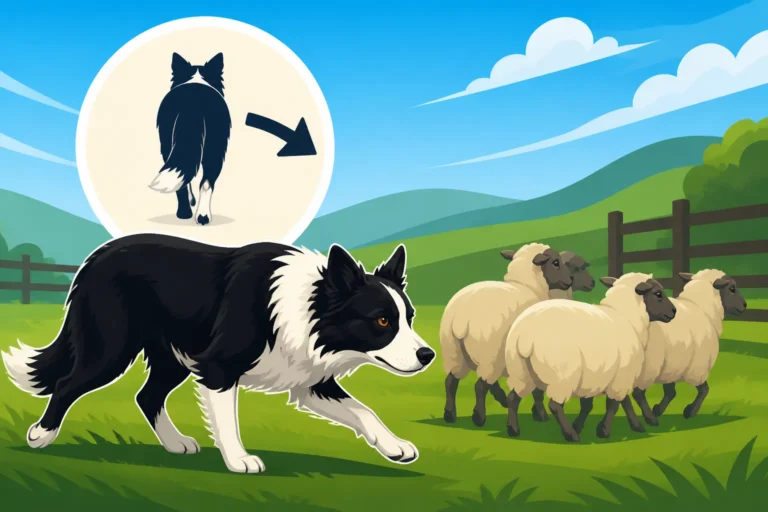
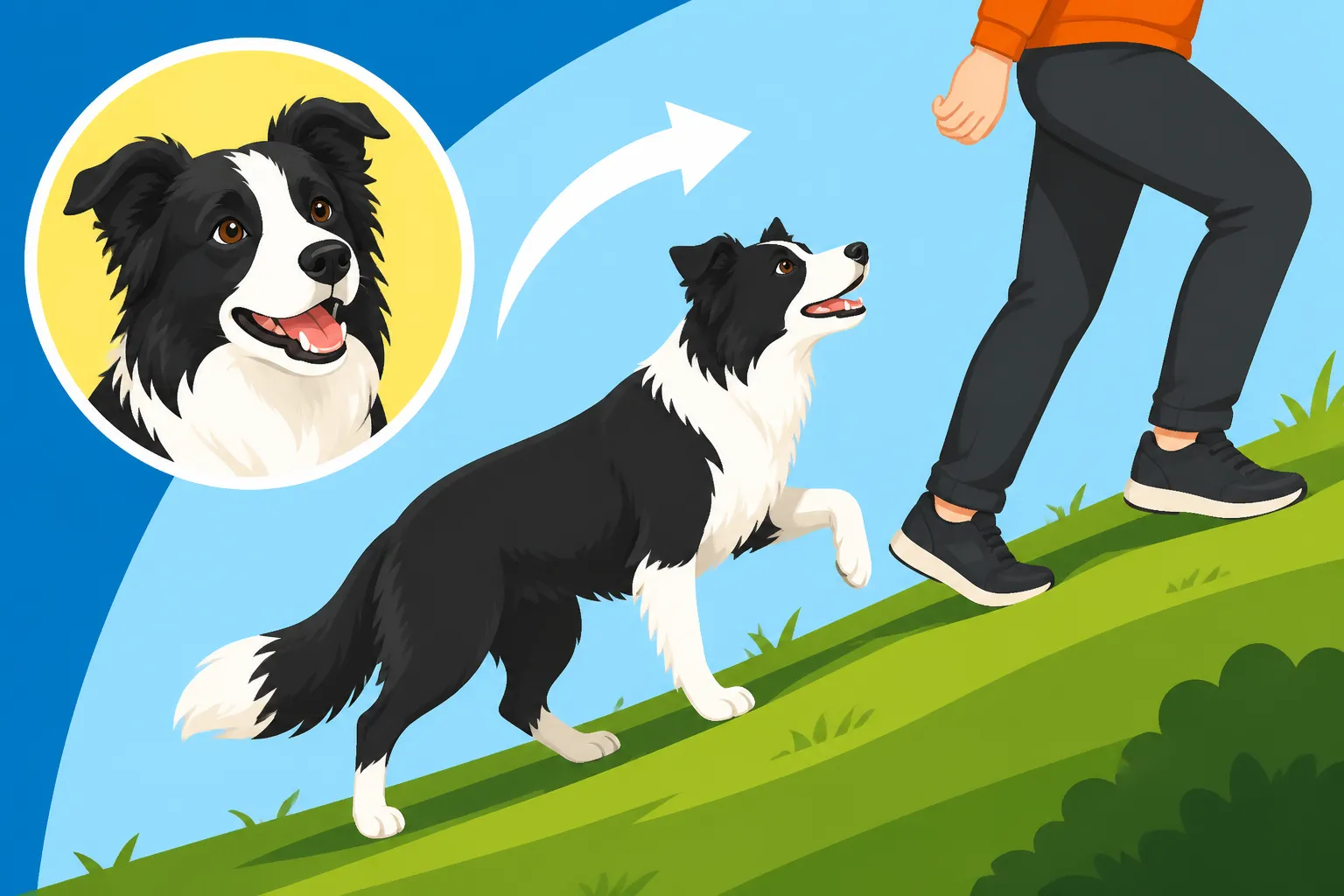
Imagine a small bunch of sheep that needs to move forward through a gate, or perhaps away from a fence line. You don't want your dog to swing "away to me" to push them from the right, or "come bye" to push them from the left. You need the dog to move directly behind the sheep, applying steady, even pressure to encourage them to walk forward in a straight line. That's the essence of "walk up." It’s a command that says, "Go straight in, behind the sheep, and advance them."
This isn't about charging in and scattering the flock, nor is it about flanking to gather them. It's about a measured, deliberate push. A good "walk up" maintains the integrity of the flock, keeping them together as they move. It requires the dog to be focused, to read the sheep's movement, and to adjust its speed and angle to maintain a consistent forward momentum. Without a reliable "walk up," moving sheep through narrow passages, into a pen, or off a specific area becomes incredibly difficult, relying on less efficient flanking maneuvers.
Why "Walk Up" Can Be Tricky for a Young Border Collie
Border Collies are bred to gather. Their natural instinct, often called "eye" or "power," is to bring stock to the handler, to collect them into a tight bunch. This innate drive to circle and balance stock is what makes them such incredible herding dogs. However, this very instinct can make teaching a precise "walk up" a real challenge.
When a young Border Collie first encounters sheep, they often want to rush in, cut off the flock, or swing wide to bring them around. Their mind is on collecting the sheep, not on pushing them steadily forward in a straight line. They might see an opening to flank and take it, or they might put too much pressure on, causing the sheep to break and run. The subtlety of "walk up"—the exact amount of pressure, the straight line of approach, the steady pace—is often counter-intuitive to their initial high-drive responses. It requires them to override some of their most basic instincts and adopt a more nuanced, controlled approach, which takes time, patience, and repetition to instill. It's a testament to their intelligence that they can learn such a refined command, but it's certainly not always easy!
Foundational Training for a Reliable "Walk Up"
Before you even think about putting your Border Collie on livestock specifically for "walk up" training, you need to establish a strong foundation of basic obedience and control. Trying to teach a complex herding maneuver without these building blocks is like trying to build a house on sand – it's simply not going to hold.
Building Forward Motion and Steadiness on a Leash
The concept of controlled forward motion starts far away from the sheep. Your Border Collie needs to understand how to walk purposefully beside you, and then eventually, ahead of you, with a steady pace and without distractions. Start with a solid "heel" command. Practice walking in straight lines, making turns, and varying your speed. Reward your dog heavily for staying focused and maintaining position. This isn't just about good manners on a walk; it's about teaching your dog to work with you in a structured way.
Once "heel" is strong, begin to introduce the idea of moving forward independently. Use a long line in an open, low-distraction environment, like a quiet park or a large field. Ask your dog to walk forward, gradually increasing the distance between you and the dog. The goal here is to get them to move steadily and calmly in the direction you indicate. You can use a verbal cue like "forward" or "go on," reserving "walk up" for later. If your dog is prone to pulling or getting distracted, resources like those offered by BAXTER & Bella can be incredibly helpful for structured, positive reinforcement-based foundation obedience training, ensuring your dog understands the mechanics of moving with purpose. Consistently reward calm, purposeful steps in a straight line, even if it's just moving towards a treat you've tossed a few feet ahead.
Introducing the Concept with Controlled Objects
Once your dog has a good grasp of moving forward steadily on cue, you can start to introduce the concept of applying forward pressure to an object, mimicking what they’ll eventually do with sheep. This helps them understand the objective without the high-drive distraction and unpredictable movement of live animals.
Many handlers find success using a large, inflatable yoga ball or a sturdy herding ball. The ball is too large and unwieldy for the dog to pick up, forcing them to push it with their nose or chest. The goal is to get your dog to push the ball away from you, in a straight line. Start in a confined space, like a hallway or a small fenced area. Roll the ball a short distance and encourage your dog to push it forward. You can use your body language to help guide them, blocking their flanks to encourage a straight-line push. If they try to circle the ball, gently redirect them back to the rear. This exercise teaches them the mechanics of applying pressure from behind and maintaining a forward trajectory. If you don't have a specific herding ball, even a sturdy, oversized beach ball from a place like Amazon can work for initial concept building, though ensure it’s durable enough for dog play. This stage is about building a mental connection between the command (or a placeholder cue) and the desired action: pushing something forward from behind.
Progressing to Livestock and Refinements
With a solid foundation in place, you’re ready to introduce your Border Collie to the real deal: sheep. This transition needs to be managed carefully to ensure success and prevent the development of bad habits. Remember, herding is about partnership and precision, not just instinct.
First Steps with a Small Bunch of Quiet Sheep
When you introduce your Border Collie to actual livestock for "walk up" training, choose your environment and your sheep wisely. A small, secure pen with quiet, calm sheep is absolutely essential. These shouldn't be flighty, fast-moving animals that will overwhelm your dog or run away at the first sign of pressure. Look for sheep that are a bit more sedate, perhaps older ewes who aren't easily flustered.
Start by allowing your dog to get a feel for the sheep in the pen. Use a long line, perhaps a 15 or 20-foot lead, to maintain control. Your position as the handler is crucial: you want to be between your dog and where you want the sheep to go, so you can guide both. Encourage your dog to move behind the sheep. As they approach, use your "walk up" command (or "come on," "push," etc.). The goal is to see the sheep move forward a few steps, calmly, not bolt. If your dog rushes, immediately stop them, perhaps with a "lie down" command. Why a Border Collie Is Taught to Lie Down First is a critical step in establishing control. Then, reposition and try again. The key here is gentle pressure, not chasing. Use the fence lines of the pen to your advantage, guiding your dog to push the sheep along a straight path. This helps them understand the boundaries and the desired direction. Keep initial sessions very short to avoid overwhelming the dog or the sheep.
Correcting Common "Walk Up" Challenges
Training "walk up" isn't always smooth sailing. Border Collies are smart, but their instincts are strong, and they'll naturally try to solve problems in ways that might not align with precise herding. Here are some common challenges and how to approach them:
- Rushing: This is perhaps the most frequent issue. A young, enthusiastic Border Collie often wants to get in there and do something. If your dog rushes the sheep, causing them to scatter or run frantically, you must intervene immediately. The "stop" or Teaching a Border Collie to Lie Down at Distance command is your best friend here. Stop the dog, allow the sheep to settle, and then restart with less intensity. You might even need to walk your dog away from the sheep for a moment to break their focus and reset. Emphasize slow, steady movement. Sometimes, practicing flanks like Come Bye and Away to Me on a Border Collie can help teach the dog control and patience before returning to direct forward pressure.
- Flanking Instead of Going Straight: Instead of pushing straight, your dog might try to circle the sheep, defaulting to their natural gathering instinct. This is where your body position and the pen boundaries become vital. If the dog starts to flank, step in to block that movement, effectively pushing them back into the straight line behind the sheep. Use your verbal command firmly to reinforce the forward direction. Again, stopping the dog and repositioning them in the correct spot behind the sheep can help reset their mental focus.
- Lack of Confidence/Hesitation: Some dogs, especially in early training, might be a bit too soft or hesitant to push the sheep forward. They might have a good "eye" but lack the confidence to apply pressure. In this case, you need to be encouraging. Use an upbeat tone of voice, clap your hands gently, or move slightly closer to the sheep yourself to add a bit of combined pressure. Praise any forward movement, no matter how small. Building their confidence is key here, without letting them get over-excited.
The ultimate goal is for the dog to apply just enough pressure to move the sheep calmly. It's a delicate balance. Sometimes, a training collar, like a well-fitted slip lead or a head halter, can provide a bit more physical control to guide your dog's initial movements, especially if they are very strong-willed. Amazon and specialized dog supply stores offer many options, but always ensure proper fit and humane use. Remember, the tool is there to communicate, not to punish. Steadying a Border Collie That Rushes Stock requires consistency and a clear understanding of your dog's pressure tolerance.
Integrating "Walk Up" into the Broader Herding Context
Once your Border Collie understands the fundamental "walk up" command, the real work begins: integrating it seamlessly into their overall herding repertoire. A command is never an isolated action; it's a piece of a much larger, dynamic puzzle.
Combining "Walk Up" with Other Commands
On the field, your Border Collie will rarely perform "walk up" in isolation. It's part of a fluid dance with the stock and the handler. You’ll need to transition from a "walk up" to a "stop" or Teaching a Border Collie to Lie Down at Distance, then perhaps a flank like Come Bye and Away to Me on a Border Collie, and then back to "walk up." This is where the true precision of Border Collie herding shines.
Practice these transitions in controlled settings. For example, have your dog walk a small bunch of sheep forward, then call a "stop" just before they reach a marker. Then, ask for a gentle flank to reposition them, and then another "walk up" to continue. This teaches your dog not just the individual commands, but how to flow between them responsively. It builds mental agility and reinforces that your commands override their natural inclinations when necessary. Learning how to end a session with a clear "that'll do" after a successful "walk up" is also important for clarity and focus. That'll Do and Ending a Border Collie's Work ensures your dog understands when work is over. This mental work is just as tiring as physical exertion and contributes to Exercise, Work and What Actually Settles a Border Collie.
Developing Advanced Field Skills
As your Border Collie matures and gains experience, you can begin to introduce more complex scenarios for "walk up." This might mean working on larger fields where the sheep have more room to spread out, or navigating varied terrain like hills or gullies. Each new environment presents unique challenges for maintaining a straight, controlled "walk up."
You'll also encounter different types of stock. Flightier sheep will require a softer, more subtle "walk up," while heavier, more stubborn sheep might need more assertive pressure. Learning to read both the stock and your dog's response is key to becoming a skilled handler. Observe their The Border Collie Stare and Where It Comes From—is it intense and driving, or more relaxed and guiding?
Ultimately, the goal is for your dog to understand the purpose of "walk up" in any situation: to advance stock calmly and efficiently in a straight line, whether for everyday farm tasks or in the challenging context of a trial. What Happens at a Sheepdog Trial With a Border Collie will show you how vital a precise "walk up" is for points. It takes countless hours, patience, and a deep connection between handler and dog, but the reward is a truly brilliant working partner. You're building upon the dog's innate The Drive a Border Collie Learns Last and channeling it into precise, useful actions. This comprehensive training contributes significantly to What a Border Collie Does With Its Whole Day.
| Common "Walk Up" Challenges | Symptoms | Correction Strategy |
|---|---|---|
| Rushing | Sheep scattering, dog running in fast | Immediate "Stop" or "Lie Down", reset, re-approach slowly |
| Flanking | Dog circling sheep instead of going straight | Block flank with body, use pen boundaries, redirect behind sheep |
| Hesitation/Lack of Drive | Dog stands still, doesn't push, lacks confidence | Encourage with voice, light pressure from handler, praise small steps |
| Too Much Pressure | Sheep panicking, breaking away from flock | Soften voice, ease off pressure, allow sheep to settle, reset |
| Drifting Off-Line | Dog veering left or right from straight line | Use body to square dog, correct with verbal cue, utilize fences |
Disclaimer
This article is for general informational purposes only and does not constitute professional advice. Laws, prices and regulations vary by location and change over time. Consult a qualified professional for guidance on your specific situation.