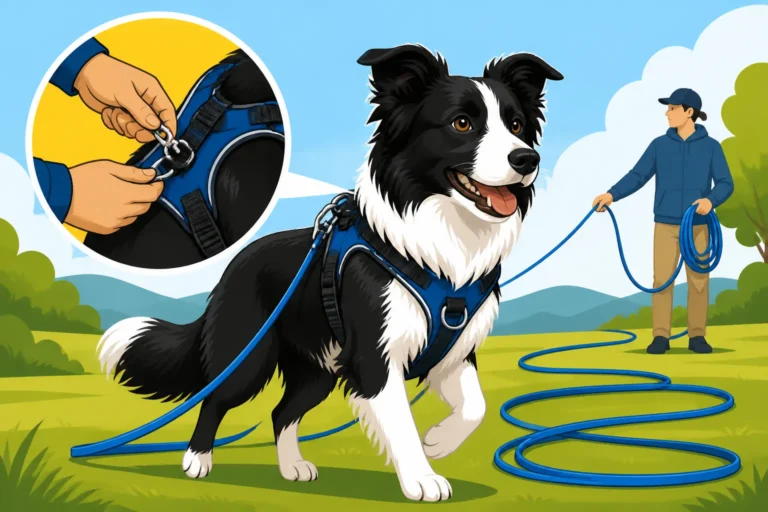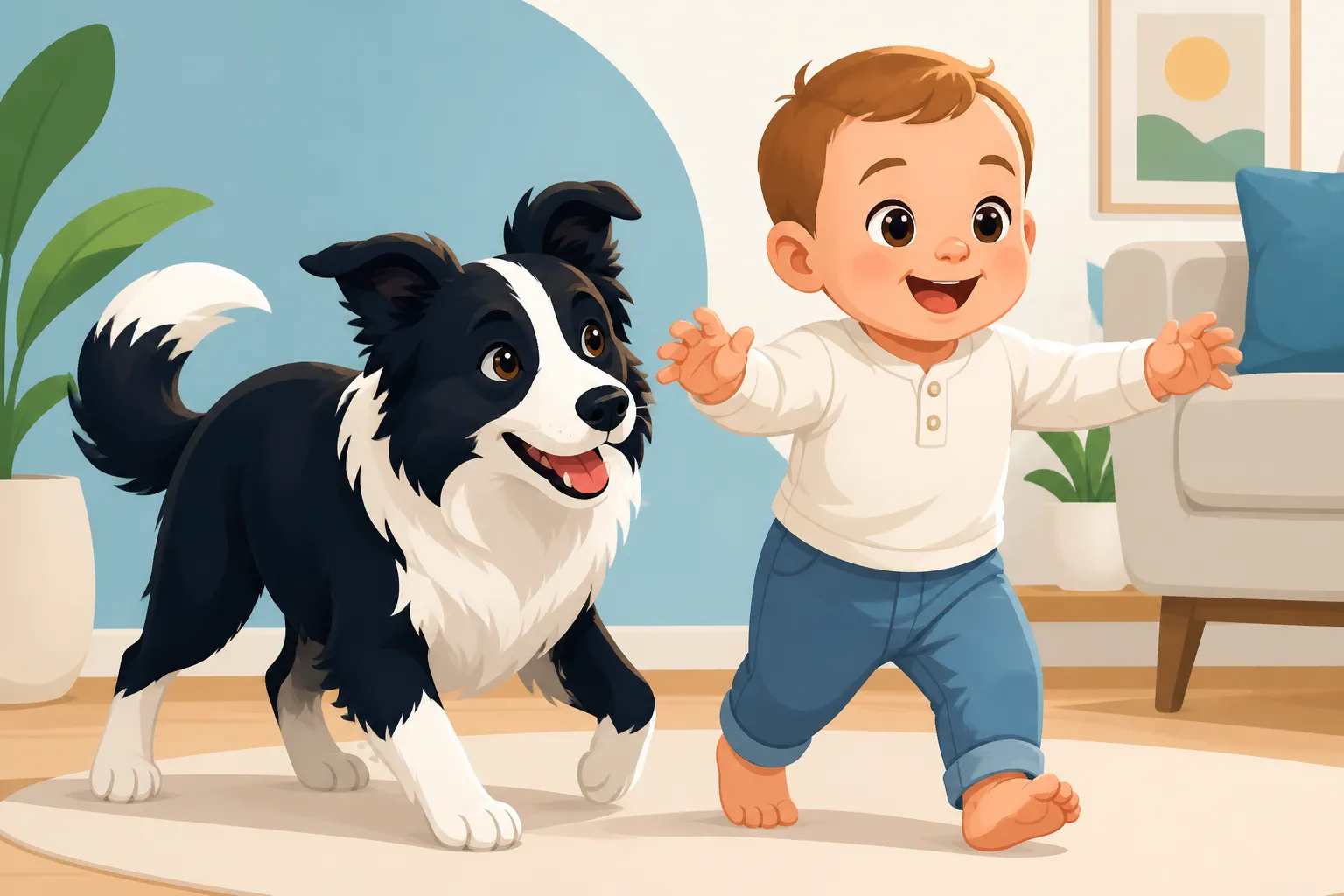
A Border Collie Around a Toddler Learning to Walk
Oh, the sheer joy of watching a little one take those first wobbly steps! It’s a milestone that fills a home with excitement and pride. But if you share your life with a sharp, instinct-driven Border Collie, that newfound toddler mobility can suddenly feel less like a celebration and more like a tightrope walk. The quick, unpredictable movements, the delightful squeals, the sudden dashes – for our intelligent herders, these are often irresistible invitations to work. This guide will walk you through understanding your Border Collie's natural instincts, preparing them for the chaotic beauty of a mobile toddler, and implementing strategies to ensure both your beloved dog and precious child can thrive safely and happily together.
Understanding the Border Collie's Herding Instinct Around Children
It’s easy to love the Border Collie for their unparalleled intelligence and boundless energy, but sometimes those very traits can become a challenge in a bustling family home, especially when tiny humans enter the picture. Their hardwired instinct to gather and control is what makes them such magnificent working dogs, but it’s also the root cause of many of the issues owners face when a toddler starts moving independently.
The Natural Drive to Gather and Control
Border Collies were selectively bred for centuries to gather and move livestock. This isn't just a learned behavior; it's deeply ingrained in their genetic makeup. Think about it: they're designed to respond to movement, to predict patterns, and to influence the direction of a flock. Their signature "eye," that intense, focused stare, isn't just for show; it's a tool for intimidation and control, helping them dictate the movements of sheep. When you bring a Border Collie into a home, that powerful instinct doesn't just vanish. It needs an outlet, and without proper direction, it can manifest in ways that are completely inappropriate for human interaction. It's not malice; it's pure, unadulterated instinct driving them. You might see this drive emerge even with other pets or even the vacuum cleaner!
Why Toddlers Are Prime Targets for Herding
Now, imagine a toddler learning to walk. They move erratically, often stumbling, changing direction abruptly, and sometimes letting out sudden squeals or bursts of laughter. They don't move in a predictable, calm manner like an adult. To a Border Collie, these movements can very closely mimic the scattered, unpredictable behavior of a flock of sheep. A child running across the living room carpet might trigger the dog’s instinct to "round them up." The Border Collie's natural response might be to circle, to block, to nudge with their nose, or even to nip gently at ankles or clothing in an attempt to steer the "errant lamb" back into the "flock." This behavior, while stemming from a natural drive, can be frightening for a child and potentially dangerous if the nips become harder or if the child falls. It’s crucial to understand that your dog isn't being "naughty" in their own mind; they're simply doing what they were born to do. This is a common phenomenon; many owners discover Why Running Children Set a Border Collie Working.
Reading Your Border Collie's Body Language
To effectively manage these situations, you need to become a fluent reader of your dog's body language. A Border Collie about to engage its herding instinct might exhibit specific signals. Look for the classic "Border Collie eye" – an intense, fixed stare, often accompanied by a low crouch. Their ears might be pricked forward, indicating high alert. You might notice a subtle stiffening of their body, a tail that is low but not necessarily tucked in fear, or even a slow, deliberate stalk. Some dogs might emit soft, low growls or "woofs" as they begin to move. If your dog starts to circle a child, or tries to position themselves between you and the toddler, these are clear signs that the herding instinct is kicking in. Catching these early cues allows you to intervene before the behavior escalates, diverting your dog's attention or redirecting them to an appropriate activity. Understanding these signals is key to preventing problems and teaching your dog what is and isn't acceptable.
Preparing Your Border Collie for a Mobile Toddler
Preparation is paramount when you have a highly intelligent, high-drive breed like a Border Collie and a rapidly developing toddler. You can’t wait until the crawling turns into running before you start laying the groundwork. Proactive steps make all the difference in fostering a safe and harmonious home.
Early Socialization and Exposure
From puppyhood, or as soon as you bring your Border Collie home, exposing them to a variety of sights, sounds, and experiences, including children, is incredibly important. If you already have a baby who is becoming mobile, you've got a bit of a head start. Introduce your dog to the sounds of babbling, giggling, and crying long before the actual crawling begins. Let them observe children from a safe distance, rewarding calm behavior. If your dog isn't used to children, don't just spring a mobile toddler on them. Gradually introduce them to children who are calm and dog-savvy, always under strict supervision. The goal isn't necessarily for them to be best friends right away, but for your Border Collie to view children as a normal, non-threatening, and predictable part of the environment, rather than something novel and exciting to be "managed."
Reinforcing Calmness and Impulse Control
Border Collies thrive on work and activity, but they also need to learn an "off-switch." This means actively teaching and rewarding calmness in the home. Incorporate exercises that build impulse control into your daily routine. "Leave It" is a fundamental command that can be a lifesaver when your dog becomes too interested in a child's toy or even the child themselves. Teach your dog to settle on a mat or in their crate for periods of time while family activities are happening around them. This creates a mental break for your dog and teaches them that they don't always need to be "on." Teaching a Border Collie to Stay on Its Bed is an excellent starting point for this crucial skill. Reward quiet relaxation liberally – a calm dog is a safe dog when small, unpredictable humans are around.
Designated Safe Spaces for Your Dog
Every dog, especially one with a strong working drive, needs a safe, private retreat where they can go to escape the hustle and bustle of family life. This is particularly critical when a curious, mobile toddler is in the house. A comfortable crate in a quiet room, a dog bed tucked away in a corner, or even a specific mat can serve as this sanctuary. Teach your Border Collie that this space is theirs, a place where they will not be disturbed, especially by the toddler. Utilize baby gates or even a secure pen to ensure the toddler cannot access this area. This safe haven allows your dog to decompress, reducing stress and preventing potential conflicts born out of feeling overwhelmed or cornered by a persistent child. Brands like Amazon offer a wide variety of sturdy crates and gates that can help you establish these boundaries effectively.
Managing Interactions: Strategies for Safety and Harmony
Even with the best preparation, living with a Border Collie and a toddler requires vigilant management. It’s not enough to simply hope they’ll get along; you need concrete strategies to ensure both safety and a positive coexistence. This means being actively involved in every interaction and setting clear boundaries for both your dog and your child.
Supervision is Non-Negotiable
This is the golden rule: Never leave your Border Collie unsupervised with a toddler, even for a second. Accidents happen quickly, and even the most well-behaved dog can react unexpectedly to a child's sudden movement, loud noise, or accidental poke. This isn't about distrusting your dog; it's about respecting their instincts and the inherent unpredictability of both animals and young children. Supervision means active engagement, not just being in the same room. It means watching for any signs of discomfort from your dog or inappropriate behavior from your child, and being ready to intervene instantly. If you need to step away for a moment, even just to grab a drink, put your dog in their crate or behind a baby gate, or take your child with you.
Teaching Children How to Interact Respectfully
While your Border Collie has instincts, your toddler also needs to learn boundaries and respectful interaction. As soon as your child is old enough to understand simple instructions, begin teaching them how to behave around dogs. This includes lessons like "gentle hands," "no pulling tails or ears," and "give the dog space." Teach them not to approach the dog when it's eating, sleeping, or in its designated safe space. Showing your child What Children Have to Learn Around a Border Collie can prevent a lot of potential friction. Model appropriate behavior yourself. Never allow your child to climb on or ride your dog, no matter how tolerant your dog seems. Consistency from you will teach your child respect for animals, which is a valuable life lesson beyond just living with your Border Collie.
Using Gates and Barriers Effectively
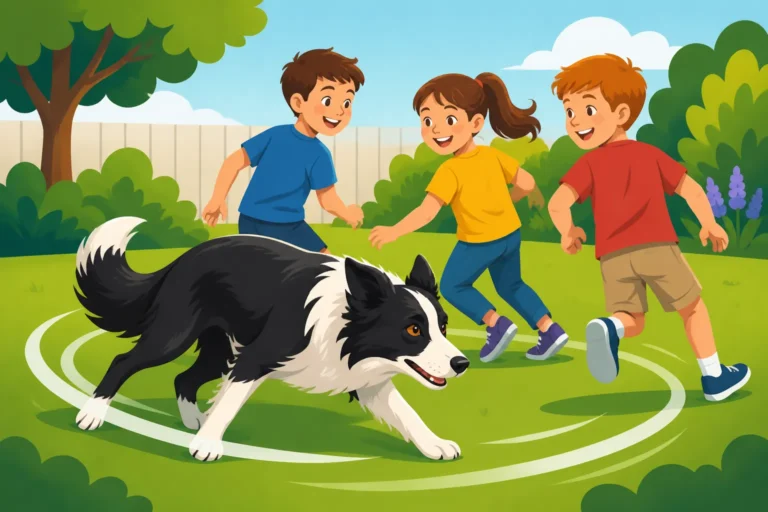
Baby gates are your best friend when managing a Border Collie and a mobile toddler. They allow you to create physical boundaries, ensuring that each can have their own space without constant direct interaction, especially during times when you can't offer 100% active supervision. You can gate off an area of the house for your dog, allowing them to relax without a child constantly trying to engage. Conversely, you can use gates to contain your toddler in a dog-free zone. These barriers aren't meant to be permanent separations but rather tools for controlled interactions and safe downtime for everyone. Consider a sturdy, climb-proof gate that your Border Collie can’t easily jump over or push through, readily available from retailers like Amazon. This helps manage situations like A Border Collie Circling Children in the Yard by providing a clear boundary.
Training Your Border Collie for Toddler-Friendly Behavior
Training is the backbone of successful dog-child integration. While instincts are strong, a well-trained Border Collie with clear boundaries and a strong obedience foundation will be much safer and more pleasant to live with alongside a busy toddler. Focus on commands that promote calmness, distance, and disengagement.
Building a Solid "Place" or "Mat" Command
A "place" or "mat" command is invaluable in a household with a toddler. This teaches your Border Collie to go to a designated spot (a dog bed, mat, or crate) and stay there until released. It gives you an instant, safe way to manage your dog when your toddler is particularly active, when guests arrive, or during meal times. Start by rewarding your dog heavily for simply being on their "place." Gradually increase the duration they stay and the distractions around them. Practice this command frequently in different rooms and with varying levels of activity. This isn't a punishment; it's a job. Your dog learns that being on their place means good things (treats, praise, calm attention) and allows them to be part of the family action from a safe distance. Teaching a Border Collie to Stay on Its Bed offers practical steps for achieving this.
Discouraging Nipping and Nudging
The herding instinct can manifest as nipping at ankles, nudging, or blocking a child's path. It's crucial to address these behaviors immediately and consistently. Every time your Border Collie attempts to herd your child, even if it seems gentle, redirect them. A sharp "no," followed by immediately moving your dog to their "place" or a separate area, helps them understand it's unacceptable. Never allow your dog to "practice" these behaviors, even in play, with the child. Some trainers advocate for interrupting the behavior with a loud noise or a sudden movement from you, then redirecting to a positive behavior. Consider enrolling in an online puppy or dog training program, such as those offered by BAXTER & Bella, which often provide modules on polite manners around children and discouraging unwanted behaviors like nipping. They can offer structured guidance that's hard to replicate on your own.
Rewarding Calmness and Disengagement
It's not just about stopping unwanted behaviors; it's also about actively rewarding the behaviors you do want. Whenever your Border Collie is calmly lying down while your toddler plays nearby, toss them a treat or offer quiet praise. If they choose to disengage from the child, perhaps moving to their bed or simply ignoring the toddler's antics, mark that behavior with a reward. This teaches your dog that being calm and choosing to not interact with the child in a herding manner is highly reinforcing. This positive reinforcement approach strengthens desired behaviors and helps your dog understand that there's no "job" to be done when the toddler is moving about. This approach is far more effective than only punishing undesirable actions.
Creating a Safe Environment for Both Border Collie and Toddler
Beyond training and management, setting up your home environment thoughtfully can significantly reduce stress and prevent incidents. A safe space for both species is crucial for a harmonious coexistence, allowing them to coexist and even enjoy each other's presence without constant tension.
Securing the Home and Removing Triggers
Take a critical look at your home from both a dog's and a toddler's perspective. What objects might tempt your Border Collie to "herd" or "guard"? What could your toddler grab or trip over? Remove small, throwable items that might inadvertently become a target for herding games. Keep high-value dog toys, chew bones, and food out of reach of your toddler to prevent resource guarding issues. Ensure that your Border Collie has plenty of appropriate chew toys and mental enrichment toys in their own space, so they aren't tempted by your child's playthings. Investing in puzzle feeders, available on Amazon, can provide mental stimulation that is safe and contained, keeping their keen minds busy without involving the toddler directly.
Providing Adequate Exercise and Mental Stimulation
A bored or under-exercised Border Collie is a recipe for disaster in any home, but especially one with a toddler. Their immense energy and intelligence mean they need a job to do. Without sufficient physical exercise, they will invent their own entertainment, which often involves herding, chasing, or destructive behaviors. Ensure your Border Collie gets at least two hours of vigorous exercise daily, tailored to their individual needs. This might be a long, brisk walk, off-leash running in a secure area (away from children), or engaging in dog sports.
But physical exercise is only half the battle. Mental stimulation is equally, if not more, important for this breed. Teach them new tricks, engage in scent work, or use interactive puzzle toys. A mentally tired Border Collie is a calm Border Collie. Exercise, Work and What Actually Settles a Border Collie delves deeper into finding the right balance for your dog. A dog that has expended its physical and mental energy in appropriate ways is far less likely to turn its attention to herding a small, wobbly human.
Regular Check-ins and Professional Guidance
Living with a Border Collie and a toddler is an ongoing journey, not a one-time fix. Regularly assess the situation. Are there new behaviors emerging? Is your toddler becoming more mobile or boisterous? Does your dog seem more stressed or anxious? Being proactive and addressing issues as they arise is key. If you find yourself struggling, or if any aggressive behaviors appear, do not hesitate to seek professional help. A certified professional dog trainer or a veterinary behaviorist can observe your specific situation, offer tailored advice, and help you implement a plan that ensures the safety and well-being of both your child and your dog. Sometimes, an objective expert eye is exactly what you need to navigate these complex family dynamics.
| Interaction Type | Dog Behavior (Appropriate) | Dog Behavior (Inappropriate) | Toddler Behavior (Appropriate) | Toddler Behavior (Inappropriate) |
|---|---|---|---|---|
| Greeting | Calmly lies on mat, offers gentle sniff if allowed | Jumps, barks excessively, nips, tries to herd | Approaches slowly, gentle petting on shoulder | Rushes, grabs, pulls, screams directly at dog |
| Playtime | Plays with own toys, ignores child, rests | Herds child, nips at ankles/clothing, takes child's toys | Plays with own toys in designated area, gives dog space | Chases dog, tries to "ride" dog, pulls dog's toys |
| Eating/Sleeping | Rests in crate/designated safe space | Guards food/bed, growls at child near its space | Gives dog space, does not approach when dog eats/sleeps | Attempts to take dog's food, disturbs sleeping dog |
| General Presence | Rests calmly, observes from a distance | Stares intensely at child, stalks, circles | Walks calmly, ignores dog unless instructed to interact | Runs wildly near dog, makes sudden loud noises at dog |
| Supervision Level | Requires active, direct supervision at all times | Never unsupervised | Requires active, direct supervision at all times | Never unsupervised |
Disclaimer
This article is for general informational purposes only and does not constitute professional advice. Laws, prices and regulations vary by location and change over time. Consult a qualified professional for guidance on your specific situation.