What a Choroidal Defect Means in a Border Collie
Discovering that your beloved Border Collie has a "choroidal defect" can be incredibly unsettling, leaving you with a knot in your stomach and a million questions about their future vision and overall health. It’s natural to feel worried, especially when dealing with something as precious as their eyesight. This guide is here to unravel the complexities of choroidal defects in Border Collies, explain exactly what it means for your dog, and help you understand how to best support them.
Understanding Choroidal Defects and Collie Eye Anomaly
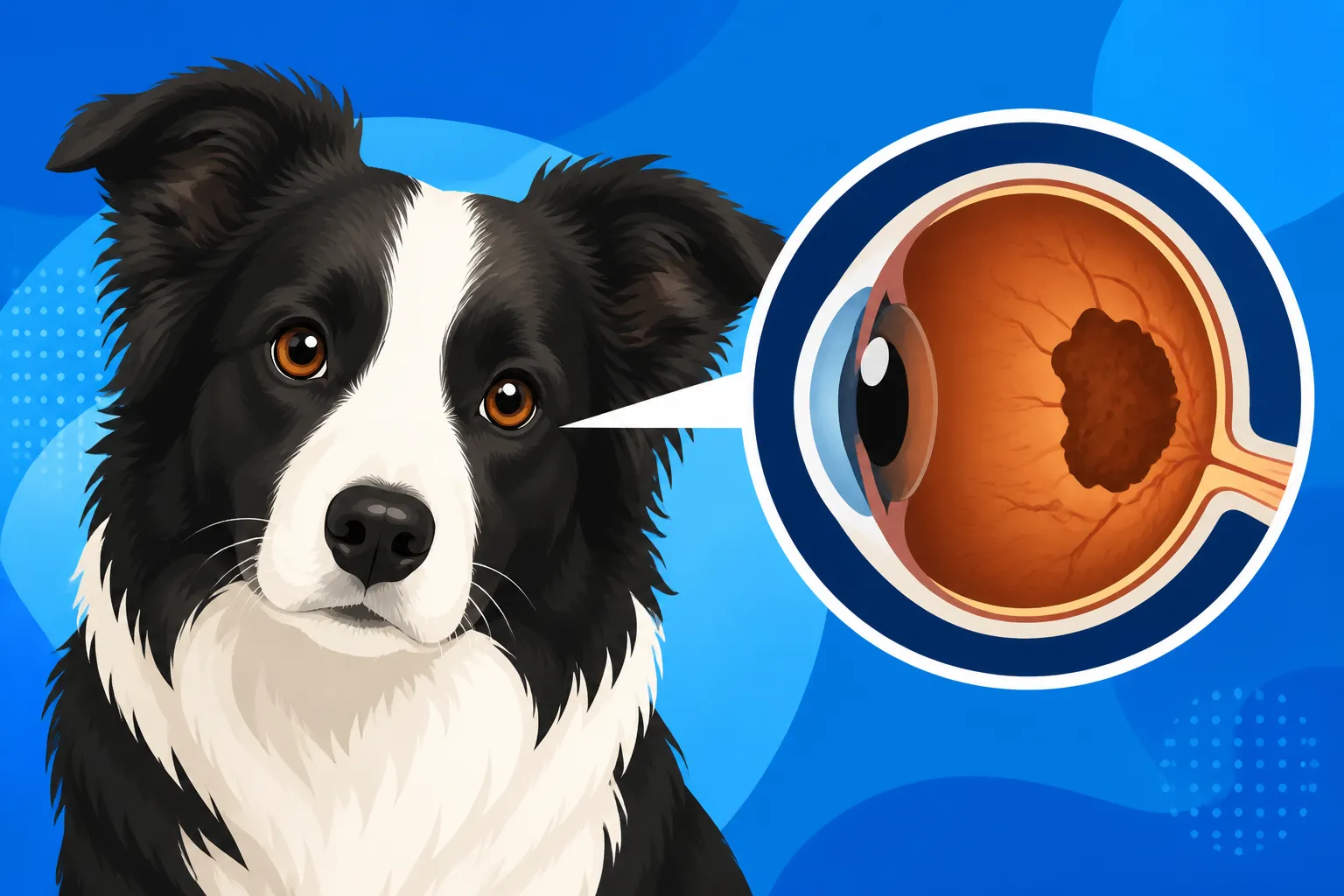
When a vet mentions a "choroidal defect" in a Border Collie, they are almost certainly referring to a manifestation of what's more broadly known as Collie Eye Anomaly, or CEA. This isn't just a quirky phrase; it’s a specific, hereditary eye condition that affects the choroid, a crucial layer of tissue behind the retina. The choroid is absolutely vital because it's packed with blood vessels that supply oxygen and nutrients to the retina, essentially keeping your dog’s vision clear and healthy. When something goes awry with its development, it can lead to a range of issues, from barely noticeable quirks to more severe vision impairment.
The Role of the Choroid in Canine Vision
Imagine the choroid as the powerhouse behind the eye. It’s a pigmented, vascular layer nestled between the retina and the sclera (the white outer layer of the eyeball). Its primary job is to nourish the photoreceptor cells in the retina – those incredible cells that convert light into electrical signals the brain interprets as images. Without a healthy choroid, the retina can't function optimally. The choroid also helps absorb excess light within the eye, reducing reflections and improving clarity of vision. In short, it’s a critical piece of the puzzle that allows your Border Collie to spot a frisbee mid-air or track a sheep across a field with their incredible focus.
What Causes These Defects in Border Collies?
The unfortunate truth is that choroidal defects, or CEA, are genetic. We’re talking about an inherited condition passed down from parent dogs to their offspring. Specifically, it's caused by a mutation in the NHEJ1 gene. This means that if a Border Collie puppy inherits the problematic gene from both parents, they will be affected by CEA. If they inherit it from only one parent, they'll be a carrier and might not show symptoms themselves, but they could pass the gene on to their own puppies. This genetic component is why responsible breeders emphasize thorough health testing and why conditions like this tend to be more prevalent in certain breeds, including our beloved Border Collies, Australian Shepherds, and other collie-type dogs. Understanding this genetic link is the first step in both prevention and managing expectations for affected dogs.
How Choroidal Defects Manifest in Your Border Collie
The term "choroidal defect" might sound ominous, but the reality is that the severity can vary wildly. Many Border Collies with this diagnosis live perfectly normal lives with no discernible vision problems, while others might face more significant challenges. It’s not a one-size-fits-all condition, and the range of effects is often the most confusing part for owners.
The Spectrum of CEA: From Mild to Severe
Collie Eye Anomaly encompasses a spectrum of changes, and a choroidal defect (sometimes referred to as Choroidal Hypoplasia or CH) is usually the mildest form. Here's a quick breakdown of what veterinarians look for:
- Choroidal Hypoplasia (CH): This is the most common and generally the mildest form. It means the choroid is abnormally thin or underdeveloped. Often, dogs with CH show no visual impairment at all, and many owners wouldn't even know their dog had it without a specific eye exam. The vision cells just aren't quite as robust in that area.
- Coloboma: This is a more significant defect, where there's a pit or a hole in the optic disc (the area where the optic nerve connects to the retina) or surrounding retina. Colobomas can range in size and location. Larger colobomas, especially those involving the optic nerve, can lead to blind spots or even significant vision loss in the affected eye.
- Retinal Detachment: This is the most severe and fortunately, the least common manifestation. In some cases, particularly with large colobomas, fluid can accumulate under the retina, causing it to detach. This is a medical emergency and typically results in blindness in the affected eye.
- Intraocular Hemorrhage: In rare, severe cases, bleeding can occur inside the eye, further complicating vision and potentially leading to pain.
A dog with a simple choroidal defect (CH) is generally considered "mildly affected" and will likely see perfectly fine. It's the presence and size of colobomas or retinal detachment that truly dictate the impact on vision.
Visual Impact and Daily Life for an Affected Dog
For the majority of Border Collies diagnosed with only a choroidal defect (CH), their day-to-day life and vision remain completely unaffected. They can run, play fetch, herd sheep, and navigate their environment without any noticeable hindrance. You might never even suspect they have an eye issue. This is why a proper diagnosis from a veterinary ophthalmologist is so crucial; it helps alleviate undue worry for owners whose dogs have a mild form. The article, The Mildly Affected Border Collie That Sees Normally, delves into this further.
However, for dogs with more severe forms of CEA, such as large colobomas or, in rare cases, retinal detachment, vision can be impaired. This might mean:
- Blind Spots: They might have areas in their vision where they simply can't see, leading to occasional bumping into objects or difficulty tracking fast-moving items from certain angles.
- Reduced Night Vision: The choroid plays a role in adapting to low light, so some dogs with significant defects might struggle a bit more in dim conditions.
- Total Blindness in one or both eyes: This is rare but possible with severe complications like retinal detachment. If this happens, dogs are incredibly adaptable, relying on their other senses. Owners might need to make adjustments to their home environment and training.
It's important to remember that even with vision impairment, Border Collies are incredibly resilient. They can still lead fulfilling lives, often compensating remarkably well. If you have concerns, an insurer like Healthy Paws might be worth looking into early on, as they can sometimes help with the costs of diagnostic tests or ongoing care, especially before any pre-existing conditions are noted.
Diagnosing and Managing a Choroidal Defect
Receiving any diagnosis about your dog's health can be daunting, but with choroidal defects, early and accurate diagnosis is key to understanding the prognosis and planning for their future. Thankfully, there are clear steps veterinarians take to identify and monitor this condition.
The Importance of Early Eye Exams
The standard practice for Border Collie breeders, and indeed many other breeds prone to eye conditions, is to have puppies undergo a specialized eye examination before they leave for their new homes. This usually occurs between six and eight weeks of age. This specific timeframe is critical for diagnosing CEA, because as puppies mature, normal pigment can begin to develop in the choroid that might mask the underlying hypoplasia, making it harder to detect later on. This phenomenon is known as "go-normal," and while the physical defect remains, it becomes visually obscured. You can learn more about this in The Eye Exam a Border Collie Puppy Gets at Six Weeks.
During this early eye exam, a board-certified veterinary ophthalmologist will dilate the puppy's pupils and use an ophthalmoscope to examine the back of the eye, specifically looking at the choroid, retina, and optic nerve. They'll be checking for any signs of choroidal hypoplasia, colobomas, or other abnormalities. If a choroidal defect is found, the ophthalmologist will grade its severity. This early screening is invaluable for both pet owners and breeders, providing crucial information about the puppy's eye health right from the start.
Diagnostic Tools and Genetic Testing
While the ophthalmic exam is the gold standard for diagnosis, particularly in puppies, genetic testing has become an incredibly powerful tool for breeders and owners alike. A simple cheek swab can determine if a Border Collie carries the NHEJ1 gene mutation responsible for CEA.
Here's how these tools work together:
- Ophthalmic Exam: As described, this provides a visual diagnosis of the physical defect and its current impact. It tells you if the dog has CEA and how severe it is.
- DNA Test (NHEJ1 Test): This test directly identifies the genetic mutation. It tells you if the dog is "clear" (no mutation), a "carrier" (one copy of the mutation, often unaffected but can pass it on), or "affected" (two copies of the mutation, meaning they have CEA). The article, The NHEJ1 Test for Collie Eye Anomaly, goes into detail about this specific test. This test is highly accurate and can be done at any age.
A dog that tests genetically "affected" will have some form of CEA, though it might be very mild choroidal hypoplasia that never impacts their vision. A dog that tests genetically "clear" will never develop CEA and cannot pass it on. This combination of physical examination and genetic insight provides the most comprehensive understanding of a Border Collie's CEA status. Many owners now seek out breeders who perform Which DNA Tests a Border Collie Breeder Should Have Run on their breeding stock, as this upfront knowledge can save a lot of heartache and expense down the line. Even if your dog has a choroidal defect, knowing whether they carry the mutation can be helpful for future planning, and pet insurance like Healthy Paws can sometimes cover a portion of diagnostic testing fees if the policy is in place before the condition is noted.
Management Strategies for Affected Border Collies
For Border Collies with mild choroidal defects (CH) and no colobomas or retinal detachment, typically no specific treatment or management is required. Their vision is usually normal, and they can participate in all activities, including high-drive sports and herding. Regular annual veterinary check-ups and routine eye exams are generally sufficient to monitor their overall eye health, just as you would for any other dog.
However, if a more severe manifestation of CEA, such as a coloboma, is diagnosed, management might involve:
- Regular Monitoring: The veterinary ophthalmologist may recommend periodic re-examinations to monitor the stability of the coloboma and ensure no complications like retinal detachment are developing. This is especially important for growing puppies.
- Protection from Injury: For dogs with significant vision impairment or colobomas that make their eyes more vulnerable, extra care might be needed to prevent eye injuries. This could involve using protective eyewear during certain activities or being more mindful in challenging environments.
- Environmental Adjustments: If vision is severely compromised, especially in cases of retinal detachment, adapting the home environment to be safe and predictable can help your Border Collie navigate with confidence. This might include keeping furniture in consistent locations, using scent markers, or providing good lighting.
- Surgery (Rare): In the rare event of a retinal detachment, sometimes surgical intervention can be attempted to reattach the retina, though success rates vary, and it's a specialized procedure. For colobomas, surgery is generally not performed unless they are causing secondary issues like glaucoma.
The key is communication with your veterinary ophthalmologist. They are the best resource for tailored advice based on your individual Border Collie's condition. While a choroidal defect might sound concerning, remember that many dogs live full, happy lives with it.
Breeding Decisions and the Future of CEA
Understanding the genetic basis of choroidal defects, or CEA, is paramount not just for individual dog owners but for the entire Border Collie community. Responsible breeding practices are the cornerstone of reducing the prevalence of this hereditary condition.
The Impact on Breeding Programs
Given that CEA is an inherited condition, it has significant implications for breeding programs. Any Border Collie intended for breeding should ideally be screened for CEA, both through an ophthalmic exam as a puppy and, perhaps more reliably for long-term breeding decisions, through a DNA test.
Here’s a breakdown of how genetic testing impacts breeding:
| Genetic Status | Interpretation | Breeding Recommendation |
|---|---|---|
| Clear | Does not have the NHEJ1 mutation. Cannot develop CEA. Cannot pass CEA gene to offspring. | Can be bred to any dog. Ideal breeding candidate as they will only produce clear or carrier offspring when bred with carriers. |
| Carrier | Has one copy of the NHEJ1 mutation. Usually unaffected (phenotypically clear). Can pass the mutation to 50% of offspring. | Can be bred, but only to a genetically "clear" dog. This combination will produce 50% clear and 50% carrier offspring, but no affected puppies. This strategy helps maintain genetic diversity while gradually reducing the gene in the population. |
| Affected | Has two copies of the NHEJ1 mutation. Will have CEA (though often mild). Will pass the mutation to 100% of offspring. | Should not be bred. Breeding an affected dog guarantees that all offspring will receive at least one copy of the gene, and if bred to another carrier or affected dog, will produce affected puppies, perpetuating the condition. In rare cases, if an affected dog is exceptional, they could be bred to a clear dog, but this is generally discouraged and requires careful ethical consideration and thorough communication with puppy buyers. |
Breeders who are committed to the health of the Border Collie breed make these tests a priority. When considering a puppy, Asking a Border Collie Breeder for Test Results is a perfectly reasonable and responsible question to ask. They should be transparent about their dogs' genetic panel results, including for CEA.
Ethical Considerations for Breeders and Owners
The goal of genetic testing for CEA is not necessarily to eliminate every carrier from the gene pool, especially since the carrier rate can be significant in some lines and removing them could drastically reduce genetic diversity. Instead, the focus is on making informed breeding choices to avoid producing affected puppies.
For breeders, this means:
- Testing All Breeding Stock: Ensuring all potential parent dogs are tested for CEA and other common genetic conditions relevant to the breed, as covered in The Border Collie Genetic Panel and What It Screens.
- Strategic Pairings: Carefully selecting mates to ensure that at least one parent is genetically "clear" of CEA. This guarantees that no affected puppies will be born.
- Transparency: Being open and honest with prospective puppy buyers about the genetic status of the parents and the puppy itself. Providing documentation of all health clearances is crucial.
For prospective owners, this means:
- Informed Decisions: Understanding the genetic status of your puppy's parents and what it means for your puppy's long-term health.
- Supporting Responsible Breeders: Choosing breeders who prioritize health testing and ethical breeding practices.
- Awareness: If you own a Border Collie that is a carrier or affected, being aware of this status is important, especially if you ever consider breeding them (which for affected dogs is highly discouraged).
While a choroidal defect can be a concerning diagnosis, the advancements in genetic testing and increased awareness mean that we, as Border Collie enthusiasts, have more tools than ever to manage and ultimately reduce the impact of this condition on future generations. Early detection through exams like Why a Border Collie Litter Is Eye-Checked Before It Leaves combined with genetic knowledge, empowers both breeders and owners to make the best decisions for the health and well-being of these incredible dogs.
Disclaimer
The information provided in this article is for general informational purposes only and is not a substitute for professional veterinary advice. Always consult with a qualified veterinarian or veterinary ophthalmologist for any health concerns or before making any decisions related to your Border Collie's health and treatment.