Why a Border Collie Litter Is Eye-Checked Before It Leaves
Bringing home a Border Collie puppy is an incredibly exciting time, full of dreams of long walks, endless games of fetch, and perhaps even some agility or herding training. But before those bright, intelligent eyes ever gaze upon their new home, responsible breeders take a crucial step: ensuring the entire litter undergoes a thorough veterinary eye check. This isn't just a routine exam; it's a proactive measure to detect inherited eye conditions early, offering peace of mind and transparency about your future companion's health.
The Importance of Early Eye Exams
When you pick up your Border Collie puppy, you expect a healthy, vibrant companion. The early eye exam, often conducted by a veterinary ophthalmologist when puppies are between 6 and 8 weeks old, is a cornerstone of responsible breeding practices. This specific timing is critical because some inherited eye conditions are most easily identified during this brief window. Missing this check means a condition might go undetected until much later, potentially after your puppy is already settled into its new family, leading to heartbreak and unexpected veterinary costs. It's about preventing future surprises and giving you the clearest picture possible of your puppy's genetic health.
Understanding Collie Eye Anomaly (CEA)
One of the primary reasons for these early eye checks is to screen for Collie Eye Anomaly, or CEA. This inherited condition can affect various collie breeds, including Border Collies, and is characterized by a developmental defect of the choroid, the layer of blood vessels and connective tissue located beneath the retina. In its mildest form, known as choroidal hypoplasia (CH), dogs might have no noticeable vision impairment. However, more severe forms can lead to colobomas (holes in the optic disc), retinal detachment, and even intraocular hemorrhage, which can result in significant vision loss or even blindness.
The genetic basis for CEA is well-understood, with a specific mutation in the NHEJ1 gene identified. Reputable breeders will often perform The NHEJ1 Test for Collie Eye Anomaly on their breeding stock, but the physical eye exam remains vital because the severity of CEA can vary greatly even among genetically affected dogs. A puppy might be genetically "affected" but appear only mildly so on an exam, or conversely, show more significant physical signs. Understanding What a Choroidal Defect Means in a Border Collie is key to grasping the nuances of this condition, and thankfully, many dogs with mild CEA live full, happy lives with normal vision.
What the Vet Looks For During the Exam
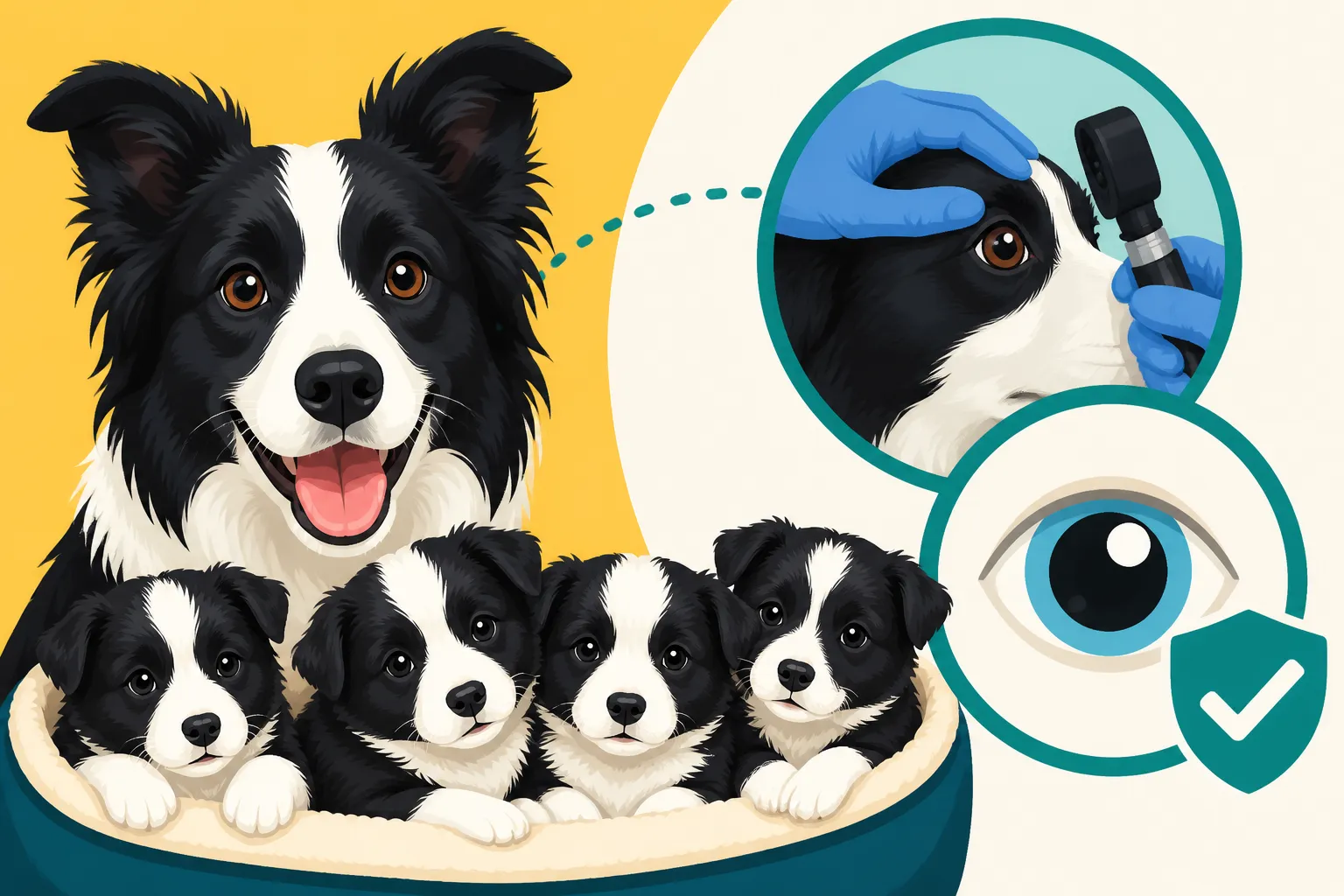
During the exam, a board-certified veterinary ophthalmologist will perform a thorough ophthalmic examination. This typically involves dilating the puppies' pupils using special eye drops. Once dilated, the vet can use an ophthalmoscope to carefully examine the structures at the back of the eye, particularly the retina and choroid. They're looking for any abnormalities in the development of these tissues.
For CEA, the tell-tale sign is often a pale area in the choroid, where the blood vessels are thinner or absent. The vet will map out these areas and note any more serious defects like colobomas or retinal folds. It's a quick, non-invasive process for the puppies, though they might not be thrilled about the eye drops! The goal is to identify any issues before they become permanent or irreversible. This crucial screening, often referred to as The Eye Exam a Border Collie Puppy Gets at Six Weeks, is specifically designed to catch conditions that might otherwise be missed.
The Critical Window for Diagnosis
Why is this 6-8 week window so crucial for eye exams, especially concerning CEA? It all comes down to the development of the tapetum lucidum, a reflective layer behind the retina that gives dogs (and many other animals) their excellent night vision and causes their eyes to glow in photographs. In puppies with CEA, the choroidal changes are visible before the tapetum fully develops and obscures the view. As the puppy matures, usually by 10-12 weeks of age, the tapetum becomes opaque, making it much harder, if not impossible, to accurately assess the underlying choroid for mild forms of CEA.
This phenomenon is why some dogs are called "Go-Normal" Border Collies – they might have mild CEA, but because their tapetum develops normally, they appear healthy on later exams. This can be quite confusing, which is why dedicated breeders prioritize the early screening. Without this early check, a puppy with mild CEA might be mistakenly deemed "clear" later in life, potentially passing on the gene. This highlights why Go-Normal Border Collies and Why the Exam Misses Them is such an important concept for prospective owners to understand.
Beyond CEA: Other Eye Conditions and What They Mean
While CEA is a major focus of the initial eye exam for Border Collies, it's certainly not the only potential issue the ophthalmologist is looking for. A comprehensive eye check aims to catch a wider array of conditions, some inherited, some developmental, that could impact your puppy's vision and overall quality of life. Understanding these possibilities helps you appreciate the full scope of what these early checks are protecting against.
Progressive Retinal Atrophy (PRA) and Its Implications
Progressive Retinal Atrophy (PRA) isn't a single disease, but a group of genetic disorders that cause the degeneration of the retina's photoreceptor cells over time. Unlike CEA, which is a developmental defect, PRA typically manifests later in a dog's life, often leading to night blindness initially, followed by complete blindness. While puppies won't show clinical signs of PRA at 6-8 weeks, a thorough exam might detect early, subtle changes or other non-PRA retinal issues.
Knowing the genetic status of the parents is the most reliable way to guard against PRA, as DNA tests are available for specific forms of the disease. However, the early physical exam ensures there are no other obvious retinal issues that might mimic or be confused with PRA symptoms later. It’s a good starting point, and something to be aware of, especially as your Border Collie ages. If you're concerned about how this condition might affect your dog later in life, researching Progressive Retinal Atrophy in an Older Border Collie can provide valuable insights.
Distichiasis, Entropion, and Ectropion
Beyond the internal structures of the eye, the veterinary ophthalmologist will also carefully examine the eyelids and surrounding tissues. Conditions like distichiasis, entropion, and ectropion are structural abnormalities that can cause chronic irritation and pain for a dog, and some of these can be identified in young puppies.
- Distichiasis: This is where extra eyelashes grow from abnormal locations along the eyelid margin, often poking into the eye and causing irritation. Imagine having a tiny, stiff hair constantly rubbing against your cornea – Ouch!
- Entropion: This occurs when the eyelid rolls inward, causing the eyelashes and surrounding fur to rub against the cornea. It's incredibly uncomfortable and can lead to corneal ulcers, infections, and scarring if left untreated.
- Ectropion: The opposite of entropion, this is when the eyelid rolls outward, exposing the delicate conjunctival tissue. This can lead to dryness, chronic irritation, and susceptibility to foreign bodies and infections.
While not immediately sight-threatening in the way severe CEA or PRA might be, these conditions require veterinary intervention, often surgical, to alleviate discomfort and prevent secondary complications. Catching them early means a better quality of life for your puppy.
Cataracts in Young Border Collies
Cataracts, which are opacities within the lens of the eye, are commonly associated with aging dogs. However, Border Collies can also be prone to juvenile cataracts, which appear in puppies or young adult dogs, often between one and three years of age. While the 6-8 week eye exam might not detect all forms of early-onset cataracts, a skilled ophthalmologist can sometimes spot nascent changes in the lens that indicate a potential problem.
A clear lens is essential for light to reach the retina properly. Any opacity can impair vision, ranging from subtle blurriness to complete blindness, depending on the size and density of the cataract. Some juvenile cataracts are progressive, while others may remain stable. Early detection is crucial for monitoring the condition and determining if surgical intervention might be necessary down the line. It's a reminder that even young dogs can face complex eye health challenges, making that initial comprehensive check so important. If you find your middle-aged Border Collie developing cataracts, it’s worth investigating Cataracts in a Middle-Aged Border Collie for further information.
Navigating the Results and Making Informed Decisions
Receiving the results of your puppy's eye exam can be a nerve-wracking experience, especially if any abnormalities are found. However, armed with information and a clear understanding of what the results mean, you can make the best decisions for your Border Collie's future. Reputable breeders will always be transparent about these findings and guide you through the implications.
Understanding "Clear," "Affected," and "Carrier" Status
When discussing eye health, especially genetic conditions like CEA, you'll often hear terms like "clear," "affected," and "carrier." These terms describe a dog's genetic status and, sometimes, its clinical presentation.
| Status Category | Genetic Implication | Clinical Presentation (for CEA) | Importance for Breeding |
|---|---|---|---|
| Clear | Does not carry the gene mutation | No signs of the condition | Can be bred to any dog without passing on the condition |
| Carrier | Carries one copy of the gene mutation | Typically no clinical signs | Can be bred to a 'clear' dog; should not be bred to another 'carrier' or 'affected' dog |
| Affected | Carries two copies of the gene mutation | Shows clinical signs of the condition (severity varies) | Should not be used for breeding as they will pass on the mutation |
For conditions like CEA, the "affected" status on an eye exam refers to a dog visually showing signs of the defect, even if mild. A dog can be genetically "affected" but clinically "Go-Normal" if the tapetum has developed. This is Why the Border Collie Eye Exam and the DNA Test Differ and why both genetic testing and physical exams are so valuable. If your breeder used genetic testing, you'll also see these terms on those results. Understanding Carriers, Affected and Clear on a Border Collie Panel is vital for responsible breeding and for anticipating potential health outcomes for your puppy.
When a Border Collie Puppy Needs Further Evaluation
If the initial 6-8 week eye exam reveals any abnormalities, it's understandable to feel concerned. The good news is that not all findings are severe, and many can be managed. For instance, if a mild choroidal hypoplasia is noted, and the puppy otherwise sees normally, it might simply mean regular monitoring, and thankfully, The Mildly Affected Border Collie That Sees Normally will likely live a full, active life without vision issues.
However, if the ophthalmologist identifies more serious concerns, such as a coloboma near the optic nerve, evidence of retinal detachment, or significant cataracts, further evaluation will be recommended. This might involve follow-up exams, more advanced diagnostic imaging, or even genetic testing to confirm the specific condition. This is where having a good relationship with your veterinarian and breeder becomes invaluable. They can help you understand the next steps and connect you with specialists if needed. If a serious condition like Coloboma and Retinal Detachment in a Border Collie is diagnosed, discussing the long-term prognosis and care with a veterinary ophthalmologist is crucial. Dealing with these specialized vet visits and potential long-term care can be a financial strain, which is why many proactive owners consider pet insurance. Providers like Healthy Paws can offer crucial support in managing unexpected veterinary costs, helping you focus on your puppy's well-being rather than the bill.
The Role of DNA Testing in Eye Health
While the physical eye exam is crucial for identifying actual clinical signs, DNA testing plays an increasingly important role, especially for inherited conditions. For diseases like CEA and various forms of PRA, a simple cheek swab can reveal whether a dog is genetically clear, a carrier, or affected. This information is invaluable for breeders looking to make informed decisions about their breeding pairs and for prospective owners who want to understand their puppy's genetic predispositions.
Many breeders opt to run The Border Collie Genetic Panel and What It Screens on their breeding stock, and sometimes even on individual puppies, before they go to new homes. This comprehensive panel can screen for a multitude of conditions, not just eye diseases, offering a deeper look into a puppy's genetic makeup. For example, if both parents are genetically "clear" for CEA, then their puppies will also be clear. However, if one parent is a carrier, or if the parents' status is unknown, the eye exam provides the definitive clinical picture for the individual puppy. A combined approach—physical eye exams and DNA testing—provides the most robust understanding of a Border Collie's eye health and helps ensure the continued health of the breed. It’s an investment in the future, providing peace of mind for you and a healthier life for your beloved Border Collie. Organizations like Healthy Paws understand the importance of preventative care and genetic testing in supporting long-term pet health.
Disclaimer
The information provided in this article is for general informational purposes only and is not intended as a substitute for professional veterinary advice, diagnosis, or treatment. Always seek the advice of your veterinarian or other qualified health provider with any questions you may have regarding a medical condition.