What the Border Collie Society of America Does
When people hear “breed club,” they may picture a group that registers puppies or decides which Border Collies are legitimate. The Border Collie Society of America does something different: it supports breed education and activities, and represents Border Collies within the American Kennel Club system. This guide explains what the society does, what it does not do, and how its work may matter to owners and prospective buyers.
The society’s role in the Border Collie community
Breed education and preservation
The Border Collie Society of America, often shortened to BCSA, is a national breed organization focused on Border Collies. Its work includes sharing information about the breed and supporting activities that bring Border Collie owners and enthusiasts together. For someone trying to understand the breed beyond its reputation for intelligence, that kind of education can be useful: Border Collies differ in temperament, working drive, structure, and the kind of daily life they need.
Breed education matters because the same qualities that make a Border Collie remarkable in the right setting can be difficult in the wrong one. A prospective owner may see a quick learner and imagine a dog that will be easy to manage. Learning about the breed’s sensitivity, activity needs, and tendency to notice movement can help set more realistic expectations. For a fuller look at the practical commitment, see The Kind of Home a Border Collie Settles In and What a Border Collie Takes Out of Your Week.
Preservation does not mean every dog must look or behave identically. Border Collies have been bred for different purposes, and there can be meaningful differences between dogs from working and show lines. A breed organization can help explain those differences and encourage informed decisions, but it cannot promise that every dog will match a simple description or suit every household. The history of that divide is explored in The Working and Show Split in Border Collies.
Breed standards and the AKC connection
BCSA is the American Kennel Club’s parent club for the Border Collie. In that role, it helps represent the breed within the AKC structure and contributes to the process around the breed standard. A standard describes the characteristics sought in a breed in the conformation ring, including general structure and appearance. It is not a complete description of personality, working ability, or the needs of an individual dog.
That distinction is easy to miss when reading a standard for the first time. The document is meant to guide evaluation in a particular context; it is not a checklist that tells a family whether a Border Collie will thrive in an apartment, enjoy sheep work, or be comfortable around young children. For the standard’s purpose and language, see What the AKC Standard Says a Border Collie Is.
The society’s role in the AKC system also does not mean it owns the breed or controls every Border Collie in the United States. Other registries and communities have their own traditions and priorities. The ABCA, for example, maintains a working registry with a different emphasis. If registry names are getting tangled together, The ABCA and Its Working Registry and The 1995 AKC Decision on the Border Collie offer useful context.
Events, activities, and ways to participate
Bringing owners together
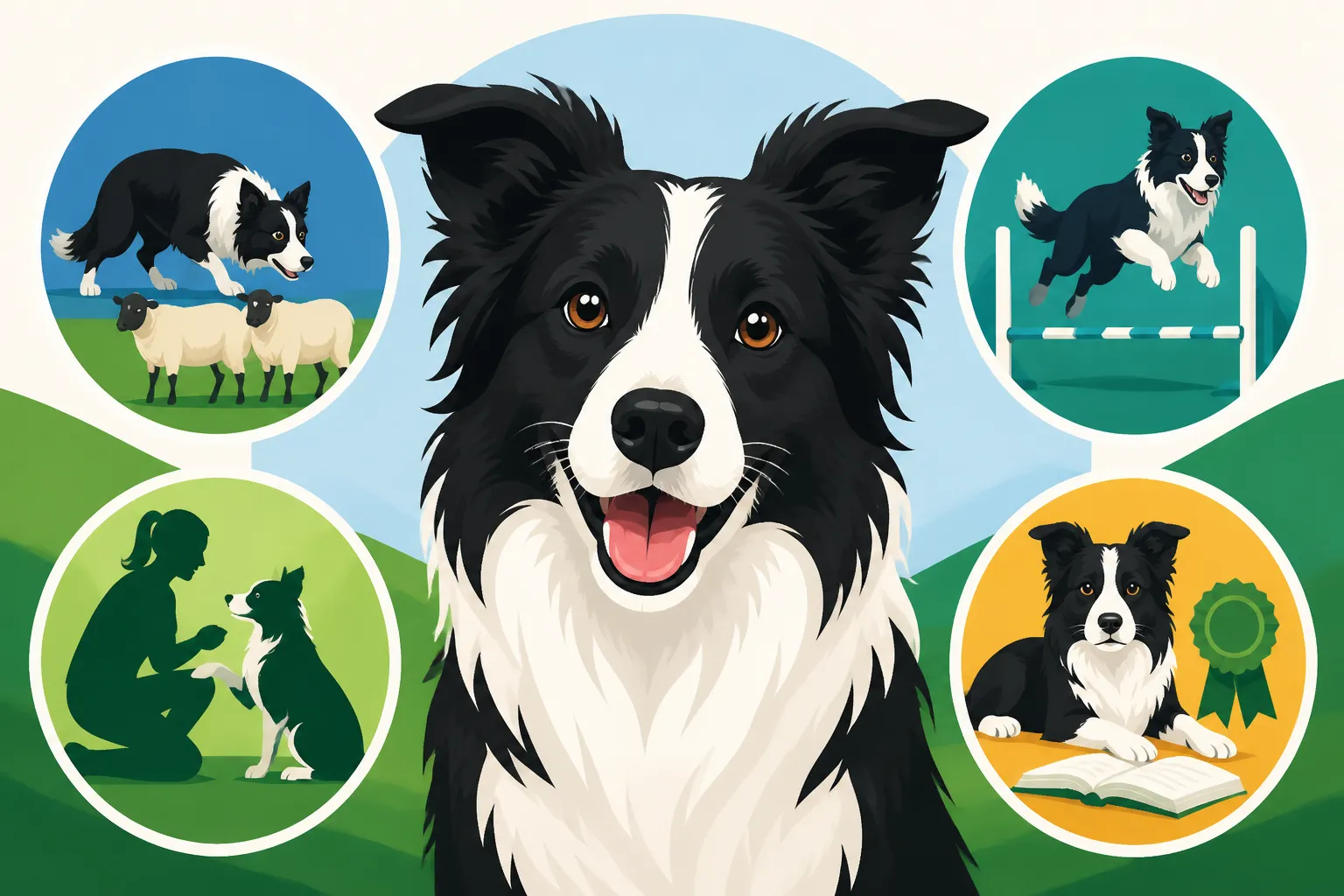
A national breed club can create opportunities for people to meet through events, education, and organized activities. For Border Collies, those activities may include conformation events and performance sports. Events give owners a chance to learn from experienced handlers, compare notes about training, and see how dogs behave in structured settings.
A show or trial is not a verdict on whether a dog is a good companion. It is one specific kind of evaluation, and success depends on the activity, the dog, the training, and the handler. A Border Collie that is not suited to the conformation ring may still be a wonderful sport partner or family dog. Similarly, a dog that performs well in one event may still need thoughtful management at home. The different kinds of work and competition are discussed in The Border Collie in Sheepdog Trials.
If you are considering an event, treat it as a learning opportunity rather than a test you or your dog must pass. Ask what the activity involves, what preparation is expected, and whether spectators can attend. A well-run event can help newcomers understand the breed’s range, but it should not be used to pressure a dog into a sport that does not suit its temperament or physical condition.
Finding useful people and resources
A breed organization may help people locate breed-focused information, connect with other owners, or learn where to look for events. Its usefulness often comes from the people and shared knowledge around it: experienced owners can explain what questions to ask, while educational materials can help newcomers distinguish a responsible breeder’s practices from a polished advertisement.
For puppy seekers, this information is a starting point, not a substitute for doing your own checks. Ask to see health results relevant to the parents, discuss temperament and working drive, and find out what support the breeder offers if circumstances change. A breeder’s contract also deserves careful reading before a deposit or commitment. See Which Test Results a Border Collie Breeder Should Show and What a Border Collie Breeder's Contract Usually Requires for questions to take into those conversations.
The society is not a universal certification service for every breeder, seller, or dog advertised as a Border Collie. A breeder’s association with a club should not replace independent questions about health, living conditions, early socialization, and the fit between the puppy and your household. If a listing relies on a club name as proof that you should act quickly, slow down and verify the details directly.
What the society does not do
It does not register every Border Collie or approve every breeder
BCSA’s connection to the AKC should not be confused with a power to register every Border Collie, regardless of registry or background. Registration rules belong to the relevant registry, and different registries can have different requirements. Nor does a club membership automatically guarantee that a breeder is responsible or that a particular puppy is healthy.
A useful way to think about it is to separate the roles:
| Question | What the society may help with | What you still need to check |
|---|---|---|
| What is the breed like? | Breed-focused education and community knowledge | Whether the individual dog suits your home |
| What does the standard describe? | Information about the breed’s AKC standard | Whether show-ring traits matter to your goals |
| Where can I learn about events? | Club-related event and activity information | Current event rules, eligibility, and logistics |
| Is a breeder responsible? | General guidance and questions to consider | Health records, living conditions, contract, and references |
| Is this dog registered? | Context about the AKC parent-club relationship | Registration documents from the registry involved |
A prospective owner should check documents with the registry named by the breeder rather than assuming that one organization’s role covers all registration questions. If you are comparing registry systems, The ABCA and Its Working Registry explains why registration context can matter.
It does not replace veterinarians, trainers, or local rescue groups
A breed club can provide general information, but it cannot diagnose an illness, assess an injury, or prescribe treatment. A Border Collie with a sudden change in movement, appetite, behavior, or energy needs advice from a veterinarian who can examine that dog. Breed knowledge can help you ask clearer questions, but it is not a substitute for individual care.
The same is true of training. An organization may share educational material or introduce owners to activities, but a trainer or qualified behavior professional can assess a particular dog’s needs in context. For example, a dog that fixates on moving cars may need a careful safety plan and tailored training, not simply more exercise. Breed-wide advice is helpful background; it cannot account for every dog’s history and environment.
Practical care also sits outside the society’s core role. A club may help you learn why a coat, exercise routine, or working schedule needs attention, while ordinary supplies are a separate matter. Owners might look to a retailer such as Chewy for routine items like brushes or food, but product selection should be guided by the dog’s needs and, when appropriate, veterinary advice. Chewy does not replace a veterinarian or a breed organization; those are different resources for different problems.
How to make the society useful to you
Start with your actual question
Before contacting a breed organization or reading its materials, identify what you need to know. Are you deciding whether a Border Collie fits your household? Trying to understand the AKC standard? Looking for a public event? Hoping to learn about activities beyond casual walks? A specific question makes it easier to find the right resource and avoid assuming the society can solve every ownership issue.
If you are considering a puppy, write down questions about the parents’ health testing, temperament, and daily work. Ask how the breeder evaluates homes and what kind of support is available after the puppy leaves. If your interest is sport or herding, ask what beginners should observe before committing and what a dog needs to participate safely. You can also read about The Border Collie in Sheepdog Trials to understand one demanding working context before deciding whether it is a fit.
If you already own a Border Collie, your questions may be more practical: how to find local events, how to learn about breed history, or how to meet people with similar interests. A club can be a helpful doorway into a community, but you still need to assess whether a particular event, trainer, or activity is right for your dog.
Use club information alongside everyday care
Breed-specific knowledge can make ordinary decisions less confusing. Understanding the difference between working and show backgrounds, for instance, can help you discuss a dog’s likely needs without assuming that pedigree alone predicts behavior. Learning about the standard can clarify why a show judge evaluates certain physical traits, while learning about working trials can show how a handler and dog cooperate under different demands.
For routine upkeep, choose supplies for the individual dog rather than for the breed label alone. A rough-coated Border Collie may need a different brushing routine from a smooth-coated dog, and a growing puppy’s food needs differ from those of an adult. Chewy is one place owners may find everyday pet-care items, but a retailer’s product selection is not a substitute for tailored feeding advice from a veterinarian. If you are uncertain about a diet or a health-related product, ask your vet before making a change.
The society is most useful when you treat it as one part of a wider support network. A breed organization can help with breed context and community; registries handle their own paperwork; veterinarians guide medical care; trainers support behavior and skills; and rescue groups address dogs needing placement. For routine purchases, Chewy may be a practical shopping option, but it does not determine whether a particular product is appropriate for your dog.
In short, the Border Collie Society of America helps educate and connect people around the breed and represents Border Collies within the AKC parent-club system. It can be a valuable starting point for learning about breed standards, activities, and responsible ownership. It is not a universal registry, breeder guarantee, veterinary service, or replacement for checking the facts about an individual dog.
Disclaimer
This article is for general informational purposes only and does not constitute professional advice. Laws, prices and regulations vary by location and change over time. Consult a qualified professional for guidance on your specific situation.