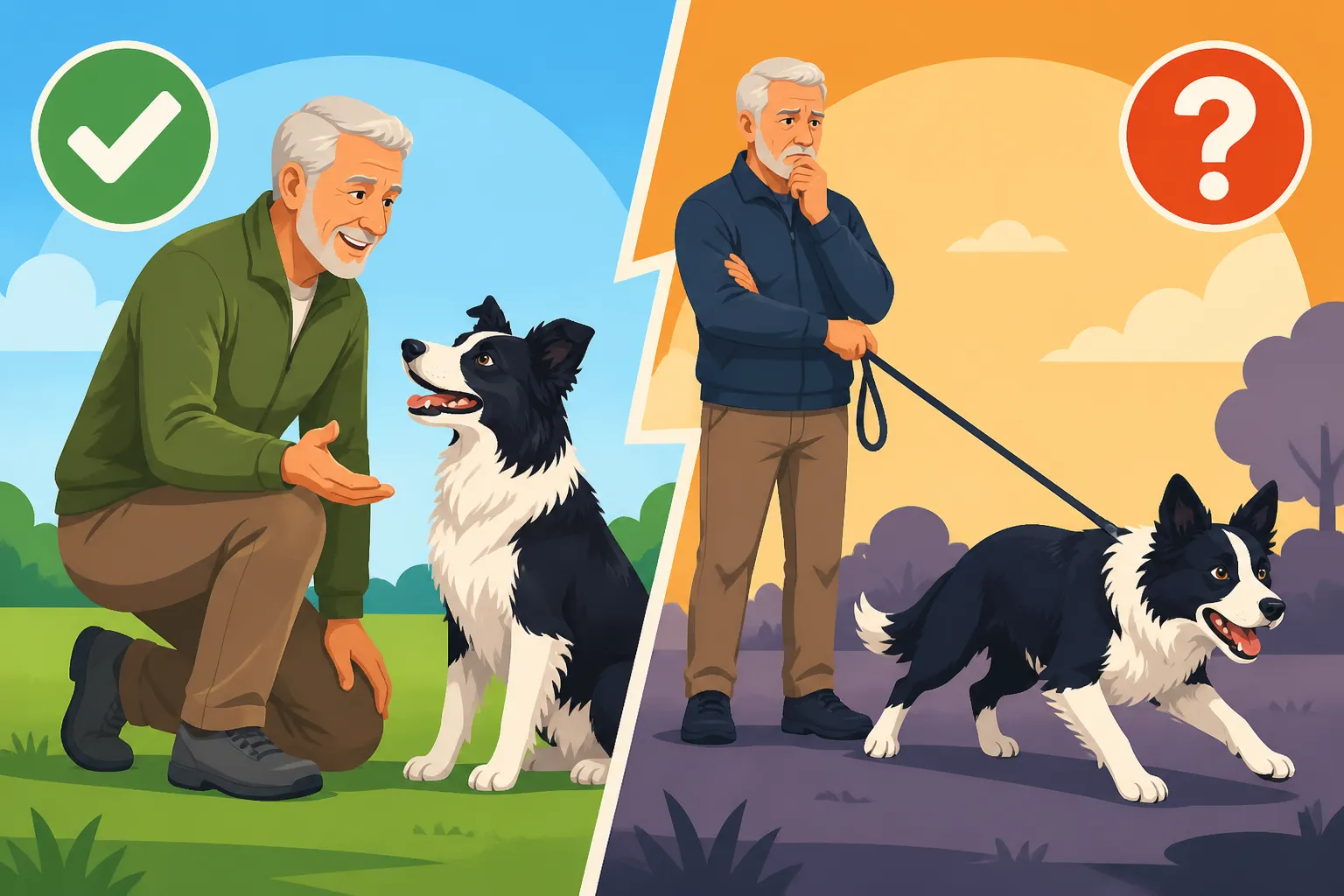
Whether an Older Owner Manages a Border Collie
An older owner can manage a Border Collie, but the match depends less on age than on the dog’s needs, the owner’s health and mobility, and the support available for everyday care. The real challenge is often not one long walk; it is keeping a bright, active dog safely occupied while planning for tired days, vet visits, and changes in either partner’s abilities.
What makes a Border Collie manageable at any age
Look beyond age and focus on capacity
There is no age at which someone automatically should or should not own a Border Collie. An active older adult with a secure routine, good balance, and reliable help may be better placed to care for one than a younger person whose schedule is unpredictable. What matters is whether the person can meet the particular dog’s needs consistently, including on days when energy or mobility is lower.
Border Collies vary. Some are intense, quick to react, and happiest with regular training or a job. Others are more moderate, especially as adults, though even a calmer dog still needs companionship, exercise, and meaningful activity. A breeder or rescue may know how a specific dog behaves at home, around visitors, on walks, and when asked to settle. Those details are more useful than relying on the breed label alone.
It also helps to think about how the dog’s needs may change over time. A puppy can be physically small but demanding: house-training, supervision, frequent outings, and teaching calm habits take time and attention. A mature dog may already have household manners, but could arrive with habits or health needs that require adjustment. Consider the question of energy and daily routine alongside The Kind of Home a Border Collie Settles In and What a Border Collie Takes Out of Your Week.
Match the dog to your routine, not an idealized one
It is easy to picture long country walks and a dog happily trotting beside you. Real life may include rain, sore knees, icy paths, medical appointments, or a week when the usual walking companion is unavailable. Plan around the routine you can reliably offer, rather than the one you hope to maintain every day.
A Border Collie does not need to spend every waking hour running. In fact, constant high-intensity exercise can create an expectation that becomes difficult to sustain. A more balanced day might include a sniffing walk at a comfortable pace, a short training session, food enrichment, and a settled period indoors. If you want ideas for adding variety without making every outing strenuous, Mental Work That Tires a Border Collie Faster offers a useful starting point.
Think about the dog’s behavior on leash, too. A dog that lunges toward squirrels, bicycles, or other dogs can be difficult to hold safely, even if it is not especially large. If balance, grip strength, or shoulder discomfort is a concern, ask to walk the dog in a quiet place before committing. A calm adult dog with practiced leash manners may fit better than a lively puppy whose habits are still developing.
Choosing a dog and planning a safe match
Why an adult dog may be a better fit
A puppy can be a wonderful companion, but puppy care calls for repeated outings, close supervision, and patient training. Puppies may nip, pull suddenly, chew household items, and struggle to settle until they learn how. For an older owner who lives alone or has limited mobility, those ordinary stages can become tiring or risky.
An adult Border Collie may offer a clearer picture of its temperament and needs. Ask about its behavior when left alone, response to handling, comfort around people and other animals, and ability to rest indoors. Find out whether the dog is accustomed to a lead, crate, car, or particular walking routine. A rescue organization or breeder should be willing to discuss both strengths and challenges rather than presenting every dog as an easy match.
“Adult” does not necessarily mean “low energy,” and a senior dog may have care needs of its own. The best choice is the individual whose established routine is compatible with yours. If adopting, discuss a trial or foster arrangement where available, and make sure the expectations are clear. Reading Why People Choose a Border Collie and Then Struggle can help you look beyond appealing photos and focus on day-to-day fit.
Questions to ask before bringing a Border Collie home
Have a frank conversation with the breeder, rescue, or current caregiver. Ask what the dog does on an ordinary weekday, not just how it behaves during a visit. A dog may appear relaxed in a quiet room but become highly aroused by joggers, traffic, children, or moving animals outdoors.
Useful questions include:
- How much exercise and training does this dog currently receive?
- Can it walk on a loose lead without pulling hard?
- Does it react to cars, bicycles, wildlife, livestock, or other dogs?
- Can it settle at home after activity, or does it pace and seek more stimulation?
- Is it comfortable being handled, groomed, and examined?
- Does it have known medical conditions or a medication routine?
- What support will be available if the placement does not work out?
Meet the dog in more than one setting if possible. A quiet walk, a short visit at home, or time observing the dog after excitement has passed can reveal more than a brief introduction. Ask someone you trust to join you and watch for pulling, sudden turns, and how confidently you can manage the dog’s pace.
| Consideration | Signs the match may work | Reasons to pause and plan |
|---|---|---|
| Leash handling | Dog walks steadily and responds to guidance | Dog surges, lunges, or changes direction abruptly |
| Daily activity | Dog enjoys walks and short training sessions | Dog needs sustained high-intensity activity you cannot reliably provide |
| Settling at home | Dog can rest after appropriate activity | Dog remains restless or demands constant engagement |
| Backup care | A trusted person can help when needed | No one is available for illness, travel, or mobility changes |
| Health and handling | Dog accepts routine care and has manageable needs | Care tasks would be difficult or unsafe without help |
Meeting exercise and enrichment needs safely
Use a varied routine instead of relying on long walks
A Border Collie needs more than a quick trip outside, but that does not mean every day has to involve a strenuous hike. The aim is an appropriate mix of movement, mental engagement, social contact, and rest. A steady, comfortable walk that lets the dog sniff can be valuable, especially when paired with a few minutes of simple training at home.
Enrichment can be adapted to the owner’s abilities. Hide a portion of the dog’s meal around one room, teach a reliable “find it” cue, or practice calm behaviors such as settling on a mat. These activities let the dog use its senses and learn without requiring the owner to run, throw a ball repeatedly, or manage a high-speed game. For ideas on building a realistic balance between activity and quiet time, see Exercise, Work and What Actually Settles a Border Collie.
Keep an eye on the dog’s arousal. Endless fetch can leave some Border Collies more wound up rather than satisfied, and a dog fixated on a ball may pull or dart suddenly. Try short, structured play with pauses, and finish with a calm activity. If the dog is difficult to interrupt or becomes intensely focused on moving objects, Weaning a Border Collie Off Endless Fetch may help you think through safer alternatives.
Reduce the chance of falls and sudden strain
A dog that is friendly and well trained can still cause a fall if it crosses in front of its owner, wraps a lead around the legs, or pulls toward an unexpected distraction. Choose a route with good footing and enough room to step aside. Avoid narrow paths beside busy roads if the dog is reactive, and take extra care on wet leaves, gravel, ice, and steep ground.
Equipment should support control rather than substitute for training. A well-fitted harness may be easier to hold than a collar for some dogs, but the right choice depends on the dog and owner. Ask a qualified trainer or veterinarian for guidance if the dog pulls or has a history of neck, shoulder, or mobility problems. Practicing leash skills in a quiet, low-distraction area is safer than trying to solve pulling on a crowded path.
On days when a walk is not practical, use indoor training, food puzzles, or a helper who can take the dog out. You can order food and everyday supplies through retailers such as Chewy if carrying heavy bags is difficult; consider delivery as one part of a broader support plan, not a substitute for hands-on exercise and companionship. For physical concerns that affect how a dog moves, Whether a Border Collie Needs a Sports Vet can help you understand when a veterinary assessment may be useful.
Building reliable support for the years ahead
Arrange backup before you need it
A solid support network is part of responsible dog ownership, not a sign that you are unable to manage. Identify someone who can help with walks, transport, or feeding if you are sick, recovering from an injury, or temporarily unable to drive. A neighbor, family member, trusted dog walker, or experienced sitter may be able to provide different kinds of help.
Try the arrangement before an emergency. Ask the helper to meet the dog, practice taking the lead, and learn any routines or cues. If the dog is sensitive to unfamiliar people, introduce them gradually. Keep written notes about feeding, medications, vet contacts, and behavior around traffic or other animals. A dog that is comfortable with a backup caregiver has more options if your routine changes unexpectedly.
Delivery can reduce the strain of lifting large food bags or repeated supply trips. Chewy is one option some households use for home delivery of pet supplies, while a local pet shop may offer another arrangement. Check product details and your dog’s dietary needs with your veterinarian, particularly if the dog has a medical condition or eats a prescribed diet. Planning routine purchases through Chewy can also make it easier to avoid running out when travel or mobility is difficult.
Plan for changing needs on both sides
A dog’s requirements can shift with age, injury, or illness. An older Border Collie may need shorter, more frequent outings, help getting into a vehicle, or changes to food and home setup. At the same time, an owner’s balance, stamina, or ability to drive may change. Revisit the arrangement periodically instead of waiting for a crisis.
Consider practical household details: Is there a secure, level place for toilet breaks? Can the dog be safely managed at the front door? Is there a plan for veterinary appointments if you cannot lift the dog into a car? For a senior dog, ask your veterinarian about mobility changes, pain, and home adjustments. A clear plan can make care feel manageable rather than overwhelming.
It is also wise to discuss the dog’s long-term welfare with a trusted person. If you become unable to care for the dog, who could take over, and what information would they need? Keep medical records, feeding instructions, and the dog’s behavioral history accessible. This preparation is especially important for an active breed that may not be an easy fit for every household.
Know when to ask for help
If you find yourself avoiding walks because the dog pulls, feeling anxious about managing it near traffic, or struggling to provide enough engagement, treat that as a practical problem to solve—not a personal failure. A reward-based trainer can help with leash manners, settling, and everyday management. A veterinarian can check whether pain or health changes are affecting the dog’s behavior or activity level.
Help can also be divided into smaller, realistic tasks. Someone else might handle the longer walk while you do a short training game at home. A dog walker could provide an outing on appointment days, while a neighbor helps with a quick toilet break during recovery from an illness. Chewy delivery may ease the supply routine, but it cannot replace those hands-on supports.
If the arrangement proves unsuitable despite reasonable adjustments, speak with the breeder or rescue organization early. A responsible placement should consider the dog’s welfare and the owner’s safety. The kindest outcome may sometimes be a different home, particularly if the dog’s needs exceed what can be provided. Making that decision thoughtfully is better than allowing exhaustion or risk to build until there is no time to plan.
Disclaimer
This article is for general informational purposes only and does not constitute professional advice. Laws, prices and regulations vary by location and change over time. Consult a qualified professional for guidance on your specific situation.