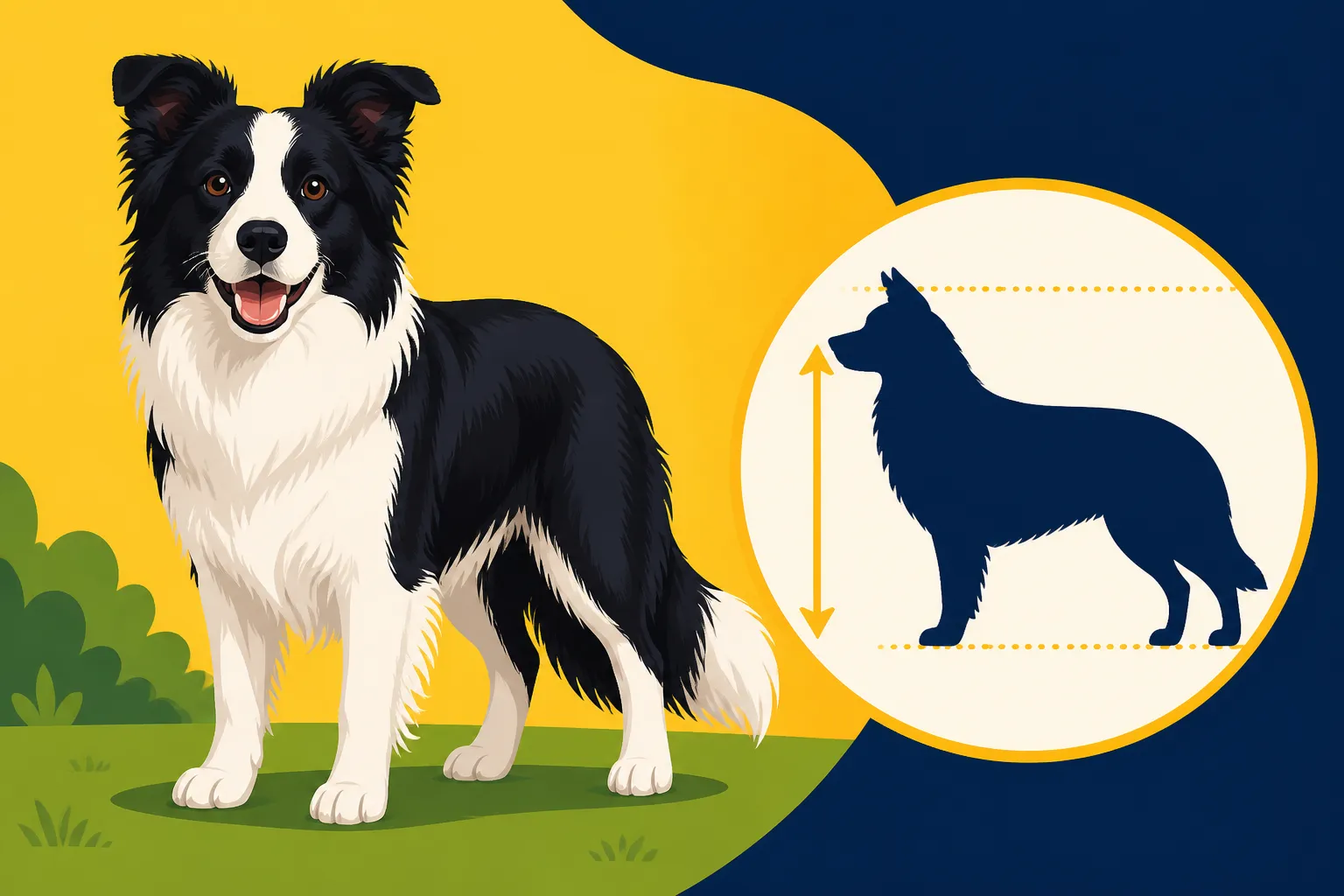
The Eighteen to Twenty-Two Inch Border Collie
It's incredibly common for people new to Border Collies to wonder about their size. You might have seen photos of sleek, compact working dogs or perhaps a more substantial dog in a show ring, and it leaves you scratching your head about what "normal" truly looks like. The truth is, while there's a general range, Border Collies aren't stamped out of a cookie cutter, and their size can vary based on genetics, gender, and even how they're raised. This guide is here to demystify the typical height and weight ranges for this incredible breed, helping you understand what to expect and how to keep your own Border Collie healthy and happy at their ideal size.
Understanding the Breed Standard for Size
When we talk about a dog's size, we're usually looking at two main things: height and weight. For Border Collies, these aren't just arbitrary numbers; they're tied to the breed's historical function and athleticism. Unlike some breeds where a precise measurement is paramount for conformation, the Border Collie's "standard" often emphasizes fitness for purpose.
The ISDS vs. AKC/KC Standards
You might encounter different "standards" for Border Collies, primarily from working registries like the International Sheep Dog Society (ISDS) and kennel clubs such as the American Kennel Club (AKC) or The Kennel Club (KC) in the UK. This distinction is really important when it comes to understanding size expectations.
Working registries, like the ISDS, tend to have less rigid physical standards because their primary focus is on working ability. For them, a dog that can effectively gather and move sheep all day, across varied terrain, is the ideal. This means a dog that's too small might struggle to cover ground or see over tall grass, while a dog that's too large or heavy might lack the agility and endurance needed for intricate work. The emphasis is on a balanced, athletic build. They care less about an exact inch measurement and more about whether the dog can do its job efficiently. If you're looking at a Border Collie from purely working lines, you'll find that The Working and Show Split in Border Collies is a real thing, and their physical appearance reflects their function.
In contrast, kennel clubs like the AKC do have more precise measurements in their breed standards. These standards exist to provide a blueprint for what an "ideal" Border Collie looks like in the show ring, encompassing everything from coat type to ear set, and yes, height and weight. While these standards still acknowledge the breed's working heritage, the interpretation can sometimes lead to slight variations in build compared to a dog whose ancestors have spent generations purely on the sheep fields. It's not uncommon for show-bred Border Collies to sometimes be a bit more substantial in bone or slightly taller, though they generally remain within the historical working parameters.
The Typical Height Range: 18-22 Inches
So, what are these typical measurements we're talking about? Generally, a fully grown Border Collie stands between 18 and 22 inches (approximately 46 to 56 centimeters) at the withers. The withers are that highest point between their shoulder blades, and it’s where you measure a dog's height.
Most often, you'll find that male Border Collies tend to be on the higher end of this scale, perhaps 20-22 inches, while females often fall into the 18-20 inch range. However, this isn't a hard and fast rule. I've known some incredibly sturdy, taller females, and some remarkably compact, agile males. There's a lot of individual variation even within the same litter. For instance, a smaller female might be perfectly suited for working in dense cover or navigating tight pens, her compact size an advantage. On the other hand, a larger male might excel on wide-open fields where covering vast distances is key. The key is that they should be well-proportioned, not gangly or overly chunky for their height.
Typical Weight Range: 30-55 Pounds
Hand-in-hand with height is weight. For a Border Collie, a healthy weight typically ranges from 30 to 55 pounds (approximately 14 to 25 kilograms). Again, this isn't a rigid figure, but rather a spectrum that correlates with their height and build.
It's absolutely crucial to remember that this weight range is for a lean, athletic Border Collie. These dogs are built for endurance and agility, not for carrying extra fat. A healthy Border Collie should have a visible waist when viewed from above, and their abdomen should tuck up neatly when viewed from the side. You should also be able to easily feel their ribs when you run your hands along their sides, without them protruding sharply. The Body Condition a Sport Border Collie Carries is a fantastic benchmark to aim for.
Muscle mass plays a significant role here. A Border Collie that is actively working sheep, training for agility, or participating in other intense sports will naturally have more lean muscle and might weigh more than a less active Border Collie of the same height, even if both are at a healthy body fat percentage. It's not about being "heavy," but about being well-muscled. A "pet" Border Collie who doesn't get the same intense physical demands might carry a few more pounds of fat if not carefully managed, but ideally, they should still be kept lean to protect their joints and overall health.
| Trait | Male Border Collie | Female Border Collie |
|---|---|---|
| Height at Withers | 20-22 inches (51-56 cm) | 18-20 inches (46-51 cm) |
| Weight | 40-55 pounds (18-25 kg) | 30-45 pounds (14-20 kg) |
| General Build | Often slightly larger, more muscular | Often slightly finer bone structure |
Note: These are general ranges for healthy, lean Border Collies. Individual variation is common.
Factors Influencing a Border Collie's Size
While those ranges give you a good idea, your individual Border Collie’s final size will be a unique combination of various influences. It’s not just about what the breed standard says; it’s about their specific genetics, their early life, and even certain medical choices.
Genetic Predisposition and Lineage
Just like in people, genetics are a massive determinant of a Border Collie’s adult size. You know how some families are just generally taller or shorter? It’s the same with dogs. The size of a Border Collie puppy's parents gives you the best indication of how big that puppy will grow to be. If both parents are on the smaller side of the breed standard, it's highly likely their offspring will also be smaller. Conversely, if you have two larger parents, you can expect their pups to be bigger too.
When you're looking at puppies, it’s really helpful to meet the parents if possible, or at least see photos and get their measurements. A responsible breeder will be transparent about this information. Beyond just the parents, the dog's lineage (whether they come from working lines, show lines, or a blend) can also play a role. Working lines are typically bred for agile efficiency and endurance, which often means a more compact, athletic build. Show lines, while still honoring the breed’s working roots, might sometimes favor a slightly more substantial bone structure or a bit more coat, which can affect the perception of size. Sometimes, breeders also select for certain traits, and size might be one of them. For instance, a handler who works with small, difficult sheep might prefer a more compact dog, and therefore breed from smaller stock.
Remember, even within a single litter, there can be variation. Not every pup will be identical to its siblings, just like in human families. There's always a little genetic lottery at play, but the parental size is your strongest predictor. If you're considering a puppy, don't be afraid to ask a breeder about the typical adult size of their dogs, and specifically about the parents of the litter you're interested in. This helps avoid surprises down the road.
Nutrition and Growth
The food a Border Collie puppy eats during its crucial growth period has a profound impact on its eventual size and overall health. It’s not just about getting enough food; it’s about getting the right kind of food in the right amounts.
Overfeeding a puppy, especially with high-calorie diets, can lead to rapid growth. While a fast-growing puppy might seem impressive, it can actually be detrimental. Rapid growth puts excessive stress on developing joints, particularly the growth plates, increasing the risk of orthopedic problems later in life, such as Hip Dysplasia in a Border Collie That Runs All Day or Elbow Dysplasia and the Border Collie Forelimb. These conditions can severely impact a Border Collie's ability to work or enjoy an active life. It's often better for a Border Collie puppy to grow at a steady, moderate pace rather than pushing for maximum size quickly.
Conversely, underfeeding a puppy or providing a diet lacking in essential nutrients can stunt their growth, leading to a smaller adult size than they were genetically predisposed to achieve. It can also result in nutritional deficiencies that affect bone development, immune function, and overall vitality.
A high-quality, balanced puppy food formulated for medium to large breeds is usually the best choice, such as those available from reputable pet suppliers like Chewy. These foods are designed to support steady, healthy growth without encouraging unhealthy rapid development. Always follow the feeding guidelines on the food packaging, adjusting as needed based on your puppy's individual growth rate and activity level, and consult your veterinarian for personalized advice on Feeding a Border Collie Puppy Through Fifteen Months.
Sex and Spay/Neuter Status
The sex of your Border Collie is a straightforward factor: males are generally larger and heavier than females. This is due to natural hormonal differences, with males typically having more lean muscle mass and a slightly larger skeletal frame.
What might be less obvious is the impact of spaying or neutering, particularly when these procedures are done early. The timing of gonadectomy (spay/neuter) can influence a dog's final height because sex hormones play a role in the closure of growth plates in long bones. If a dog is spayed or neutered before their growth plates have naturally closed, the absence of these hormones can delay closure. This delay means the long bones (in the legs, for instance) can continue to grow for a longer period, potentially resulting in a taller dog than they would have been if left intact or spayed/neutered later. This is often referred to as a "leggy" appearance.
The decision of when to spay or neuter is a complex one, with various health and behavioral considerations beyond just size. While delaying spay/neuter until after growth plate closure (typically around 12-18 months for Border Collies) might contribute to them reaching their genetically predetermined height and structure, it also comes with other considerations, such as the risk of unplanned pregnancies in females or certain behavioral tendencies in intact males. It's vital to have a thorough discussion with your veterinarian about the optimal timing for your individual Border Collie, weighing all the pros and cons. You can learn more about this in Spaying a Border Collie Early and Its Joints or Neutering a Border Collie and Its Drive.
Assessing Your Border Collie's Ideal Weight and Health
It's one thing to know the general size ranges for a Border Collie, but it's another to know if your Border Collie is at their ideal, healthy weight. The scale can tell you a number, but it doesn't always tell the full story. A truly fit Border Collie is a picture of lean athleticism, and understanding how to assess this is key to their long-term well-being.
The Importance of Body Condition Score
For Border Collies, the Body Condition Score (BCS) is far more important than a specific number on the scale. The BCS is a standardized, subjective assessment of a dog's body fat, typically rated on a 5-point or 9-point scale. It helps you, and your vet, determine if your dog is underweight, ideal, or overweight.
Here's a simplified way to think about it for a Border Collie:
- Ribs: You should be able to easily feel your Border Collie's ribs when you run your hands along their side, much like feeling the knuckles on your hand. You shouldn't see them prominently sticking out (which indicates underweight), nor should you have to press hard to feel them (which indicates overweight).
- Waist: When looking down at your dog from above, you should see a clear "waist" or hourglass shape behind their ribs. If they look like a straight line or bulge out, they're likely carrying too much weight.
- Abdominal Tuck: From the side, their abdomen should tuck up nicely from their rib cage to their hind legs, not hang low or look flat.
This visual and tactile assessment is crucial because an "average" weight might be perfectly healthy for one Border Collie but overweight for another, depending on their bone structure, height, and muscle mass. A working Border Collie with substantial muscle might weigh 50 pounds and be perfectly lean, while a less muscular pet Border Collie of the same height might be overweight at 45 pounds. Focusing on BCS ensures you're aiming for optimal health, not just a number. You can often find great visual guides to BCS on vet websites or from pet nutrition brands like Chewy.
Keeping a Border Collie Lean and Fit
For a Border Collie, being lean isn't just about aesthetics; it's fundamental to their health and ability to perform. These dogs are athletes, and carrying extra weight is like asking a human marathon runner to carry a heavy backpack – it puts undue strain on their bodies.
Extra weight significantly increases the risk of joint problems, exacerbating conditions like arthritis or making them more prone to injuries such as cruciate tears. It can also reduce their stamina, agility, and overall enjoyment of life. A lean Border Collie can jump higher, turn faster, and work longer without tiring or putting excessive stress on their joints. Keeping a Border Collie Lean Enough to Work should be a top priority for any owner, whether their dog is actively herding sheep or just enjoying daily walks and games of fetch.
Maintaining that lean, athletic build requires a combination of appropriate nutrition and plenty of physical and mental exercise. Regular, vigorous exercise – not just a stroll around the block – is essential. This could involve running, hiking, swimming, dog sports like agility, or even herding if you have access to stock. Remember, Exercise, Work and What Actually Settles a Border Collie goes beyond just physical activity to include mental stimulation. Feeding a high-quality diet appropriate for their activity level, and carefully monitoring portion sizes and treats, will round out the equation.
When to Consult Your Vet
While you can monitor your Border Collie's BCS at home, your veterinarian is your best partner in ensuring they maintain a healthy weight and overall well-being. There are certain situations where a vet consultation is definitely warranted:
- Significant or Sudden Weight Changes: If your Border Collie rapidly gains or loses a noticeable amount of weight without any obvious changes in diet or exercise, it could be a sign of an underlying health issue. This might range from a thyroid imbalance to more serious conditions.
- Difficulty Maintaining Weight: If you're struggling to keep your Border Collie at a healthy weight despite consistent efforts with diet and exercise, your vet can help investigate potential causes or offer strategies for adjustment. They can also screen for conditions that might affect metabolism or nutrient absorption.
- Limping or Reluctance to Move: While this isn't directly a weight issue, being overweight can worsen joint pain or contribute to lameness. Conversely, unexplained lameness might cause a dog to become less active and gain weight. Any persistent limping or changes in gait should always be checked by a vet, as it could indicate an orthopedic injury or the onset of arthritis.
- Annual Wellness Exams: Regular check-ups are vital for proactive health management. During their The Annual Exam a Border Collie Needs, your vet will assess your dog's weight and BCS, discuss their diet and exercise routine, and address any concerns you might have. They can offer tailored advice for your dog's specific age, activity level, and health status, helping you adjust food intake or exercise plans as needed over time.
Don't hesitate to reach out to your vet if you have any questions or concerns about your Border Collie's size, weight, or general health. They are there to help you give your amazing companion the best possible life.
Disclaimer
This article is for general informational purposes only and does not constitute professional advice. Laws, prices and regulations vary by location and change over time. Consult a qualified professional for guidance on your specific situation.