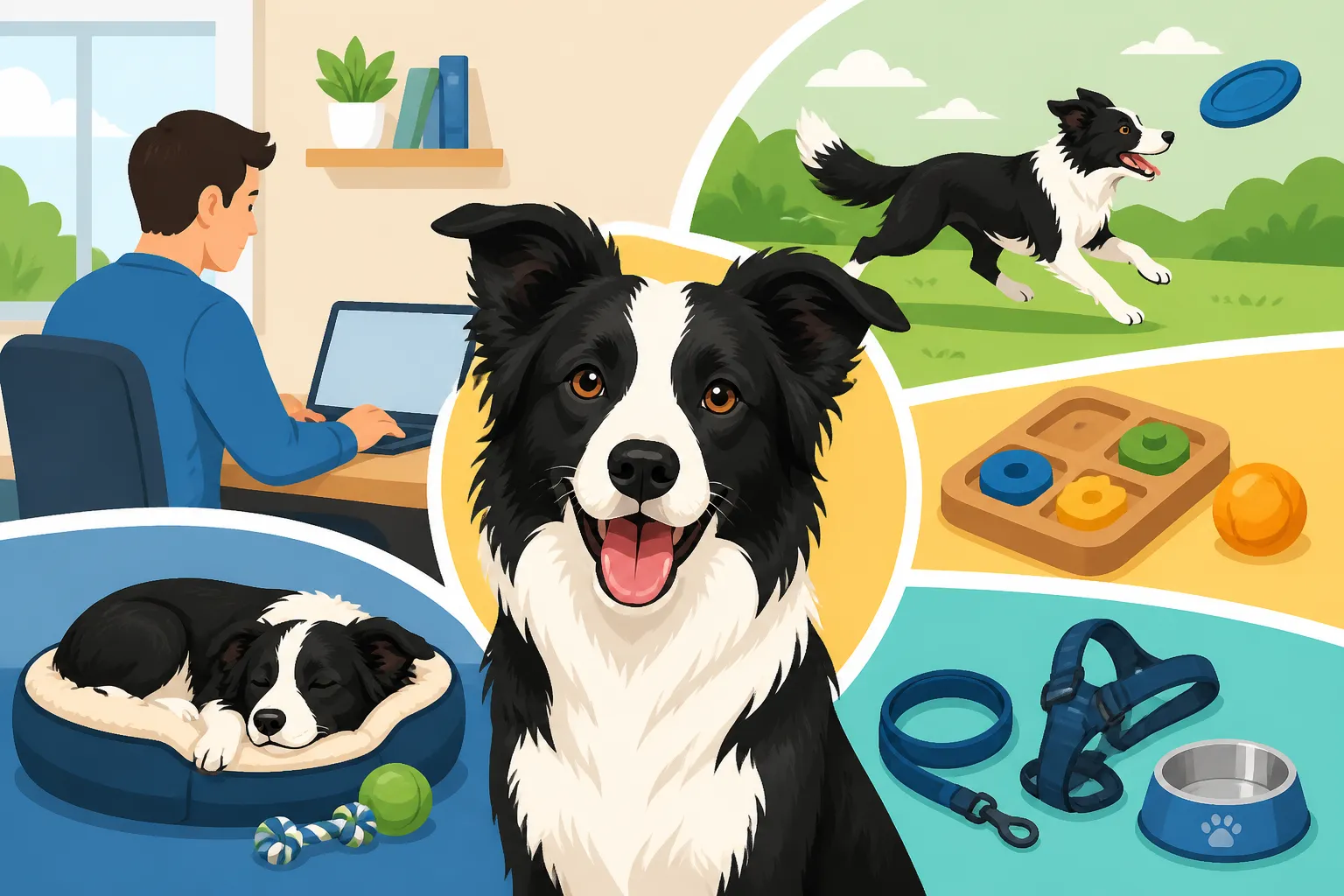
The Arrangements a Working Owner Makes for a Border Collie
A working owner’s day rarely leaves room for guesswork: a shift runs late, the dog still needs a proper outing, and a bored Border Collie may find its own job at home. The solution is not simply adding more exercise. It is building dependable routines for care, enrichment, rest, transport, and backup when the usual plan falls apart.
Build a daily routine that works on ordinary days
A Border Collie does not need a farm to have a fulfilling life, but it does need more than a quick walk squeezed in before work. The most useful arrangement is one you can repeat on an unremarkable Tuesday, not just on a free weekend. Think in terms of a predictable mix of movement, training, company, and quiet recovery.
Plan activity around your real schedule
Start by mapping the dog’s needs onto the hours you actually have. A morning routine might include a sniff-filled walk, a short training session, breakfast delivered in a puzzle feeder, and a calm transition to a resting place. After work, you might offer a longer walk, scent games, a class, or structured play. The right balance depends on the individual dog’s age, health, temperament, and experience.
It is tempting to think that a long run before work will make the dog sleep all day. Sometimes it simply creates a fitter dog who expects even more running. Physical activity matters, but so do activities that engage the dog’s attention without keeping it revved up. Try asking for a few simple behaviors during a walk, hiding treats around a room, or practicing a “find it” game in the yard. For ideas that go beyond distance and fetch, see Mental Work That Tires a Border Collie Faster.
A schedule should also include intentional rest. Some Border Collies struggle to settle after exciting play or a stimulating outing, especially if they have learned that activity continues whenever they demand it. Build a quiet period into the routine after exercise: offer a comfortable bed or crate if the dog is already comfortable using one, reduce household commotion, and avoid turning every moment together into another training session. Settling a Border Collie on a Mat offers a useful starting point for teaching a dog how to relax in a designated spot.
Make time alone manageable
If your workday keeps you away for hours, plan for the dog’s needs rather than assuming it will simply adapt. A young puppy usually needs more frequent toilet breaks and supervision than an adult dog. An adult may still need a midday visit, a dog walker, or another check-in, particularly if it struggles to cope alone or becomes restless after several hours.
A dog walker can provide a bathroom break and movement, but be clear about what kind of outing suits your dog. A quiet, controlled walk may be more helpful than a chaotic group walk for a dog that fixates on bikes, joggers, or other dogs. Share practical instructions: what equipment to use, where the dog is allowed to go, which cues it knows, and what situations should be avoided. If your Border Collie is not reliable around livestock, wildlife, or traffic, a secure lead and a suitable route matter more than giving it a chance to run loose.
Before leaving, make the home environment predictable. Put away items the dog might chew, close off rooms where it could get into trouble, and leave safe activities that do not depend on constant human supervision. A food puzzle or chew can help some dogs, but it is not a substitute for gradual alone-time training. If you suspect separation distress, talk with a veterinarian or qualified behavior professional rather than relying on confinement to solve it. For a closer look at the challenge, read The Eight Hours a Border Collie Spends Alone.
Arrange reliable care for the hours you cannot cover
The best routine has a backup. Work shifts change, commutes run long, and a dog may need care during a day when you expected to be home. Finding help before an emergency makes it easier to choose someone who can safely manage an energetic, responsive, and sometimes intensely focused dog.
Choose help that fits your dog
Different care options solve different problems. A dog walker may be useful for a midday break, while daycare can provide supervised company for some dogs. Neither is automatically right for every Border Collie. A dog that is uncomfortable in groups, becomes overstimulated by repeated play, or tries to herd other dogs may do better with an individual walker or a trusted sitter at home.
| Care arrangement | Often useful for | Questions to ask |
|---|---|---|
| Individual dog walker | A toilet break, calm outing, or midday company | How are walks managed? Can the walker follow your dog’s lead and safety plan? |
| Small-group walk | Dogs that enjoy compatible canine company | How are dogs matched, supervised, and transported? |
| Daycare | Dogs who settle well in a supervised group setting | Is there a quiet rest area? How are breaks and introductions handled? |
| Pet sitter at home | Dogs who are more comfortable in familiar surroundings | Can the sitter follow feeding, medication, and exercise instructions? |
| Friend or family backup | Unexpected delays or occasional coverage | Does the person know your dog’s cues and emergency contacts? |
Arrange a gradual introduction before relying on a new caregiver. Meet together, share a short walk, and give the person written instructions. Watch your dog’s behavior rather than assuming a wagging tail means the experience is comfortable. Relaxed movement, the ability to take treats, and a willingness to disengage can be reassuring signs; frantic pacing, repeated barking, or an inability to settle may mean the setup needs adjusting.
Do not expect every caregiver to exercise your dog in the same way you do. A walker who understands the dog’s recall and triggers may be a safer choice than someone promising unlimited off-leash running. If you are considering daycare, ask how the staff handles dogs that become overexcited, guard toys, or try to control other dogs’ movement. Daycare is a care option, not a test of whether a Border Collie is “tired out.” See Whether Daycare Tires a Border Collie at All for ways to think through that tradeoff.
Keep instructions and supplies ready
A simple care sheet prevents small details from getting lost during a busy handoff. Include feeding amounts as advised for your dog, medication instructions from your veterinarian, emergency contacts, your vet’s details, relevant health conditions, and clear notes about handling. Add practical information such as where the leash is kept, whether the dog is allowed on furniture, and what to do if it slips its collar or refuses to come inside.
Keep routine supplies in one known place. That might include a sturdy lead, properly fitted harness, identification information, waste bags, towels, a portable water bowl, and any food or medication the caregiver needs. For repeat household essentials, some owners use Chewy to arrange deliveries, which can be convenient when work makes a store trip difficult. Still, keep enough food and routine supplies on hand that a delayed delivery does not leave the dog short.
Make the backup plan specific. “Call someone if I’m late” is less useful than naming the person, stating where the key is, and explaining what the dog needs. If you are away overnight, provide enough food and medication, explain the dog’s normal routine, and make sure the sitter knows how to reach you. A Border Collie may notice when its schedule changes, so a calm and familiar handoff can help.
Make exercise and enrichment safe and sustainable
A working owner often feels pressure to compensate for time away with an enormous burst of activity. That can backfire if the dog is still growing, is returning from an injury, or becomes increasingly wound up by repetitive high-speed games. A sustainable plan offers variety, builds skills gradually, and includes a clear end to each activity.
Use more than one kind of “work”
Border Collies are often quick to learn, but intelligence does not mean every dog needs constant commands. Work can include scent activities, trick training, food searches, controlled play, obedience practice, or suitable sport classes. A five-minute session that asks the dog to think and then settle can be more useful than an hour of aimless excitement.
If your dog has a strong interest in chasing balls, use fetch carefully. Repeated sprinting, abrupt stops, and tight turns can put significant demands on the body, and a dog that becomes fixated may have trouble stopping. Set a brief, predictable session, ask for pauses, and use lower-impact games on days when the ground is slippery or the dog seems tired. If fetch has taken over your evenings, Weaning a Border Collie Off Endless Fetch discusses ways to broaden the dog’s activities without abruptly removing every familiar game.
You can also give the dog a job that fits ordinary life. Ask for a hand target before clipping on the leash, have it search for a toy while you prepare dinner, or practice waiting calmly while you open the door. These small routines create opportunities to learn self-control without requiring a large yard or a daily trip to a training facility. For working owners with limited space, Living With a Border Collie in an Apartment explores how thoughtful routines can matter more than acreage alone.
Protect recovery and notice changes
Exercise should match the dog in front of you, not an idealized picture of the breed. A young dog, an older dog, and a fit adult returning after a period of inactivity need different plans. Increase duration and intensity gradually, and avoid using a sudden weekend outing to make up for a quiet week. After demanding activity, allow recovery and watch for persistent stiffness, reluctance to jump, an unusual gait, or a change in willingness to play.
It helps to keep brief notes about activity and behavior. Record the length and type of outing, weather conditions, rest periods, and any signs of discomfort or unusual fatigue. A pattern can be easier to spot on paper than from memory, especially when several people share the dog’s care. If you notice a limp or repeated soreness, pause strenuous activity and seek veterinary advice instead of trying to train through it. Sport Injuries a Border Collie Picks Up can help owners understand why active dogs need thoughtful conditioning and recovery.
Weather belongs in the plan too. On hot days, shift exercise to cooler hours, provide shade and water, and do not assume a highly motivated dog will stop before it overheats. In winter, check paws after walks on salted or gritty surfaces and dry the coat if the dog comes home wet. A small supply of towels and paw-cleaning materials can make these routines easier; Chewy is one place some owners use to reorder ordinary care items, but choose products that suit your dog and ask your veterinarian about health-related concerns.
Prepare for transport, emergencies, and changing seasons
A working owner’s arrangements should cover more than the normal weekday. A reliable car setup, an accessible veterinary plan, and a clear response to schedule disruptions reduce stress when something unexpected happens. These preparations are especially helpful for a dog that travels to training, sports, work sites, or family visits.
Set up safe transport
Choose a way to secure the dog in the vehicle, such as a well-fitted travel harness or a correctly sized crate that is secured according to its instructions. The dog should not be loose in the cabin or riding in a way that interferes with the driver. Make sure it is comfortable with the setup before a long drive by practicing short trips and rewarding calm behavior.
Keep a travel kit where you can find it. Include water, a bowl, waste bags, a towel, a lead, identification details, and any items your dog needs for a planned outing. If your dog takes medication, carry it in its original packaging and follow the prescribed instructions. Do not leave a dog unattended in a parked vehicle when temperatures may become dangerous; a car can heat up quickly, even when the weather initially feels mild.
If the dog travels to a farm or training venue, clarify what is expected before arrival. Ask about gate rules, livestock exposure, lead requirements, and where the dog can rest between activities. Do not treat a dog’s interest in sheep or other animals as proof that it is safe to work them without suitable handling and training. The Arrangements a Working Owner Makes for a Border Collie are most effective when they account for the specific places the dog will visit, not only the exercise it will get.
Plan for the unexpected
Keep your veterinarian’s contact details accessible and know where you would go if your regular clinic were closed. If your dog has an ongoing condition, ask the veterinarian which signs call for urgent attention and what information a caregiver should provide. Keep vaccination and medical records organized, and make sure anyone looking after the dog knows where they are stored.
Build a small amount of flexibility into the weekly routine. If a meeting runs late, the backup caregiver should know the plan. If the dog is injured or unwell, have lower-impact activities ready so you can maintain calm engagement without encouraging physical exertion. Sniffing games, food searches, and brief training exercises may be suitable alternatives for some dogs, but follow your veterinarian’s guidance when illness or injury is involved.
Finally, revisit the plan as your life changes. A new job, a move, an older dog, or a change in household members can all alter what is realistic. Review the routine with everyone who helps care for the dog: who handles morning exercise, who refills food, and who is called if plans fall through? Chewy may be useful for keeping recurring supply orders organized, but delivery arrangements should sit alongside—not replace—a practical local backup for hands-on care.
A Border Collie can fit into a working household when the dog’s day is planned with care. Aim for a repeatable routine, suitable activity, genuine rest, clear caregiver instructions, and a backup plan. The goal is not to keep the dog busy every waking minute; it is to make its needs manageable and its life predictable even when yours gets hectic.
Disclaimer
This article is for general informational purposes only and does not constitute professional advice. Laws, prices and regulations vary by location and change over time. Consult a qualified professional for guidance on your specific situation.