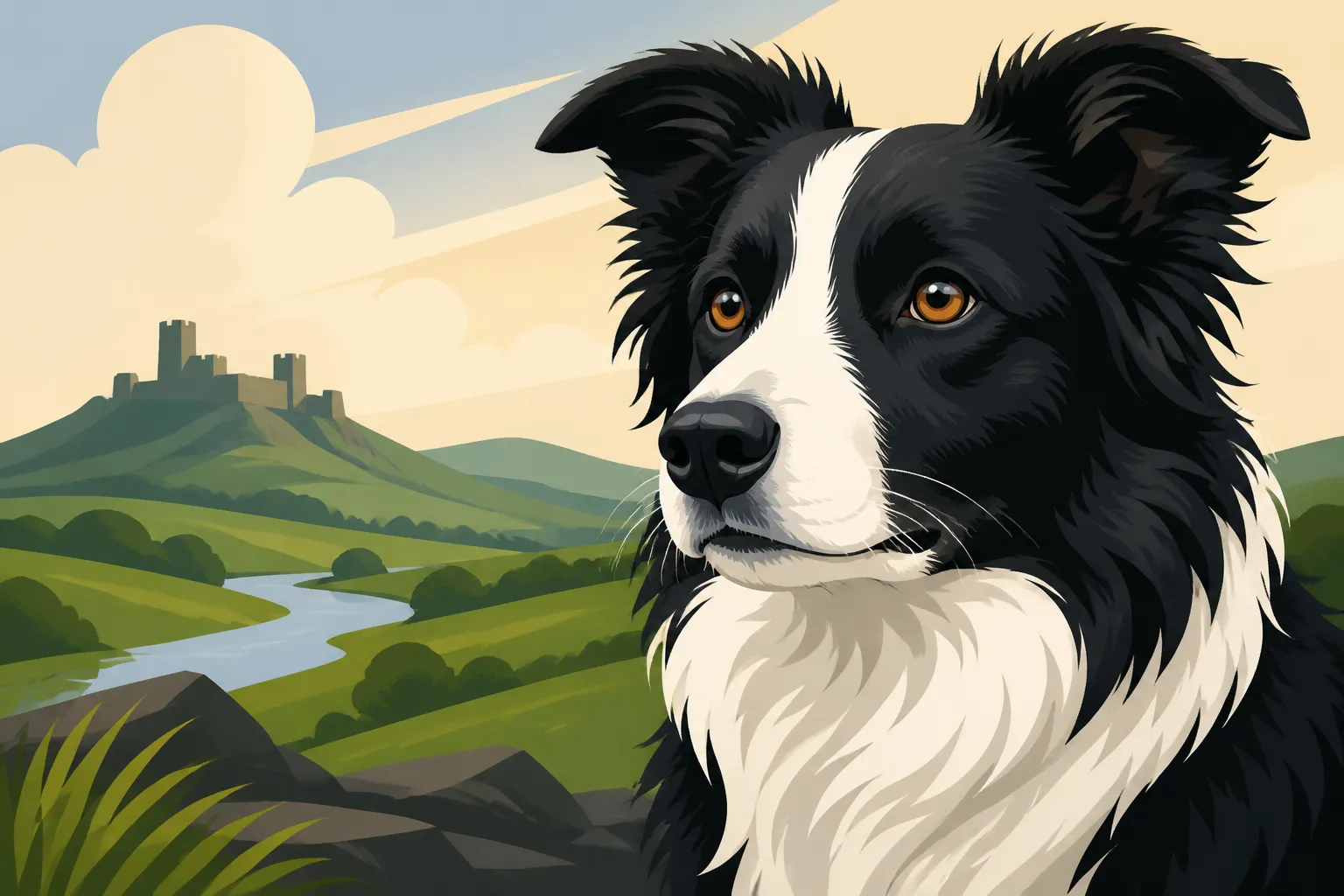
Old Hemp, Born in Northumberland in 1893
If you've ever found yourself marveling at the intense focus and undeniable intelligence of a Border Collie, you're looking at a dog whose very essence can be traced back to one remarkable individual. It's easy to take for granted the breed we know and love today, but understanding its origins helps us appreciate the depth of its capabilities. This guide will take you back to 1893, to the birth of a dog named Old Hemp, whose unique working style irrevocably shaped every Border Collie that followed.
The World Before Old Hemp: Early Herding Dogs
Before the structured breed definitions we have today, the fields and fells of Britain were home to countless types of working dogs, all loosely grouped under the moniker of "collie." These were hardy, intelligent animals, indispensable to shepherds who needed help managing their flocks in often unforgiving landscapes. But there wasn't a universal standard; methods varied wildly, and so did the dogs themselves.
Ancient Roots of Canine Herding
For centuries, dogs have been an integral part of human pastoralism, driving and guarding livestock across continents. In the British Isles, particularly along the rugged Anglo-Scottish border, shepherds relied on dogs whose skills had been honed over generations. These dogs weren't chosen for their looks or pedigree charts in the way modern breeds are; they were selected purely for their effectiveness in the field. A dog that could bring in a scattered flock, find lost lambs, or hold a stubborn ewe was priceless. They were practical tools, not pets, and their survival depended on their utility.
This long history meant that by the late 19th century, a rich tapestry of local "collie" types existed. Some were rough-coated, some smooth; some used a lot of bark and bite, others were quieter. There was no single, unified idea of what a "collie" should be beyond its ability to work sheep. The focus was entirely on function, adapting to the specific needs of a farm or a region. This is why if you look into the history, you'll find much discussion about What Collie Meant Before the Border Collie. It truly was a more fluid definition, rooted in geography and task rather than strict genetics or appearance.
Local Varieties and Unstandardized Working Dogs
The term "collie" itself was a broad descriptor, often referring to any sheepdog. Imagine the variety – a shepherd in the Cheviot Hills might favor a different type of dog than one working the softer lowlands of Northumberland. These dogs were often nameless beyond their working role, or given simple, functional names. They were products of their environment and the specific demands of their masters. Breeding was largely a matter of convenience and performance; if a dog worked well, it was bred, often to another local worker. This created a patchwork of types, each adapted to its niche.
These early working collies were certainly intelligent and driven, but their methods could be inconsistent. Some were too forceful, prone to nipping or "gripping" sheep, while others might lack the necessary intensity to control a difficult flock. Handlers had to adapt their commands and techniques to each individual dog, learning its quirks and strengths. This meant that while the dogs were undeniably useful, there was a desire for greater predictability and a more refined, efficient working style. The challenge lay in harnessing that raw herding instinct into something consistently effective and calm.
Old Hemp's Birth and Unique Talent
Into this diverse world of working collies stepped Old Hemp, born in Northumberland in 1893. His arrival marked a pivotal moment, not because he was the first working dog, but because of how profoundly different he was from his contemporaries. His owner, Adam Telfer, a shepherd from West Woodburn, recognized something special in this pup almost immediately.
The Northumberland Hills and His Origins
Old Hemp was the progeny of two working dogs: his sire, Roy, was a tri-color dog with a forceful, "strong-eyed" approach, known for his power but perhaps a bit too much intensity. His dam, Meg, was a black-and-tan, very quiet and biddable, but perhaps lacking some of Roy's commanding presence. From this pairing, a truly unique combination emerged. Hemp was born into an environment where sheep were plentiful and the need for skilled dogs was paramount. The rugged terrain and changeable weather of The Anglo-Scottish Border and the First Collies fostered dogs that were tough, intelligent, and self-reliant.
It was in this crucible that Old Hemp’s exceptional qualities shone through. He wasn't just a good worker; he was a different kind of worker. He learned quickly, not with the usual hard corrections, but by keen observation and an innate understanding of what was required. His intelligence wasn't just about following commands; it was about anticipating the sheep's movements and working with an almost uncanny intuition. This made him incredibly efficient, reducing the stress on both sheep and shepherd.
The Revolutionary Herding Style
What set Old Hemp apart was his novel approach to herding. Most collies of his era relied heavily on barking, chasing, or even nipping to move sheep. It was often a high-energy, sometimes confrontational method. Old Hemp, however, introduced a remarkably calm and authoritative style. He moved sheep not through aggression or excessive force, but through a powerful, hypnotic "eye"—a steady, unwavering gaze that communicated intent and control. This quiet intensity was something shepherds had rarely seen.
Instead of rushing and scattering the flock, Old Hemp would gather them with a calm deliberation, using his presence and precise movements to guide them where they needed to go. He seemed to understand that too much pressure could backfire, and a quiet confidence was far more effective. This revolutionary style meant less stress on the sheep, less energy expended by the dog, and a much smoother operation for the shepherd. It was a revelation, showing that a dog could be both powerful and gentle in its work. This quiet, controlled method was a departure from how many other dogs of the time worked, as detailed in How Old Hemp Worked Differently From Other Dogs.
How Old Hemp Redefined the Working Dog
Old Hemp didn't just have a different style; he possessed a complete package of traits that redefined what was considered excellent in a working sheepdog. His influence spread rapidly because handlers saw firsthand the efficiency and effectiveness of his methods.
The 'Eye' and Quiet Control
The "Border Collie stare," that intense, focused gaze, is perhaps the most iconic feature of the breed, and it was Old Hemp who popularized this defining trait. He didn't need to bark or nip; his piercing stare alone was often enough to command the attention and movement of the sheep. This "eye" allowed him to control the flock from a distance, making subtle adjustments to his position and gaze to dictate their direction. It was an exercise in pure mental presence, a chess game played out on the hillside.
This quiet control was groundbreaking. It meant that a shepherd could manage sheep with far less commotion, which was not only better for the livestock but also conserved the dog's energy. Imagine the difference: instead of a dog constantly running and yapping, Old Hemp moved with purpose, his focus unwavering. It was a ballet of subtle signals and keen intelligence, a far cry from the more chaotic methods of previous generations. This understated power became the gold standard for What Shepherds on the Border Needed From a Dog.
Consistency and Intelligence on the Field
Beyond his powerful stare, Old Hemp was praised for his incredible consistency and intelligence. He wasn't a one-trick pony; he could adapt his approach to different sheep, different terrains, and different situations. He demonstrated an innate understanding of the task at hand, often anticipating the shepherd's next command. This level of foresight and problem-solving ability was truly remarkable for a dog.
His intelligence wasn't just about being "smart" in a general sense; it was a practical, working intelligence that translated directly into superior performance. Shepherds quickly realized that a dog like Old Hemp saved them time, effort, and stress. His reliability meant they could trust him to handle complex tasks, even with minimal vocal commands. He set a new benchmark for what a sheepdog could achieve, showcasing an unparalleled blend of instinct, trainability, and calm execution. This made him incredibly valuable, and his reputation spread like wildfire among working dog enthusiasts.
Old Hemp's Lasting Legacy: The Foundation of a Breed
Old Hemp wasn't just a great individual dog; he was a genetic powerhouse, and his descendants carried forward his unique talents, solidifying the traits that would eventually define the Border Collie breed.
Prolific Sire and Genetic Influence
Old Hemp's impact wasn't confined to his own lifetime; he was an incredibly prolific sire, reportedly fathering over 200 pups. This was a critical factor in spreading his genes and, by extension, his revolutionary working style throughout the working dog population. Shepherds recognized the superior qualities of his offspring and sought them out for their own breeding programs. His progeny consistently displayed the quiet eye, intelligence, and biddability that made their sire famous.
Through these many litters, Old Hemp effectively stamped his characteristics onto generations of working collies. It's truly astonishing to think that nearly every Border Collie alive today can trace its lineage back to this single dog. His genetic legacy is the bedrock of the breed, ensuring that the traits he pioneered—that unique combination of intense focus and calm control—continue to define the Border Collie. The story of The Two Hundred Pups Old Hemp Sired is a testament to his profound and lasting genetic contribution.
Formalizing the "Border Collie" Name
It was this widespread influence, combined with the growing popularity of sheepdog trials, that led to the formal recognition and naming of the "Border Collie." As dogs of Hemp's lineage dominated these competitions with their consistent, refined working style, a need arose to distinguish this superior type of collie from others. The International Sheep Dog Society (ISDS), founded in 1906, played a crucial role in promoting these working standards and registering dogs based on their working ability, not just their appearance.
The name "Border Collie" itself, first coined in 1915 by James Reid, the first secretary of the ISDS, was a nod to the breed's geographical origins along the Anglo-Scottish border and its specific "collie" type. This formalization helped solidify the breed's identity and provided a clear lineage for working dogs that excelled in the field. It drew a line in the sand, distinguishing these highly specialized herding dogs from other collie types. Understanding When the Term Border Collie Was First Used helps us appreciate the intentionality behind the naming of this extraordinary breed.
The Enduring Impact on Modern Border Collies
The influence of Old Hemp is still profoundly evident in Border Collies today, whether they're working sheep, competing in dog sports, or living as cherished family companions. His genetic blueprint continues to guide the breed's development and define its characteristic traits.
Traits Carried Down Through Generations
When you watch a Border Collie carefully stalk a toy, demonstrating that intense focus, or observe its lightning-fast ability to learn complex commands, you are seeing the direct legacy of Old Hemp. His defining traits—the "eye," the biddability, the sharp intelligence, and the desire to work—are woven into the very fabric of the breed. Even pet Border Collies, many generations removed from the working fields, often exhibit these powerful instincts. They might not be gathering sheep, but they're often trying to gather children, other pets, or even inanimate objects.
This inherent drive to work and control is what makes Border Collies so captivating, yet also challenging for owners who aren't prepared. It's why they excel in activities like agility, obedience, flyball, and scent work, where their intelligence and athleticism can be channeled constructively. These aren't traits that developed by chance; they were carefully selected for and passed down from a lineage that began with Old Hemp. To ensure these traits remain healthy and manageable, responsible breeders conduct The Border Collie Genetic Panel and What It Screens to screen for potential health issues that can impact a dog's working life.
The Working Standard vs. Show Lines
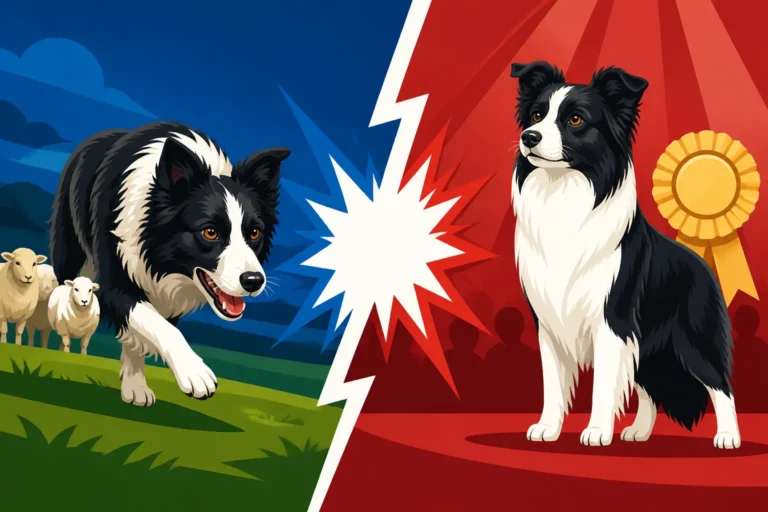
With the rise of the Border Collie's popularity, a divergence began to occur, largely centered around the priorities of breeding. The ISDS, established specifically to preserve the working ability of the breed, continued to register dogs based solely on their proven herding prowess. Their focus remains on functional excellence in the field. However, as the breed gained recognition, some enthusiasts began to breed for specific appearances and conformation standards, leading to the development of show lines. This created a distinct "working and show split."
While show Border Collies are beautiful and often still possess considerable intelligence, the emphasis in their breeding shifted. The intense drive and specific working traits that define a top-tier sheepdog are not always the primary focus in conformation breeding. This isn't to say show dogs can't work, but their genetic lines have often been selected for different attributes. This split is a significant point of discussion for breed enthusiasts, highlighting the two different paths the Border Collie has taken since Old Hemp first graced the fields. You can explore this further by reading about The Working and Show Split in Border Collies.
Accessing the Best of the Breed
For potential Border Collie owners, understanding this history and the breed's inherent traits is crucial. You're not just getting a dog; you're welcoming a descendant of one of the most influential working dogs in history. This means you're getting a dog that thrives on purpose, mental engagement, and physical activity. Whether it's daily runs, complex training sessions, or engaging in dog sports, a Border Collie needs a "job."
Choosing a reputable breeder who prioritizes health and temperament, and who understands the demands of these dogs, is paramount. They can help guide you to a puppy whose energy levels and drive align with your lifestyle. And once you bring your Border Collie home, you'll need to equip yourself with the right tools and nutrition to support their active life. High-quality food, durable toys that can withstand intense play, and grooming supplies for their thick coats are all essentials. Many owners turn to trusted retailers like Chewy for a wide selection of performance dog foods, engaging puzzle toys that stimulate their minds, and tough chews that satisfy their instinct to work. Providing a stimulating environment and the right care ensures that these incredible dogs can truly thrive, honoring the legacy of Old Hemp with every focused gaze and energetic stride.
Old Hemp's Enduring Legacy in Border Collie Trials
Sheepdog trials emerged as a way for shepherds to test and showcase the abilities of their dogs, and it was in this arena that Old Hemp’s descendants truly solidified their dominance. The trials themselves mirrored the practical work of a shepherd, demanding precision, control, and a deep understanding between dog and handler.
The Rise of Organized Sheepdog Trials
While informal competitions had likely existed for ages, the late 19th and early 20th centuries saw the formalization of sheepdog trials. These events provided a platform for shepherds to pit their dogs against each other, demonstrating their skill in gathering, driving, shedding, and penning sheep under various conditions. It was a rigorous test of a dog’s natural instinct, its training, and its ability to work calmly under pressure. A good performance in a trial wasn't just about winning; it was about proving the dog’s utility and efficiency, which in turn boosted its value as a breeding animal.
The establishment of organizations like The International Sheep Dog Society, Founded 1906 was instrumental in standardizing these trials and creating a system for registering outstanding working dogs. This emphasis on proven working ability was a defining characteristic of the Border Collie's development, ensuring that form always followed function. These trials became the crucible in which the Border Collie's reputation was forged, showcasing the quiet power and intelligence passed down from Old Hemp.
Old Hemp's Dominance on the Field (Through Progeny)
Old Hemp himself was said to have never been beaten in a trial, though records from that early era are sometimes sparse. However, his true dominance was expressed through his offspring. They consistently outshone other dogs in trials across the British Isles, thanks to their inherited calmness, intense "eye," and exceptional biddability. Judges and handlers alike marveled at the way Hemp's descendants could manage sheep with such minimal fuss and maximum efficiency.
This consistent success in trials reinforced the value of Old Hemp's genetic line and further spread his influence. Winning dogs were in high demand for breeding, ensuring that his traits became increasingly prevalent in the working collie population. The trial circuit became a proving ground for the Border Collie, solidifying its reputation as the premier sheepdog. It was clear that the "Hemp style" was not just a passing fad but a superior method that was both effective and repeatable. This undeniable success in competitive environments was a significant factor in How Old Hemp's Style Became the Standard for the breed.
The Border Collie's Continued Success in Competition
Even today, Border Collies continue to dominate sheepdog trials worldwide. Their inherent traits, perfected over generations, make them ideally suited for the challenges of competitive herding. The breed's intelligence allows them to learn complex patterns and commands quickly, while their agility and stamina enable them to cover vast distances and make precise movements. The intense bond they form with their handlers, combined with their strong desire to please, makes them incredibly responsive partners.
Beyond traditional sheepdog trials, Border Collies excel in a myriad of dog sports. Their intelligence and athleticism are perfectly suited for agility, flyball, obedience, and rally. This versatility underscores the enduring legacy of Old Hemp; his contributions weren't limited to the sheep field but provided the foundation for a dog that could master virtually any task requiring brains, brawn, and boundless enthusiasm. It's truly inspiring to see how far the breed has come, all while still carrying the unmistakable stamp of that quiet, intense dog born over a century ago in Northumberland.
The Life and Times of Old Hemp: A Quick Overview
To really grasp the influence of Old Hemp, it helps to consolidate some of the key facts about his life and impact. While detailed historical records can sometimes be elusive, the consistent accounts from those who knew and worked with him paint a clear picture of an extraordinary dog.
| Aspect | Description | Significance |
|---|---|---|
| Birth Year | 1893 | Marked the beginning of a new era for working collies. |
| Birthplace | Northumberland, England | Rooted in the traditional sheep-farming regions of the Anglo-Scottish border. |
| Owner | Adam Telfer | A shepherd who recognized and cultivated Hemp's unique talent. |
| Sire | Roy (known for strong eye) | Contributed intensity and focus. |
| Dam | Meg (known for quietness) | Contributed biddability and a gentle nature. |
| Working Style | Quiet, intense "eye," calm control, minimal barking/nipping. | Revolutionized herding, creating a more efficient and humane method. |
| Progeny | Over 200 reported pups | Massively spread his genetic influence, making him the foundation sire. |
| Influence | Set the standard for the Border Collie breed; every BC traces to him. | His traits define the breed today in working, sport, and companion roles. |
| Legacy | Inspired the formalization of the breed and ISDS registration. | Ensured future generations of working dogs retained his desirable characteristics. |
This table provides a snapshot of why Old Hemp is not just a historical footnote but the actual cornerstone of the Border Collie breed as we know it today. He lived in a time when dogs were essential for survival on the farm, and he provided a level of skill and intelligence that was unmatched, ensuring his genetic legacy would endure. It's incredible to think that Whether Every Border Collie Traces to Old Hemp is often stated as a fact because of his prolific breeding and the desirability of his unique style.
Disclaimer
This article is for general informational purposes only and does not constitute professional advice. Laws, prices and regulations vary by location and change over time. Consult a qualified professional for guidance on your specific situation.