Training Treats Inside a Border Collie’s Ration
One of the biggest struggles we face as Border Collie owners is finding the balance between rewarding their incredible intelligence and intense drive during training, and keeping them at a healthy weight. Those tiny training treats add up fast, often without us realizing how significantly they impact our dog's daily caloric intake. This guide will help you understand how to integrate training treats into your Border Collie's regular food ration, ensuring they stay fit, focused, and fueled for all their amazing work.
The Challenge of Treats: Why They Matter More Than You Think
It's no secret that Border Collies are eager to please and highly food-motivated, which makes training a joy. But that enthusiasm can lead to an unexpected problem: calorie creep. Every single piece of kibble, every tiny bit of cheese, every commercial training treat – it all contributes to their daily energy intake. For a breed that thrives on being lean and agile, letting those extra calories accumulate can have real consequences for their long-term health and performance.
The Double-Edged Sword of High-Value Rewards
We often reach for high-value treats when our Border Collie is learning something new or working in a highly distracting environment. And rightly so! That sliver of cooked chicken or a chewy, smelly training bite can make all the difference when you're trying to nail down that perfect recall amidst a flock of geese or teach a complex agility sequence. The problem isn't the treat itself, but the sheer volume that can be given over a day, a week, or a month. Imagine all those little rewards adding up – a handful here, a handful there. Before you know it, your Border Collie has consumed an entire extra meal's worth of calories, on top of their regular dinner. It’s easy to do, especially when you're caught up in the flow of a great training session and your dog is just so good.
This is a particular concern for a breed that typically requires Keeping a Border Collie Lean Enough to Work. A heavier dog, even by a few pounds, will experience more strain on their joints, reduced stamina, and a general decrease in efficiency and speed. Their bodies are built for endurance and quick, precise movements. Carrying extra weight undermines these natural advantages and can lead to issues like premature arthritis or a greater risk of injury. It also impacts their comfort and overall quality of life.
Maintaining That Athletic Border Collie Physique
A healthy Border Collie should have a lean, athletic build. You should be able to easily feel their ribs without seeing them overtly, and they should have a noticeable "tuck-up" where their abdomen meets their hind legs. Many owners find it challenging to maintain this ideal weight, especially if their dog is in active sports or working sheep. The energy expenditure is high, but the appetite can be even higher! When you're constantly engaged in training – whether it's obedience, agility, flyball, or herding – the temptation to use copious treats is always there.
However, a Border Collie isn't built to carry excess weight. Unlike some other breeds, a Border Collie is rarely just a "pet" in the traditional sense; even companion Border Collies often have a demanding exercise schedule that mimics their working heritage. Every extra calorie has an impact on their joints, cardiovascular health, and even their ability to regulate body temperature during intense activity. A dog carrying just a few extra pounds might find itself struggling more with Heat Stroke in a Border Collie That Kept Working or showing signs of Stiffness in a Border Collie After a Long Day sooner than a leaner counterpart. It’s a fine line to walk, ensuring they have enough fuel without overdoing it.
Calculating the Calories: Making Treats Part of the Meal Plan
The key to preventing unwanted weight gain from training treats is to consciously integrate them into your Border Collie's daily caloric allowance. This isn't about depriving your dog; it's about smart management. Think of their daily food ration as a budget, and every treat is an expenditure from that budget.
Decoding Treat Labels and Calorie Counts
Most commercial dog foods and treats will list their calorie content, often in kilocalories per cup (kcal/cup) or kilocalories per treat (kcal/treat). This information is gold! Without it, you're essentially guessing, which isn't ideal for precise nutrition. Take the time to look at the labels of your dog's regular kibble and any treats you use. If a treat doesn't list calories, try to find a similar product online (perhaps on a site like Chewy or Amazon) that does, to get an estimate.
Once you know the calorie count of both your dog's regular food and their favorite training treats, you can start to do the math. Your dog's daily recommended caloric intake depends on several factors: their age, activity level, metabolism, and whether they're spayed/neutered. A good starting point is to refer to the feeding guidelines on your dog's food bag for their ideal weight, then consult with your veterinarian to fine-tune it, especially for a highly active Border Collie who might burn significantly more calories than the average pet dog. For example, The Calorie Load a Working Border Collie Burns can be substantial, meaning their total intake needs careful consideration.
Let's imagine your Border Collie typically eats 1000 kcal per day from their regular food. If you use treats that are 5 kcal each, and you give 20 treats during a training session, that's 100 kcal. That 100 kcal needs to come out of their regular meal portion for the day. It sounds simple, but it's often overlooked.
A Practical Approach to Dietary Adjustment
Here's how you can make it work:
- Determine Baseline Calories: Calculate your Border Collie's ideal daily caloric intake. This is your target.
- Estimate Treat Calories: At the start of a training session, portion out the treats you plan to use. Don't just grab from the bag as you go. Calculate the total calories in that portion.
- Subtract from Meals: Deduct the treat calories from your dog's regular meal portions. For instance, if you usually feed 2 cups of kibble, and your treats equal half a cup's worth of calories, you'll feed 1.5 cups of kibble for their main meals that day. You can spread this reduction across both breakfast and dinner, or just reduce one meal.
This approach requires a bit of pre-planning, but it quickly becomes second nature. It also encourages you to be more mindful of each treat you hand out. If you find yourself consistently giving a very large volume of treats, it might be time to reassess the treat type or the length of your training sessions. Remember, you're aiming for Feeding a Border Collie That Works Two Hours a Day while maintaining an appropriate weight, not letting them get pudgy from all those rewards.
Here’s a simplified table to help you visualize a daily calorie adjustment:
| Item | Calories per Unit | Units Consumed | Total Calories |
|---|---|---|---|
| Regular Kibble | 400 kcal/cup | 2.5 cups (ideal) | 1000 kcal |
| Training Treat A (Small) | 3 kcal/treat | 20 treats | 60 kcal |
| Training Treat B (Chew) | 20 kcal/chew | 2 chews | 40 kcal |
| Total Treat Calories | 100 kcal | ||
| Remaining Kibble Needed | 900 kcal | ||
| Adjusted Kibble Portions | 400 kcal/cup | 2.25 cups | 900 kcal |
In this example, your Border Collie's regular kibble would be reduced from 2.5 cups to 2.25 cups for the day to accommodate the 100 kcal from treats.
Smart Integration: Strategies for Feeding a Working Mind (and Body)
Beyond just calculating calories, how you deliver those treats makes a huge difference. For a Border Collie, training isn't just about learning commands; it's mental enrichment. Leveraging their entire ration, not just "extra" treats, can be incredibly effective.
Using Mealtime Kibble as Training Reinforcement
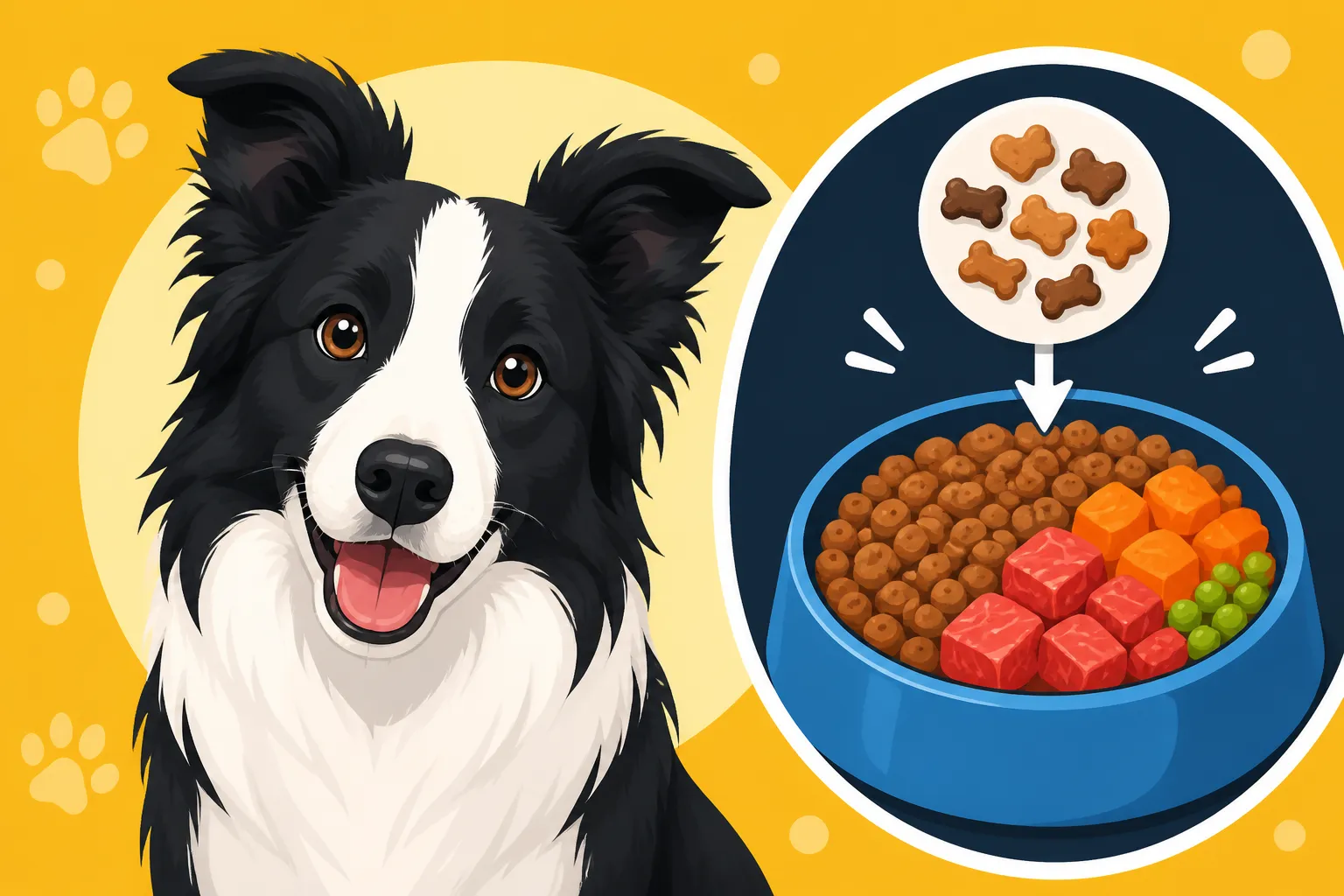
This is perhaps the simplest and most effective strategy for managing treat calories: use your Border Collie's regular kibble as training treats. Instead of pouring their entire meal into a bowl, measure out a portion and use it throughout the day for short training bursts, puzzle feeders, or enrichment activities. This means every piece of kibble becomes a reward, reinforcing desirable behaviors while still contributing to their overall nutrition. You’ll be surprised how motivated your Border Collie remains for their usual food, especially if it’s a high-quality, palatable brand.
This method has several benefits:
- Calorie Control: Since it's part of their measured ration, there are no "extra" calories to account for.
- Nutritional Balance: Your dog receives all the necessary nutrients from their balanced diet, rather than relying on less nutritionally complete treats.
- Engagement: It transforms mealtime from a quick gulp into an extended, interactive experience. For a breed that needs Mental Work That Tires a Border Collie Faster, making them work for their food can be a fantastic way to burn mental energy.
- Cost-Effective: You're not buying separate, often expensive, training treats. This can certainly help with Monthly Costs for a Border Collie in Full Work.
You can hand-feed a portion of their meal, scatter-feed it in the grass to encourage sniffing and searching, or load it into a variety of toys that dispense kibble slowly. This makes mealtime an adventure, not just a pit stop.
Portion Control and Timing for Optimal Impact
When you are using commercial training treats, portion control is paramount. Don't eyeball it; measure it. If treats are larger, break them into smaller pieces. A pea-sized piece of high-value treat is often just as effective as a larger chunk for a Border Collie. They respond to the presence of the reward and the associated positive reinforcement, not necessarily the size of it.
Timing is also critical. Deliver the treat immediately after the desired behavior. This instantaneous feedback loop is what makes training so effective for a Border Collie. Delaying the treat even by a few seconds can confuse your dog about what they're being rewarded for. Furthermore, think about when you're giving treats. Are you rewarding calm behavior around the house, or are you primarily using them for high-energy activities? Varying the context of treat delivery can enhance their learning.
Consider the role of food in their overall schedule. If your Border Collie is on a Feeding a Border Collie on a Performance Diet, the timing of meals around intense work or trials is also important. Treats should complement this schedule, not disrupt it by adding unexpected, unbalanced calories. Some owners find that feeding a slightly smaller, easily digestible breakfast before a morning training session allows for more treat-based reinforcement without overfeeding.
Choosing Your Tools: What Makes an Effective and Healthy Training Treat
Not all treats are created equal. The best training treats for your Border Collie are those that are low in calories, highly palatable, and easy to consume quickly, without creating crumbs or excessive chewing time that can interrupt the flow of training.
Beyond the Bag: DIY and Whole Food Options
You don't always need to buy specially marketed training treats. Many household items, prepared safely, make excellent, cost-effective, and healthy rewards.
- Cooked Chicken Breast: Boiled or baked, unseasoned chicken breast is a high-value, lean protein. Cut it into tiny, pea-sized pieces.
- Cheese: Small cubes of low-fat cheese (like mozzarella or cheddar) are incredibly motivating for many Border Collies. Use sparingly due to higher fat content.
- Carrots/Green Beans: For a very low-calorie crunch, small pieces of raw carrot or cooked green beans can work for some dogs, especially during less intense training.
- Hot Dogs/Sausage: Again, unseasoned and cut into minuscule pieces. These are typically very high-value but also higher in sodium and fat, so use them in tiny amounts for specific challenges.
- Liver Treats: Dehydrated liver is very popular. You can often buy raw liver, cook it, and dehydrate it yourself for a more economical and controlled option.
When preparing DIY treats, ensure they are cooked thoroughly, unseasoned, and cut into appropriate, choke-proof sizes for your dog. Store them properly to prevent spoilage.
Leveraging Commercial Options Responsibly
There are countless commercial training treats available, and many are formulated with lower calories and specific textures in mind. When looking at options from places like Chewy or Amazon, seek out brands that emphasize:
- Small Size: Treats designed to be small and easily swallowed.
- Low Calorie: Often marketed as "lite" or "low-calorie" options.
- Limited Ingredients: Fewer artificial colors, flavors, and preservatives are generally better.
- Palatability: Ultimately, your dog has to want to eat them!
Brands like Zuke's Mini Naturals or Wellness Soft Puppy Bites are popular choices known for their small size and decent ingredient lists. Even specific fresh food brands like Ollie can be a great option. Since their food is typically human-grade and comes in pre-portioned, high-quality ingredients, you can easily pull small pieces of their gently cooked protein or vegetables to use as training rewards. It's an excellent way to use a highly nutritious food that your Border Collie already loves, without adding mystery calories or ingredients to their diet.
Regardless of your choice, remember to always read the label, understand the calorie count, and integrate those treats into your Border Collie's total daily food allowance. This mindful approach ensures that your brilliant companion remains healthy, happy, and perfectly poised to learn whatever you throw at them.
Disclaimer
This article is for general informational purposes only and does not constitute professional advice. Laws, prices and regulations vary by location and change over time. Consult a qualified professional for guidance on your specific situation.