Whether a Working Border Collie Eats Twice a Pet’s Ration
One of the biggest questions that often pops up for new Border Collie owners, especially those who come to the breed with an idea of their incredible energy, is just how much food these dogs actually need. It’s a common misconception that a working Border Collie devours a monster truck rally’s worth of kibble every day, eating double what a typical house pet does. This guide will dive deep into the nuances of a working Border Collie's diet, exploring their true energy demands and how that translates to their food bowl, debunking myths along the way.
Understanding the Energy Demands of a Working Border Collie
It's easy to look at a Border Collie tearing around a field, rounding up sheep or flying over agility jumps, and assume they must be burning through calories at an astronomical rate. And while it's true that their energy demands are significantly higher than many other breeds, or even a more sedentary Border Collie, the idea of them eating twice a pet's ration isn't always accurate. It really depends on what "work" entails and how consistently they're doing it.
Defining "Working" for a Border Collie
When we talk about a "working" Border Collie, what exactly are we picturing? The truth is, "work" can manifest in many different forms, each with varying caloric expenditures. A dog that spends eight hours a day gathering sheep across rugged, hilly terrain is burning a vastly different amount of energy than one that does an hour of intense agility training a few times a week, or a pet Border Collie that enjoys long, vigorous hikes on weekends.
- Full-Time Stock Work: This is the image many people have in their heads: a dog that's truly earning its keep on a farm. These dogs are moving, thinking, and reacting constantly for hours on end, often covering many miles in a day. They navigate challenging terrain, deal with unpredictable livestock, and exert immense physical and mental effort. Their caloric needs are indeed at the high end.
- Competitive Dog Sports: Agility, flyball, disc dog, obedience, and even competitive herding trials, while incredibly demanding, often involve bursts of intense activity interspersed with periods of rest. A dog might train for an hour or two, or compete for short, explosive runs throughout a trial day. The energy expended is high, but the sustained duration isn't always comparable to full-time farm work.
- Active Pet Companions: Many Border Collies live in pet homes but are still incredibly active. They might go for long runs with their owners, participate in hiking or biking, or engage in extensive fetch sessions. While not "working" in the traditional sense, their activity levels can still be quite high, requiring more fuel than a couch potato dog.
The key takeaway here is that "working" is not a monolith. You can't just apply a blanket "twice the food" rule. It’s critical to assess your individual dog’s specific activity level to tailor their diet appropriately.
Metabolism and Individual Differences
Just like people, every Border Collie has a unique metabolism. You might have two Border Collies performing similar work, and one seems to need significantly more food to maintain condition than the other. Factors like age, genetics, gender, and even the weather can influence how many calories a dog burns and how efficiently their body uses those calories.
For instance, a young, intact male Border Collie in the prime of its working life might have a higher metabolic rate than an older, spayed female who is starting to slow down. During colder months, a dog might also need a slight increase in calories to help maintain body temperature, especially if they are working outdoors. The Calorie Load a Working Border Collie Burns provides a deeper look into this.
Calculating a Working Border Collie's True Caloric Needs
Instead of guessing, the best approach is to actually calculate and observe. The "twice a pet's ration" idea can lead to overfeeding, which is just as detrimental as underfeeding, contributing to joint issues and other health problems down the line.
Starting with a Baseline Estimate
Most dog food bags provide a general guideline for caloric intake based on a dog's weight and "activity level" (e.g., sedentary, active, highly active). While these are starting points, a true working Border Collie often falls into the "highly active" or even "performance" category, which means the upper end of these recommendations, or even slightly above, might be more appropriate.
A general formula to estimate a dog's Resting Energy Requirement (RER) is often used: Body Weight (kg)^0.75 x 70. From there, you multiply by an activity factor:
- Neutered/Spayed Adult (inactive): RER x 1.6
- Intact Adult (inactive): RER x 1.8
- Active/Working Dogs: RER x 2.0 to 5.0 (This is where the range gets huge!)
- Highly Active/Extreme Work: RER x 4.0 to 5.0+
As you can see, for a truly extreme working dog, the caloric multiplier could be twice that of an inactive dog. But for a Border Collie that's "active" but not running miles all day, it's more likely in the 2.0-3.0 range. This is why just saying "twice a pet's ration" is too simplistic.
Let's imagine a fit, 40-pound (approx. 18 kg) Border Collie:
RER = 18^0.75 * 70 = ~660 calories/day
| Activity Level | Multiplier | Estimated Daily Calories | Equivalent to Inactive Dog |
|---|---|---|---|
| Inactive/Pet | 1.6 | 1056 | 1.0x |
| Intact Adult (inactive) | 1.8 | 1188 | 1.1x |
| Moderately Active (e.g., long daily walks/some sport) | 2.5 | 1650 | 1.6x |
| Active Sport Dog (e.g., agility training daily) | 3.5 | 2310 | 2.2x |
| Heavy Farm Work (e.g., all-day herding) | 4.5 | 2970 | 2.8x |
Disclaimer: These are general estimates. Always consult with your veterinarian for precise dietary recommendations.
As this table illustrates, a dog doing heavy farm work might indeed need closer to 2.8 times the calories of an inactive pet Border Collie. However, an "active pet" Border Collie already needs 1.6 times that inactive pet. So, a heavy working dog might only need around 1.7-1.8 times the calories of an already "active pet" Border Collie. It's all about what baseline you're comparing against.
Monitoring Body Condition Score
The absolute best way to know if your Border Collie is getting enough food is to regularly assess their body condition score (BCS). This involves feeling their ribs, spine, and hip bones, and observing their waistline and abdominal tuck.
- Ideal Body Condition: You should be able to easily feel their ribs, but not see them prominently (except possibly on very short-coated dogs when they stretch). They should have a clear waist when viewed from above, and an abdominal tuck when viewed from the side.
- Too Thin: Ribs, spine, and hip bones are easily visible or feel very prominent with little to no fat covering.
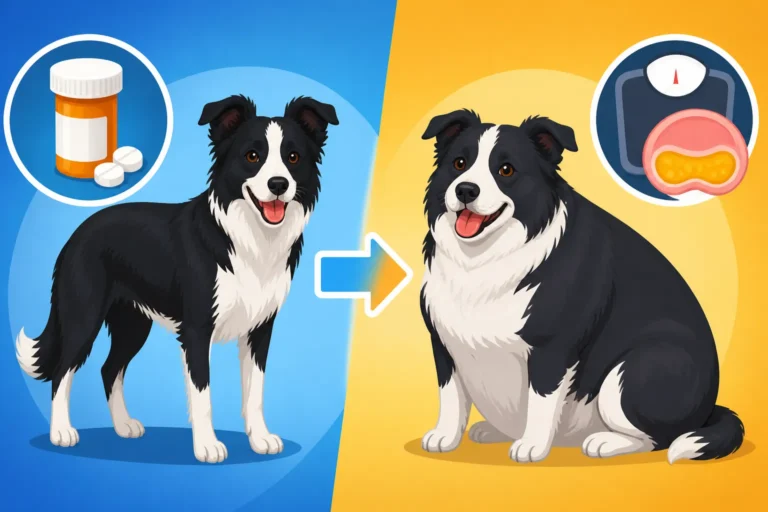
- Overweight: Ribs are difficult to feel, no discernible waist, and a sagging abdomen.
You want your working Border Collie to be lean and athletic, with strong muscle mass. If they start to lose weight or look too thin, gradually increase their food. If they start putting on weight, reduce it. It's a continuous adjustment based on their activity levels and individual response. The Body Condition a Sport Border Collie Carries offers more insight into what to look for.
The Nutritional Differences: Quality Over Quantity
It's not just about the sheer number of calories; the source of those calories is equally, if not more, important for a working Border Collie. Performance dogs need nutrient-dense food that provides sustained energy, supports muscle repair, and maintains overall health.
Macronutrient Ratios for Performance
While an average pet dog might do well on a diet with moderate protein and fat, a working Border Collie typically thrives on a higher protein and fat content.
- Protein: Essential for muscle repair and growth. Working dogs put significant stress on their muscles, so high-quality protein (e.g., chicken meal, lamb meal, fish meal) is crucial. Look for foods with protein levels generally in the 25-30% range, sometimes even higher for extremely hard-working dogs.
- Fats: The primary source of concentrated, sustained energy for endurance work. Healthy fats (e.g., chicken fat, salmon oil, flaxseed) are vital. Performance foods often have fat content in the 15-25% range. These fats also support healthy skin and coat.
- Carbohydrates: Provide quick energy bursts and are important for glycogen replenishment after intense exercise. Complex carbohydrates (e.g., sweet potatoes, brown rice, oats) are preferable to simple sugars. The remaining percentage of the diet will typically be carbohydrates.
When selecting food, you'll notice that many "performance" or "sporting dog" formulas prioritize these ratios. These specialized diets are formulated to meet the demands of high-energy dogs, making it easier to provide the necessary fuel without having to feed an excessive volume of a less appropriate food. Many owners find excellent performance foods available through online retailers like Chewy or Amazon, making it easy to compare ingredients and guaranteed analyses.
Avoiding "Empty Calories"
Just as important as adding the right nutrients is avoiding fillers and ingredients that offer little nutritional value. A working Border Collie needs every bite to count. Ingredients like corn, wheat, and soy, while not inherently "bad" for all dogs, can be harder to digest for some and offer fewer functional benefits for a high-performance athlete compared to more nutrient-dense alternatives.
Look for foods where meat or meat meal is the first ingredient, and where the ingredient list features whole foods rather than long lists of vague derivatives. This ensures your dog is getting bioavailable nutrients that their body can efficiently convert into energy and utilize for repair. Whether a Border Collie Needs a Performance Food delves into this in more detail.
Practical Feeding Strategies for a Working Border Collie
Beyond what and how much, when and how you feed your working Border Collie also plays a crucial role in their performance and well-being.
Timing Meals Around Work
Feeding a large meal right before intense exercise can lead to discomfort, gastric upset, or even serious conditions like bloat (though less common in Border Collies, it's always a concern for active dogs). Similarly, immediately after intense work, a dog's digestive system might not be ready for a heavy meal.
- Before Work: Offer a smaller portion, or ideally, their full meal at least 2-3 hours before strenuous activity. This allows for proper digestion and nutrient absorption.
- After Work: Wait at least 30-60 minutes after vigorous exercise for your dog to cool down and relax before offering their main meal. This helps prevent digestive issues and ensures they're calm enough to eat properly.
- Multiple Meals: Many working dog owners opt to split their Border Collie's daily ration into two or even three meals. This can aid digestion, prevent over-fullness, and provide more consistent energy throughout the day. For those considering fresh food options, services like Ollie provide tailored meal plans that often come in convenient, pre-portioned servings, which can be great for splitting meals.
This strategic timing ensures your dog has the energy when they need it, and that their body can process food efficiently. Feeding a Border Collie Before and After Work provides more detailed advice on this.
Hydration is Key
No matter how perfectly balanced your dog's food is, without adequate hydration, their performance will suffer, and their health could be at risk. Working Border Collies, especially those active in warmer weather, need constant access to fresh water.
- Always Available: Ensure water bowls are always full at home.
- On the Go: Carry water and a portable bowl when out training, hiking, or working. Offer water frequently during breaks.
- Encourage Drinking: Some dogs might need a little encouragement. A splash of low-sodium broth in their water can sometimes entice them to drink more.
- Wet Food Options: Incorporating some wet food or rehydrating kibble with water or broth can also contribute to their overall fluid intake.
Dehydration can severely impact a dog's ability to work and recover. It's a non-negotiable part of their care.
Supplements and Additional Considerations
For some working Border Collies, especially those in high-impact sports or those with specific health needs, supplements might be considered. Joint supplements, for instance, are popular for active dogs to support cartilage health. However, any supplements should always be discussed with your veterinarian to ensure they are appropriate and won't interfere with their diet or any existing medications.
Remember, a high-quality, balanced diet should provide most of what a healthy working Border Collie needs. Supplements are meant to supplement, not replace, a foundational good diet. Always prioritize feeding a nutritionally complete and balanced performance food first. Your vet can also advise on Joint Supplements for a Border Collie Doing Agility if that's a concern.
Adjusting for Different Life Stages and Seasons
A Border Collie's caloric needs aren't static; they change throughout their life and even with the seasons. A proper feeding regimen is dynamic, not a fixed setting.
Puppies and Growing Dogs
Young Border Collie puppies need nutrient-dense food to support their rapid growth, but it's crucial not to overfeed them. Excessive calories can lead to too-rapid growth, potentially predisposing them to orthopedic issues later in life. Look for large breed puppy formulas, or formulas designed for all life stages, that are appropriate for their breed size and anticipated adult weight. While they are energetic, sustained, high-impact exercise should be limited during their growth phase to protect their developing joints. Feeding a Border Collie Puppy Through Fifteen Months offers more specifics.
Senior Working Dogs
As a Border Collie ages, their metabolism often slows down, and their activity levels may naturally decrease, even if they still have the drive to work. Continuing to feed the same performance ration could lead to unhealthy weight gain. It's important to adjust their diet to a senior-specific formula or reduce their caloric intake while ensuring they still receive adequate protein to maintain muscle mass. Caring for a Border Collie Past Its Working Years talks about how to manage these changes.
Seasonal Adjustments
A Border Collie working outdoors in freezing winter conditions will burn more calories to maintain body temperature than one working in mild spring weather. Conversely, in the heat of summer, intense work might be curtailed, and thus caloric needs could slightly decrease. Pay attention to the weather and your dog's actual workload to make subtle adjustments to their food intake.
The idea that a working Border Collie automatically eats twice a pet's ration is an oversimplification. While their energy demands are high, the actual amount depends on the intensity and duration of their specific "work," their individual metabolism, and the quality of the food you're providing. Focus on a high-quality, high-performance diet, monitor their body condition closely, and adjust their portions as needed. This attentive approach ensures your intelligent, athletic companion gets exactly the fuel they need to thrive, whether they’re gathering sheep all day or excelling in agility trials.
Disclaimer
This article is for general informational purposes only and does not constitute professional advice. Laws, prices and regulations vary by location and change over time. Consult a qualified professional for guidance on your specific situation.