Joint Supplements for a Border Collie Doing Agility
If you're an agility enthusiast with a Border Collie, you know the thrill of watching them fly over jumps and weave poles with incredible precision and speed. But with that intense athleticism often comes a nagging worry: are their joints holding up? Many of us find ourselves wondering what more we can do to support those hardworking elbows, hips, and shoulders, especially as our dogs mature and continue to give their all in the ring. This guide will dive deep into understanding joint health for active Border Collies and explore the role joint supplements can play in their long-term well-being and performance.
Understanding Border Collie Joint Health and Agility Demands
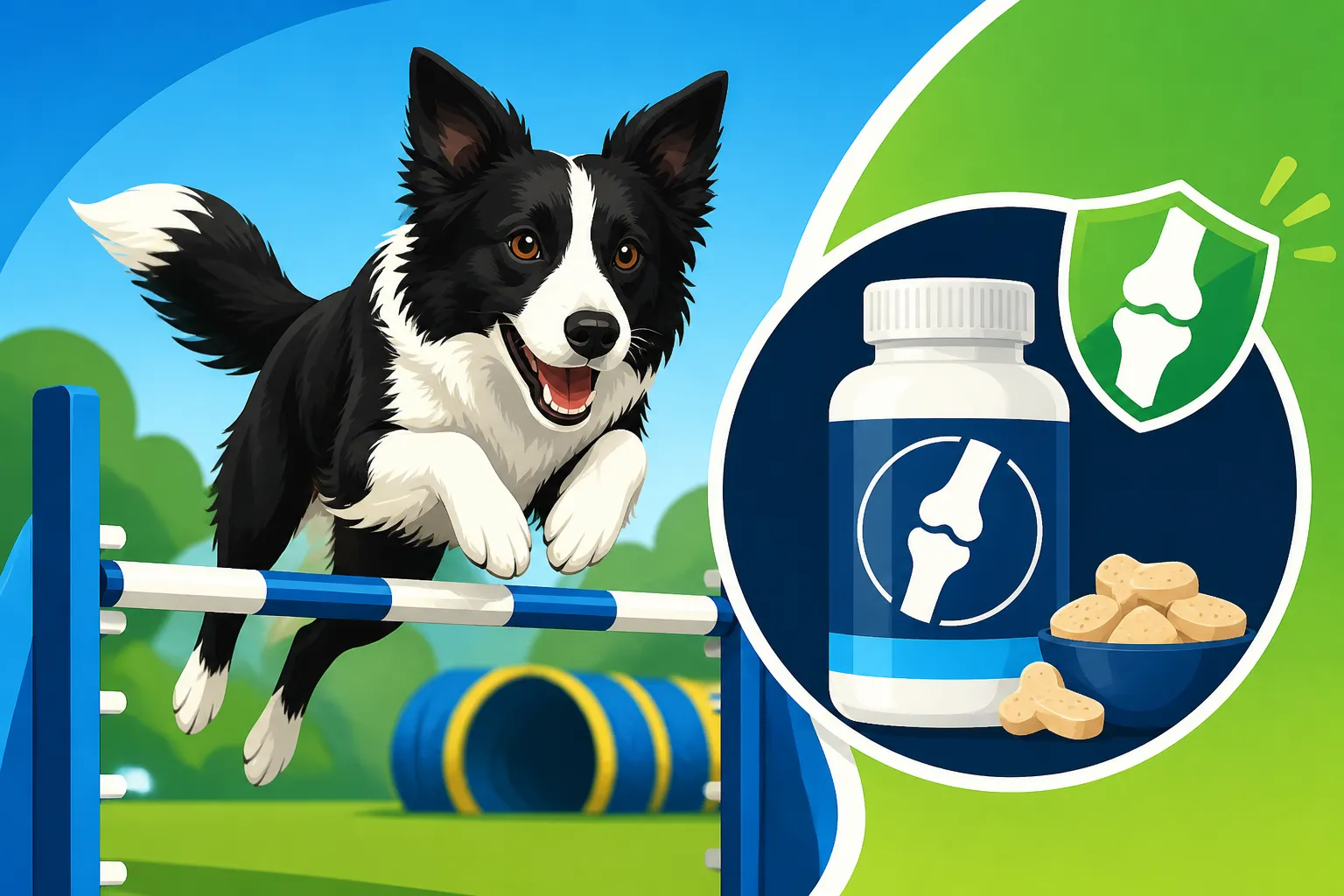
Our Border Collies are magnificent athletes, built for endurance, speed, and sudden bursts of power. This genetic predisposition for work and movement is what makes them so brilliant in sports like agility. However, the very activities we love to share with them, with their tight turns, explosive take-offs, and jarring landings, can put immense strain on their joints over time. It's a delicate balance, wanting to let them excel while also protecting them from the wear and tear that comes with such demanding physical exertion.
The Anatomy of an Agility Dog's Joints
Think about what happens to your Border Collie's body during an agility run. Every pivot around a jump standard, every dive into a tunnel, every rapid weave through poles – these actions aren't just muscle power; they're complex interactions of bones, cartilage, ligaments, and tendons. The cartilage, that smooth, slippery tissue covering the ends of bones, is critical for cushioning and allowing fluid movement. The synovial fluid within the joint acts like a natural lubricant. When a dog repeatedly experiences high-impact stress, like hitting the ground after a jump, or twisting sharply, this intricate system can start to show signs of strain. Over time, that constant stress can lead to inflammation, cartilage degradation, and reduced joint fluid, paving the way for conditions like arthritis.
Why Agility Is Demanding on Border Collie Joints
It's not just the intensity; it's the specific types of movements. Agility requires dogs to accelerate, decelerate, turn sharply, and jump vertically and horizontally – often all within seconds of each other. Contrast this with a long, steady run across a field. While both are exercise, the sudden, asymmetrical forces involved in agility are unique. A Border Collie flying over a broad jump lands on its forelimbs, absorbing significant impact. A dog in a weave pole sequence is constantly shifting its weight, bending its spine, and stressing its shoulders and hips. Even seemingly innocuous activities like repeated ball retrieving, if done incorrectly or excessively, can contribute to joint wear. We see conditions like Shoulder Injuries in an Agility Border Collie or Iliopsoas Strain in a Border Collie that are directly linked to these high-performance demands. Owners are often looking for any edge to keep their companions sound and happy for as long as possible.
Common Joint Supplements: What They Are and How They Might Help
When you start looking into joint supplements, it can feel like stepping into a labyrinth of unfamiliar terms and ingredients. The sheer volume of options, each promising remarkable results, can be overwhelming. Let's break down some of the most common ingredients you'll find and what the general idea behind their use is for supporting canine joint health. Remember, these are meant to support, not replace, proper veterinary care, appropriate training, and a balanced diet.
Glucosamine and Chondroitin Sulfate
These two are often found together, like a classic dynamic duo in the supplement world. Glucosamine is an amino sugar that plays a role in the production of glycosaminoglycans, key components of cartilage. The theory is that by providing extra glucosamine, you're giving the body more building blocks to repair and maintain cartilage, and to produce more synovial fluid. Chondroitin sulfate is a complex carbohydrate that helps cartilage retain water, which is essential for its shock-absorbing properties. It's also thought to inhibit enzymes that break down cartilage. Many owners swear by the combination for reducing stiffness and improving mobility in their active dogs, often noticing a subtle difference after consistent use. You'll find many reputable brands of glucosamine and chondroitin supplements available through retailers like Chewy or Amazon.
Methylsulfonylmethane MSM
MSM is an organic sulfur compound that is often included in joint supplement formulas. Sulfur is a vital component of connective tissue, and MSM is thought to support the integrity of cartilage and collagen. Beyond its structural role, MSM is also believed to have anti-inflammatory and pain-reducing properties. While not a standalone painkiller, the idea is that by reducing inflammation, it can contribute to overall joint comfort and function, especially after intense activity. For a Border Collie, who might be feeling a bit sore after a long trial weekend, the anti-inflammatory aspect of MSM could be quite appealing to owners.
Omega-3 Fatty Acids DHA and EPA
Most commonly sourced from fish oil, these essential fatty acids are celebrated for their potent anti-inflammatory effects. Unlike glucosamine and chondroitin which focus on cartilage structure, Omega-3s work more broadly on the body's inflammatory pathways. Chronic, low-grade inflammation can be a silent enemy for active dogs, slowly contributing to joint degradation. By incorporating Omega-3s, you're essentially providing a nutritional tool to help mitigate that inflammatory response throughout the body. Not only are they good for joints, but they also contribute to skin and coat health, which is always a bonus for our beautiful Border Collies. Just be mindful of the dosage and quality of the fish oil, as it can vary. When choosing a performance diet, many owners consider things like this, tying into topics like Feeding a Border Collie on a Performance Diet.
Other Noteworthy Ingredients
The world of joint supplements isn't limited to the big three. You might encounter other ingredients, each with its own proposed benefits:
- Hyaluronic Acid (HA): A major component of synovial fluid, HA helps lubricate the joints and absorb shock. Some supplements include it to enhance joint fluid viscosity.
- Green-Lipped Mussel (GLM): Hailing from New Zealand, GLM contains a unique blend of Omega-3s, glycosaminoglycans, and other nutrients thought to support joint health and reduce inflammation.
- Vitamin C: An antioxidant that plays a role in collagen synthesis, which is crucial for healthy cartilage and connective tissue.
- Turmeric/Curcumin: Known for its strong anti-inflammatory and antioxidant properties, often used in holistic approaches to managing joint discomfort.
It's tempting to think that more ingredients mean better results, but sometimes a simpler, high-quality formula is more effective. The key is understanding what each component aims to do.
Here's a quick overview of some common joint supplement ingredients:
| Ingredient | Primary Proposed Benefit | Focus |
|---|---|---|
| Glucosamine | Cartilage repair and production of joint fluid | Structural support, cushioning |
| Chondroitin Sulfate | Cartilage elasticity, water retention, enzyme inhibition | Cartilage protection, shock absorption |
| MSM (Methylsulfonylmethane) | Anti-inflammatory, pain reduction, connective tissue health | Inflammation management, overall comfort |
| Omega-3 Fatty Acids | Anti-inflammatory, systemic health | Reducing inflammation throughout the body |
| Hyaluronic Acid (HA) | Joint lubrication and shock absorption | Improving joint fluid quality |
| Green-Lipped Mussel (GLM) | Multi-faceted joint support, anti-inflammatory | Holistic joint health, broad spectrum benefit |
When to Consider Supplements and Talking to Your Vet
Deciding when to start a joint supplement for your agility Border Collie isn't always clear-cut. Is it a proactive measure for prevention, or a reactive step when you notice issues? And perhaps most importantly, how do you navigate this decision with your trusted veterinary professional?
Proactive vs. Reactive Supplementation
Many Border Collie owners start considering joint supplements long before their dog shows any outward signs of discomfort. This proactive approach is based on the understanding of the inherent stresses of agility work and a desire to support joint health from an earlier age. They might begin a supplement regimen for a young dog (around 1-2 years old) who is just starting intense training, hoping to fortify their joints against future wear. The idea here is prevention – providing the building blocks before significant breakdown occurs.
On the other hand, some owners react to subtle signs of stiffness, a slight reluctance to jump, or a slower pace during runs. These could be early indicators of joint discomfort or developing conditions like Osteoarthritis in a Border Collie by Eight. In such cases, a supplement is introduced with the hope of alleviating symptoms, improving comfort, and potentially slowing the progression of joint issues. While a reactive approach is still beneficial, catching issues early is always better.
It's also worth noting that factors like genetics play a huge role. If your Border Collie's pedigree has a history of hip or elbow dysplasia, even if your dog has good Hip and Elbow Scores in a Border Collie, you might lean more towards a proactive approach.
The Essential Role of Your Veterinarian
This is absolutely non-negotiable: always discuss any potential joint supplement with your veterinarian before starting it. They are your best resource for several critical reasons:
- Accurate Diagnosis: Those subtle changes you're noticing? They could be something a supplement can help with, or they could be a sign of a more serious underlying issue like a cruciate tear or a soft tissue injury that requires different treatment. Your vet can perform a thorough physical examination, and if needed, recommend X-rays or other diagnostics to get a precise diagnosis. Sport Injuries a Border Collie Picks Up can sometimes mimic general stiffness, and only a vet can tell the difference.
- Dosage and Interactions: Your vet can advise on the appropriate dosage for your dog's size, age, and activity level. They also know your dog's full medical history and any other medications they might be on, which is crucial for identifying potential drug interactions. This is especially important for Border Collies, who can sometimes have unique sensitivities.
- Quality and Efficacy: The supplement market is largely unregulated. Your vet can help you sift through the noise and recommend brands with good reputations, transparent ingredient sourcing, and scientific backing, or at least a history of positive anecdotal evidence from their other patients. They often have specific products they trust.
- Integrated Treatment Plan: Supplements are rarely a standalone solution. Your vet can help integrate them into a broader plan that might include prescription medications, pain management, specific exercise modifications, physical therapy, or even dietary changes. For example, if your Border Collie has developed Hip Dysplasia in a Border Collie That Runs All Day, a supplement might be part of a larger management strategy.
Never guess when it comes to your dog's health. A simple conversation with your vet can save you time, money, and most importantly, ensure your Border Collie is getting the best possible care.
Choosing the Right Supplement and Realistic Expectations
So you've talked to your vet, and they've given you the green light to explore joint supplements. Now comes the task of choosing one from the vast array available. It's not just about picking the most expensive option or the one with the flashiest marketing. It's about finding something that truly supports your individual Border Collie, with realistic expectations about what these products can achieve.
Factors in Choosing a High-Quality Joint Supplement
When you're staring at a shelf (or a webpage) full of joint supplements, consider these points to help you make an informed choice:
- Reputable Brands: Look for companies that specialize in pet health, have veterinarians on staff, and openly share information about their manufacturing processes and ingredient sourcing. Companies that perform third-party testing for purity and potency are also a good sign. Be wary of brands that make overly dramatic claims without evidence.
- Active Ingredients and Potency: Check the label for the specific amounts of active ingredients like glucosamine, chondroitin, and MSM per serving. Is it enough to be effective for a dog your Border Collie's size? Many generic brands might contain lower concentrations, meaning you'd have to feed more, or they simply wouldn't be as effective.
- Formulation: Supplements come in various forms: chewable tablets, soft chews, powders, and liquids. Consider what will be easiest for you to administer consistently. If your Border Collie is picky, a flavored soft chew might be better than a powder you have to mix into food.
- Value for Money: This isn't just about the upfront cost. Compare the cost per day or per dose, and factor in the concentration of active ingredients. Sometimes a slightly more expensive product is actually a better value because it contains higher quality or more potent ingredients, requiring smaller doses. You can find a good range of options across different price points on platforms like Chewy or Amazon.
Setting Realistic Expectations for Joint Supplements
It's vital to approach joint supplements with a dose of realism. They are supplements, meaning they are intended to add to or enhance an existing diet and care routine, not replace fundamental veterinary treatment or responsible management.
- Not a Magic Bullet: Supplements are not a cure for established joint disease, nor will they instantly reverse damage. They work slowly, providing support and potentially slowing progression. You won't see your Border Collie suddenly leap like a puppy after one dose.
- Consistency is Key: For any potential benefits to be seen, supplements need to be given consistently, as directed, over weeks or even months. Missing doses will likely negate any cumulative effect.
- Individual Response: Just like with people, every dog is different. What works wonders for one Border Collie might have no noticeable effect on another. It can be a process of trial and error to find the right product and dosage that suits your dog. Some owners find that The Age a Border Collie Starts to Slow is a good benchmark to begin evaluating supplemental needs more closely.
- Part of a Broader Strategy: Joint supplements are best viewed as one component of a holistic approach to joint health. This approach should also include:
- Appropriate Exercise: Balancing intense agility work with rest and cross-training.
- Weight Management: Keeping your Border Collie lean reduces stress on their joints.
- High-Quality Diet: A balanced diet provides essential nutrients for overall health.
- Regular Veterinary Check-ups: Ongoing monitoring for any changes or developing issues.
- Physical Therapy/Rehabilitation: If injuries or significant joint issues arise, specialized therapy can be incredibly beneficial, tying into the discussion of Physiotherapy Costs for a Sport Border Collie.
By combining high-quality joint supplements with excellent overall care and a realistic mindset, you're giving your incredible agility Border Collie the best possible chance to enjoy a long, active, and comfortable life.
Disclaimer
This article is for general informational purposes only and does not constitute professional advice. Laws, prices and regulations vary by location and change over time. Consult a qualified professional for guidance on your specific situation.