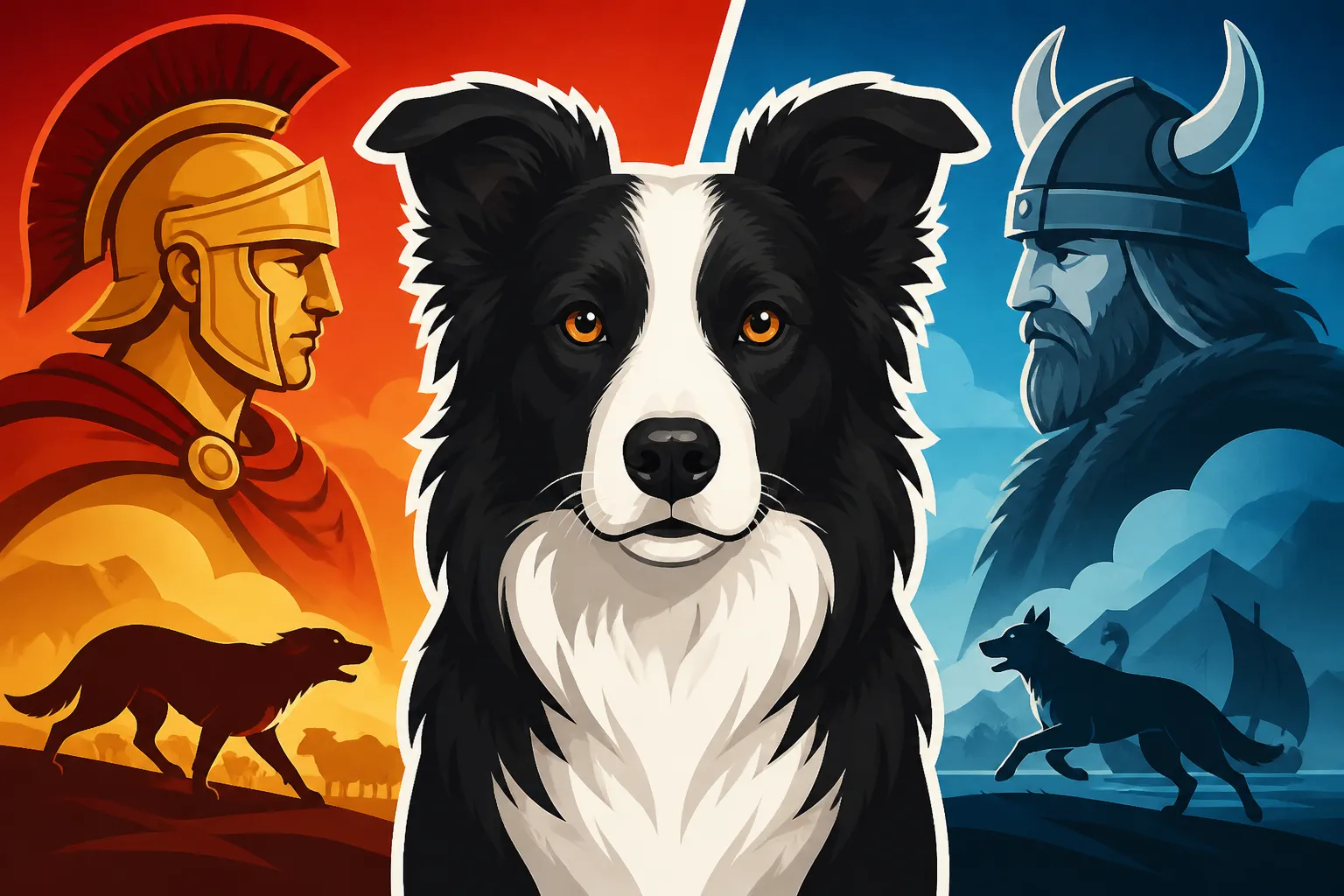
Whether Roman or Viking Dogs Are in the Border Collie
It’s natural to wonder about the deep history of our beloved Border Collies, isn't it? We look at their incredible intelligence and athleticism, and sometimes we try to imagine a grand, ancient lineage stretching back through the mists of time. You might have heard whispers of Roman war dogs or Viking companions in their ancestry, and while these tales are certainly intriguing, understanding the true origins requires separating fascinating speculation from historical fact. This guide will delve into these captivating theories and then explore what we genuinely know about where the Border Collie truly came from.
Tracing the Ancient Roots: The Allure of Roman and Viking Theories
There's something incredibly romantic about picturing our modern Border Collies as direct descendants of dogs that served ancient empires or explored new worlds on longships. It speaks to the deep connection we feel with these animals and our desire to give them a storied past that matches their remarkable present. However, the world of ancient dog breeds was far less structured than what we know today, making direct lineage extremely difficult to prove definitively.
The Roman Herding Dogs: A Legacy of Empire?
The Roman Empire was vast and sophisticated, and like any advanced civilization, they relied heavily on working animals, including dogs. It's well-documented that Romans used dogs for guarding livestock, property, and even in warfare. Imagine the legions marching across Europe, bringing their faithful companions with them. These dogs would have been robust, intelligent, and capable of handling various tasks in diverse environments. Some theories suggest that as the Romans expanded into Britain, they brought their herding dogs, which then interbred with native canine populations. Over centuries, these Roman dogs might have contributed to the gene pool that eventually led to the collies of the British Isles.
However, the "herding dog" of Roman times wouldn't have looked or worked exactly like our Border Collies. They were likely general-purpose farm dogs, perhaps more focused on guarding flocks from predators than on the intricate, silent art of gathering sheep. While their presence undoubtedly influenced the local dog populations, drawing a direct line to the Border Collie as we know it is a significant leap. The genetic contributions from Roman dogs, if any, would have been diluted over many centuries and countless generations of selective breeding by local shepherds for very specific traits. It's more likely a case of a broad, ancient influence rather than a direct ancestral claim.
Viking Dogs: Seafaring Companions or Farmhands?
Similarly, the Vikings, known for their incredible seafaring abilities and expansive raids and settlements, also traveled with their dogs. Archaeological evidence from Viking settlements in places like the Shetland and Orkney Islands, and even mainland Britain, reveals canine remains. These dogs would have been essential for hunting, guarding, and perhaps even some basic herding on the farms they established. It's easy to imagine these sturdy northern dogs, resilient to harsh weather and loyal to their human companions, leaving their mark on the local dog populations they encountered.
The idea here is that these Nordic dogs, robust and intelligent, could have intermingled with existing dogs in the British Isles, contributing to the development of early herding types. The geographical proximity of some key Viking settlements to areas that later became hotbeds for collie development makes this theory somewhat compelling. Perhaps some of the hardiness and keen intelligence we see in Border Collies today owes a subtle nod to these ancient Norse companions. However, much like the Roman theory, direct, traceable genetic evidence specifically linking Viking dogs to the highly specialized Border Collie type is scarce. Most ancient dog breeds were far more fluid, defined by function rather than rigid appearance or pedigree, making it challenging to pinpoint exact origins for specific modern breeds. You won't find a dog food from Chewy advertising "Viking-descended kibble" for a reason – the connection is largely speculative.
The More Accepted Narrative: Border Collie Origins on the Anglo-Scottish Border
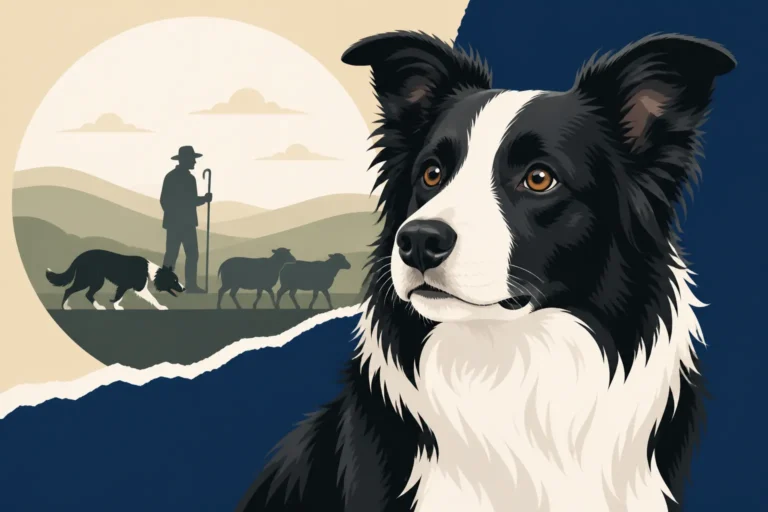
While the Roman and Viking theories are fun to ponder, the more robust and widely accepted understanding of the Border Collie's lineage places its origins firmly in the Anglo-Scottish border region. This area, known for its challenging terrain and a long history of sheep farming, provided the perfect crucible for the development of a highly specialized herding dog. Here, utility and working ability were paramount, shaping the breed through generations of intense selection by shepherds who depended on these dogs for their livelihood.
The Development of the "Collie" Type
Long before the "Border Collie" was formally recognized, there were various "collie" or "colley" dogs throughout Scotland and northern England. These were simply dogs that worked with sheep. The term "collie" itself is thought to derive from terms like "coaly" (referring to black sheep or the dogs' common black coats) or perhaps from an old Celtic word meaning "useful." These early collies were not a uniform breed as we understand it today; they varied in appearance and working style depending on the specific needs of their local shepherds. Some were rough-coated, some smooth; some relied heavily on "eye" (the intense stare to control sheep), others on bark and drive. They were bred purely for their ability to manage sheep, often in vast, open, and rugged landscapes where a skilled dog was an indispensable partner.
The focus during this period wasn't on aesthetics or show rings, but purely on function. A dog that could gather a scattered flock, bring them gently but firmly to the shepherd, and do so with minimal fuss was highly prized. This practical approach to breeding meant that dogs with natural herding instincts, intelligence, biddability, and stamina were consistently favored. This relentless selection pressure for working ability laid the foundational characteristics that we now recognize as quintessential Border Collie traits. It's this continuous, purposeful selection that really defines the early development of the breed, far more than any ancient, distant ancestors. You can learn more about this by reading What Collie Meant Before the Border Collie.
The Influence of Old Hemp and Modern Breeding
The Border Collie as a distinct, recognizable breed truly coalesced around the late 19th and early 20th centuries. A pivotal figure in this development was a dog named Old Hemp, born in Northumberland, England, in 1893. Old Hemp was a tri-color dog, quiet and intensely focused on sheep, with a natural, authoritative herding style that revolutionized how dogs worked stock. He didn't use excessive barking or nipping; instead, he controlled sheep with a powerful, intelligent "eye" and an uncanny ability to anticipate their movements. He was so effective that he became highly sought after as a stud dog, siring over 200 pups in his lifetime.
It's widely accepted that nearly all modern Border Collies can trace their lineage back to Old Hemp. His specific working style and genetic traits became the gold standard for what a sheepdog should be, solidifying the characteristics we value today. The formation of the International Sheep Dog Society (ISDS) in 1906 further cemented this, creating a registry based purely on working ability, effectively formalizing the "Border Collie" as a breed defined by its function, not its appearance. This period of concentrated, purposeful breeding, focusing on specific working traits, is far more significant in the Border Collie's history than any vague ancient connections. If you're interested in just how much of an impact this one dog had, check out Old Hemp and Every Border Collie Alive Today.
Why Direct Lineage is Unlikely (and What Matters More)
While the idea of a direct, unbroken line from ancient Roman or Viking dogs to our modern Border Collies is alluring, the reality of dog breeding through history makes it improbable. The emphasis on specific functions and local adaptations for thousands of years means that what we see today is a product of much more recent, intentional selection.
The Fluidity of Ancient Dog Populations
For most of history, dogs were not "breeds" in the sense we understand them today. There were types of dogs – hunting dogs, guarding dogs, herding dogs – but these were much more fluid categories based on function rather than strict genetic purity or appearance. Dogs interbred freely within local populations, and traits were selected for based on immediate utility. If a Roman soldier's dog bred with a local British farm dog, their offspring would simply be another local farm dog, and its descendants would continue to be shaped by the needs of the community, not by an ancient Roman "breed standard."
The concept of a closed studbook and distinct breeds is a relatively modern invention, largely originating in the 19th century. Before that, dogs were tools, and their genetic makeup was constantly being re-shuffled and re-selected based on performance. Trying to trace a precise genetic line back thousands of years through such a fluid and intermixing population is like trying to find a specific raindrop in a vast ocean. The genetic contributions of ancient dogs were likely absorbed into a broader gene pool, continually adapted and refined by centuries of natural and artificial selection driven by the practical needs of shepherds in places like The Border Country That Produced the Border Collie.
The Power of Purpose-Breeding Over Pure Ancestry
What truly defines the Border Collie is not a distant, ancient ancestry, but rather its relatively recent and incredibly intense focus on purpose-breeding. Shepherds on the Anglo-Scottish border needed dogs that could perform demanding tasks in challenging environments. They didn't care about a dog's lineage to a Roman mastiff or a Viking spitz; they cared if it could gather a flock of 500 sheep scattered across a mile of fells. This pragmatic approach led to the careful selection of individuals with exceptional herding instinct, intelligence, stamina, and biddability.
This continuous selection for working ability, rather than for specific aesthetic traits or ancient bloodlines, is what forged the Border Collie into the magnificent working dog it is today. When you look at a Border Collie displaying its incredible "eye" or executing complex commands at a sheepdog trial, you're witnessing the culmination of centuries of purpose-driven breeding, not necessarily a direct echo of a Roman legionnaire's dog. This singular focus on herding ability is arguably What Separates a Border Collie From Every Other Herder. Many Border Collie owners, seeking the very best for their working companions, rely on retailers like Chewy for high-quality, performance-oriented dog food and supplies that support this incredible drive and athleticism. They understand that modern care is just as important as historical lineage.
Ultimately, while the romantic theories about Roman and Viking dogs are engaging, the true magic of the Border Collie lies in its documented history of dedicated development by shepherds. It's a testament to human ingenuity and the incredible partnership between people and dogs, shaped by the practical demands of life on the land. Whether you're considering getting one or already have one, remember that this breed's history is as fascinating and rich as its abilities. They might not have sailed with the Vikings, but they certainly conquered the hearts of shepherds!
| Theory | Proposed Influence on Border Collie | Historical Evidence | Likelihood of Direct Lineage |
|---|---|---|---|
| Roman Dogs | Robustness, general herding traits | Roman presence in Britain, use of herding/guarding dogs | Low – extensive interbreeding diluted specific lines over centuries |
| Viking Dogs | Hardiness, intelligence, resilience | Viking settlements in British Isles, archaeological dog remains | Low – similar reasons to Roman dogs; local adaptation was key |
| Anglo-Scottish Border Collies | Intense herding instinct, "eye," biddability, stamina | Extensive documentation of sheep farming, selective breeding by shepherds, Old Hemp, ISDS | High – widely accepted as the direct and primary origin of the modern breed |
When you consider the costs associated with these magnificent dogs, from puppyhood through their working lives, you'll find that companies like Chewy are invaluable resources for everything from high-energy food to grooming tools that keep those coats in top condition, reflecting a breed bred for rugged practicality rather than ancient pomp.
Disclaimer
This article is for general informational purposes only and does not constitute professional advice. Laws, prices and regulations vary by location and change over time. Consult a qualified professional for guidance on your specific situation.