The Colors a Border Collie May Be
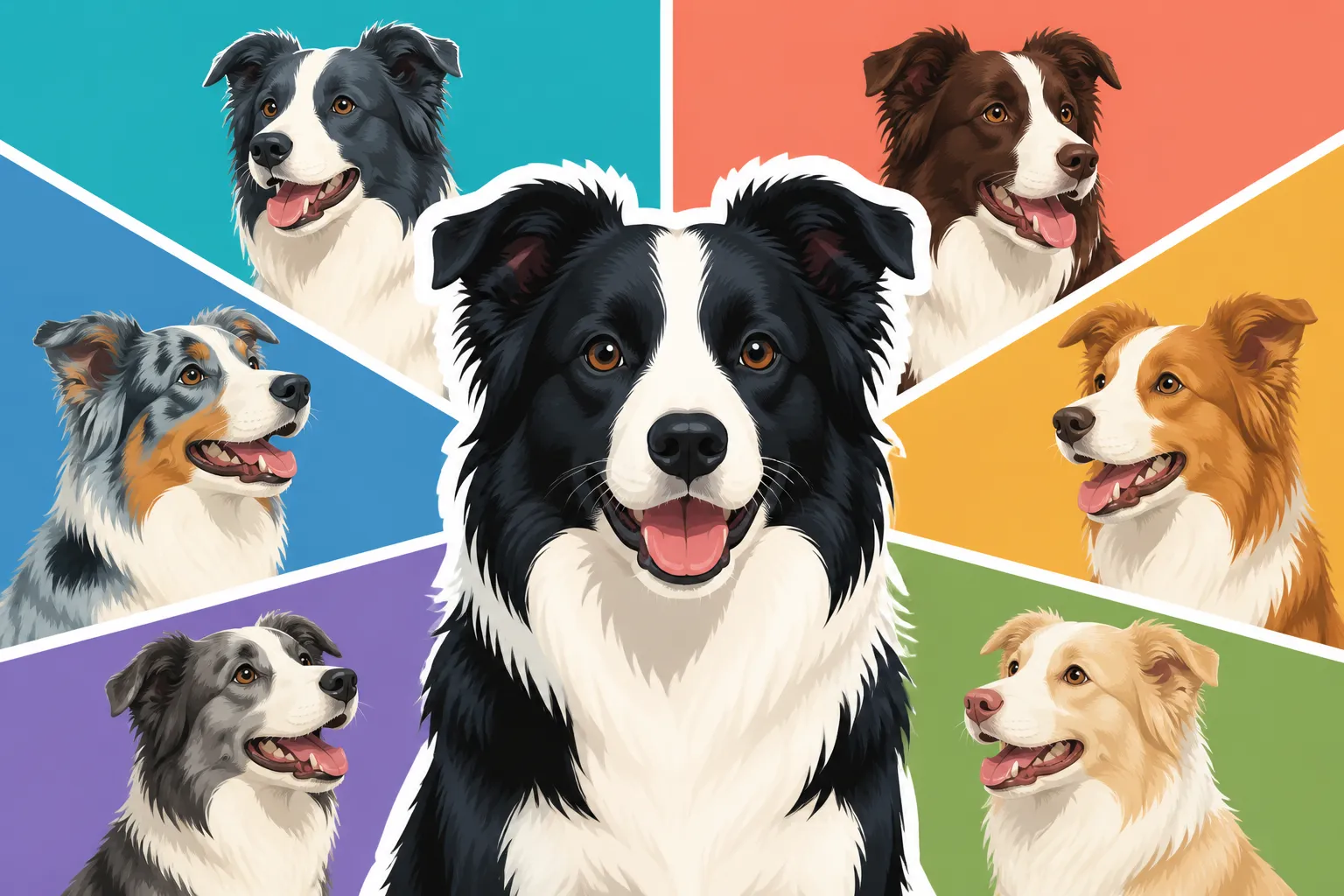
It’s a common misconception that Border Collies only come in that iconic black and white pattern we all associate with champion sheepdogs. I can't tell you how many times I've heard someone say, "Oh, I didn't know Border Collies came in that color!" The truth is, these incredible dogs boast a surprisingly diverse palette, and understanding these variations goes beyond aesthetics – it can tell you a lot about their genetics and even potential health considerations. This guide is here to unravel the beautiful spectrum of Border Collie colors, helping you appreciate their full chromatic glory.
Beyond Black and White: The Common Color Varieties
While black and white might be the poster child for the Border Collie breed, representing that classic, intense working dog image, it's really just the tip of the iceberg. The genetic possibilities are truly fascinating, leading to a wonderful array of coat colors and patterns that are just as legitimate and, frankly, just as stunning. People often gravitate towards what's familiar, but once you start looking, you realize just how much variety there is.
Classic Black and White: The Icon
Ah, the quintessential Border Collie! When most people picture a Border Collie, they envision a sleek, intelligent dog with a striking black coat and crisp white markings. This classic combination is not just common; it's practically the breed's trademark, deeply rooted in their working heritage. The black is usually a rich, deep hue, sometimes with a subtle blue sheen in certain lights, while the white typically appears on the blaze, collar, chest, legs, and tail tip. This pattern, often referred to as Irish spotting, is what gives them that instantly recognizable look.
Many working lines still predominantly feature black and white dogs, not because other colors are undesirable, but because these genetics were simply prevalent in the foundational dogs like Old Hemp. There’s a timeless elegance to it, a stark contrast that highlights their agile movements and piercing gaze. Even within this "standard" look, you'll find variations – some dogs have more white than black, others are mostly black with just a splash of white, leading to a unique appearance for each individual. It’s never just a uniform paint job; each one is a masterpiece. For more on their ancestry, you might find The Anglo-Scottish Border and the First Collies interesting.
Rich Reds and Browns: From Aussie Red to Chocolate
Moving beyond the monochrome, we enter the warm and inviting world of red and brown Border Collies. These colors are often a delightful surprise to newcomers to the breed. The term "red" in Border Collies can encompass a range from a deep, burnished copper to a lighter, almost golden hue. Sometimes these are called "Australian Red" or simply "gold" in lighter shades. They possess the same intelligent eyes and energetic demeanor as their black and white cousins, just wrapped in a different, equally appealing package. These reds are caused by a recessive gene that prevents the expression of black pigment in the coat, turning what would be black hair into varying shades of red.
Then there's chocolate, sometimes referred to as brown or liver. This is another wonderfully rich and distinctive color, often paired with stunning amber or green eyes, a direct contrast to the dark eyes usually seen on black dogs. Like red, chocolate is also a recessive trait, meaning a dog needs to inherit two copies of the gene to express this color. You'll see this range from a light, milk chocolate shade to a very dark, almost black-brown. Both red and chocolate dogs still carry the white markings, just as a black and white dog would, creating beautiful contrast. A good quality dog food, perhaps one you'd find on Chewy, formulated for active dogs can really help maintain the luster of these rich coats. If you're curious about genetics, our article on The Border Collie Genetic Panel and What It Screens might shed some light on how these colors are inherited.
Blue and Slate: The Diluted Delights
Blue and slate Border Collies offer a softer, often ethereal beauty, a result of the dilution gene acting upon black pigment. A blue Border Collie isn't truly blue in the way a crayon is blue; rather, it's a diluted black, appearing as a soft, smoky gray or charcoal. The effect is quite striking, often making their eyes seem lighter, too, sometimes an intense blue or gray that matches their coat. This dilution gene affects all black pigment, so their nose leather and paw pads will also be blue, not black.
Similarly, a slate Border Collie is a variation of this dilution, often appearing as a slightly lighter or more uniform gray than what is typically called blue. These colors can be particularly captivating, giving the dog an almost mystical appearance, especially when combined with white markings. It’s not a common color you'll see every day, which makes encountering one even more special. Imagine a vigorous game of fetch with a blue Border Collie, their sleek, diluted coat gleaming in the sun – a truly gorgeous sight. For more on this, you might be interested in What Makes a Border Collie Lilac or Slate.
Understanding Merle: A Pattern, Not a Color
Merle is one of the most visually distinctive patterns in the Border Collie world, and it's absolutely crucial to understand that it's a pattern, not a color in itself. It’s a genetic modifier that dilutes random sections of the base coat color, creating patches of lighter and darker shades, often with solid patches of the original color interspersed. Think of it like someone took a paintbrush and swirled white paint through a colored canvas, leaving streaks and spots. This pattern can affect any base color, leading to blue merle (black base), red merle (red base), chocolate merle (chocolate base), and so on.
The Striking Merle Pattern
A blue merle Border Collie, for example, will have patches of black, various shades of gray, and white markings. A red merle will feature patches of red, lighter cream or buff, and white. The effect is always unique; no two merle dogs look exactly alike. Often, merle dogs also have striking blue eyes or heterochromia (one blue eye, one brown eye), which adds to their captivating appearance. This pattern is very popular due to its aesthetic appeal and the individuality it brings to each dog.
However, it's essential to understand the genetics behind merle. It's an incompletely dominant gene, meaning even one copy of the gene will produce the merle pattern. While a single merle gene typically results in a healthy, beautiful dog, the presence of the merle gene means that a dog may require specialized grooming products for their unique coat, which can be found at retailers like Chewy.
Double Merle: A Serious Consideration
This is where the conversation turns serious and ethical considerations come into play. A "double merle" Border Collie occurs when a dog inherits two copies of the merle gene (M/M), one from each parent. This happens when two merle-patterned dogs are bred together. While breeders of other breeds sometimes accidentally or ignorantly breed two merles, responsible Border Collie breeders never do this intentionally. The risk associated with double merle is simply too high.
Double merle dogs are at a significantly increased risk for severe health issues, particularly related to sight and hearing. They can be born with underdeveloped or missing eyes (microphthalmia or anophthalmia), resulting in blindness or severe vision impairment. They also frequently suffer from deafness, which can be unilateral (one ear) or bilateral (both ears). These dogs often have excessive white markings, sometimes appearing almost entirely white, leading to the heartbreaking misconception that they are "rare" or "special" when in fact they are often struggling with profound sensory deficits. It's a truly heartbreaking situation, and it's why ethical breeders strongly advocate against breeding merle to merle. This is a vital part of understanding Whether Two Merle Border Collies Should Be Bred.
The Nuances of White: Markings, Splashes, and "Too Much" White
White markings are an integral part of the Border Collie's appearance, often defining their classic look. However, the amount and placement of white can vary wildly, leading to discussions about what constitutes "normal" and what might be considered "excessive" or even indicative of specific genetic traits. It’s not just about a white blaze; it’s a whole spectrum of patterns.
Irish Spotting and White Markings
The most common white pattern seen in Border Collies is known as Irish Spotting. This pattern typically includes a white blaze on the face, a white collar that may or may not be full, a white chest, white legs and feet, and a white tip on the tail. These markings contribute to the breed's striking appearance, providing contrast against the darker body color. The edges of these white areas are usually clean and well-defined, creating a balanced and aesthetically pleasing look.
Within Irish spotting, there's a good deal of individual variation. Some dogs will have a very narrow blaze, while others might have a broad one that extends over their muzzle. The white collar can range from a small patch on the neck to a full circle. These variations are all part of the natural genetic diversity within the breed and are generally not associated with any health concerns. A Border Collie with classic Irish spotting is a beautiful example of the breed’s heritage. You can see how these markings contribute to the overall picture described in The Border Collie Expression a Judge Looks For.
"Excessive White": What Does It Mean?
The term "excessive white" can be a bit of a loaded phrase, often misunderstood. In the context of conformation showing, an overly white coat might be considered a fault, particularly if it obscures too much of the dog’s true color or gives the impression of a different pattern. The AKC standard, for instance, mentions that white should not predominate. However, this is largely an aesthetic judgment for the show ring and doesn't inherently imply a health issue unless it's linked to the double merle gene, as discussed earlier.
Beyond the show ring, a Border Collie can have a lot of white on its coat without being a double merle. Some dogs have "splash" patterns, where large, irregular patches of white are distributed across the body, often looking like splashes of paint. This is generally a harmless genetic variation. The key distinction is that while excessive white can accompany double merle, not all heavily white Border Collies are double merle. It’s crucial to know your dog’s lineage and any genetic testing done by the breeder, especially if there’s any merle in the background. Understanding Whether a Border Collie Puppy Should Meet Sheep or What the AKC Standard Says a Border Collie Is focuses on different aspects of breed characteristics, but coat color definitely plays a role in identifying your dog's heritage and potential considerations.
Other Intriguing Shades: Lilac, Slate, Brindle, and Tri-Color
The world of Border Collie colors is wonderfully expansive, and while some shades might be less common, they are no less beautiful or characteristic of the breed's rich genetic tapestry. These unique combinations add even more flair and individuality to these already captivating dogs.
Lilac and Slate: Rare Dilutions
As we briefly touched upon, lilac and slate are quite rare and striking dilutions. A lilac Border Collie is perhaps one of the most unusual colors you'll encounter. It's essentially a dilute chocolate, resulting in a warm, dusty grayish-brown coat that has a distinctly purplish or pinkish cast, especially in natural light. Like other dilute colors, the nose and paw pads will also reflect this hue, appearing lighter than a standard chocolate. The eyes often complement this unique coat, sometimes appearing amber or greenish. It’s a truly distinctive color that makes a dog stand out in a crowd, and people often do a double-take when they see one.
Slate, as mentioned, is a dilute black, similar to blue but often with a slightly different intensity or tone. It's a lovely, soft grey, sometimes appearing almost metallic. These dilute colors are recessive, so both parents must carry the dilute gene to produce a lilac or slate puppy. They are perfect examples of the subtle genetic artistry that can manifest in a Border Collie's coat. A dog with a beautiful, rare coat like lilac might benefit from a specialized brush, like those you can find for all coat types on Chewy, to keep its unique color vibrant and free of mats.
Brindle and Tri-Color: Unique Combinations
Brindle is another fascinating pattern that can occur in Border Collies, though it's not as commonly seen as merle. Brindle creates a striped effect, almost like tiger stripes, across the dog's coat. This pattern typically appears on areas that would normally be tan points, or sometimes across the entire base color of the dog, depending on the specific genetic expression. So, you might see a black brindle, where black stripes overlay a lighter fawn or red background, or even a blue brindle. It’s a bold and visually complex pattern that adds a wild, untamed beauty to the Border Collie's appearance.
Then there's the tri-color, which is exactly what it sounds like: a combination of three distinct colors. Most commonly, this means a black and white Border Collie with tan points, usually appearing on the eyebrows, cheeks, and sometimes on the legs or under the tail. These tan markings add depth and warmth to the classic black and white, giving the dog an extra layer of visual interest. But you can also have blue tri-color (blue, white, and tan), or chocolate tri-color (chocolate, white, and tan). These dogs truly have it all, showcasing a harmonious blend of hues that make them particularly appealing. The Colors a Border Collie May Be only scratches the surface, but this table should give you a clearer picture of the primary color types:
| Primary Color/Pattern | Description | Genetic Basis (Simplified) | Common Eye Color | Associated Health Concerns (Directly from color) |
|---|---|---|---|---|
| Black & White | Solid black with white markings on face, chest, collar, legs, tail tip. | Dominant black (Eumelanin) + Irish Spotting | Brown | None |
| Red/Gold | Ranges from deep copper to light blonde, with white markings. | Recessive Red (Phaeomelanin) | Brown, Amber | None |
| Chocolate/Brown | Rich brown, from milk to dark chocolate, with white markings. | Recessive Brown (Eumelanin dilution) | Amber, Green | None |
| Blue (Dilute Black) | Smoky gray/charcoal, dilute black pigment, with white markings. | Recessive Dilute (Eumelanin) | Blue, Gray, Brown | None |
| Lilac (Dilute Choc) | Dusty grayish-brown with purplish cast, dilute chocolate, with white markings. | Recessive Dilute + Recessive Brown | Amber, Green | None |
| Merle (Pattern) | Mottled patches of lighter and darker base color, with solid areas. | Incompletely Dominant Merle Gene (M) | Blue, Brown, Heterochromia | Double Merle (M/M) risks severe eye/ear issues |
| Brindle | Striped pattern, like tiger stripes, often on tan points. | Dominant Brindle Gene (K locus) | Brown, Amber | None |
| Tri-Color | Base color (black, blue, chocolate) with white and tan markings. | Recessive Tan Points (A locus) | Brown, Amber, Blue | None |
Understanding the variety of Border Collie colors is not just about appreciating their beauty; it’s about recognizing the genetic diversity within the breed and, in some cases, being aware of potential health implications, particularly with merle patterns. Whether your Border Collie is a classic black and white, a striking merle, or a rare lilac, each one carries a unique blend of traits that make them the intelligent, loyal, and endlessly captivating companions we adore. The beauty of these dogs truly shines through, no matter their coat.
Disclaimer
This article is for general informational purposes only and does not constitute professional advice. Laws, prices and regulations vary by location and change over time. Consult a qualified professional for guidance on your specific situation.