Whether a Border Collie’s Topline Should Slope
When you look at a Border Collie, especially from the side, one of the things you might notice is the line of their back, often called the topline. It's common to see a variety of profiles, and it often leaves owners and enthusiasts wondering: is there a "correct" way a Border Collie's topline should look? Does it need to be perfectly level, or is a slight slope acceptable, or even desirable? This guide dives deep into what constitutes a Border Collie's topline, how different influences affect its appearance, and what to look for to ensure your dog is structurally sound and comfortable.
Understanding the Border Collie Topline
The topline of any dog refers to the outline of its back, from the withers (the highest point of the shoulders) to the set-on of the tail. For a Border Collie, this line is far more than just an aesthetic feature; it's a critical component of their athletic prowess and ability to perform the demanding tasks they were bred for. A sound topline allows for efficient movement, power, and agility, all essential for herding livestock across varied terrain.
What Constitutes the Topline?
Think of the topline as the scaffolding that supports all the powerful movements a Border Collie makes. It's formed by the vertebrae of the spine, specifically the thoracic and lumbar regions, along with the deep musculature that runs alongside and over them. These muscles, like the longissimus dorsi, are responsible for extending and flexing the spine, allowing for the powerful drive and quick turns that define a Border Collie's working style. The ribs also play a role, attaching to the thoracic vertebrae and forming the shape of the chest, which in turn influences the overall appearance of the topline when viewed in profile.
It's not just about the bones, but the interplay of bone structure, muscle development, and even fat coverage that creates the visual line. A dog in peak condition, with well-developed back muscles, will present a different topline than one that is underweight or overweight, regardless of its underlying skeletal structure. This is why two dogs with similar skeletal builds might appear to have subtly different toplines.
Functional Importance of the Topline
For a breed like the Border Collie, whose entire history is rooted in intense physical work, the topline is paramount to their performance. A strong, flexible, and correctly formed topline allows for maximum reach and drive, essential for covering ground quickly and maintaining stamina throughout a long day of herding. Imagine a dog needing to rapidly change direction to cut off a wayward sheep, or to crouch low, gathering itself before a powerful burst of speed. The integrity of the topline directly impacts these movements.
A topline that is too long or too short, or that has an extreme arch or dip, can hinder efficiency and potentially lead to injury over time. For example, a topline that is excessively long might lack the necessary rigidity for powerful propulsion, causing the dog to "string out" when moving. Conversely, one that is too short might restrict flexibility and lead to a choppy gait. The ideal is a balance that facilitates both strength and agility, enabling the dog to work tirelessly and effectively without undue strain. This functional aspect is often what The Athletic Build a Border Collie Standard Describes really emphasizes.
Decoding the Ideal Border Collie Topline
The question of whether a Border Collie's topline should slope is where things get a little complex, mainly because there are differing ideals depending on whether you're looking at a working-bred dog or one bred for the show ring. Historically, and most importantly for the breed's purpose, the topline is about efficiency and endurance, not just a static picture.
Working Line vs. Show Line Toplines
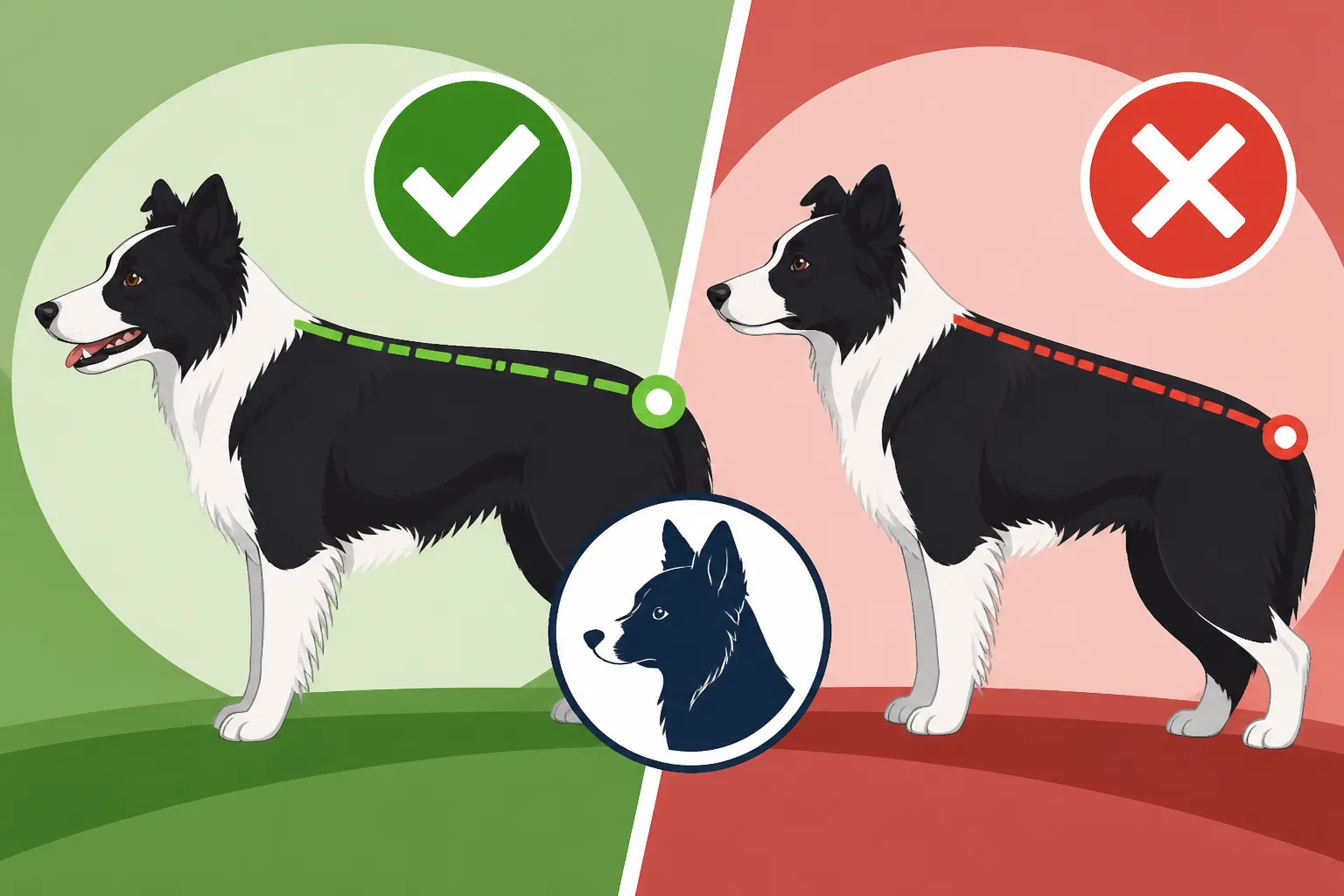
For working Border Collies, the emphasis is almost entirely on function. A working Border Collie needs a topline that provides strength, flexibility, and sustainability. Many experienced handlers and breeders of working lines will describe an ideal topline as relatively level or with a very slight, almost imperceptible, rise over the loin. This subtle rise can sometimes indicate powerful musculature over the hindquarters, which translates to explosive drive and agility. However, the key word here is "subtle." An exaggerated slope, either rising dramatically from the withers to the tail (roach back) or dipping significantly behind the withers and rising over the loin (sway back), would be considered a structural fault because it impedes efficient movement and can predispose the dog to injury.
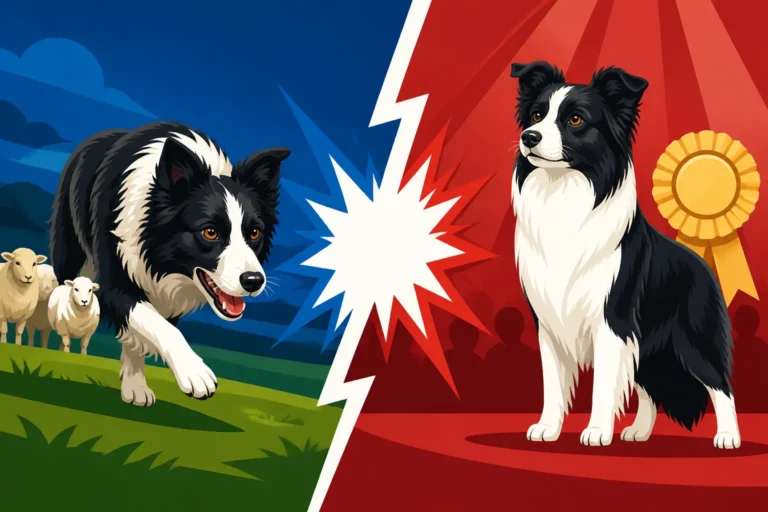
In the world of conformation shows, the interpretation of the breed standard often leads to a slightly different emphasis. While "functional soundness" is always stated, the visual aesthetics can sometimes take precedence. Some show lines might exhibit a more pronounced, gentle slope from the withers to the tail, often described as a graceful curve rather than a sharp incline. This can sometimes be confused with a "downward slope" when, in fact, the standard aims for a harmonious, well-balanced outline. The official What the AKC Standard Says a Border Collie Is will detail these aspects, though interpretations can vary among judges and breeders. The biggest challenge arises when the desire for a particular aesthetic in the show ring inadvertently compromises the functional requirements of the breed, contributing to The Working and Show Split in Border Collies.
What Constitutes an Acceptable Slope?
So, back to the core question: should it slope? For a working Border Collie, a truly sloped topline, meaning a significant downward angle from front to back, is generally not considered ideal. A strong, relatively level topline is preferred for enduring work. A very slight rise over the loin is acceptable and often indicative of powerful musculature. What we're trying to avoid is anything that makes the dog's rear end appear lower than its front, or a dramatic dip in the middle.
Consider the dynamic movements of a Border Collie. When a dog is fully extended in a gallop, its spine will naturally flex and extend. A well-constructed back allows for this flexion without undue stress. If the topline is inherently weak or poorly angled, these natural movements can become inefficient, leading to wasted energy or even injury. When you look at the entire dog, the topline should complement its overall structure, leading to a balanced and powerful appearance, not one that looks like it's perpetually going downhill.
Factors Influencing Topline Appearance
A Border Collie's topline isn't a static blueprint fixed purely by genetics; it's a dynamic feature influenced by a range of factors throughout the dog's life. Understanding these can help you better assess your dog's physical condition and identify potential issues.
Genetics and Conformation
The most foundational aspect of a Border Collie's topline is its genetic inheritance. Good breeding practices prioritize sound structure, and this includes a correct topline. Dogs with parents and ancestors known for strong, functional toplines are more likely to inherit these traits. Conversely, if there are known structural issues in a dog's lineage, such as a tendency towards a weak loin or a significant roach or sway back, these can be passed on. This is why looking at a puppy's pedigree and the conformation of its parents is often a good indicator of its potential adult structure. Genetic predispositions to conditions like Hip Dysplasia in a Border Collie That Runs All Day can also indirectly affect how a dog carries its back, as compensation for discomfort in the hips might alter spinal alignment.
It's also important to remember that conformation is about the entire dog. The angle of the shoulder, the length of the humerus, the angulation of the hindquarters – all these elements work together to create the overall balance and movement, and thus influence how the topline is presented. A dog with excellent rear angulation but a poor front, for example, might still struggle with efficient movement, regardless of a technically correct topline.
Age and Development
A Border Collie's topline will change significantly from puppyhood through adulthood and into its senior years. Puppies are often gangly, with their parts growing at different rates, and their toplines can appear a bit awkward or even roached temporarily. This is usually part of normal growth. As they mature, particularly between 12 to 24 months, their musculature develops, and their bones fuse, leading to a more defined and stable topline. It's during this period that their true adult conformation begins to emerge. Providing a balanced diet and appropriate, safe exercise for a growing Border Collie is crucial to supporting healthy development. High-quality puppy food, which you can often find readily available from retailers like Chewy, is essential during these formative months.
As Border Collies enter their senior years, changes in the topline are also common. Muscle mass can decrease, and ligaments and joints may stiffen or become arthritic. Conditions like Osteoarthritis in a Border Collie by Eight can lead to a slight dip or sway in the back as the dog compensates for pain or loses core strength. Maintaining muscle tone through gentle exercise and providing appropriate joint support can help mitigate some of these age-related changes, but a perfectly taut, level topline is rarely seen in very old dogs.
Conditioning and Musculature
This is perhaps one of the most significant non-genetic factors influencing a Border Collie's topline. A well-conditioned Border Collie with strong core and back muscles will naturally have a firmer, more stable, and often more level topline. These muscles act like guy wires, holding the spine in optimal alignment and enabling powerful, controlled movements. Dogs that are regularly engaged in their work or sport, like herding, agility, or obedience, tend to develop this musculature beautifully.
Conversely, a Border Collie that is under-exercised, overweight, or out of condition might exhibit a weaker, softer topline. The lack of muscle tone can make the spine appear to sag or sway, even if the underlying bone structure is sound. An overweight dog, for instance, might carry excess fat along its back, obscuring the true contours and potentially creating a less defined, somewhat flabbier appearance. Ensuring your Border Collie receives adequate exercise and a balanced diet (look for reputable brands on sites like Chewy for nutrient-rich options) is paramount for maintaining a healthy, functional topline throughout its life.
Posture and Movement
Finally, how a Border Collie stands and moves can dramatically affect the perceived slope of its topline. A dog that is "stacked" for a show might be posed in a way that emphasizes a particular topline, while a dog in motion will constantly change its spinal flexion. When a Border Collie gathers itself, prepares to burst into a run, or executes a tight turn, its back will naturally arch and flex. What looks like a slight slope in a static picture might entirely disappear or reverse when the dog is in action.
Even subtle postural habits can influence how the topline appears. A dog that habitually stands with its rear legs tucked too far under its body or stretched too far out might give the impression of a sloped back. Similarly, a dog compensating for discomfort or pain, perhaps due to The Limp That Shows Up After a Border Collie Works or Shoulder Lameness in a Border Collie That Weaves, might shift its weight and alter its spinal alignment, making its topline look different from its natural, relaxed posture. Observing your dog's topline in various situations – standing, walking, running, and at rest – provides the most complete picture.
Healthy Topline vs. Conformation Concerns
Understanding what a healthy, functional Border Collie topline looks like is crucial, not just for aesthetics but for the dog's long-term health and athletic ability. While no dog is perfect, certain topline characteristics can indicate underlying issues or potential for problems.
Characteristics of a Healthy Topline
A healthy Border Collie topline, particularly in working lines, is generally firm, strong, and appears relatively level when the dog is standing naturally. There might be a very slight, almost imperceptible rise over the loin, indicating powerful hindquarters, but it should never be exaggerated. The topline should flow smoothly from the withers to the tail, without abrupt dips (sway back) or pronounced arches (roach back). When you gently run your hand along your dog's back, you should feel firm muscle and solid bone beneath, not softness or a sudden drop.
More importantly than a static picture, a healthy topline allows for fluid, efficient movement. Watch your Border Collie gait at a trot: the back should remain relatively stable, with minimal bouncing or rolling. The movement should be powerful, covering ground effortlessly, and the topline should contribute to this overall efficiency. A dog with a sound topline will exhibit good reach in the front and strong drive from the rear, making its The Border Collie Gait a Judge Watches a thing of beauty and efficiency. This overall structure is key to a Border Collie's ability to live a long, active life.
Identifying Potential Issues
There are several topline variations that could be cause for concern, either indicating poor conformation or suggesting an underlying health issue.
- Sway Back (Lordosis): This is when the topline dips noticeably in the middle, between the withers and the hips. It can be a genetic fault, indicating weakness in the spine and musculature, or it can develop with age, poor conditioning, or sometimes as a compensatory posture due to pain elsewhere (e.g., in the hips or shoulders). A severe sway back can lead to back pain and reduce the dog's ability to use its hindquarters effectively for propulsion.
- Roach Back (Kyphosis): This refers to an arched topline, where the spine rises sharply over the loin, creating an exaggerated curve. While some breeds are meant to have a slight roach, it's generally not desired in a Border Collie. An extreme roach back can restrict spinal flexibility and impact gait efficiency, potentially causing discomfort or injury during intense activity.
- Weak Loin: The loin is the area between the last rib and the pelvis. A weak loin, often appearing soft or lacking muscle, can contribute to a sway back or simply make the topline less stable. This area is critical for transmitting power from the hindquarters, so weakness here reduces overall efficiency and increases the risk of strain.
- Too Long or Too Short in Body: While not strictly a topline slope issue, the length of the back can impact its appearance and function. A body that is too long relative to its height can lead to a weaker, less efficient topline, as the leverage points are spread too far apart. Conversely, a body that is too short might lack necessary flexibility and restrict freedom of movement. The ideal is a harmonious balance, often described as slightly longer than tall. This is part of the overall consideration when discussing The Height and Weight a Border Collie Standard Sets.
If you notice any significant changes in your Border Collie's topline, or if they exhibit signs of pain, stiffness, or reluctance to move, it's always best to consult with your veterinarian. They can help distinguish between normal aging or conformational quirks and genuine health concerns.
Maintaining a Healthy Topline
Just like any other part of their athletic build, a Border Collie's topline benefits greatly from proper care, nutrition, and management throughout its life. It's not just about what they're born with, but how you support their physical well-being.
Exercise and Conditioning
Regular, appropriate exercise is paramount for maintaining strong back and core muscles, which directly support a healthy topline. For Border Collies, this isn't just about a walk around the block. They thrive on activities that engage their entire body, such as herding, agility, flyball, or long hikes on varied terrain. These activities build muscle, improve flexibility, and strengthen the ligaments and tendons that stabilize the spine. However, it's crucial to introduce intense activities gradually, especially with young dogs whose growth plates are still developing. Over-exertion too early can cause harm.
Consider incorporating specific core-strengthening exercises into your dog's routine. These don't have to be complex; activities like walking over uneven surfaces, gentle incline work, or even simple balance exercises can help build the deep stabilizing muscles along the spine. Consistent, moderate activity is far more beneficial than sporadic bursts of intense exercise. If you're involved in dog sports, discuss a conditioning program with a canine sports medicine veterinarian or a certified canine fitness trainer to optimize your dog's strength and prevent injury.
Nutrition and Weight Management
A balanced diet provides the building blocks for strong muscles, bones, and connective tissues. High-quality dog food, tailored to your Border Collie's age, activity level, and any specific health needs, is essential. Adequate protein supports muscle maintenance and growth, while proper levels of vitamins and minerals ensure bone health. Many reputable brands offer formulas specifically designed for active breeds, which can be found at pet supply retailers like Chewy.
Maintaining a healthy weight is equally critical. Excess weight puts additional strain on the spine and joints, weakening the supporting structures and potentially leading to a softer, less stable topline. An overweight dog might also develop conditions like Hip and Elbow Scores in a Border Collie more rapidly or experience exacerbated symptoms from pre-existing joint issues. Conversely, a dog that is too thin might lack sufficient muscle mass, making its topline appear bony and less robust. Aim for your Border Collie to be lean and athletic; you should be able to easily feel their ribs without seeing them prominently, and they should have a discernible tuck-up at their waist.
Regular Health Checks and Support
Routine veterinary check-ups are vital for monitoring your Border Collie's overall health, including its musculoskeletal system. Your vet can assess your dog's gait, palpate its spine, and discuss any changes you've observed. Early detection of issues like arthritis, spinal discomfort, or muscle strains can lead to more effective treatment and better long-term outcomes.
For working or sport Border Collies, or those entering their senior years, consider incorporating supportive care. This might include joint supplements (such as glucosamine, chondroitin, or omega-3 fatty acids, widely available on Chewy), regular massage, or even canine chiropractic or physiotherapy if recommended by your vet. These proactive measures can help maintain spinal flexibility, reduce inflammation, and support muscle health, all contributing to a strong and comfortable topline throughout your Border Collie's active life.
Conclusion
The question of whether a Border Collie's topline should slope doesn't have a simple yes or no answer, but rather a nuanced one rooted in the breed's functional history and genetic standards. While a slight, almost imperceptible rise over the loin can be seen in well-muscled working dogs, an exaggerated downward slope or a distinctly roached or swayed back is generally not desirable as it can impede efficiency and lead to health issues. The most important characteristic of a Border Collie's topline is its ability to support powerful, agile, and enduring movement, allowing the dog to perform its work or sport effectively and comfortably. By understanding the factors that influence topline appearance—genetics, age, conditioning, and posture—and by providing consistent care through appropriate exercise, nutrition, and regular health checks, you can help ensure your Border Collie maintains a strong, healthy back throughout its vibrant life.
Disclaimer
This article is for general informational purposes only and does not constitute professional advice. Laws, prices and regulations vary by location and change over time. Consult a qualified professional for guidance on your specific situation.