What the Supreme Championship Means for a Border Collie
A Border Collie’s Supreme Championship result can sound like a simple “best dog” award, but it usually represents much more: a demanding trial, careful handling, and a run judged against a particular set of rules. This guide explains what the championship means, what a dog has to do to win, and what the result can—and cannot—tell you about that dog.
What a Supreme Championship means
It is a top-level sheepdog trial result, not a breed title
A Supreme Championship generally refers to winning a high-level sheepdog competition or final. It is not a formal title that every Border Collie can earn through a single universal registry, and the exact meaning depends on the event using the name. Organizers set the entry requirements, course, scoring system, and rules, so it’s worth checking which specific championship a result refers to.
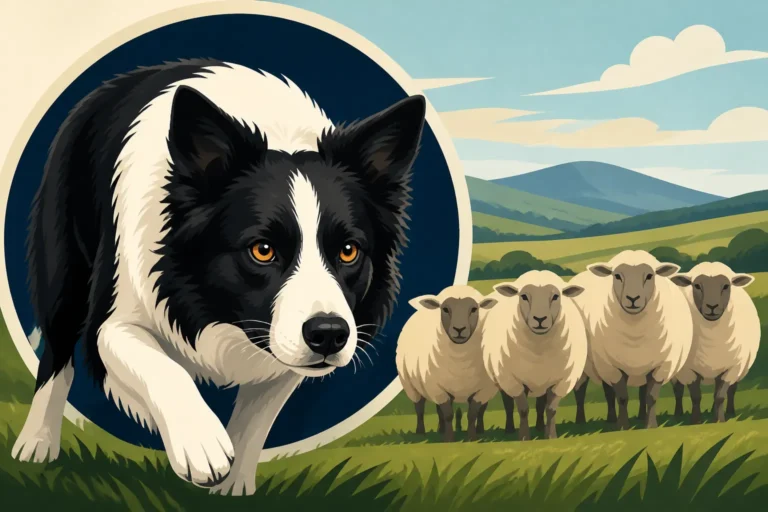
In practical terms, the dog and handler are being tested on how well they work sheep through a course. That can involve sending the dog away from the handler, gathering sheep from a distance, bringing them in a controlled line, and completing further tasks such as driving, shedding, or penning. The dog is not being judged on appearance, obedience in a show ring, or speed alone. The full performance matters.
That distinction helps when you see a dog described as a “Supreme Champion.” The phrase may refer to winning a named championship event, rather than holding a standardized title recognized in the same way everywhere. For a fuller look at the sport and its working background, see The Border Collie in Sheepdog Trials.
The championship tests the partnership as much as the dog
A strong Border Collie can have natural stock sense, stamina, and focus, but those qualities don’t automatically produce a championship run. The handler has to set the dog up well, give timely directions, and respond to what the sheep are doing. A dog may need to adjust its pace or position as the flock changes direction, rather than simply follow a memorized sequence.
This is one reason a result should be understood as a team achievement. A handler’s decisions affect the run, and a dog’s response affects whether those decisions work. If a command comes too early, too late, or at the wrong angle, sheep may drift off course. If the dog presses too hard, the flock may scatter; if it holds back too much, the sheep may stall.
Even a very talented dog can have an imperfect run. Sheep are living animals, not course equipment, and their behavior can shift with the terrain, the weather, or their own movement. The challenge is to keep the work controlled and effective while responding to what is actually happening in the field.
The event’s rules give the result its context
There is no single course that defines every Supreme Championship. One event may emphasize certain tasks or use a particular course layout; another may have different requirements, judging details, or entry qualifications. That means two championship wins can both be impressive without being directly comparable in every detail.
When reading about a result, look for the event’s full name, the year or edition, and the format. Was it a final after qualifying rounds? Was the course designed for an experienced handler and dog? Were there particular tasks that had to be completed? Those details explain what the team was asked to do.
It can also help to learn the sequence of a typical trial run before judging a result. What Happens at a Sheepdog Trial With a Border Collie offers a useful starting point for understanding how the work unfolds from the first send to the final tasks.
What a Border Collie must do to win
A controlled outrun starts the work
Many sheepdog trials begin with an outrun: the dog leaves the handler and travels in a wide arc toward sheep positioned at a distance. The aim is to reach the flock without driving it away, then approach in a way that encourages the sheep to move toward the handler. This calls for balance, distance, and control—not just running fast.
A Border Collie that cuts in too sharply may disturb the sheep. One that takes an inefficient route may lose time or arrive in a poor position. A well-executed outrun shows that the dog can travel away from the handler, stay responsive at a distance, and approach the flock thoughtfully. The handler’s directions may shape the route, but the dog still has to interpret the situation in the field.
From the sidelines, an outrun can look effortless, which makes it easy to miss how much judgment it involves. The dog is working at a distance, the handler is communicating with signals or commands, and the sheep are responding to pressure and position. If you want to understand this first phase more closely, read The Outrun a Border Collie Runs at a Trial.
The lift and fetch reveal control
After reaching the sheep, the dog has to lift them and bring them toward the handler. The lift is the moment the flock begins moving, and it needs to be firm enough to get the sheep going without causing a rush or a break in formation. The fetch then tests whether the dog can bring the flock along a planned line.
A championship-level run is not simply about getting sheep from one point to another. The dog has to apply the right amount of pressure and maintain a position that helps the sheep move as a group. If the flock veers off course, the handler may need to redirect the dog. If the dog crowds the sheep, they may speed up or split; if it gives them too much space, they may stop or wander.
Judges evaluate how the work is done, not just whether the flock reaches its destination. What Judges Score on a Border Collie's Lift explains why this phase is about balance and control as well as forward movement.
Later tasks can separate close competitors
Depending on the event, a course may include tasks such as driving sheep away from the handler, shedding part of the flock, or penning them. These stages ask for different kinds of precision. A drive may require the dog to guide sheep along a route while the handler remains at a distance. A shed may call for separating a specified sheep or group from the flock. A pen tests whether the dog can help move sheep into an enclosure without causing them to scatter.
A team that reaches the final task has not necessarily completed it successfully. Sheep can hesitate at a pen entrance, turn back, or follow one another in unexpected ways. In a shed, the flock may not divide neatly on the first attempt. The dog needs to adapt while the handler stays clear and communicates effectively.
This is why a small mistake late in a run can matter. A team may have performed the early stages well but lose points during a difficult finish. To see how those final tasks fit into the overall performance, explore The Shed and Pen at the End of a Border Collie's Run.
How to interpret a championship result
A win is meaningful, but it is not a complete profile of the dog
Winning a major trial shows that a Border Collie and handler produced an outstanding performance under the conditions of that event. It can be evidence of strong stock work, training, and teamwork. It does not, on its own, tell you everything about the dog’s temperament, health, suitability for a different job, or behavior in a family home.
A working trial is a specific test. The dog may be highly skilled on sheep but still need thoughtful handling in unfamiliar environments or around other animals. Likewise, a championship result doesn’t guarantee that the dog will perform identically on a different course, with different sheep, or with a different handler.
If you’re evaluating a dog for breeding, work, or purchase, consider the broader picture. Ask about the dog’s working experience, temperament, health history, and how it behaves outside competition. Trial records can be useful context, but they’re not a substitute for meeting the dog or understanding what kind of work and home it is suited to. Reading Trial Wins on a Border Collie Pedigree explores how to put competition results into perspective.
The same result may not mean the same thing across countries
Sheepdog trials can differ by country, organization, and event. Course layouts, qualifying routes, classes, judging practices, and terminology may not match exactly. For that reason, a result from one competition should be read in the context of its own rules rather than treated as a direct ranking against every other trial in the world.
This matters especially when comparing American events with competitions elsewhere. A dog’s record may include different types of trials, and terms that sound alike may refer to different formats. Check the organizer’s description of the event and how competitors qualify before drawing conclusions. Whether an American Border Collie Trial Differs gives more context for making those comparisons.
The length of a run can also affect the demands placed on the team. Some courses take longer or involve more stages than others, and the sheep and terrain add their own challenges. A time or score is most informative when you know what the competitors had to complete. For more on that part of the sport, see How Long a Border Collie Trial Run Lasts.
A championship does not make a dog a good fit for every handler
A winning dog is not automatically the right dog for every farm, handler, or home. Experienced stock handlers may value a dog’s ability to cover ground, respond at a distance, and work through complex tasks. Someone new to sheep may need a different kind of dog and, just as importantly, instruction and safe access to suitable stock.
Nor does a championship result mean that a pet Border Collie needs sheep in order to thrive. A dog’s daily needs depend on its individual drive, temperament, training, and home life. Competition success is one measure of working ability; it is not a universal prescription for how every Border Collie must live. If you’re wondering whether trial work is an option for a non-working dog, Whether a Pet Border Collie Could Ever Trial is a helpful next read.
If you’re preparing to attend a trial with your own dog, focus on comfort and safety rather than copying a competitor’s routine. A secure travel setup, water, shade, and a quiet place to rest can make a long day easier. Chewy is one place owners may look for everyday travel and feeding supplies, but check that any crate or carrier is appropriate for your dog and vehicle. A familiar bowl from home can also help a dog settle into a new setting; Chewy carries routine pet-care items, though event rules and the dog’s needs should guide what you pack.
Preparing to watch or enter a trial
Watch the whole run, not just the flashy moments
If you’re watching a championship for the first time, it’s tempting to focus only on the dog’s speed or the moment the sheep turn. Try following the full sequence instead. Notice where the dog begins, how it reaches the sheep, whether the flock stays together, and how the handler communicates when the sheep change direction.
Watching several teams can help you see the difference between an efficient run and one that merely looks fast. A quiet, controlled performance may be more effective than a dramatic one. The handler and dog are working with the flock, not forcing a predetermined pattern onto it.
Bring patience, too. Sheep may move slowly, hesitate, or make a sudden choice that changes the flow of a run. That unpredictability is part of the competition, not a sign that the dog has stopped working. A championship becomes more interesting when you can see the small adjustments that keep the flock moving.
New competitors should learn the event before entering
If you’re considering trialing, start by learning the rules and finding a suitable instructor or experienced handler. Trial work involves livestock, and an enthusiastic dog that hasn’t learned to respond around sheep can create risk for itself, the flock, and the people nearby. A structured introduction is safer and more useful than simply turning a keen dog loose.
Young dogs may also enter introductory or nursery classes in some settings, but eligibility and expectations vary. Don’t assume that a young Border Collie should be pushed into advanced work because it shows early interest. Good foundations, physical maturity, and a handler who can read both dog and sheep matter more than rushing toward a title. The Nursery Class a Young Border Collie Starts In explains how those early competition opportunities can work.
For day-to-day logistics, plan for rest between runs and keep your dog from becoming overstimulated while waiting. Pack water, food if appropriate for your schedule, and familiar equipment. Chewy may be a convenient source for ordinary supplies such as bowls or travel gear, but no purchase replaces a safe crate setup, sensible supervision, and a plan for keeping the dog comfortable at the venue.
Keep the achievement in perspective
A Supreme Championship win is a remarkable result because it reflects a demanding performance by a dog and handler under trial conditions. It says something important about their ability to work together with sheep, make decisions in the field, and complete the event’s tasks successfully.
It is still one result, shaped by the specific course, rules, sheep, and day. Understanding those details helps you appreciate the achievement without treating it as a complete measure of a Border Collie’s character or potential. Whether you’re a spectator, prospective handler, or simply curious about the breed, the most useful question is not only “Who won?” but “What did the team have to do, and how well did they do it?”
Disclaimer
This article is for general informational purposes only and does not constitute professional advice. Laws, prices and regulations vary by location and change over time. Consult a qualified professional for guidance on your specific situation.