Whether One Man and His Dog Used Border Collies
If you remember One Man and His Dog as a shepherd and a quick, crouching dog moving sheep across a field, you’re remembering a real working partnership, not a scripted breed showcase. Border Collies featured prominently because they were well suited to sheepdog trials. This guide explains what the programme showed, why the breed appeared so often, and what television could not tell you about living with one.
Did One Man and His Dog Use Border Collies
The programme was about sheepdog trials
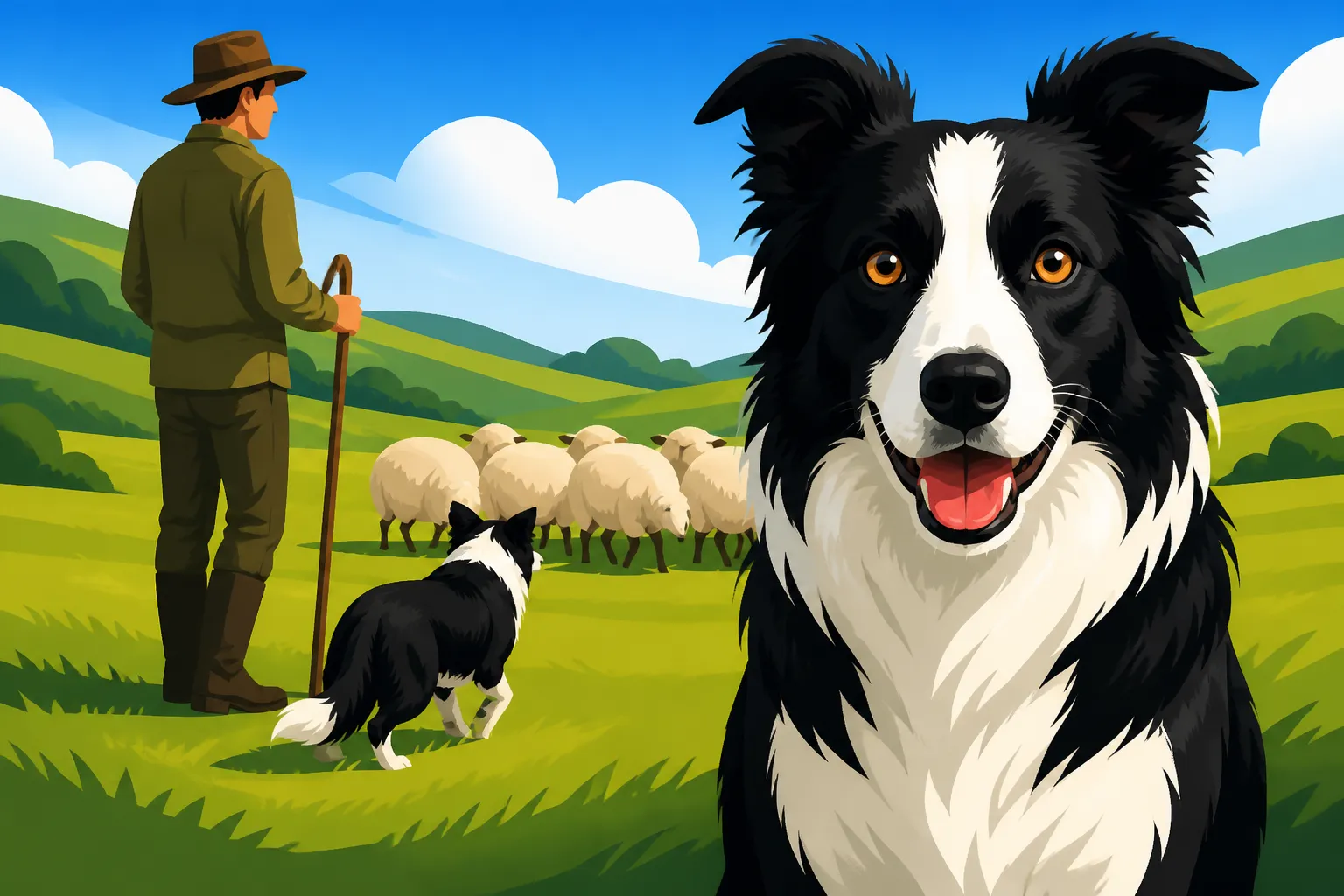
One Man and His Dog was a British television programme built around sheepdog trials. Rather than following a fictional dog with a regular cast, it brought viewers to competitions where handlers directed trained dogs as they moved sheep through a course. The title described the partnership at the heart of the event: one handler giving instructions, one dog interpreting them, and a flock responding to both.
Border Collies were strongly associated with the trials shown on the programme because they were widely used as working sheepdogs. Their appearance was not a special casting choice. These were dogs bred and trained for practical stock work, competing in a setting where their ability to gather and move sheep could be judged.
That distinction matters if you’re asking whether the programme “used” Border Collies. It featured them because they were common in this kind of work, not because every dog on screen belonged to one fixed television team. The dogs were participants in a working sport, and the handler-dog partnerships were the central attraction.
For more on the competition itself, The Border Collie in Sheepdog Trials explains how the breed’s work fits into trial courses. The programme offered a view of that work, but it was still a broadcast selection of runs and moments—not a complete picture of every aspect of a dog’s life or training.
Border Collies were common, but not the only possibility
A Border Collie may be the dog many viewers picture when they think of a sheepdog trial, but a breed’s reputation should not be mistaken for a rule that no other dog can work stock. In trials, the practical question is how well a particular dog can perform the work. Training, experience, temperament, stock, and the handler’s skill all matter.
The Border Collie’s working history helps explain why it was so visible. The breed was developed for managing livestock, and many working lines have been selected for the qualities handlers value in the field: stamina, responsiveness, a strong tendency to gather, and the ability to work at a distance. Those qualities can make a dog effective in a trial, but they do not make every Border Collie an experienced sheepdog.
A viewer might see a dog respond to a whistle or change direction around sheep and assume that the breed simply “knows what to do.” In reality, the polished run is the result of training and practice. A young dog may show interest or instinct, but safe and controlled work takes guidance. That’s why an instinctive response is not the same thing as a dog being ready to manage livestock.
What viewers saw a Border Collie do
The dog gathers sheep and moves them with control
A sheepdog trial commonly asks a dog to move sheep through a sequence of tasks, with the handler guiding its work from a distance. One striking part of the performance is often the outrun: the dog travels away from the handler in a wide arc to get behind the sheep without driving straight into them. From a television screen, this can look effortless. In practice, it depends on direction, pace, distance, and the dog’s response to the handler.
Once the dog reaches the sheep, the job is not simply to chase them toward a target. The dog needs to influence their movement while maintaining enough balance and control to keep the flock together. A rushed approach may scatter sheep; poor positioning can send them away from the intended route. Skilled work looks calm because the dog is applying pressure in a controlled way.
The handler’s commands are an important part of the picture. Voice and whistle cues can tell the dog to change direction, slow down, move closer, or stop. A handler may appear to do very little compared with the dog, yet the quiet, precise instructions shape the entire run. If you’d like to understand one key stage of the course, The Outrun a Border Collie Runs at a Trial looks at how that initial approach works.
The programme showed teamwork, not just speed
It’s easy to focus on the dog’s speed and athleticism. But a successful run is not simply a race. The dog needs to read the sheep, respond to the handler, and adjust its position as the flock moves. A dog that moves quickly but loses control of the sheep may be less effective than one that works steadily and keeps the flock on course.
A trial can include several stages, and each asks for a different kind of control. Depending on the course, sheep may need to be guided through gates, separated, or brought into a pen. The dog’s job changes as the sheep’s position changes, and the handler must make decisions while watching both the flock and the dog.
That is part of what made the format compelling: the partnership was visible. The handler could not simply direct sheep by hand, and the dog could not complete the course without clear communication. What Happens at a Sheepdog Trial With a Border Collie gives a fuller sense of how the course and partnership fit together.
| What viewers may notice | What it involves in practice |
|---|---|
| A dog running far from the handler | A controlled outrun to reach the sheep from behind |
| Sheep moving across a field | The dog applying pressure and adjusting its position to influence the flock |
| A whistle or shouted cue | A trained signal that tells the dog how to change its work |
| Sheep passing through a gate | Careful positioning and control, not simply chasing |
| A dog stopping or lying down | A response that can help steady the work and maintain control |
A strong run depends on the dog’s lift and balance
When a dog reaches the sheep, how it begins to move them matters. A dog that approaches too forcefully may unsettle the flock. A dog that positions itself well can encourage the sheep to move in the direction the handler needs. In trial language, this early part of the work includes the lift—the moment the dog begins to influence the sheep after reaching them.
The dog’s balance is also important. In broad terms, a dog has to stay in a useful position relative to the handler and the sheep. If it circles too far or pushes from the wrong angle, the flock may drift off the intended line. Good work involves continual adjustment rather than repeating the same movement regardless of what the sheep do.
Television can make these decisions easy to miss, especially when the camera cuts between a wide shot and the handler. Watching the flock’s path can help: does it remain together, and does it travel where the course requires? For a closer look at that crucial first interaction with the sheep, see What Judges Score on a Border Collie's Lift.
Why Border Collies fit the work shown on television
The breed’s working traits suit sheep handling
Border Collies are often described as intelligent, but intelligence alone does not explain their work. A sheepdog needs to notice what the sheep are doing, respond to a handler’s signals, and keep working even when the handler is some distance away. The dog also has to cope with changing conditions: sheep may stop, turn, split, or move faster than expected.
Many Border Collies have a strong inclination to gather and control movement. That tendency can be useful with livestock, but it does not automatically produce reliable work. Without training and clear boundaries, a dog’s interest in moving things can also show up in ways owners find difficult, such as chasing cyclists or trying to control running children.
That gap between instinct and trained skill is worth keeping in mind. The dogs on a trial programme are not a fair picture of what every pet Border Collie will do with little practice. They are trained individuals working in a structured setting. For more on the breed’s reputation and what people mean when they call it intelligent, Why the Border Collie Is Called the Smartest Breed explores the idea in a broader context.
The dog’s job is more than running around sheep
A sheepdog’s work relies on judgment as well as energy. The dog must respond to the flock, adjust its position, and listen to the handler. A dog that is physically fit but cannot settle, wait, or change direction when asked will struggle to work safely and effectively.
This is one reason a trial run shouldn’t be reduced to “a Border Collie needs lots of exercise.” The dog is doing purposeful, directed work, not merely burning energy. Training also involves self-control, learning signals, and being able to stop. These skills are relevant to pet homes too, even if the dog never sees sheep.
The course tasks help make that work easier to understand. The Shed and Pen at the End of a Border Collie's Run looks at the later stages, when the handler and dog need to manage sheep with particular care. Seeing how those tasks depend on communication helps explain why a good run is about control as much as drive.
What the programme does and does not tell you about the breed
A trial dog is not a typical household portrait
A skilled working dog on television may look naturally composed, responsive, and endlessly ready to go. But viewers are seeing the dog in a specialised context, often after considerable training. They are not seeing every rest period, daily routine, early training mistake, or ordinary moment at home.
That can create an unrealistic expectation for someone considering a Border Collie. It’s tempting to think that a large yard or frequent walks will recreate the life shown on screen. In reality, a dog’s needs depend on the individual, and activity alone does not guarantee that it can relax indoors. Many Border Collies also need help learning to switch off, handle frustration, and live calmly around everyday movement.
The programme can still be useful as a window into the breed’s working heritage. It shows why the dog’s focus, responsiveness, and interest in movement are valued by handlers. But those traits can be demanding outside the field. The Kind of Home a Border Collie Settles In considers what that means in everyday life, beyond the trial ground.
Watching a trial is different from starting a dog on stock
If watching the programme makes you curious about trying sheepdog work, treat that interest as a starting point—not as a reason to put an untrained dog among livestock. Sheep can be frightened or injured, and a dog that has not learned control can put itself, the stock, and its handler at risk.
A responsible introduction should be planned with an experienced stock handler or qualified instructor who can assess the dog and the setting. Not every Border Collie will be suited to trial work, and a dog that shows interest still needs to learn how to respond safely. The handler also needs to learn how to read the dog and the sheep rather than relying on instinct or television impressions.
For many owners, the most useful takeaway from One Man and His Dog is not that every Border Collie should herd. It is that the breed’s familiar traits have a working context, and that skilled performance grows out of training and partnership. To explore the competition further, The First Border Collies Brought to America offers historical context for the breed’s spread, while trial-focused resources can help explain what viewers see on the field.
Disclaimer
This article is for general informational purposes only and does not constitute professional advice. Laws, prices and regulations vary by location and change over time. Consult a qualified professional for guidance on your specific situation.