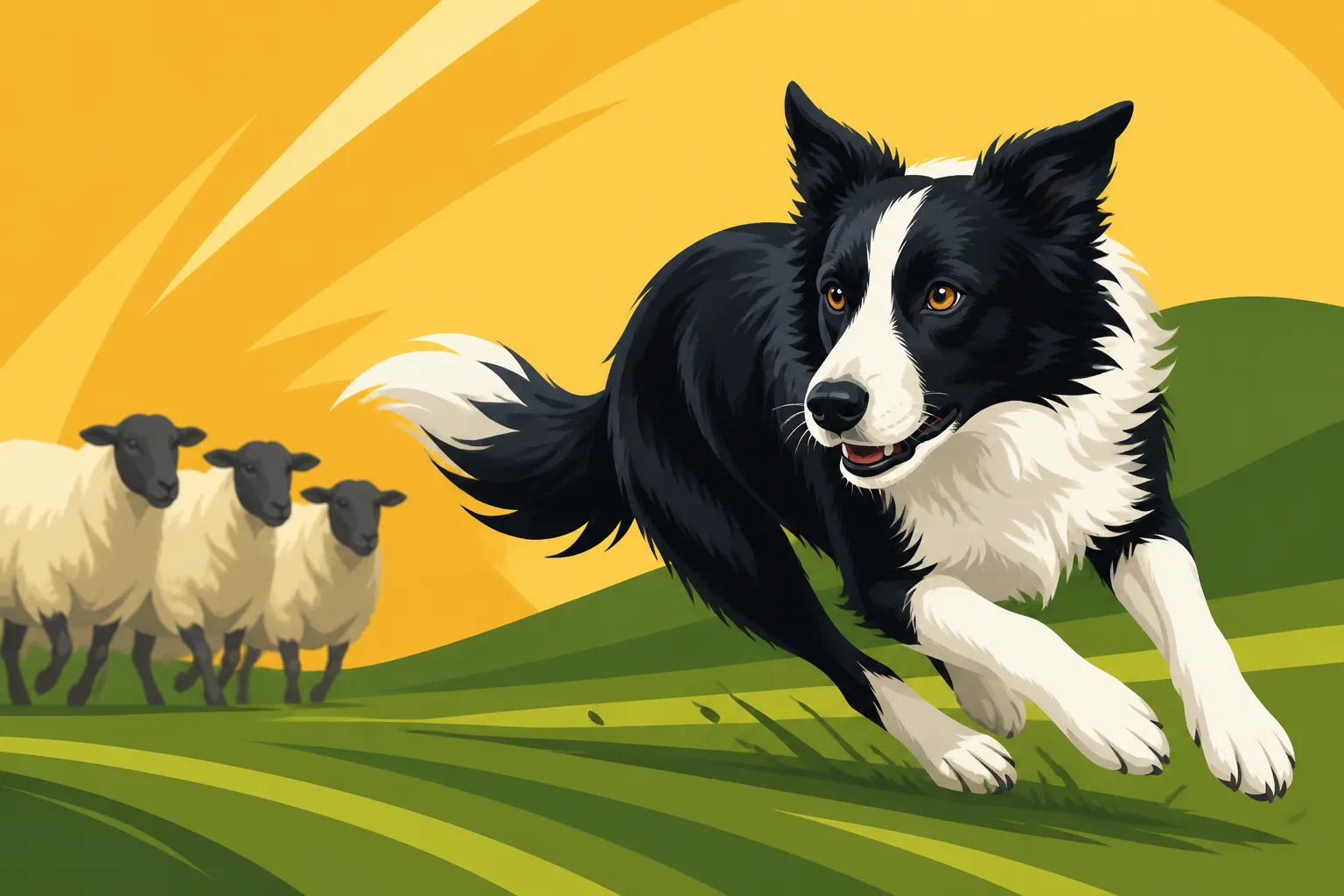
The Outrun a Border Collie Runs at a Trial
A Border Collie’s outrun is the wide, controlled arc it makes from the handler’s side to the far side of a group of sheep. It looks effortless when the dog gets it right, but the line, pace, and final position all matter. This guide explains what an outrun does, what judges look for, and how handlers build it without rushing a young dog.
What a Border Collie’s outrun does
From the handler’s side to the sheep
At a sheepdog trial, the sheep usually begin some distance from the handler and dog. The outrun is the dog’s route around them: the dog leaves the handler, travels out to one side, curves behind the sheep, and reaches a position where it can bring them back. It is not simply a fast run toward the flock. The shape of the route is central to the work.
A well-shaped outrun gives the sheep room. The dog should approach from behind rather than charge straight at their heads, which could make them scatter or run in the wrong direction. From the handler’s viewpoint, the dog often disappears from sight for part of the outrun, especially over a rise or behind uneven ground. That can be nerve-racking when you are new to trials, but a dog that has learned the job should be able to work around the terrain without needing constant visible guidance.
The outrun comes near the beginning of a trial course, before the dog gathers the sheep toward the handler. It sets up the rest of the run: if the dog arrives in the right place and approaches calmly, the sheep are more likely to move in a balanced, manageable way. To see how that gather fits into the whole course, read What Happens at a Sheepdog Trial With a Border Collie.
How the outrun differs from a direct chase
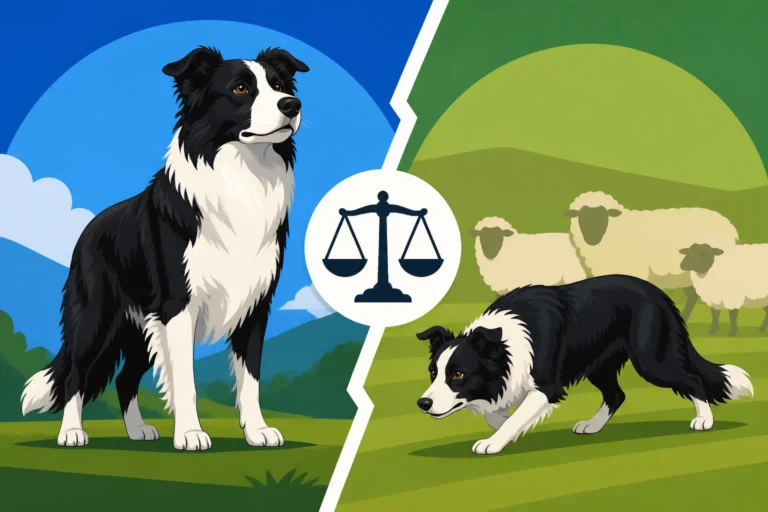
A dog running straight at sheep may look energetic and determined, but that is not the same as an outrun. The dog’s path needs to take it around the flock and behind it. A direct line can put pressure on the sheep from the front, making them turn away, split, or rush past the handler. The dog may be keen, yet still be doing the wrong part of the job.
Handlers often describe a good outrun as “wide” or “open.” Those words mean the dog gives the sheep enough space while reaching the far side. The right width depends on the layout, the distance, the sheep, and the handler’s training plan. A small field with calm sheep does not call for exactly the same path as a larger trial field with more challenging terrain.
The outrun also differs from a free-for-all sprint. Speed alone does not prove that a dog understands the task. A dog that races out but cuts in too close, overshoots, or arrives in front of the sheep may need a calmer, more deliberate approach. In a trial, control and judgment matter alongside athleticism. The handler’s job is to help the dog learn a route that works for the sheep, not just one that looks impressive from the gate.
What makes an outrun effective
Shape, balance, and the dog’s approach
A useful outrun has a clear arc around the sheep. The dog leaves on the side the handler asks for, moves out far enough to create room, and curves behind the flock. Ideally, the dog reaches a balanced position where it can begin bringing the sheep toward the handler without pushing them off course. That position is sometimes called the point of balance: the spot behind the sheep from which the dog can influence their movement in the desired direction.
Balance does not mean the dog stops at one exact distance every time. Sheep move, fields vary, and some groups are more responsive than others. The dog has to adjust to what is happening rather than follow a memorized track blindly. A handler may use a whistle or voice command to guide the direction, but the dog still needs to read the sheep and choose a suitable path.
The final part of the outrun is the lift: the moment the dog begins to move the sheep away from their starting point. A dog that arrives quietly and gives the flock space can often start them with less pressure. A dog that rushes in may make them bolt, split, or turn sharply. The lift is judged as part of the dog’s work, not as a separate performance trick. For more on that transition, see What Judges Score on a Border Collie's Lift and Teaching a Border Collie to Lift Sheep Quietly.
What judges may notice
Judges assess the quality of the dog’s work across the course, and the outrun influences what follows. They may notice whether the dog takes the requested side, keeps an appropriate line, reaches behind the sheep, and arrives in a position that allows a controlled lift. They may also notice whether the handler needs to give repeated corrections or whether the dog works independently.
A tight or uneven route can cost the dog room and control. For example, imagine a dog that starts wide but cuts sharply inward near the sheep. It may arrive quickly, but the sheep could react by turning away from the intended line. Another dog might travel more slowly yet maintain a smooth arc, arrive behind the flock, and move them forward steadily. The second dog’s work may be more effective because the route serves the job.
Trial courses, rules, and conditions differ, so there is no single diagram or distance that describes every successful outrun. Terrain can hide the sheep; wind and light can affect what the dog sees; and the flock may move before the dog reaches them. The handler’s commands and the dog’s response are part of the overall picture. A trial is not a test of how far a dog can run in a straight line. It is a test of practical control and stock sense within the course.
How handlers build the outrun
Start with understanding, not distance
A young dog should learn the idea of going around the sheep before being asked to do a long, demanding outrun. Training often begins in a controlled setting where the handler can observe the dog and the sheep, keep the work safe, and give clear direction. The handler may use short distances and simple layouts first, then gradually increase the challenge as the dog understands the task.
Building distance too quickly can create problems. A dog may learn to run hard without holding its line, or it may become unsure when it loses sight of the sheep. A handler may also be tempted to repeat the same command louder when the dog struggles. But if the dog does not yet understand the route, repeated commands can add noise without adding clarity. Calm, well-timed guidance and appropriate practice are more useful than simply asking for a bigger run.
Training goals should be shaped around the individual dog. Some dogs naturally want to cut in close; others make a wide circle but need help finding the correct stopping point. A trainer may adjust the field setup, the starting position, or the distance to make the lesson clearer. The long-term aim is a dog that understands the task and can respond to subtle guidance, not one that has rehearsed a single pattern without reading the sheep. For a closer look at progressive practice, see Building a Border Collie's Outrun.
Why the lie-down matters
A stop or lie-down command can help a handler steady the dog during work. It gives the handler a chance to pause the dog, change direction, or prevent it from rushing into the sheep. The dog does not necessarily need to lie down at every point in every outrun, but a reliable stop gives the handler a useful way to manage speed and pressure.
Teaching the dog to stop is not the same as teaching it to do the entire outrun. If a dog is repeatedly stopped because it is taking the wrong line, the underlying problem may be that it needs clearer practice on the arc itself. Conversely, a dog that understands the route but rushes the final approach may benefit from learning to respond promptly to a stop cue. The handler has to distinguish between these situations rather than treating every mistake as a failure to stop.
A young dog’s training should also take account of its maturity and confidence. If a dog is overwhelmed by the sheep, worried by distance, or unsure about the handler’s signals, adding more pressure may make the work less clear. Short, positive sessions with an experienced stock handler can help build a solid foundation. The command itself is only useful when the dog understands it and can respond without confusion. See Why a Border Collie Is Taught to Lie Down First for more on the role of this basic control skill.
Preparing for a trial and reading your dog
What to watch for during practice
When observing an outrun, pay attention to more than whether the dog reaches the sheep. Notice where the dog starts, which direction it takes, how its path changes as it gets closer, and how the sheep respond when it arrives. If the dog disappears from view, listen for the handler’s commands and watch the flock. Sheep turning or breaking apart may offer clues about the dog’s position and pressure, though the handler is best placed to assess the situation.
It can help to record practice sessions, if that is permitted and safe. A short video may reveal that a route that looked wide from the handler’s position actually tightened near the sheep. Or it may show that the dog made a good arc but arrived too quickly for the flock. Review footage with a knowledgeable instructor rather than relying on one clip to diagnose every issue. A dog’s work can vary with the field, the sheep, the weather, and its level of experience.
Keep an eye on the dog’s physical and mental state as well. A dog that is tired, distracted, or overexcited may struggle to respond consistently. Trial preparation includes rest, water, secure transport, and suitable handling between runs—not just repetitions on sheep. For organizing familiar travel supplies, owners may find it useful to check what they already have at home before ordering anything from a retailer such as Chewy. A water bowl, lead, towels, and the dog’s regular food are practical items to plan for, but no piece of equipment can replace a suitable training setup or experienced instruction.
Choosing the right next step
If your dog is just beginning stock work, an instinct test or introductory lesson can help you understand how it responds to sheep, but neither guarantees trial readiness. A dog may show natural interest and still need substantial training before it can manage an outrun reliably. The handler also needs to learn: reading sheep, timing commands, and knowing when to pause are skills developed through practice with an experienced mentor.
For a young dog, classes or novice trial opportunities may offer a gradual way to gain experience, depending on the local training community and event rules. The right progression is one where both dog and handler can work safely and calmly. The Nursery Class a Young Border Collie Starts In explains how young dogs may enter trial competition as their experience develops. You can also read How Long a Border Collie Trial Run Lasts to understand how the outrun fits into the time and flow of a full run.
A simple preparation checklist can keep trial-day logistics from becoming an avoidable distraction:
| Area | What to prepare | Why it matters |
|---|---|---|
| Dog’s routine | Familiar food, water, and a quiet place to rest | A new setting can be stimulating, so familiar routines may help the dog settle |
| Handling equipment | Lead, collar or harness as appropriate, and identification | Helps you manage the dog safely around people, vehicles, and other dogs |
| Weather and comfort | Shade, towels, and a plan for warm or wet conditions | Dogs may spend time waiting between activities |
| Training notes | Recent goals, commands, and feedback from your instructor | Keeps practice focused rather than turning into repeated, unplanned runs |
| Supplies | Check what you already own before shopping | Chewy is one possible place to look for routine pet supplies if something is missing |
Chewy may be useful for replacing familiar everyday supplies before a trip, but trial-specific rules and the event organizer’s instructions should guide what you bring. If you are considering a new bowl, treat, or travel item, test it at home rather than introducing it for the first time on a busy trial day. Chewy’s product listings can help you compare ordinary pet-supply options, while an instructor or trial organizer is the better person to ask about training and event requirements.
Disclaimer
This article is for general informational purposes only and does not constitute professional advice. Laws, prices and regulations vary by location and change over time. Consult a qualified professional for guidance on your specific situation.