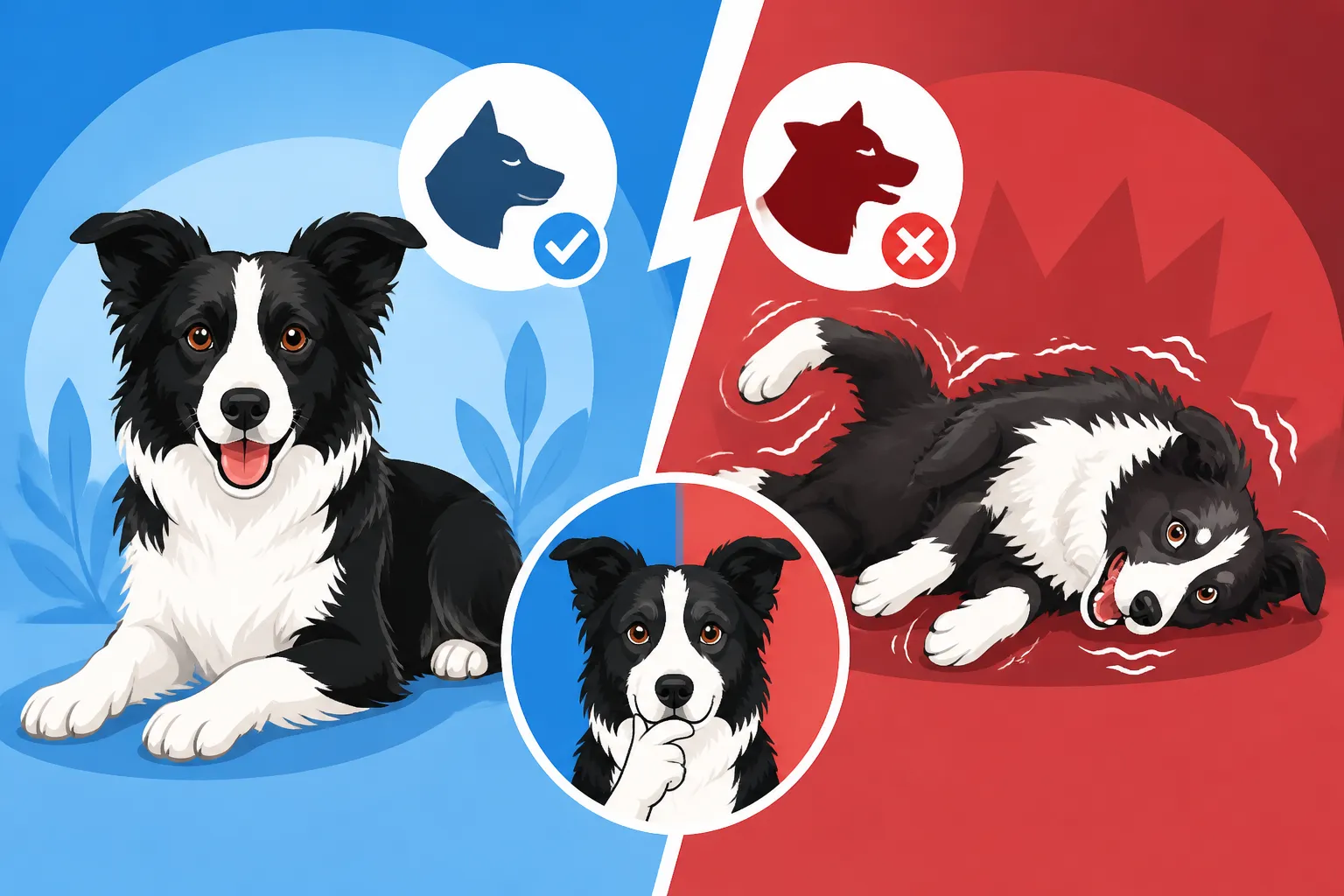
Telling Border Collie Collapse From a Seizure
It's terrifying when your beloved Border Collie suddenly goes down, showing strange symptoms that leave you utterly bewildered and scrambling for answers. The immediate fear is often that they're having a seizure, but with Border Collies, there's another, often equally distressing condition known as Border Collie Collapse that can look alarmingly similar. Understanding the key differences between these two serious issues is vital for every owner, helping you react appropriately and provide your dog with the right care and diagnosis.
Unraveling Border Collie Collapse BCC
Imagine you're out with your high-drive Border Collie, perhaps at the dog park, or working sheep in the field, when suddenly, without much warning, their hind legs give out. They might stumble, look disoriented but still aware, and struggle to coordinate their movements. This alarming scenario is often characteristic of Border Collie Collapse (BCC), a condition that is unique to the breed and can cause immense worry for owners who don't know what they're seeing. It’s not quite a seizure, and it’s certainly not just exhaustion; it’s a specific neuromuscular disorder that demands attention and a clear understanding.
What a BCC Episode Looks Like
A typical Border Collie Collapse episode unfolds in a very specific way. Your dog might be intensely exercising – perhaps chasing a ball relentlessly, navigating an agility course, or focused on herding work – when you notice a sudden change in their gait. They might start to wobble, especially in their hindquarters, almost as if they're drunk or their legs are no longer fully under their control. This can quickly progress to them dragging their hind limbs, staggering, and eventually collapsing. What's crucial to observe is that despite the severe motor dysfunction, your Border Collie typically remains fully conscious and alert throughout the episode. They might even try to keep going, their eyes still bright and focused on the task, even as their body fails them. You won't see the rigid, uncontrolled spasms or paddling motions associated with a grand mal seizure, but rather a profound weakness and loss of coordination. If you've ever seen your dog experience this, you'll know that the sight is heartbreaking and baffling, making it clear why so many owners confuse it with other serious conditions. For a more detailed look at what happens, check out our guide on What a Border Collie Collapse Episode Looks Like.
Triggers and Onset of BCC
The defining characteristic of Border Collie Collapse is its strong link to intense physical exertion. It’s an exercise-induced condition, meaning it almost exclusively occurs during or shortly after periods of strenuous activity. Think long retrieves, high-speed agility runs, extended herding sessions, or any activity that pushes your dog's physical limits. While heat can sometimes exacerbate an episode, BCC isn't simply a case of overheating; it can happen in cooler temperatures too. Excitement and stress associated with the activity can also play a role, making an already predisposed dog more likely to experience an episode. It's believed to be a genetic condition, with research pointing towards the DNM1 gene in many affected dogs. This means that a dog might carry the genetic predisposition without ever showing symptoms until placed in the right triggering environment. It’s not just any dog that collapses; it's a specific set of circumstances combined with a genetic makeup. For deeper insights into these triggers, you might find our post on Border Collie Collapse and What Sets It Off particularly helpful.
Recovery from a BCC Episode
One of the most distinguishing features of Border Collie Collapse, setting it apart from a seizure, is the recovery process. Once the strenuous activity stops and your Border Collie is allowed to rest, the recovery is usually remarkably rapid and complete. Most dogs will regain full motor function within a few minutes, typically within 5 to 30 minutes, though they may seem tired afterward. They might stand up, shake it off, and often, given the chance, seem eager to get back to whatever they were doing. This quick return to normal function is in stark contrast to the prolonged disorientation and exhaustion that follows a generalized seizure. While they might still need a good nap, they won't be bumping into walls or acting as if they don't know who you are. The speed of recovery can sometimes make owners question if anything serious even happened, but rest assured, it’s a real and concerning event. To understand the typical timeline, explore our article on How Long a Border Collie Takes to Come Right Again.
Understanding Seizures in Border Collies
Witnessing a seizure in your dog is, for many owners, one of the most frightening experiences imaginable. The sudden loss of control, the violent shaking, and the fear that your dog is in pain or dying can be overwhelming. While Border Collies are generally a robust breed, they are not immune to neurological conditions, and epilepsy, which causes recurrent seizures, is a concern for some lines. Unlike BCC, which is a motor dysfunction rooted in a specific metabolic issue during exercise, a seizure is an electrical storm in the brain, an involuntary event that can manifest in various ways and has a very different underlying pathology.
The Different Faces of a Seizure
Seizures aren't a one-size-fits-all event; they can present in several ways. The most commonly recognized, and arguably the most terrifying, is the generalized or "grand mal" seizure. During this type of seizure, your Border Collie will lose consciousness, fall to their side, and their entire body will go rigid before cycling into uncontrolled, rhythmic jerking or paddling motions of all four limbs. They may salivate excessively, chew their tongue, vocalize, and often lose control of their bladder and bowels. It's a truly distressing sight, but it's important to remember your dog is not aware or in pain during this phase.
Less dramatic, but equally concerning, are focal or partial seizures. These seizures originate in a specific part of the brain and can result in more localized symptoms. You might see twitching in just one part of the body, like an eyelid, a lip, or a single limb. Some dogs might experience "fly-biting" (snapping at imaginary flies), staring blankly, or showing subtle behavioral changes like sudden anxiety or confusion. Because these can be so subtle, owners sometimes miss them or mistake them for quirky behavior. Understanding the full spectrum of possibilities is key to recognizing them; for more detailed descriptions, our article What a Border Collie Seizure Looks Like can be very insightful.
The Stages of a Seizure Event
A seizure is more than just the convulsive phase; it’s a whole event that typically unfolds in three distinct stages. First, there’s the prodrome or pre-ictal phase, which can occur hours or even days before the seizure itself. During this time, some dogs exhibit subtle behavioral changes: they might become unusually clingy, anxious, restless, or seek solitude. Owners who live with an epileptic dog often learn to recognize these cues. Second, the ictus is the seizure itself – the actual electrical storm in the brain. This is the part most people visualize, with the uncontrolled movements, loss of consciousness, and potential urination/defecation. While it feels like an eternity, the ictus usually lasts only a few seconds to a few minutes. Finally, there's the post-ictal phase, which is perhaps the most critical for distinguishing a seizure from BCC. After the convulsions cease, your Border Collie will slowly regain consciousness, but they will almost certainly be disoriented, confused, and exhausted. They might pace aimlessly, temporarily lose their vision, act ravenously hungry or thirsty, or seem to not recognize their surroundings or even you. This post-ictal state can last anywhere from a few minutes to several hours, and it's a profound period of recovery for the brain. It's during this time that the full impact of the seizure becomes apparent, and it’s often the strongest differentiator when comparing it to Border Collie Collapse. For instance, The Age a Border Collie's First Seizure Arrives often provides context for when owners first start observing these episodes.
Causes and Management of Seizures
The most common cause of recurrent seizures in Border Collies, as in many breeds, is idiopathic epilepsy. This means there's no identifiable underlying cause, and it's often believed to have a genetic component. Seizures typically begin in dogs between one and five years of age, making it a critical window for owners to be vigilant. However, seizures can also be caused by other serious issues, such as structural brain problems (tumors, inflammation, head trauma), metabolic disorders (low blood sugar, liver disease), or exposure to toxins. Diagnosing the cause often involves a thorough neurological exam, blood tests, and sometimes advanced imaging like an MRI of the brain.
Managing epilepsy typically involves lifelong medication, such as phenobarbital, potassium bromide, or levetiracetam, aimed at reducing the frequency and severity of seizures. Finding the right medication and dosage can be a delicate balance, as vets strive to control seizures without excessively sedating the dog or causing significant side effects. The cost of ongoing medication and specialist visits can be substantial, making pet insurance from providers like Healthy Paws a wise investment for many owners facing a chronic condition. It’s a long-term commitment that requires careful monitoring and regular veterinary check-ups to ensure the medication is effective and not causing other issues. Our article on Medicating a Border Collie Without Dulling It offers further guidance on treatment strategies, and you can learn more about specific age ranges for onset in Epilepsy in a Border Collie Between One and Five.
Key Differences: BCC vs. Seizures
When your dog suddenly goes down, distinguishing between Border Collie Collapse and a seizure can be incredibly difficult in the moment, especially if you’ve never witnessed either before. Both are terrifying, and both require veterinary attention. However, understanding the core distinctions is crucial for providing your veterinarian with accurate information, which in turn leads to a correct diagnosis and appropriate treatment plan. The subtle cues can be the difference between managing an exercise-induced condition and a neurological disorder.
Observing the Crucial Distinctions
The critical differences between BCC and seizures lie in a few key areas that every Border Collie owner should be aware of.
- Consciousness: During a BCC episode, your dog remains fully aware of its surroundings, often making eye contact and appearing distressed but mentally present. In contrast, a generalized seizure involves a complete loss of consciousness, while focal seizures can result in altered awareness or a dazed state.
- Movement Pattern: BCC manifests as profound weakness, a wobbly gait, and often dragging of the hind limbs, leading to a collapse. There are no rigid spasms or uncontrolled paddling characteristic of a seizure. Seizures, especially generalized ones, involve involuntary, stiffening muscles followed by rhythmic, often violent, full-body contractions.
- Triggers: BCC is almost exclusively triggered by intense physical exercise, often occurring during or immediately after high-drive activity. Seizures, particularly those from idiopathic epilepsy, are typically unpredictable, though some dogs may have triggers like excitement, stress, or even sleep, but rarely intense physical exertion during the seizure itself.
- Urination/Defecation: Loss of bladder and bowel control is a very common occurrence during generalized seizures due to the complete loss of body control. It is rare, if ever, seen during a BCC episode.
- Recovery: The recovery from BCC is usually rapid and complete within minutes, with the dog returning to its normal self, albeit possibly tired. Following a seizure, the dog enters a prolonged post-ictal phase of confusion, disorientation, exhaustion, and sometimes temporary blindness, which can last for hours.
To help visualize these differences, here’s a quick comparison:
| Feature | Border Collie Collapse (BCC) | Seizure (Epilepsy) |
|---|---|---|
| Consciousness | Generally fully aware | Loss of consciousness or altered awareness |
| Primary Symptoms | Weakness, wobbly gait, hind limb dragging, collapse without rigid spasms | Convulsions, rigid spasms, muscle twitching, paddling |
| Trigger | Intense physical exercise | Often unpredictable; can be stress or sleep-related |
| Urination/Defecation | Rare | Common during generalized seizures |
| Recovery | Rapid (minutes to 30 mins), returns to normal | Prolonged (minutes to hours) post-ictal phase: confusion, disorientation, exhaustion |
| Origin | Neuromuscular (exercise-induced energy metabolism) | Brain (abnormal electrical activity) |
| Genetic Test | Available (DNM1 gene) | Not always a specific genetic test for idiopathic epilepsy (though some specific types of epilepsy might have genetic markers) |
The Diagnostic Journey
Getting an accurate diagnosis is paramount for both Border Collie Collapse and seizures. When your dog has an episode, the single most helpful thing you can do for your vet is to video record it. Even a short clip can provide invaluable clues about the nature of the event, distinguishing involuntary spasms from weakness, and noting the level of consciousness. Your veterinarian will perform a thorough physical and neurological exam, and often recommend blood tests to rule out metabolic issues like low blood sugar or liver dysfunction, which can mimic seizures or cause collapse.
For BCC, a genetic test is available to identify the DNM1 mutation, which can confirm the diagnosis. This is a simple cheek swab or blood test that can provide definitive answers. For seizures, especially if epilepsy is suspected, after ruling out other causes with blood work, an MRI of the brain might be recommended to check for structural abnormalities like tumors, inflammation, or fluid buildup. Without a clear cause, a diagnosis of idiopathic epilepsy is often made. Diagnostic tests, including advanced imaging like MRIs, can incur significant costs, highlighting why a comprehensive pet insurance plan from a provider like Healthy Paws can offer crucial financial support during these uncertain times. It's a journey that can involve multiple specialist visits, so asking your breeder for health test results, including genetic panels, is an important step in prevention. For more on this, consider reading Asking a Border Collie Breeder for Test Results and The Border Collie Genetic Panel and What It Screens. It’s also important to understand that Whether One Seizure Means a Border Collie Has Epilepsy is not always a straightforward answer; a single seizure doesn't automatically mean a lifelong diagnosis.
Long-Term Outlook and Living with the Conditions
Living with a Border Collie affected by either BCC or seizures requires dedication and adjustment. For dogs diagnosed with Border Collie Collapse, the management strategy primarily revolves around modifying exercise. This might mean shortening the duration or intensity of activities, taking frequent breaks, or finding alternative, less strenuous forms of mental and physical stimulation. Many dogs with BCC can still lead happy, active lives with careful management, but their competitive careers in high-impact sports like agility or herding might need to be re-evaluated.
For Border Collies with epilepsy, management is typically lifelong medication. This means regular vet visits for blood work to monitor medication levels and liver function, and to adjust dosages as needed. Owners must be diligent in administering medication, understanding potential side effects, and tracking seizure frequency and severity. While medication aims to reduce seizures, it may not eliminate them entirely. This can be a significant emotional and financial commitment. For chronic conditions like epilepsy or managing BCC, having a robust pet insurance policy, such as those offered by Healthy Paws, can greatly alleviate the financial burden of lifelong care, including medications and emergency treatments. Unexpected health emergencies, like the ones discussed here, can lead to substantial Emergency Costs the Night a Border Collie Collapses, making preparedness key. Our guide on Insuring a Border Collie Against Epilepsy and Joints provides more detail on how pet insurance can support you through these challenges. Both conditions require a strong partnership between you, your vet, and potentially specialists, to ensure the best possible quality of life for your beloved Border Collie.
Disclaimer
The information provided in this article is for educational purposes only and is not intended as a substitute for professional veterinary advice. Always consult with a qualified veterinarian for any health concerns or before making any decisions about your pet's health or treatment.