What Children Have to Learn Around a Border Collie
Bringing a Border Collie into a family, especially one with children, is a dream for many – visions of a devoted, intelligent companion playing fetch in the yard, tirelessly entertaining the kids. But the reality can sometimes hit hard, leaving parents overwhelmed by nips at heels, obsessive circling, and a general feeling of chaos. It's not that your Border Collie is "bad" or your children are "naughty"; it's often a fundamental misunderstanding of this incredible breed's intense instincts and how they interact with the unpredictable, high-energy world of kids. This comprehensive guide is here to walk you through exactly what children need to learn to safely and happily coexist with a Border Collie, transforming potential conflicts into a harmonious home.
Understanding the Border Collie's Instincts Around Children
Let's be real, Border Collies weren't bred to be nanny dogs. They were bred to work livestock, often independently, making split-second decisions and controlling movement with their intense "eye" and lightning-fast agility. When you bring that into a home with children, especially active ones, you're essentially asking a highly specialized working dog to reinterpret its deepest instincts. This isn't always easy, and it's certainly not intuitive for the dog.
The Herding Drive and Its Manifestations
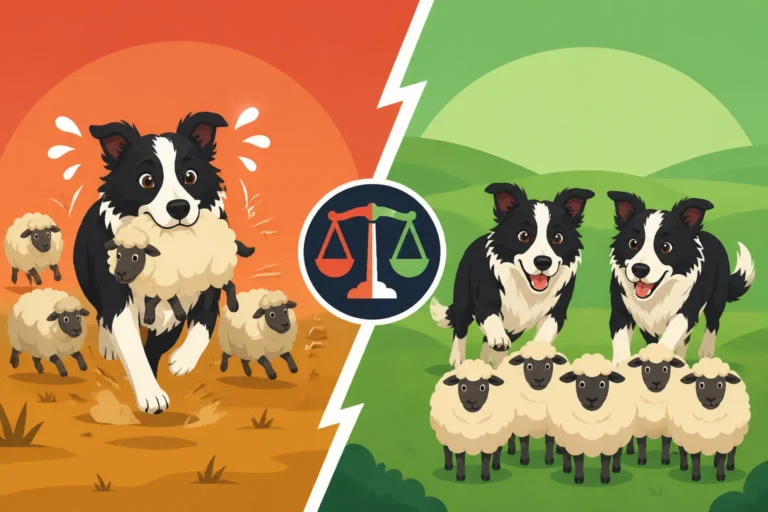
The core of a Border Collie's being is its herding drive. This isn't just a cute trick; it's a powerful, ingrained instinct to gather, control, and move. Children, with their sudden movements, high-pitched squeals, and tendency to scatter, are, to a Border Collie, very much like a flock of sheep. It's not malicious when your Border Collie tries to "herd" them; it's just doing what it's genetically programmed to do. This can look like nipping at heels, circling them, nudging them, or even barking to change their direction. For a child, especially a small one, this can be terrifying and result in nips and scratches that are frustrating and worrying for parents. It's crucial for children to understand that the dog isn't trying to hurt them intentionally, but rather that it's acting on an instinct that needs to be managed and redirected.
The challenge is that this behavior, if unchecked, can become deeply ingrained. A Border Collie that successfully herds children might find it rewarding, thinking it's doing a good job. This makes it harder to stop later. We need to prevent these behaviors from even starting. You might find your Border Collie engaging in A Border Collie Gathering the Family Into One Room or constantly positioning itself between children, trying to keep them together. It's a sign of their strong desire to maintain order, even if that order isn't what your human family has in mind.
Prey Drive vs. Herding Drive
While often intertwined, it's important to distinguish between herding drive and prey drive, even if they sometimes look similar. Herding drive is about control and movement without necessarily intending harm, whereas prey drive involves chasing, catching, and potentially dispatching. Children's fast movements, especially running or riding bikes, can accidentally trigger both. A child running across the yard might look like a fleeing animal to a Border Collie, stimulating a chase response. While Border Collies are not typically aggressive, an overstimulated dog might respond with a harder nip or a more forceful tackle than intended.
Teaching children not to run from the dog is a key component of managing this. If a Border Collie learns that chasing children is a game, it can escalate quickly. This is why proper training and redirection are paramount. For instance, instead of letting your Border Collie chase a child, you might redirect that energy into a structured game of fetch with a designated toy, demonstrating that acceptable outlets exist. Understanding the subtle differences and overlap between these drives helps parents anticipate and mitigate potential issues before they become ingrained patterns.
Sensitivity to Movement and Noise
Border Collies are highly sensitive creatures, a trait that makes them exceptional working dogs. They notice every twitch of a sheep's ear, every shift in wind direction, and every subtle cue from their handler. This heightened awareness extends to their home environment. Children, bless their hearts, are not known for their subtlety. They are often loud, unpredictable, and prone to sudden, jerky movements. A dropped toy, a sudden scream of delight, or a child unexpectedly darting across the room can be perceived as an alarming, overwhelming stimulus to a Border Collie.
This sensitivity can manifest as anxiety, fear, or overstimulation in the dog, leading to behaviors like barking, retreating, or even reactive snapping if they feel trapped or threatened. Imagine living in a constant state of hyper-vigilance, where any sudden sound or movement could signal a need to spring into action. It's exhausting for the dog, and it can be stressful for the family. It's not uncommon for a Border Collie to exhibit Noise Fear in a Border Collie or be easily startled by unexpected sounds within the home. This heightened sensitivity means that children need to learn to move more calmly and communicate more predictably around their canine companion.
Teaching Children How to Interact Safely
Once you understand the Border Collie's inherent traits, the next critical step is empowering your children with the knowledge and skills to interact safely and respectfully. This isn't just about protecting the children; it's about protecting your dog from being put in uncomfortable or overstimulating situations that could lead to problem behaviors. It requires consistent effort from parents, teaching, and reinforcing good habits.
Gentle Hands and Quiet Voices
This might sound like a no-brainer, but for kids, especially younger ones, remembering "gentle hands" and "quiet voices" around an excitable Border Collie can be a challenge. Border Collies respond best to calm, clear communication. Loud yells, sudden shrieks, or boisterous games can easily overstimulate them. Children need to learn that petting should be gentle, not grabbing or pulling fur. They should approach the dog slowly, allowing the dog to initiate contact if it wishes, rather than rushing in for a hug.
It's helpful to practice this with stuffed animals first, then with your dog in a controlled setting. Show them how to stroke gently along the back or chest, avoiding sensitive areas like the tail, ears, or face, especially if the dog is still getting used to them. Explain that the dog's ears are very sensitive to sound, so shouting can actually hurt their ears or make them anxious. A calm, consistent tone from children can go a long way in building a trusting relationship with a Border Collie. When your child learns What Children Have to Learn Around a Border Collie, these foundational skills are at the top of the list.
Respecting the Dog's Space and Belongings
One of the most vital lessons children must learn is to respect the dog's personal space and its belongings. Just like people, dogs need a place where they can feel safe and undisturbed. This means a designated crate, bed, or mat should be off-limits to children. It's the dog's sanctuary. Teach your children that if the dog is in its bed, they should leave it alone. No poking, no climbing in with it, no trying to pet it. This is particularly important during meal times or when the dog is chewing on a favorite toy or bone. Many behavioral issues stem from resource guarding, where a dog feels its possessions or food are being threatened.
Children need to understand that a dog's food bowl is not a plaything, and toys should be shared only through structured games where an adult mediates. If a Border Collie is chewing a highly valued toy, children should be taught to give the dog space. Explain to them that the dog needs its own things, just like they have their special toys. You might even consider having specific "dog toys" and "kid toys" to avoid confusion. This boundary setting isn't just about preventing bites; it's about fostering mutual respect. Giving your Border Collie its own space helps prevent a Border Collie guarding its toys and promotes a sense of security.
Learning Dog Body Language
This is perhaps the most powerful tool you can give your children. If they can "read" their Border Collie, they can anticipate its moods and know when to approach and when to back off. Dogs communicate primarily through body language, and Border Collies, with their intense gaze and expressive movements, are often quite clear if you know what to look for. Teach children to recognize the early signs of stress or discomfort: lip licking, yawning (when not tired), turning the head away, freezing, lowering the body, or showing the whites of their eyes (often called "whale eye").
Conversely, teach them the signs of a happy, relaxed dog: a loose, wagging tail (not stiff and high), relaxed ears, soft eyes, and an open mouth. Explain that a dog curled up tight, or one that has turned its back, probably wants to be left alone. If a dog is growling, that's a clear "stop" signal, and children need to know to immediately disengage and call an adult. There are many excellent children's books and online resources that use simple illustrations to teach dog body language. Investing in these can make a huge difference in your child's ability to safely interact with any dog, not just yours. A great resource like BAXTER & Bella often provides guidance on these topics as part of their training programs, making it easier for families to understand dog communication.
| Dog Body Language Sign | What it often means (Simplified for Kids) | What Kids Should Do |
|---|---|---|
| Tail tucked low | I'm scared or worried. | Give me space. |
| Yawning (not sleepy) | I'm a bit stressed or unsure. | Be quiet and gentle. |
| Licking lips | I'm feeling a little nervous. | Slow down, give space. |
| Turning head away | Please don't look at me or come closer. | Give me space. |
| Stiff body/freezing | I might be getting uncomfortable. | Stop what you're doing, walk away. |
| Growling | STOP! I need you to leave me alone. | Stop immediately, tell an adult. |
| Loose, wagging tail | I'm happy and friendly! | Approach gently if I come to you. |
| Relaxed ears | I'm calm and happy. | Good time for a gentle pet. |
Managing the Environment for Peace and Safety
Creating a safe and harmonious home for both your Border Collie and your children isn't just about training; it's also about proactively managing the physical environment. A well-structured home can prevent many conflicts and provide both dog and child with the security and space they need.
Creating Safe Zones for Both Child and Dog
One of the most effective strategies is to establish clear "safe zones" that are off-limits to either the dog or the children at certain times. For your Border Collie, this could be a comfortable crate or a designated room with a baby gate, where it can retreat for quiet time without being disturbed. This is especially important during busy periods, like after-school chaos or when guests are over. Teach your children that when the dog is in its crate or behind its gate, it's having "rest time" and should not be approached.
Conversely, consider a safe zone for children, particularly toddlers, where the Border Collie cannot enter, or only under strict supervision. This could be a playpen, a gated-off room, or even just a designated rug where the children know they are "dog-free." These boundaries help both species relax, knowing they have a predictable refuge. When you're managing a Border Collie in A Border Collie in a Busy Family Household, these zones are indispensable for preventing overstimulation and stress.
Supervised Play and Structured Interactions
Unsupervised interactions between Border Collies and young children are a recipe for disaster. Border Collies, with their instincts, and children, with their unpredictability, are not a safe combination without adult guidance. All play and interaction should be supervised by a calm, attentive adult. This means you are actively engaged, not just in the same room scrolling on your phone. Supervision allows you to intervene immediately if the dog shows signs of stress or if the child is being inappropriate.
Structured interactions are key. Instead of free-for-all play, guide children on how to play with the Border Collie. For instance, teach them to roll a ball gently across the floor rather than throwing it wildly. Use a long line from Amazon for recall practice in the yard, teaching your dog to return to you rather than focusing on the children's movement. Incorporate basic obedience commands into playtime, such as "sit," "stay," or "down" before throwing a toy. This reinforces the dog's training and provides predictable interactions. What a Border Collie Does With Its Whole Day should include plenty of structured interactions that build positive associations with children.
Securing the Home from a Border Collie's Perspective
A Border Collie sees the world differently than a human. What might be an innocuous item to a child could be an irresistible chew toy or a tempting target for herding to your dog. "Border Collie proofing" your home means looking at it from their level. Are there small toys or items on the floor that could be ingested? Are electrical cords accessible? Are there areas where a child could accidentally corner the dog?
Consider baby gates to restrict access to certain rooms. Make sure outdoor spaces are securely fenced, as a Border Collie's drive to chase something (like a squirrel or a passing car) can be incredibly powerful. A simple gate won't stop a determined Border Collie, so Fencing Heights a Border Collie Will Not Clear is a crucial consideration. Ensure that anything that could be a resource (food, toys, dirty laundry) is put away or secured. The less opportunity for accidental conflict or temptation, the safer everyone will be. This proactive approach prevents problems before they even have a chance to start.
Recognizing and Responding to Stress Signals in Your Border Collie
One of the most important things any family member, especially children, can learn is to recognize when a Border Collie is feeling stressed or uncomfortable. Border Collies are often stoic, but they communicate volumes through subtle signals long before they resort to a growl or a snap. Ignoring these early warnings puts everyone at risk.
Subtle Signs of Discomfort and Fear
Dogs don't just "snap" out of nowhere; they usually give a series of increasingly obvious signals that they are feeling overwhelmed or threatened. For a Border Collie, these subtle signs can include lip licking, yawning (when not tired), turning its head away from the child, showing the whites of its eyes (often called "whale eye"), a lowered head, flattened ears, or a stiff body posture. The dog might also "freeze," refusing to move, or try to escape by moving away. These are all attempts to communicate, "I'm not comfortable with this situation, please stop."
Children need to understand that these aren't just quirks; they are critical messages from the dog. A child who learns to spot a quick lip lick when they approach the dog too quickly can learn to slow down and give the dog space. This not only prevents potential escalation but also builds the child's empathy and understanding of animals. Many resources, including online training platforms, offer visual guides to help children and adults interpret these non-verbal cues.
Escalation of Warning Signals
If the subtle signs are missed or ignored, a Border Collie's communication will escalate. The dog might start to growl, which is a very clear warning signal that needs to be taken seriously. A growl is a dog's way of saying, "I'm about to bite if you don't stop." After a growl, the dog might air snap (snapping at the air near the child) or show its teeth. These are serious red flags.
It is absolutely crucial that children are taught that any growl or display of teeth from the dog means they must immediately stop what they are doing, back away slowly, and find an adult. Punishing a dog for growling is counterproductive; it teaches the dog to skip the warning and go straight to biting. Instead, the growl should be seen as valuable communication, giving you a chance to intervene. Understanding this escalation is vital for safety, especially when dealing with a highly sensitive breed like the Border Collie, which might react strongly when pushed past its comfort zone.
Teaching Children to Report Dog Behavior
Beyond just recognizing signals, children need to feel comfortable and empowered to report unusual or concerning dog behavior to an adult. If the dog is hiding, growling, or acting strangely, the child should know to tell a parent or trusted adult immediately. This empowers the child to be a part of the solution and ensures that small issues don't fester and become larger problems.
Create an open line of communication where children feel safe reporting what they see without fear of getting in trouble. Reassure them that they're helping the dog by letting you know. This builds a proactive approach to safety and helps parents stay attuned to their Border Collie's well-being and its interactions within the family. Regularly checking in with children about how they and the dog are getting along can help catch potential issues early.
Setting Boundaries and Consistency for Both Child and Dog
Consistency is the bedrock of good behavior for both children and Border Collies. This intelligent breed thrives on routine and clear expectations. Without them, they will often try to "figure things out" on their own, which usually means engaging in their natural, often inconvenient, herding behaviors. Setting clear boundaries for everyone involved is paramount.
Rules for Kids Around the Dog
Just as there are household rules for children, there need to be specific, non-negotiable rules for how they interact with the Border Collie. These rules should be simple, easy to understand, and consistently enforced by all adults. Examples include:
- No running or screaming around the dog: This prevents triggering the dog's herding or prey drive.
- No disturbing the dog when it's eating, sleeping, or in its bed: This respects the dog's personal space and prevents resource guarding.
- No pulling ears, tail, or fur: This prevents pain and fear in the dog.
- Always ask an adult before petting the dog: Especially for young children, this adds a layer of supervision.
- Never put your face close to the dog's face: This avoids direct eye contact which can be seen as a challenge, and prevents accidental nips if the dog startles.
These rules aren't meant to make the dog seem like a forbidden object, but rather to foster respect and understanding. When children learn What a Border Collie Does With Its Whole Day, they also need to understand their own role in making that day peaceful for the dog.
Rules for the Dog Around the Kids
Equally important are the rules you establish for your Border Collie when children are present. This means consistent training to ensure the dog understands what is acceptable behavior around its smaller human companions. Key rules might include:
- No jumping on children: This can be dangerous, especially for small kids. Teach an alternative behavior like "sit" for greetings.
- No herding or nipping at children: This needs to be actively interrupted and redirected. Provide appropriate outlets for herding behaviors, such as playing with a large herding ball or structured games.
- Stay off furniture unless invited: This creates clear boundaries about who controls elevated spaces.
- Go to your mat/bed when told: This gives the dog a place to settle and the ability to "turn off" when asked, which is crucial for a breed with such high drive. Getting a Border Collie Puppy to Rest on Cue is a skill that pays dividends as they grow up.
Consistency from adults in enforcing these rules for the dog is critical. If sometimes the dog is allowed to jump and other times it's not, the Border Collie will become confused and frustrated.
The Role of Routines and Predictability
Border Collies thrive on routine and predictability. They are intelligent enough to anticipate what comes next, and this reduces anxiety and provides a sense of security. Establish a consistent daily schedule that includes regular feeding times, designated potty breaks, training sessions, and structured play. This predictability helps both the dog and the children know what to expect.
For children, knowing when "dog time" is and when "quiet time" is can help manage their excitement and expectations. For the Border Collie, a routine provides comfort and lessens the need for them to try and manage their own environment (which often results in unwanted behaviors). A predictable schedule reduces stress and provides a framework within which both children and Border Collies can flourish. Even small things like knowing the dog gets its dinner after the children have finished theirs can contribute to a calmer household.
The Importance of Supervision and Training
We can't say this enough: constant, diligent supervision and ongoing training are non-negotiable when you have a Border Collie and children in the same home. This isn't a "set it and forget it" situation; it's a dynamic relationship that requires active management.
Never Leaving Children and Dogs Unattended
This is the golden rule, the absolute bedrock of safety: Never leave children and a Border Collie unattended, even for "just a second." Accidents happen in a blink of an eye. Even the most well-behaved dog can react unexpectedly if startled, hurt, or pushed too far by a child. A child's innocent actions can be misinterpreted by a dog, leading to an unfortunate incident. This rule applies whether you're stepping away to answer the door, or just popping into the next room.
If you cannot actively supervise, separate them. Use a crate for the dog, or a baby gate to keep them in different rooms. This simple rule eliminates the vast majority of risks and ensures that an adult is always present to read body language, intervene, or redirect interactions. It's a fundamental principle for A Border Collie Around a Toddler Learning to Walk and should remain in place for young children.
Training Your Border Collie for a Family Life
Your Border Collie needs specific training tailored to living successfully with children. This goes beyond basic obedience and focuses on impulse control, calm behavior, and appropriate redirection of instincts. Commands like "leave it" and "stay" are incredibly valuable. "Leave it" can prevent the dog from snatching a child's dropped toy, while a strong "stay" can keep the dog settled while children are active.
Training should also include teaching the dog to settle on a mat or in its crate, even when there's commotion. This "off-switch" is vital for a breed that struggles to relax. Work on teaching your Border Collie to be comfortable with gentle handling from family members, gradually desensitizing them to things like having their paws touched (useful for nail trims), or being gently brushed. This training isn't a one-time event; it's an ongoing process that reinforces good habits and adapts as both your dog and children grow.
Involving Children in Training (Appropriately)
Involving children in your Border Collie's training can be incredibly beneficial, fostering a sense of responsibility and strengthening the bond between them. However, this must be done appropriately and under strict adult supervision. Young children can help with simple tasks like giving treats for known commands (e.g., "sit" or "down"), throwing a ball for a structured game of fetch, or brushing the dog gently.
Make sure the children understand that they are helping the dog, not dominating it. Keep sessions short, fun, and positive. This teaches children patience, consistency, and how to communicate effectively with their dog. A great platform like BAXTER & Bella offers online training programs that are family-friendly, guiding you on how to involve every member of the household safely and effectively, even the littlest ones. When done right, it can be a wonderful way to build mutual respect and positive associations.
Beyond the Basics: Advanced Socialization and Activities
Once the foundational safety measures and basic training are in place, you can start to think about how to further enrich the lives of both your Border Collie and your children. Providing appropriate outlets for the dog's energy and intelligence can dramatically improve household harmony.
Enrichment Activities That Bridge the Gap
Border Collies are problem-solvers. If you don't give them puzzles to solve, they'll invent their own, and those often involve herding, barking, or destroying things. Enrichment activities that involve children can be fantastic. This might include scent work, where children hide treats (with adult help) for the dog to find, or teaching the dog new tricks together. Puzzle toys, especially those from brands like Outward Hound available on Amazon, can keep a Border Collie mentally engaged, and children can often help set them up.
Consider creating a designated "activity time" each day where children and the Border Collie can engage in a supervised, structured activity. This could be a short training session, a game of hide-and-seek with a favorite toy, or even just sitting together while the child reads aloud (some dogs find this calming). These shared positive experiences build a deeper, more positive relationship. Mental Work That Tires a Border Collie Faster is just as important as physical exercise, and involving children can make it a family affair.
Teaching Children How to Play with a Border Collie
Playing with a Border Collie requires a certain finesse. These aren't dogs that typically enjoy roughhousing or wrestling with children, as that can quickly escalate or trigger unwanted behaviors. Instead, teach children to engage in games that tap into the Border Collie's natural drives in a controlled way. Fetch, tug-of-war (with clear rules, like "drop it" on command, and the child winning sometimes), and hide-and-seek are excellent choices.
For tug, teach children to hold the toy out, let the dog take it, then gently pull. Explain that if the dog's teeth accidentally touch their hand, the game stops immediately. This teaches bite inhibition. Encourage games that involve chasing toys, not children. Demonstrate how to throw a frisbee or a ball for the dog, ensuring the dog brings it back to the adult or a designated spot, rather than playing keep-away with the child. This structured play provides an appropriate outlet for their energy and prevents the dog from inventing its own, less desirable, games.
Sports and Activities as an Outlet
For many Border Collies, even with children in the home, their innate drive needs more than just backyard play. Engaging in dog sports can be a fantastic way to channel their energy and intelligence. Agility, flyball, obedience, disc dog, or even actual herding lessons can provide an unparalleled outlet. While children might not directly participate in these intense sports, they can be involved in other ways – helping with warm-ups, cheering from the sidelines, or assisting with care before and after.
Knowing that their dog has a designated "job" or intense activity can help children understand why their Border Collie might have such high energy. It also means the dog is more likely to be calm and settled when at home. If your Border Collie is constantly restless, even with regular walks, exploring formal sports might be the missing piece of the puzzle. It certainly helps with Exercise, Work and What Actually Settles a Border Collie and can make home life much calmer for everyone.
When to Seek Professional Help
Even with the best intentions and consistent effort, sometimes challenges arise that are beyond what a family can handle on their own. Recognizing when to call in a professional is not a sign of failure but a responsible and proactive step to ensure the safety and well-being of both your Border Collie and your children.
Recognizing Persistent Behavioral Challenges
It's natural for a Border Collie puppy to mouth or nip sometimes, or for a young dog to test boundaries. However, if certain behaviors persist despite your best efforts, or if they escalate, it's time to seek expert help. These include:
- Consistent, hard nipping or biting: Especially if it's breaking skin, or if the dog is showing aggression.
- Intense guarding: If the Border Collie is aggressively guarding food, toys, or even space from children.
- Extreme fear or anxiety: If the dog is constantly hiding, trembling, or reacting negatively to normal household sounds or movements involving children.
- Obsessive behaviors: Such as shadow chasing, incessant barking at children, or repetitive behaviors that seem out of control. Chasing shadows and light can be a serious issue.
- Unmanageable herding of children: If the dog's attempts to herd children are constant and aggressive, leading to fear or injury.
These are not issues to ignore or hope they will simply fade with time. They indicate a deeper problem that requires professional intervention.
Finding a Qualified Professional
Not all dog trainers are created equal, and it's essential to find a qualified professional who specializes in behavioral issues, particularly those involving children and high-drive breeds. Look for certified professional dog trainers (CPDT-KA), certified dog behavior consultants (CDBC), or veterinary behaviorists. These professionals use positive, science-based training methods and understand the complexities of canine behavior.
Avoid trainers who advocate for harsh punishment, alpha roles, or outdated dominance theories. These methods can often exacerbate fear and aggression, especially in a sensitive breed like the Border Collie. Ask for references, inquire about their experience with Border Collies and families with children, and ensure their philosophy aligns with humane and effective training practices. A good professional will involve the whole family in the training plan and provide practical, tailored advice.
Proactive Measures to Prevent Issues
Prevention is always better than cure. If you're considering getting a Border Collie and you have children (or plan to), start thinking about these dynamics before the puppy arrives. Research reputable breeders who prioritize temperament and health. Choose a puppy from parents with stable, calm dispositions around people. Begin socialization and basic training from day one. What Children Have to Learn Around a Border Collie is a journey, not a destination, and starting early sets everyone up for success.
Even if you already have a Border Collie, you can still take proactive steps. Continuously educate yourself and your children about dog behavior. Stay consistent with rules and routines. Provide ample mental and physical exercise appropriate for your dog's age and health. The more you understand and meet your Border Collie's needs, the more likely you are to have a peaceful, loving, and safe home for all its inhabitants, two-legged and four-legged alike.
Disclaimer
This article is for general informational purposes only and does not constitute professional advice. Laws, prices and regulations vary by location and change over time. Consult a qualified professional for guidance on your specific situation.