Whether a Border Collie Learns Someone Else’s Whistle
Many Border Collie owners find themselves in a unique situation, perhaps inheriting a dog, sharing handling duties, or even just noticing their dog responds differently to a friend's whistle. It’s natural to wonder if your incredibly smart Border Collie can truly adapt to a new person’s specific whistle commands, especially when they've been trained so meticulously by someone else. This guide will walk you through the nuances of Border Collie whistle communication, explore their remarkable ability to learn and adapt, and provide practical advice for teaching your dog to respond reliably to a new handler's whistle.
The Intricacies of Whistle Training for Border Collies
Whistle commands are a cornerstone of Border Collie training, especially in working and sport contexts. They offer a level of precision and distance communication that voice commands simply can't match. Understanding why whistles are so effective for these dogs gives us a solid foundation for exploring how they adapt to new ones.
Why Whistles Work So Well (and How They're Different)
Border Collies, with their intense focus and sharp ears, are perfectly wired for whistle work. Unlike human voices, which can carry different inflections, tones, and emotions based on the speaker or the situation, a whistle produces a consistent, clear sound. This consistency is invaluable when you're asking a dog to make complex decisions at hundreds of yards across a field. The specific pitch, duration, and pattern of a whistle command remain identical every single time it's given by a skilled handler, making it an unambiguous signal.
Imagine trying to shout "lie down" across a windy field – your voice might be distorted, lost, or misunderstood. A short, sharp pip followed by a long, sustained note from a shepherd's whistle, however, cuts through the elements and delivers a distinct message. This pure, unvarying signal eliminates guesswork for the dog. They learn to associate specific sound patterns with specific actions, like "stop," "come by," or "away to me." The dog isn't interpreting emotion or context; they're simply responding to a learned audio cue. This precision is one of the key reasons why Whistle Commands for a Border Collie are so fundamental to their work.
The Border Collie's Learning Prowess and Adaptability
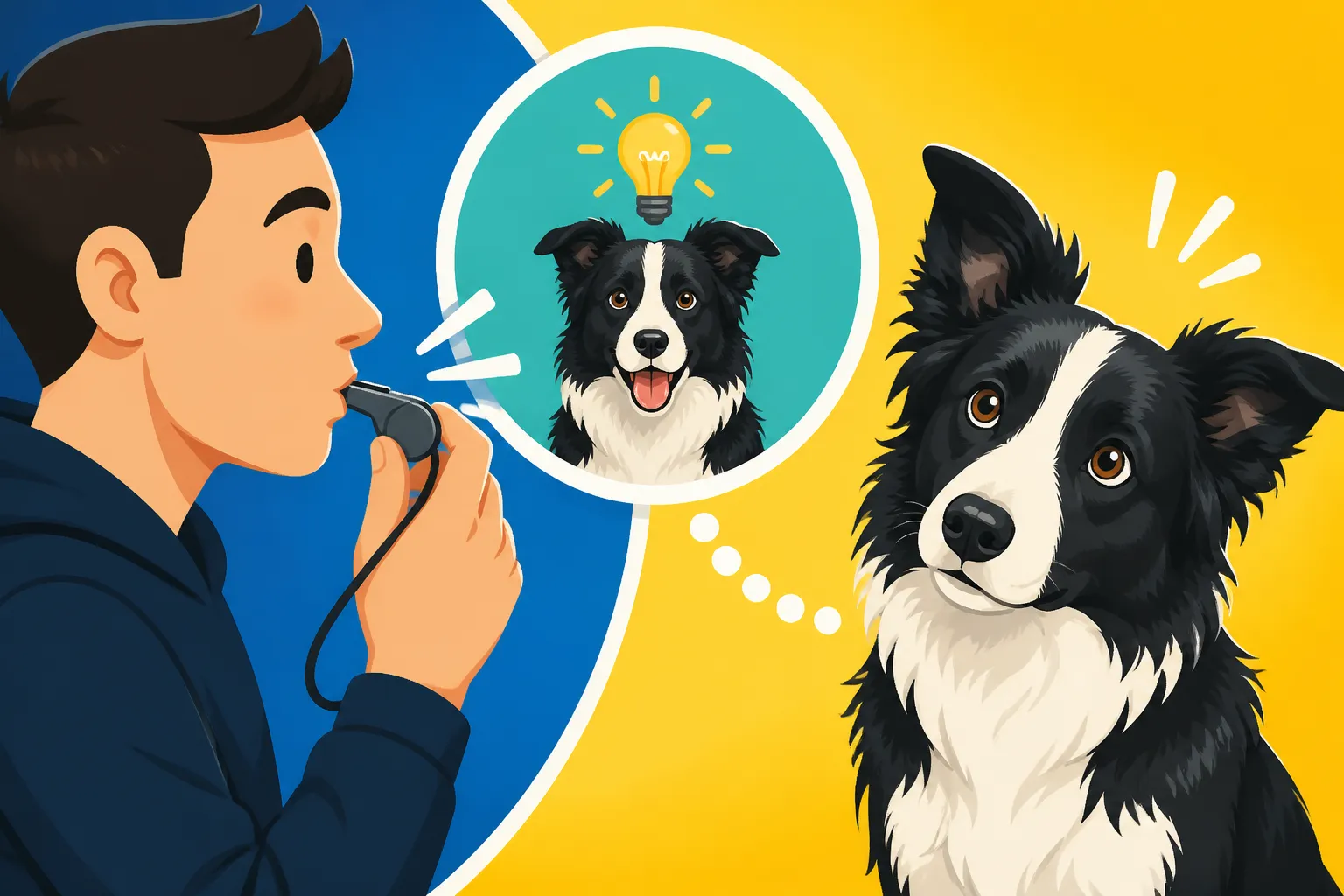
It’s no secret that Border Collies are often hailed as the most intelligent dog breed. Their remarkable capacity for learning isn't just about understanding a vast vocabulary; it's about their ability to generalize, adapt, and form new associations rapidly. A Border Collie doesn't just memorize a sound; they understand the concept of a command. This means that while they might initially associate a particular whistle sound with a particular handler, their inherent drive to work and their cognitive flexibility allow them to accept new signals for the same actions.
Think of it like learning a new language. You know the command "sit" in English. If someone teaches you that "asst" means "sit" in a new language, you can learn it. Your Border Collie operates similarly. They've learned that a specific whistle sequence means "lie down," and if a new handler consistently uses a different whistle sequence for the same action, the dog’s intelligence and desire to please will kick in. They are eager to figure out what's being asked of them. This adaptability is critical, especially for working dogs that might move between handlers or work in different environments. The Border Collie That Learns Faster Than You Teach really highlights this incredible cognitive ability.
Successfully Transitioning to a New Handler's Whistle
The good news is, yes, a Border Collie absolutely can learn someone else's whistle. It might take patience, consistency, and a structured approach, but their intelligence and drive make them excellent candidates for this kind of retraining. The key is to manage the transition thoughtfully.
Building New Associations: From Old Sounds to New Ones
When introducing a new whistle, the process is largely about creating new, strong associations. If the dog is already trained on whistle commands, you'll be leveraging their existing understanding of the actions and transferring those to the new sounds. This isn't about erasing old memories, but rather building new pathways.
One highly effective method is to pair the new whistle command with a known voice command, and then gradually fade out the voice command. For example, if your dog knows "lie down" to both a specific whistle sound and your verbal cue, the new handler would start by giving the new whistle sound, immediately followed by the old, known voice command ("lie down"), and then rewarding the correct action. Over time, as the dog begins to anticipate the action from the new whistle sound, the verbal cue can be softened, then whispered, and eventually dropped altogether. It's a gentle bridge from the familiar to the new. This technique can be practiced in a low-distraction environment first, gradually increasing the complexity and distance as the dog gains confidence. This methodical approach helps prevent confusion and reinforces the desired behavior positively. Many online training platforms, such as those offered by BAXTER & Bella, provide structured lesson plans that can guide you through these transition phases with expert advice.
The Critical Role of Consistency and Positive Reinforcement
Just like any training, consistency is paramount when teaching a Border Collie new whistle commands. Every single time the new handler uses the whistle, it must be the same pattern for the same command, and it must be followed by the expected action and a reward. Inconsistent whistle patterns or delayed rewards will only confuse the dog and slow the learning process.
Positive reinforcement is your best friend here. Whether it's high-value treats, a favorite toy, or enthusiastic praise, ensure the dog feels amply rewarded for responding correctly to the new whistle. The goal is to make the experience highly positive, associating the new sound with good things. If the dog makes a mistake, avoid punishment; simply withhold the reward and try again, perhaps making the task easier or providing clearer cues. Remember, they are trying to understand what you want. Consistency and repetition cannot be overstated for a breed like the Border Collie, which thrives on clear communication and predictable outcomes. Using a consistent whistle, like a good quality shepherd's whistle (many types are available on Amazon), ensures the sound itself is uniform every time.
Here's a simple example of a transitional training table:
| Phase | New Whistle Command | Old Voice Command | Dog Action (Desired) | Reward Type | Notes |
|---|---|---|---|---|---|
| Phase 1: Pairing | New Whistle A | "Come By" | Circles right | High-value treat | New handler gives whistle, immediately followed by verbal, then reward. |
| Phase 2: Fading | New Whistle A | (Soft "Come By") | Circles right | Praise, Treat | Verbal command becomes quieter, or a whispered cue. |
| Phase 3: Whistle Only | New Whistle A | (Silence) | Circles right | Treat, Play | Dog responds to whistle alone. Practice at varying distances. |
| Phase 4: Generalize | New Whistle A | (Silence) | Circles right | Praise | Practice in new locations, with distractions, lower reward frequency. |
This table illustrates the process for one command. You would repeat this for each command you wish to transition to the new whistle.
Navigating Potential Pitfalls and Ensuring Clarity
While Border Collies are incredibly smart, they can also be incredibly sensitive to inconsistencies. Addressing potential confusion and ensuring crystal-clear communication is vital for a smooth transition.
Overcoming Confusion and Unlearning Old Habits
One of the biggest hurdles can be the dog’s existing strong associations with the old whistle. They’ve spent years, perhaps, perfectly interpreting those familiar sounds. When a new sound means the same thing, or even worse, if a similar sound means something different, it can create a mental block. Sometimes, a dog might even ignore the new whistle altogether, waiting for the familiar one or the familiar handler. This isn’t stubbornness; it’s confusion.
To overcome this, start fresh as much as possible. If the original handler is still around, it might be beneficial for them to step back from giving commands for a period, allowing the new handler to establish their unique cues. If the dog is very attached to the old whistle, sometimes introducing entirely new commands with the new whistle can be easier than trying to re-teach existing ones. For instance, if the dog knows "lie down" to the old whistle, the new handler might teach "stop" to their whistle first, then layer in other commands. Patience is key. If the dog shows frustration or shuts down, take a break and return to easier, more familiar tasks before trying again. This helps build their confidence and prevents negative associations with the new whistle training.
Strategies for Multi-Handler Households
In a household where multiple people might need to handle the Border Collie, or if you participate in activities where different coaches might give commands, managing multiple whistle sounds becomes important. The most straightforward approach is for everyone to use the same whistle and command patterns. This creates a universal language for the dog, ensuring consistent responses regardless of who is giving the command. This is why many professional trainers recommend a specific type of whistle, like an ACME shepherd's whistle, and teach standardized sequences for Teaching a Border Collie to Lie Down at Distance or Building a Border Collie's Outrun.
However, if using the same whistle isn't feasible or desired (e.g., if different family members have slightly different methods), then each handler must establish their unique set of whistle commands and ensure they are distinct from each other. This requires careful planning and communication among all handlers to avoid accidental overlap or conflicting signals. It's often easier to have one primary whistle handler for complex commands, while others use verbal cues for basic obedience in casual settings. Regardless of the approach, clarity, consistency, and clear rules for who commands what and when will be crucial to prevent the dog from becoming confused or learning to ignore commands altogether.
Beyond the Basics: Advanced Whistle Communication
Once your Border Collie is responding reliably to the new handler's basic whistle commands, you can begin to expand their repertoire and refine their responsiveness. This takes time, practice, and a deeper understanding of the Border Collie's incredible capacity for communication.
Expanding the Whistle Vocabulary with a New Handler
With the foundation laid, the new handler can now start teaching more complex or nuanced commands using their whistle. This might involve combining existing commands into sequences (e.g., "come by" followed by a "lie down" in position) or introducing entirely new behaviors. For example, if your dog needs to learn The Look Back Command on a Border Collie, the new handler can systematically introduce this with their whistle, building on the dog's established understanding of whistle cues.
When expanding the vocabulary, always start in a controlled environment, break down complex tasks into smaller, manageable steps, and maintain that high level of positive reinforcement. Border Collies thrive on mental stimulation, so learning new commands with a new handler can actually be a bonding experience, reinforcing the new partnership. Consider engaging in online courses, such as those from BAXTER & Bella, that offer a curriculum designed for advanced obedience and specialized skills, which can provide structured guidance for expanding your whistle vocabulary. This way, you're not just guessing; you have a clear progression path.
Maintaining Sharpness and Responsiveness Over Time
Training a Border Collie is rarely a "one and done" affair; it's an ongoing conversation. To keep your dog sharp and responsive to the new whistle commands, regular practice is essential. This doesn't always mean full-blown training sessions. It can be as simple as incorporating a few whistle commands into daily walks or playtime. Randomly ask for a "stop" on a walk, or a "come by" in the park, and reward good responses. This keeps the commands fresh in their mind and reinforces the new handler's authority.
Varying the training environment is also crucial. Start in quiet areas, then gradually introduce distractions. Practice in the yard, at the local park, and then in busier areas. This helps the dog generalize their understanding of the whistle commands, knowing they apply everywhere, not just in specific training spots. Over time, the responsiveness will become second nature, a testament to the Border Collie's intelligence and the handler's dedication. Remember, The Old Border Collie That Still Wants to Gather will show that even older dogs retain their drive and willingness to work, given consistent and clear direction.
Ultimately, a Border Collie's ability to learn someone else's whistle comes down to their extraordinary intelligence and their deep-seated desire to partner with a human. With patience, consistency, and a clear, positive approach, any dedicated handler can establish effective whistle communication with a Border Collie.
Disclaimer
This article is for general informational purposes only and does not constitute professional advice. Laws, prices and regulations vary by location and change over time. Consult a qualified professional for guidance on your specific situation.