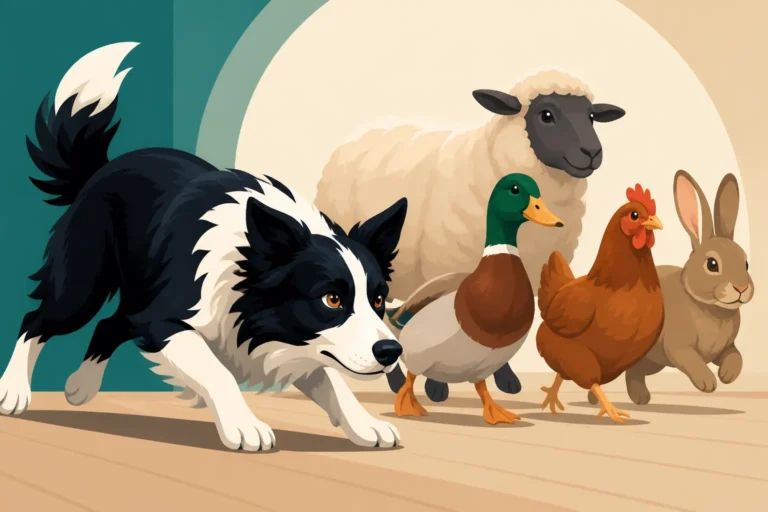
The Border Collie That Will Not Break Its Stare
It’s a scenario many Border Collie owners know all too well: your dog suddenly locks onto something – a leaf skittering across the patio, a flickering shadow on the wall, or even an unfamiliar visitor – and freezes. Their body lowers, their tail stiffens, and their eyes bore into the object with an intensity that can be unnerving. This guide dives deep into this powerful, sometimes problematic, Border Collie "stare," exploring its origins and offering practical strategies to help your dog learn to disengage and relax.
Understanding the Border Collie Stare
The intense gaze, the crouch, the almost hypnotic focus – this isn't just your Border Collie being stubborn or overly interested. This is the very essence of their being, a finely honed instinct that has been cultivated over centuries. To understand why your Border Collie will not break its stare, we need to go back to its roots.
The Instinctual Drive to Herd
At its heart, the Border Collie is a working dog, bred specifically for gathering and controlling livestock. Their primary tool in this demanding job isn't brute force or barking, but rather their incredible intelligence combined with an almost telepathic ability to communicate with sheep using their body language – and most famously, their "eye." This strong herding instinct is not something that can be trained out; it's hardwired into their DNA. When a Border Collie fixates, they are, in essence, trying to "herd" whatever has captured their attention, even if that object is completely inanimate or inappropriate.
This drive is what makes them such exceptional working dogs, capable of moving hundreds of sheep with precision and calm. Shepherds selectively bred for dogs that could use their gaze to influence stock, understanding that a strong, focused stare could move a stubborn ewe more effectively than any bark or nip. This ancient selection process means that even today, in a suburban backyard, your Border Collie is still carrying that same instinct. It's why they seem to operate with such purpose, why they are so driven to control and organize their environment, and why they can find it incredibly difficult to break that intense focus once it has been engaged. For them, it’s not just a game; it’s their job. You can learn more about this core trait in The Border Collie Stare and Where It Comes From.
What Strong Eye Means in a Border Collie
"Strong eye" is a term unique to herding breeds, particularly Border Collies, and it refers to the intense, unblinking gaze they use to control livestock. It's more than just looking; it's a profound, almost hypnotic connection. When a Border Collie exhibits strong eye, their entire body often becomes still, low to the ground, almost coiled, ready to spring into action if the "stock" (whatever they're fixated on) tries to break away. This isn't aggressive, but it is incredibly assertive. It's their silent command, their way of saying, "I see you, and I control your movement."
This intense focus is one of the hallmarks of the breed, a quality so prized in working lines that it's often the first thing a shepherd looks for in a pup. A dog with insufficient eye will struggle to gather and hold a flock. However, in a pet home, this powerful trait can quickly become a challenge. A Border Collie with a strong eye might apply this same intense gaze to squirrels, passing cars, children, or even shadows, making it hard for them to relax or shift their attention. They become so engrossed in their "work" that external commands, even from their beloved human, can simply fail to register. It's a testament to the power of their instinct, but it also highlights the need for careful management and redirection. Understanding this distinction is key to managing your dog's behavior, as detailed in What Strong Eye Means in a Border Collie.
Why a Border Collie Drops Into a Crouch
The physical posture that often accompanies the Border Collie stare – the characteristic crouch – is another direct manifestation of their predatory herding instinct. Imagine a wild canid stalking prey: it lowers its body to remain unseen, to conserve energy, and to be ready to pounce or change direction instantly. While a Border Collie isn't hunting sheep in the same way, their movement patterns mimic this ancestral hunting sequence. The crouch allows them to maintain a low profile, making them less intimidating to the sheep (or whatever they're herding), while also giving them maximum agility to react to the slightest movement.
This posture is an integral part of their "herding dance." It allows them to move quietly and efficiently, appearing to glide across the ground. For a Border Collie, dropping into a crouch means they are fully engaged, completely focused, and ready to exert their will over the object of their attention. When you see your dog crouch, it's a clear signal that their herding brain has fully switched on. Breaking this physical engagement often requires breaking the mental fixation first, which can be a significant challenge when their entire being is aligned with their instinct. This natural inclination is further explored in Why a Border Collie Drops Into a Crouch.
Common Stare Triggers Beyond Livestock
While the instinct is born from livestock work, many Border Collies, especially those in pet homes, will apply their intense stare to a myriad of things that are decidedly not sheep. It's often bewildering for owners to see such a dedicated focus on something seemingly trivial, but for the Border Collie, any moving object or even a perceived "disorder" can become an opportunity for their herding drive to kick in.
A Border Collie That Stalks the Vacuum
Picture this: you pull out the vacuum cleaner, and your Border Collie transforms. Instead of running away or simply observing, they drop into that familiar crouch, eyes locked, stalking the machine as it moves across the floor. This isn't necessarily fear, although some dogs might react with anxiety; often, it's their herding instinct interpreting the loud, moving object as something that needs to be controlled. The vacuum, with its erratic movements and loud noises, presents a challenging "flock" that your Border Collie feels compelled to manage.
They might try to block its path, circle it, or even nip at its brushes. This behavior highlights how easily their instincts can be misdirected in a domestic environment. Anything that moves unpredictably, makes noise, or takes up space can become a "thing to be herded." This includes mops, brooms, children on scooters, even shadows and light reflections. It's a common frustration for owners, who just want to clean their homes without their dog treating the vacuum like a rogue sheep. Understanding that this is an instinctual response, rather than naughtiness, is the first step in addressing it. This behavior is similar to A Border Collie That Stalks the Vacuum.
A Border Collie Circling People at Parties
Social gatherings, with their unpredictable movements and scattered groups of people, can be another prime trigger for a Border Collie's stare and herding tendencies. Imagine a party where guests are mingling, children are running, and there's a general hubbub. Your Border Collie might become highly stimulated, seeing this disorganization as a problem that needs to be solved. They might start circling people, particularly children or groups, using their body and eye to subtly (or not-so-subtly) try and bring everyone together.
This can manifest as a constant stare, a low crouch, or even gentle nudges or nips at ankles, particularly if people are moving quickly or seem to be "scattering." For the Border Collie, they are attempting to gather and contain their "flock" – your guests. While their intentions are often good (from their perspective), this can be startling or even irritating for visitors. It shows how deeply ingrained their need for order and control is, and how they apply their herding strategies to almost any social dynamic. Management in these situations is key to preventing your dog from becoming overwhelmed or from developing unwanted behaviors.
A Border Collie Blocking a Doorway
When a Border Collie plants itself firmly in a doorway, or strategically positions itself to cut off your path, it's often more than just a desire for attention or laziness. For many, it's another subtle manifestation of their herding instinct – controlling access and movement within their perceived territory. They might stare intently at you, challenging your movement, or simply sit there, appearing to regulate the flow of traffic. This behavior can be particularly common when a dog feels a sense of responsibility or wants to direct where people (their "flock") are going.
They might want to ensure everyone stays in one room, or perhaps they're attempting to prevent someone from leaving, believing they need to keep the "group" together. This isn't usually an aggressive act, but rather a deliberate imposition of their will, a quiet assertion of control. Owners often find themselves negotiating with their dog to simply pass through a doorway, which can be frustrating. Recognizing that this stems from their innate drive to manage and organize helps in developing consistent strategies to teach them appropriate boundaries and responses to household movement.
Strategies for Managing the Stare
Managing a Border Collie that is intensely staring or fixating requires patience, consistency, and a deep understanding of their unique drives. The goal isn't to eliminate their instinct – that's impossible and undesirable – but to teach them appropriate outlets and how to disengage when needed.
Breaking the Fixation
When your Border Collie locks onto a trigger, the first step is often to break that intense fixation before it escalates. This can be tricky, as their focus is so powerful. Start by trying a clear, calm verbal cue like "look at me" or "leave it." Practice these commands in low-distraction environments first, rewarding heavily when they break eye contact with a less exciting object to look at you. If verbal cues aren't working, a physical interruption might be necessary, but always aim to redirect, not punish. A gentle leash pressure and redirection away from the object, or even subtly stepping into their line of sight, can help break the spell. The key is to interrupt before they become over-aroused and completely unresponsive.
Consistency is absolutely paramount here. Every time you allow your dog to stare unchecked, you reinforce the behavior. You're teaching them that their fixation is an acceptable way to interact with the world. Therefore, you need to be vigilant and ready to intervene consistently. For instance, if your dog fixates on the television, turn it off or block their view. If it's a window, draw the blinds. The idea is to interrupt the behavior, remove the trigger if possible, and then immediately redirect their attention to something more appropriate and constructive, like a puzzle toy or a training exercise. This takes constant effort, but it's crucial for teaching them that staring is not the desired response. The Border Collie That Will Not Drop the Ball delves into similar issues with obsessive play.
Redirecting a Border Collie's Eye Onto a Toy
One of the most effective ways to manage a Border Collie's intense stare is to give them a sanctioned, appropriate outlet for that focused energy. This means redirecting their "eye" onto a toy or a specific task. Start by finding toys that genuinely capture their interest. These might be durable fetch toys, tug toys, or even large, soft balls that they can "herd" around the yard, like those mentioned in Big-Ball Herding Games for a Border Collie. The trick is to make the toy more engaging and rewarding than the unwanted fixation.
Introduce structured play sessions where you control the start and end of the game. Use clear cues to initiate play and, crucially, to end it. For example, after a few throws, put the toy away and ask your dog to perform a different command, then reward them. This teaches them that toys are for specific times and that you are the one who dictates when the "work" begins and ends. Many owners find robust toys on platforms like Amazon to be indispensable for these kinds of games, as Border Collies can be quite destructive with less durable options. By consistently providing appropriate redirection, you are teaching your Border Collie how to channel their powerful instinct in a way that is acceptable and enriching for them, rather than frustrating for you.
Building an "Off-Switch" and Relaxation
Beyond redirection, teaching your Border Collie an "off-switch" and how to genuinely relax is critical. These dogs are always "on," constantly scanning their environment, and many struggle to simply settle down. A designated "place" command or mat training is invaluable for this. Teach your dog to go to a specific bed or mat and stay there, even amidst distractions. Start in a quiet environment and gradually introduce more stimuli. Reward calm, settled behavior, not just obedience to the command.
This mat work isn't just about physical restraint; it's about teaching mental disengagement. It gives them a safe, predictable space where they don't have to be "on guard" or "working." You might find programs, like those offered by BAXTER & Bella online, particularly helpful in guiding you through positive reinforcement techniques to build these foundational skills. These types of training resources often emphasize the importance of duration and distraction in teaching a solid "stay" or "place" command. By consistently reinforcing periods of calm, you are literally teaching your Border Collie how to switch off their intense focus and enjoy downtime, which is vital for their overall well-being and for peaceful coexistence in a home environment. You can read more about this in Settling a Border Collie on a Mat.
Long-Term Prevention and Training
Managing a Border Collie's stare is not a quick fix; it's an ongoing commitment to training, management, and understanding. By implementing a combination of strategies, you can help your dog thrive and channel their incredible focus into productive, enjoyable activities.
Structured Exercise and Mental Work
It’s a common misconception that simply giving a Border Collie a large yard to run in, or taking them for endless walks, will "tire them out" and reduce their intense staring. While physical exercise is crucial, it's often the mental stimulation that truly exhausts a Border Collie's mind. A dog that is physically fit but mentally bored is a recipe for obsessive behaviors, including prolonged staring at inappropriate objects. Structured exercise, such as agility, flyball, or organized fetch sessions with clear rules, is far more beneficial than aimless running.
Even more important is incorporating regular mental work into their routine. This could include scent work, where they use their nose to find hidden treats or articles, which is incredibly taxing mentally. Puzzle feeders that require problem-solving to get their meal, or trick training that teaches them new commands and sequences, are also excellent for engaging their brain. Think of it this way: a physically tired Border Collie might still have a restless mind, but a mentally tired Border Collie is far more likely to relax and disengage from unwanted fixations. This deep dive into their cognitive needs is crucial, and you can explore more ideas in Mental Work That Tires a Border Collie Faster. Many sources emphasize that Whether a Border Collie Is Really the Smartest Breed comes with the responsibility of meeting that intelligence with stimulating challenges.
Management and Environmental Control
Sometimes, the best training is simply good management. Proactive environmental control can prevent many instances of unwanted staring and fixation. If you know your Border Collie fixates on squirrels outside the window, consider drawing the blinds or using window film during peak squirrel activity. If they stare at the television, block their view with a piece of furniture or use a baby gate to keep them out of the room during screen time. The goal is to reduce their exposure to known triggers, especially in the early stages of training, to prevent the behavior from becoming ingrained.
Crates can be incredibly useful tools for managing a Border Collie who struggles with an "off-switch." A crate, when properly introduced and used as a safe, quiet den, provides a space where your dog can truly relax without the constant urge to "work" their environment. During parties, for instance, a comfortable crate in a quiet room can offer them a much-needed break from the overstimulation. Similarly, using baby gates or secure runs can help manage their access to areas where they might get into trouble, like an open kitchen during meal prep. Thoughtful environmental management doesn't mean sheltering your dog completely, but rather setting them up for success by minimizing opportunities for undesirable behaviors to occur.
Seeking Professional Help
While many of these strategies can be implemented by a dedicated owner, there are times when the intensity of a Border Collie's stare and associated obsessive behaviors warrant professional intervention. If your dog's fixation is severely impacting their quality of life, leading to self-harm (like tail chasing or excessive licking), aggression, or an inability to function in daily life, it's time to consult an expert. A certified professional dog trainer or a veterinary behaviorist can provide invaluable guidance.
These professionals can assess the root cause of the behavior, which might extend beyond simple herding instinct to anxiety, compulsive disorder, or other underlying issues. They can develop a tailored training plan, often incorporating behavior modification techniques, and in some cases, medication might be considered as part of a comprehensive treatment strategy. Don't feel like you've failed if you need to seek help; Border Collies are complex, highly intelligent animals, and sometimes their unique drives require a nuanced approach that only an experienced professional can provide. Early intervention is always better, so don't hesitate to reach out if you're feeling overwhelmed or stuck. It's about finding the best way for your highly-driven Border Collie to live a balanced and happy life.
| Stare Trigger Example | Instinctual Drive | Management Strategy | Redirection Alternative |
|---|---|---|---|
| Vacuum Cleaner | Herding moving object | Block view, crate during use | Engage with tug toy, "find it" game |
| Reflections/Shadows | Visual stimulation, "prey" | Close blinds, avoid laser pointers | Scent work, structured fetch |
| Running Children | Gathering "flock" | Leash, baby gate, "place" command | Puzzle feeder in quiet spot |
| Passing Cars/Bikes | Herding motion | Fence, long-line training, counter-conditioning | High-value treats for calm observation |
| People at Parties | Organizing the "flock" | Crate in quiet room, structured "meet and greet" | Chewing on a safe bone, mat work |
Disclaimer
This article is for general informational purposes only and does not constitute professional advice. Laws, prices and regulations vary by location and change over time. Consult a qualified professional for guidance on your specific situation.