A Border Collie That Stalks the Vacuum
It's a familiar scene for many Border Collie owners: you pull out the vacuum cleaner, and suddenly your otherwise calm, intelligent dog transforms into a whirling dervish of barking, nipping, and frantic circling. This intense reaction to a mundane household appliance can be incredibly frustrating and even a bit alarming, leaving you wondering if your brilliant companion has suddenly lost its mind. But don't worry, you're not alone, and this guide is here to help you understand why your Border Collie stalks the vacuum and, more importantly, how to teach them to coexist peacefully with this noisy contraption.
Understanding the Border Collie's Vacuum Obsession
Before we can tackle this behavior, we need to understand its roots. Your Border Collie isn't being "naughty" for the sake of it; their intense reaction is usually a complex mix of instinct, sensory overload, and perhaps even a bit of genuine confusion or fear. It’s their innate drives clashing with the modern world.
The Herding Instinct in Action
At its core, much of what we see in a Border Collie's interaction with a vacuum cleaner can be traced back to their powerful herding instinct. These dogs were bred for centuries to gather and control livestock, and they possess an uncanny ability to read and react to movement, direct attention, and exert influence. The vacuum, in its noisy, moving, unpredictable glory, can trigger these hardwired responses.
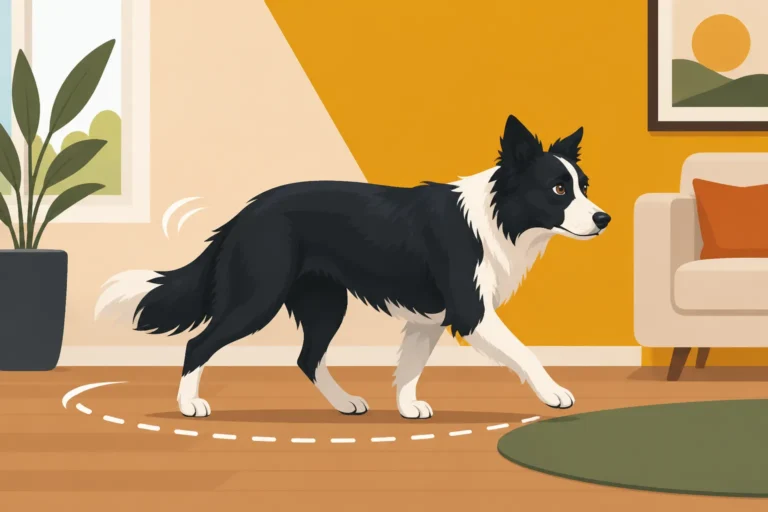
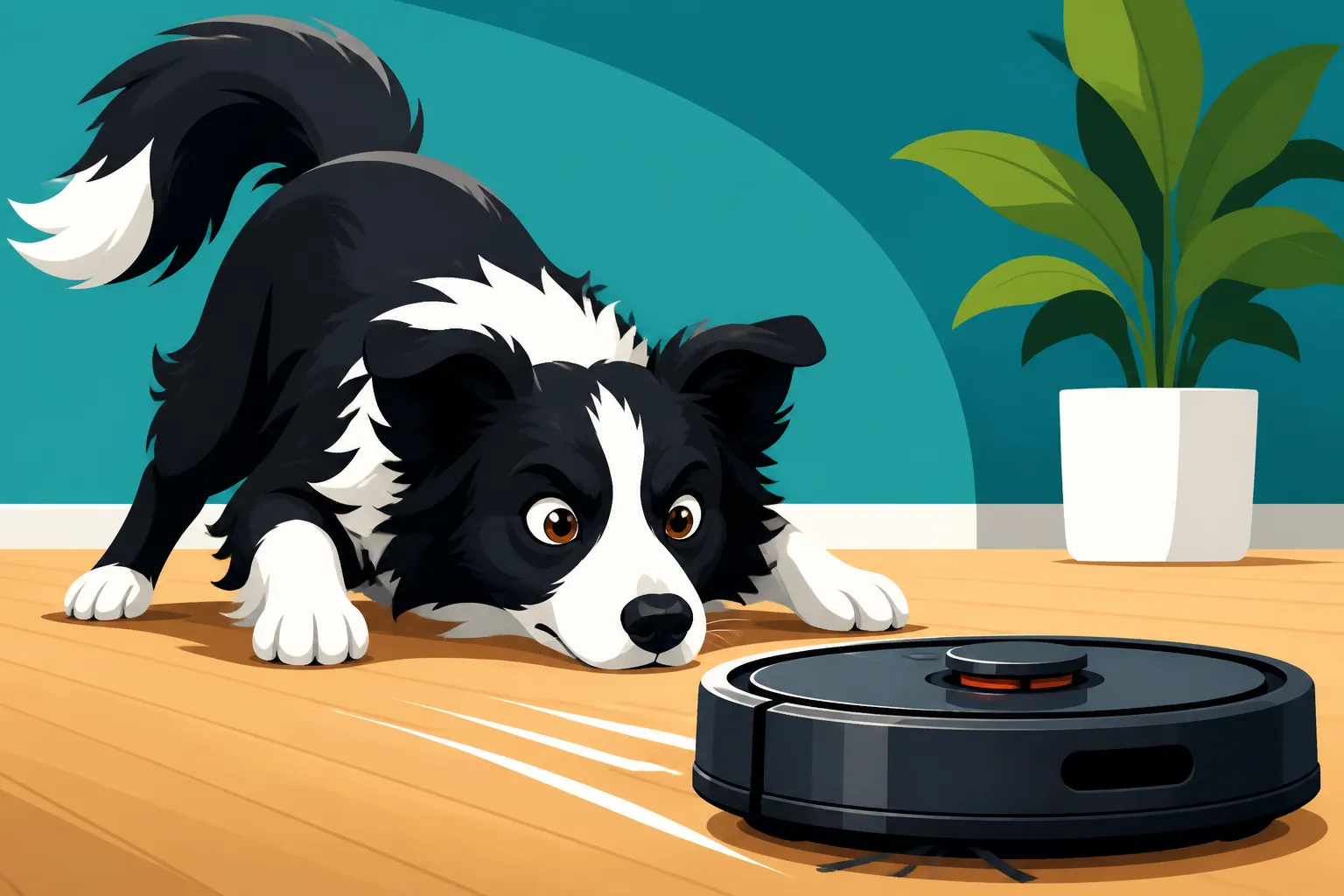
Think about it from your Border Collie's perspective: here's this loud, fast-moving "thing" that intrudes into their space. It sweeps across the floor, pushing "strays" (dust bunnies, pet hair, toys) into a pile, and then often "consumes" them. Your Border Collie might perceive it as an unruly sheep, a rogue object that needs to be controlled, gathered, and stopped. The intense The Border Collie Stare and Where It Comes From that often accompanies this behavior is a classic herding posture, an attempt to lock onto and influence the "prey." They might try to flank it, nip at its "heels," or bark to drive it away, just as they would with a stubborn ewe. For a dog whose entire purpose is to manage movement, this unmanaged, erratic movement is deeply unsettling and calls for action.
Fear, Curiosity, or Both?
While the herding instinct is a primary driver, it’s not the only factor. For some Border Collies, especially those who weren't properly socialized to loud noises and strange objects as puppies, the vacuum can be genuinely terrifying. The sudden, loud roar, the vibrating sensation, and the looming presence of this mechanical beast can trigger a fight-or-flight response.
On the other hand, some dogs might start with intense curiosity. They want to investigate this strange new thing, and their attempts to get closer or interact might escalate into frustrated barking or pawing when they can't quite "figure it out" or get it to respond in a way they understand. Imagine a Border Collie trying to herd a flock of birds that just flies away – it can be incredibly frustrating! Over time, if not addressed, this frustration can morph into a strong, negative association, or even anxiety. The noise, particularly, can be a major stressor, leading to sensitivity that might manifest in other situations, even Noise Fear in a Border Collie during thunderstorms or fireworks. Distinguishing between genuine fear and intense, frustrated herding instinct is crucial because it influences the training approach you'll take.
The Sensory Overload
Let's not forget the sensory experience of a vacuum cleaner. It's not just the sight of it moving. It's the high-pitched whine, the roar of the motor, the vibrations it sends through the floor, and the strange smells it can kick up. For a dog with incredibly acute hearing and smell, this can be an absolute assault on their senses. Many Border Collies are particularly sensitive to their environment, and a vacuum creates a chaotic sensory landscape that can be overwhelming.
This sensory overload can put them into a highly aroused state, making it difficult for them to think clearly or respond to your commands. It's like trying to concentrate on a math problem while a rock concert is blaring next to you. Their natural intelligence and drive, usually an asset, can become a hindrance here, as they hyper-focus on this intrusive stimulus. This heightened state of arousal can make them seem disobedient, but often, they are simply beyond their capacity to process and comply.
Addressing the Stalking: Training Strategies
Now that we understand a bit more about why your Border Collie might be targeting the vacuum, let’s talk about proactive steps to change this behavior. This isn't about "punishing" them, but about teaching them a different, calmer way to react.
Desensitization and Counter-Conditioning
This is the cornerstone of addressing fear or over-arousal. The goal is to gradually expose your Border Collie to the vacuum in a way that helps them associate it with positive experiences, rather than stress or herding drive. It’s a slow process, so patience is key!
Start with the vacuum off and out of sight. Bring it into the room but keep it far away. As soon as your dog notices it and remains calm (no barking, no intense stare), reward them with a high-value treat. Repeat this over several sessions, gradually moving the vacuum closer. The key is to keep your dog under their threshold – the point at which they start reacting negatively. If they react, you've moved too fast. Once they are calm with the vacuum in the room and off, move to the next step. Then, turn the vacuum on for just a second, from a distance, and immediately turn it off. Reward calm behavior. Slowly increase the duration and decrease the distance, always ensuring your dog remains relaxed. You can even try having the vacuum on in another room with the door slightly ajar, pairing the sound with a fantastic chew toy or a delicious Kong. Think of it as building a positive emotional bank account with the vacuum. For some dogs, a long-lasting chew that they only get when the vacuum is on can be incredibly effective. Consider looking on Amazon for some robust chews that will hold their attention.
Teaching a "Place" Command
A solid "place" command is invaluable for situations like vacuuming. It teaches your Border Collie to go to a designated spot (a mat, a dog bed, a crate) and stay there until released. This provides them with a clear job and a safe, predictable space during potentially stressful times. It empowers them with an alternative behavior rather than leaving them to figure out what to do with the "rogue sheep."
Start teaching "place" in a low-distraction environment. Lure or guide your dog onto their mat, say "Place," and reward them for staying. Gradually increase the duration and add distractions. Once they reliably go to their place, start practicing with the vacuum nearby, but turned off. As they get comfortable, introduce the vacuum's sound at a very low level, again, always rewarding them for staying calmly on their place. This isn't just about control; it's about providing a clear, acceptable alternative to their instinctual reaction. Consistency is vital here, and many online training programs, like those offered by BAXTER & Bella, can provide step-by-step guidance on building a reliable "place" command from scratch. They emphasize positive reinforcement, which is exactly what a smart, sensitive Border Collie thrives on. You want them to choose the place, not be forced into it.
Redirection and Engagement
For some Border Collies, especially those whose reaction is driven more by herding and high arousal than outright fear, redirecting their focus can be effective. Instead of letting them stalk the vacuum, give them an appropriate "job" to do elsewhere. This could be a highly engaging puzzle toy filled with treats, a long-lasting chew, or a structured training session in a separate room.
The key is to offer something even more interesting and rewarding than the vacuum. If your Border Collie thrives on mental stimulation, this can be a powerful tool. You might set them up with a challenging scent work game in another room, or ask them to practice a series of known tricks for high-value rewards. This doesn't directly address the vacuum, but it manages the behavior by giving them an outlet for their energy and focus that doesn't involve the vacuum. This works best in conjunction with desensitization – you don't want to just distract them from their fear, you want to help them overcome it. However, for a dog whose drive is simply to do something, giving them a positive "something" to do can make all the difference. Remember, Mental Work That Tires a Border Collie Faster can often be more effective than physical exercise alone when it comes to settling their minds.
Environmental Management and Tools
Sometimes, training takes time, and you still need to keep your home clean! Environmental management is about setting your Border Collie up for success and minimizing their exposure to triggers while you work on training. This isn't a substitute for training, but a crucial support system.
Creating a Safe Space
One of the simplest and most effective strategies is to create a dedicated safe space for your Border Collie during vacuuming. This could be their crate, a cozy bed in a quiet room, or even just another part of the house where the vacuum won't go. The goal is for this space to be a positive, calm retreat.
Before you start vacuuming, guide your Border Collie to this safe space. Give them a special, high-value chew or puzzle toy that they only get when the vacuum is out. This builds a positive association with their retreat and helps them view it as a haven, not a punishment. Ensure the space is comfortable, perhaps with a blanket or their favorite bed, and consider playing some calming music or using a white noise machine to help muffle the sound of the vacuum. Consistency is key: this always happens when the vacuum comes out, and they always get that special treat. This ritual creates predictability, which can be very comforting for a sensitive Border Collie.
Using Barriers and Crates
Sometimes, simply putting a physical barrier between your Border Collie and the vacuum is the most practical solution. Baby gates are fantastic for this, allowing you to contain your dog in one area while you clean another. This prevents them from practicing the unwanted behavior (stalking, barking) and gives you the peace of mind to clean efficiently.
If your Border Collie is already crate-trained and comfortable in their crate, this can be an excellent option. Place the crate in a separate room, perhaps with a blanket over it to further muffle sounds and reduce visual stimulation. Again, a special treat or chew toy inside the crate helps maintain a positive association. It's crucial that the crate is seen as a safe, comforting den, not a place of punishment. If your Border Collie isn't keen on their crate, it's worth investing time into making it a positive space, perhaps with the help of resources like BAXTER & Bella's crate training guides, which focus on making the crate a desirable retreat. For persistent boundary pushers, look for sturdy, tall gates on Amazon that they can't easily jump over or knock down.
Tools to Help Manage the Noise
For Border Collies who are particularly sensitive to sound, managing the auditory aspect of vacuuming can make a significant difference. While desensitization works on changing their emotional response, reducing the immediate impact of the noise can make the training process smoother and less stressful for them.
Consider using dog-specific ear protection, like Mutt Muffs or similar products. These are designed to dampen loud noises and can be particularly helpful during the initial stages of desensitization or for dogs with severe noise phobias. Introduce them slowly and positively, associating them with treats and praise, long before the vacuum comes out. Another simple trick is to put cotton balls in their ears (if they tolerate it and you ensure they can't swallow them), which can offer some sound reduction. Additionally, if your budget allows, investing in a quieter vacuum cleaner might be an option. Many modern robot vacuums operate at a much lower decibel level than traditional uprights. While the ideal is always to train your dog to cope, these tools can provide much-needed relief and create a less intimidating environment for your Border Collie.
Here's a quick comparison of common management tools:
| Tool/Method | Primary Benefit | Best Use Case | Considerations |
|---|---|---|---|
| Crate/Safe Room | Physical separation, reduced stimulation | During active vacuuming, severe reactivity | Requires prior positive association; dog must be comfortable being alone |
| Baby Gates | Creates physical barrier, allows visibility | Preventing chasing/nipping while dog is in adjacent room | Dog must respect barriers; some dogs will bark from behind the gate |
| High-Value Chews/Toys | Distraction, positive association | During active vacuuming in safe space, desensitization | Only works if treat/toy is more appealing than vacuum; not for all dogs |
| Dog Ear Protection | Reduces auditory impact | Highly noise-sensitive dogs, early desensitization | Requires positive introduction; some dogs dislike wearing them |
| White Noise Machine | Muffles vacuum sound, creates calm ambiance | Supplement to safe space, general noise sensitivity | May not be strong enough for very loud vacuums or severe phobias |
When to Seek Professional Help
While many Border Collie owners can make significant progress with consistent training, there are times when the behavior escalates beyond what you can reasonably manage on your own. Recognizing these signals is important for your dog's well-being and your own sanity.
Recognizing Escalation and Aggression
If your Border Collie's reaction to the vacuum goes beyond barking and stalking and starts to include genuine aggression—such as lunging with intent to bite, growling, snapping, or becoming genuinely unmanageable—it's time to call in a professional. This isn't just an annoyance anymore; it's a safety concern for you and potentially for your dog if they injure themselves in their frantic state.
Similarly, if the behavior is accompanied by extreme panic, such as uncontrollable trembling, excessive drooling, destructive behavior (not directed at the vacuum, but generally due to stress), or self-harm (e.g., A Border Collie That Chews Itself When Bored or stressed), these are signs of severe anxiety. These intense reactions indicate that your dog is deeply distressed and needs more specialized intervention than general obedience training can provide. Trying to push through these behaviors without professional guidance can worsen the problem and damage your relationship with your dog.
The Value of a Certified Professional
When dealing with deeply ingrained or aggressive behaviors, a certified professional dog trainer or a veterinary behaviorist can be a game-changer. Look for someone with credentials like Certified Professional Dog Trainer (CPDT-KA), Certified Dog Behavior Consultant (CDBC), or a Diplomate of the American College of Veterinary Behaviorists (DACVB). These individuals have the expertise to assess your specific situation, identify underlying causes, and develop a tailored training plan.
They can observe your Border Collie's body language and reactions, discerning whether it's primarily a herding obsession, a fear response, or a combination. They can guide you through advanced desensitization and counter-conditioning protocols, often introducing management strategies you might not have considered. A good professional will use positive reinforcement methods and focus on building your dog's confidence and ability to cope, rather than just suppressing the symptoms. They can also help you rule out any underlying medical issues that might be contributing to behavioral changes, ensuring a holistic approach to your Border Collie's welfare.
Understanding When It's More Than Just Annoying
Sometimes, the "vacuum problem" isn't an isolated issue. It can be a symptom of broader anxiety, over-arousal, or a lack of appropriate outlets for your Border Collie's intelligence and energy. If your dog exhibits similar intense reactions to other moving objects (bicycles, cars, children), shadows, or reflections (like The Border Collie That Chases the Sun Off Walls), it indicates a deeper compulsive or over-arousal tendency that needs to be addressed comprehensively.
A professional can help you evaluate your Border Collie's overall daily routine, ensuring they're receiving adequate physical and mental stimulation, which is paramount for this breed. They might suggest a wider range of activities, introduce more structured relaxation protocols, or even explore medication options if anxiety is severe and impacting their quality of life. The goal is to create a well-adjusted, confident Border Collie who can handle the everyday quirks of human life, including the dreaded vacuum cleaner, with a calm and collected demeanor. Don't hesitate to reach out for help; it's an investment in a happier, more peaceful life for both you and your extraordinary companion.
Disclaimer
This article is for general informational purposes only and does not constitute professional advice. Laws, prices and regulations vary by location and change over time. Consult a qualified professional for guidance on your specific situation.