A Border Collie That Circles People at Parties
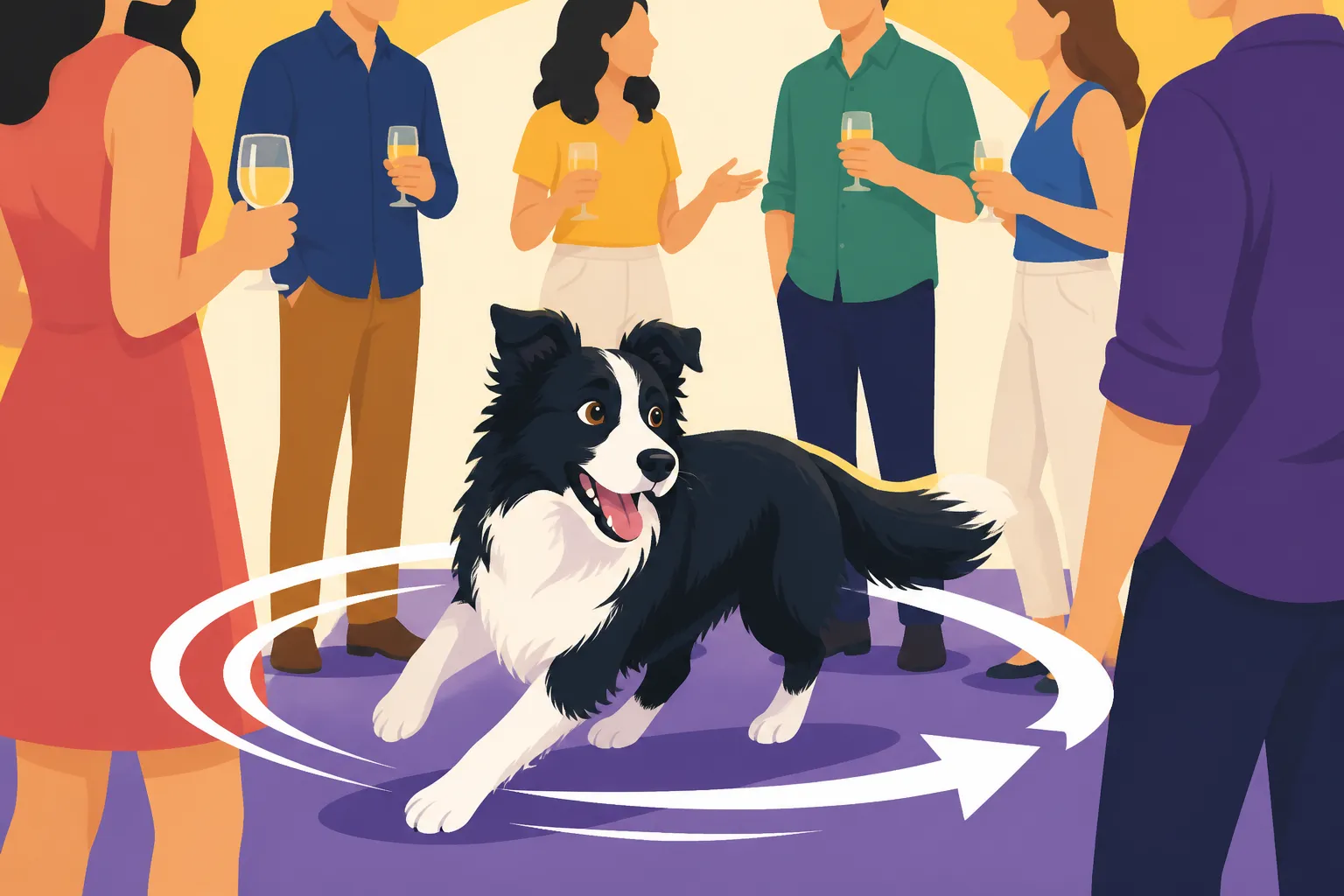
There's nothing quite like the joy of hosting friends and family, but if you share your home with a Border Collie, you might dread the doorbell. That familiar "gather" instinct, which is so impressive out in the field, can quickly turn into a four-legged party police officer, circling your bewildered guests or even trying to "herd" them. It’s frustrating, embarrassing, and honestly, a little overwhelming to constantly manage your dog while also trying to be a good host. This guide is here to help you understand why your Border Collie feels compelled to circle people at parties and, more importantly, equip you with practical strategies to manage this behavior and foster a calmer, more enjoyable social environment for everyone.
Understanding the Root Cause: Why Do Border Collies Circle?
Let's face it, Border Collies are brilliant, but that brilliance comes with a deeply ingrained set of behaviors designed for a very specific job: herding livestock. When you have a house full of excited, moving people, your dog's instincts can kick into overdrive, interpreting your guests as a scattered flock in need of rounding up. It’s not malicious; it's just pure, unadulterated Border Collie.
The Herding Instinct in Action
At its core, circling people is a manifestation of your Border Collie's powerful herding instinct. Imagine a sheepdog on a vast field, systematically moving around the flock to gather them, maintain boundaries, and direct their movement. The circling, the intense stare, the low crouch – it's all part of this ancient behavioral repertoire. Your guests, especially if they’re moving around, laughing, or even just standing in groups, can inadvertently trigger this instinct. They become "sheep" in your dog's eyes, and your Border Collie, being the conscientious worker they are, feels an urgent need to bring order to the "flock." This can escalate from gentle circling to blocking pathways, or even a soft nip at the heels if the "sheep" aren't responding to the dog's subtle cues. It’s worth exploring Why a Border Collie Drops Into a Crouch in these scenarios, as it's a classic herding posture indicating intense focus.
This behavior isn't about being dominant or aggressive; it's about a deep, genetic blueprint for control and organization. Your dog isn't trying to be rude; they're trying to do their job. And in a busy, stimulating party environment, their job description often expands to include managing all human movement. This is particularly true for dogs from strong working lines, whose instincts are incredibly potent. Without appropriate outlets for this drive, it can easily spill over into inappropriate contexts, like your living room.
Overstimulation and Anxiety
Parties, by their very nature, are often chaotic. New smells, loud voices, sudden movements, strange objects (like coats piled on a chair), and the sheer number of people can be incredibly overwhelming for a sensitive, highly perceptive breed like the Border Collie. While some dogs thrive on social interaction, many Border Collies find prolonged, unstructured social gatherings stressful. The circling might not just be herding; it can also be a coping mechanism for anxiety or overstimulation. They might be trying to gain control of a situation they perceive as disarray, or it could be an outward sign of an inner struggle to process all the sensory input.
Think about it from your dog's perspective: a quiet routine suddenly explodes into a cacophony of unfamiliar sounds and shifting bodies. A dog that circles might be trying to create predictability in an unpredictable environment. They might be exhibiting what looks like focused herding, but underneath, it’s a dog that’s genuinely uncomfortable and attempting to bring things back to a manageable state. This underlying stress can sometimes manifest in other behaviors, such as excessive barking or even resource guarding, as the dog tries to establish some sense of normalcy and control.
Lack of Clear Boundaries
Sometimes, the circling behavior stems from a lack of clear boundaries and expectations. If your Border Collie hasn't been explicitly taught what is and isn't acceptable behavior around guests, they'll often revert to their instincts. When we don't provide a structure, these intelligent dogs will create their own, and for a Border Collie, that often means establishing their own "rules" of engagement with moving bodies. This isn't about disobedience; it's about a lack of communication from us. We expect them to understand our human social etiquette without explicitly teaching it in a way they comprehend.
Consider if your dog has ever been allowed to "herd" children or other pets in the house. If so, they’ve learned that this behavior is permissible, even if you never intended for it to extend to adult guests. It's easy for us to forget that what seems like playful nipping or nudging to a puppy can quickly become a problem as they grow and their instincts mature. Setting clear boundaries isn't about suppressing their nature, but about channeling it appropriately and teaching them alternative, polite behaviors for social situations. This involves consistent training and management, ensuring they understand that human guests are not sheep to be managed. Often, people struggle because Why People Choose a Border Collie and Then Struggle often comes down to underestimating these inherent drives.
Practical Strategies to Manage Party Behavior
Now that we understand some of the "whys," let's talk about the "hows." Managing this behavior isn't about punishing your Border Collie for being a Border Collie; it's about setting them up for success, managing their environment, and teaching them alternative, acceptable ways to interact (or not interact) with guests.
Pre-Party Preparation and Management
The key to a successful party with a Border Collie often lies in preparation, long before the first guest even rings the doorbell. Proactive management can prevent many issues before they even start. Think of it as creating a structured environment that minimizes triggers and maximizes comfort for your dog.
First, ensure your Border Collie is physically and mentally tired before the party starts. A long, engaging walk, a session of fetch in a secure yard, or a vigorous training session that involves problem-solving can help burn off excess energy. Remember, physical exercise alone might not be enough; these dogs thrive on mental challenges. Engage them with Mental Work That Tires a Border Collie Faster, like scent games, puzzle toys, or a complex obedience routine. An hour or two before guests arrive, give them a good workout, both body and brain. This helps them be in a calmer state, less likely to feel the need to "work" your guests.
Next, create a designated safe space for your dog. This might be a comfortable crate in a quiet room, a partitioned off area with a baby gate, or a dog bed in a less trafficked corner of the house. This space should be associated with positive experiences – perhaps a special chew toy, a long-lasting treat, or a favorite blanket. Introduce this space well in advance of any party, rewarding your dog for settling there. You can even practice Teaching a Border Collie to Stay on Its Bed as a foundational command for this purpose. When guests arrive, your dog can retreat to this haven if they feel overwhelmed, or you can preemptively put them there for a scheduled "break" from the action. Many owners find a sturdy wire crate from a brand like Amazon to be indispensable for this purpose, providing a secure den for their dog.
Redirection and Positive Reinforcement During the Party
Even with the best preparation, your Border Collie might still try to engage with guests. During the party, your role shifts to redirection and rewarding appropriate behavior. This requires vigilance and consistency from you and, ideally, cooperation from your guests.
If you see your Border Collie starting to eye a group of people, or beginning to circle, immediately intervene. Don't wait for the behavior to escalate. A calm, clear "Leave it" or "Come" command, followed by directing them to their safe space or a designated toy, can be very effective. Have high-value treats readily available to reward them generously for choosing to disengage from the "herding" and focus on you or their safe activity instead. This teaches them that ignoring the guests and engaging with you or their toys is more rewarding. You might even consider having a toy or chew available that is only brought out for these situations, making it extra special. For instance, Giving a Border Collie Something to Gather can be a great way to redirect that instinct onto an appropriate object.
It’s also helpful to educate your guests, especially those unfamiliar with Border Collies. Explain that while your dog is friendly, they have strong herding instincts and are learning polite manners around people. Ask them to avoid encouraging chasing games, sudden movements, or inadvertently rewarding circling behavior with attention. Sometimes, guests might think it's cute for the dog to "herd" them playfully, which only reinforces the unwanted behavior. If your dog has a tendency to get too close or Whether a Border Collie Nips Ankles, explaining this to guests beforehand is crucial.
Teaching an "Off-Switch" and Relaxation
Beyond managing party-specific behaviors, the long-term goal is to teach your Border Collie a general "off-switch" and the ability to relax in stimulating environments. This is a vital skill for any high-drive dog, allowing them to truly settle rather than constantly being on alert.
One effective method is the "Place" command, as mentioned above with Teaching a Border Collie to Stay on Its Bed. This involves training your dog to go to a specific bed or mat and stay there calmly until released. Start in a quiet environment, gradually increasing distractions. Reward heavily for duration and calm behavior. This skill is invaluable for parties, allowing you to direct your dog to their "place" when needed, providing them with a clear job and a safe space away from the action. Many online training platforms, such as BAXTER & Bella, offer structured programs that can guide you through teaching advanced obedience and "place" training, providing step-by-step instructions and support.
Another approach is to incorporate more relaxation protocols into your daily routine. This could involve teaching your dog to settle quietly at your feet while you read or watch TV, rewarding them for doing nothing. Practice structured downtime where they are simply observing the environment without being asked to perform or engage. This helps build their capacity to be calm in the face of stimulation. Remember that a dog that is constantly pacing or A Border Collie That Paces the House is likely struggling with overstimulation or unmet needs for mental engagement, which makes party behavior even harder to manage.
Here's a quick comparison of common party scenarios and effective responses:
| Scenario | Border Collie Behavior | Recommended Action | Why It Works |
|---|---|---|---|
| Guests arriving at the door | Barking, jumping, circling | Dog in crate/separate room before guests arrive. Reward calm "Place" behavior once guests are settled. | Prevents over-excitement, provides a safe boundary. |
| Guests moving from room to room | Following closely, trying to herd | Redirect to a designated toy or "Place." Use a tether if necessary. | Offers an alternative focus, maintains control, prevents escalation. |
| Children playing boisterously | Intense stare, low crouch, circling | Place dog in a quiet room with a puzzle toy. Educate children on calm interactions. | Prevents instinct from taking over, ensures safety for both dog and children. |
| Dog becomes overstimulated/mouthy | Nipping, persistent nudging, barking | Immediate "timeout" in crate or quiet room. Ensure sufficient prior exercise and mental stimulation. | Teaches consequence for unwanted behavior, allows dog to decompress. |
| Dog is calm and ignoring guests | Lying on "Place," chewing a toy | Generously praise and reward with a high-value treat. | Reinforces desired calm behavior, builds positive association with quiet time. |
Long-Term Training for a Calmer Canine Citizen
While party-specific strategies are crucial, the most effective long-term solution comes from consistent, daily training that builds a solid foundation of obedience, impulse control, and appropriate engagement. This isn't just about managing symptoms; it's about shaping a more balanced and relaxed Border Collie overall.
Strengthening Basic Obedience and Impulse Control
A Border Collie with strong basic obedience is a Border Collie that is easier to manage in any situation, including parties. Commands like "sit," "stay," "down," "come," and "leave it" are your best friends. Practice these commands daily in various environments, gradually increasing distractions. Focus heavily on "stay" and "leave it" as they directly address impulse control. For example, practicing "leave it" with tempting treats on the floor will translate to leaving guests alone or ignoring their movements.
Impulse control is particularly vital for Border Collies because their instincts are so strong. They need to learn that not every moving object (or person) requires their immediate attention or "management." Games that build impulse control, like "It's Yer Choice" (where the dog learns to wait for permission before taking a treat), or waiting patiently at doorways (avoiding A Border Collie Blocking a Doorway), can be incredibly beneficial. Consistency is key here. Every interaction is a training opportunity, reinforcing good habits and gently correcting unwanted ones.
Providing Appropriate Mental and Physical Outlets
Remember, a tired Border Collie is a good Border Collie, but a mentally stimulated Border Collie is an even better one. If their innate drives aren't being met through appropriate channels, they will find their own outlets, and those outlets might involve herding your guests. Ensure your dog receives a consistent routine of vigorous physical exercise, but always pair it with challenging mental work.
Consider dog sports like agility, flyball, or advanced obedience, which tap into their intelligence and athleticism in a structured way. Even if you're not competing, participating in classes provides excellent mental and physical exercise. Inside the home, use puzzle feeders, interactive toys, and regular training sessions that teach new tricks or refine existing commands. How Many Words a Border Collie Can Learn is astonishing, so teaching them new concepts and names for toys can be a fantastic way to engage their minds. This helps fulfill their need to "work" and problem-solve, making them less likely to invent their own "jobs" during your social gatherings.
Socialization Beyond the Frenzy
While managing your dog during parties is important, it's equally important to consider their overall socialization. Exposing your Border Collie to a variety of people, places, and situations in a controlled and positive way can help them become more confident and less reactive in novel environments. This doesn't mean throwing them into every party; it means carefully structured introductions.
For example, invite one or two calm, dog-savvy friends over for short periods, specifically instructing them on how to interact (or not interact) with your Border Collie. Reward your dog for calm behavior during these mini-socializations. Take your dog to dog-friendly parks or cafes during off-peak hours to observe people and other dogs from a distance, rewarding calm observation. The goal isn't to make them a social butterfly, but to teach them that strangers are not a threat and do not need to be herded. If you have concerns about A Border Collie Gathering the Family Into One Room, these structured, low-stress interactions can generalize to larger groups over time, building their confidence without overwhelming their natural instincts.
By consistently applying these strategies, you can transform your Border Collie from a "party pooper" into a well-managed, respectful member of your household, allowing both you and your guests to enjoy social gatherings without the constant worry of canine crowd control.
Disclaimer
This article is for general informational purposes only and does not constitute professional advice. Laws, prices and regulations vary by location and change over time. Consult a qualified professional for guidance on your specific situation.