A Border Collie That Barks at the Ball Being Held
Oh, the sheer intensity of a Border Collie fixated on a ball! It's a scenario countless Border Collie owners know all too well: you're holding their prized possession, perhaps waiting for them to settle, and they respond with an incessant, piercing bark that drills right through your skull. This isn't just a quirky habit; it’s a deeply ingrained behavior that can be incredibly frustrating for both dog and human, often indicating a build-up of unmanaged drive and anticipation. This comprehensive guide will help you understand the root causes behind this demanding barking and provide actionable strategies to cultivate a calmer, more controlled relationship with the ball.
Why Your Border Collie Barks at the Ball Being Held: The Root Causes
Let's be honest, living with a Border Collie means living with intensity. Their brains are wired for work, for problem-solving, and for managing movement. When that intensity is channeled into something as exciting as a tennis ball, you get a highly driven animal. The barking you're experiencing isn't random; it's a symptom of some very core Border Collie traits.
Instinctive Herding Drive and Prey Drive
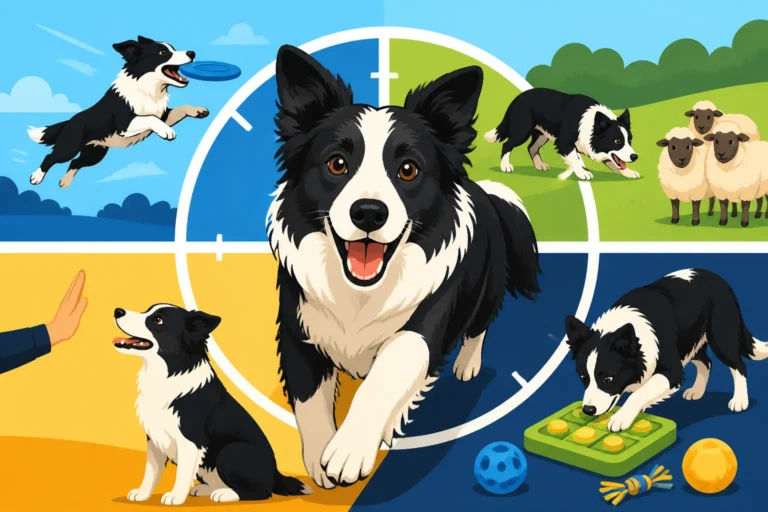
The fundamental reason behind much of a Border Collie's behavior, even in a pet home, traces back to their original purpose: herding livestock. A ball, in many ways, becomes a substitute for a sheep or a flock. When your Border Collie barks at the ball you're holding, they're essentially trying to move it, to control it, and to release it. Their powerful "eye," that intense, unwavering gaze, is usually directed at the ball, but when it's stationary, the barking serves as an additional pressure tactic.
Think about it from their perspective: the "prey" (ball) is right there, but it's not moving. Their instinct tells them to gather it, to push it, to make it respond. The barking is a primitive communication, an attempt to make the "flock" (you, the handler) move the object they so desperately want to control. This can escalate into other behaviors too, like circling you, nipping at your hands or clothing, or even jumping, all in an effort to get that ball to budge. It's a powerful urge, and for some dogs, it's incredibly hard to break that intense focus once they've locked on. This intense focus and the underlying drive are what make Border Collies so captivating, but also so challenging.
Frustration and Arousal Thresholds
Border Collies are highly intelligent and easily aroused by activities they love, especially high-value games like fetch. When the ball is visible but inaccessible, their arousal levels can skyrocket, leading to intense frustration. Imagine being primed for your favorite activity, all systems go, and then being told to wait indefinitely. That's how your Border Collie feels. The barking becomes an outlet for this built-up energy and anticipation. They get "stuck" in a heightened state of excitement, unable to self-regulate or switch off without intervention.
The threshold for frustration varies between individual Border Collies. Some might give a polite bark or two, while others will launch into a full-blown barking fit the moment they see the ball. Repetitive fetch sessions, especially those that encourage endless retrieving without clear boundaries, can inadvertently train your dog that constant high arousal is the norm. This can be particularly problematic, as excessive high-arousal activity can sometimes contribute to issues like Repeated Ball Retrieving and Border Collie Collapse in predisposed individuals, though that's a more extreme manifestation. The key here is understanding that the barking is often a sign that your dog is struggling to manage their internal state in the face of intense desire.
Learned Behavior and Reinforcement
As much as we love our Border Collies, sometimes we accidentally teach them exactly the behavior we want to stop. If your dog barks at the ball, and you, in an attempt to quiet them or just get a moment's peace, throw the ball, you've just reinforced the barking. Your Border Collie, being the intelligent problem-solver they are, quickly makes the connection: "Bark = Ball Released." This is a classic example of operant conditioning, where a behavior is strengthened by its consequence.
It doesn't even have to be immediate ball-throwing. Any attention you give — telling them "no," looking at them, pushing them away, or even sighing dramatically — can serve as reinforcement for an attention-seeking Border Collie. They learn that barking works to get a reaction from you, even if it's negative attention. It's a tough cycle to break because the barking is so effective at getting your attention and often achieving their goal. We, as owners, often fall into the trap of giving in, creating a demanding dog who believes barking is the appropriate way to get what they want.
Diagnosing the Barking: Is It Problematic?
It's one thing for a Border Collie to be excited; it's another for that excitement to manifest as a constant, demanding bark whenever a ball is present. Understanding the difference is crucial for addressing the behavior effectively.
Differentiating Normal Excitement from Compulsion
A little excited panting, maybe a happy whine, and certainly an eager gaze when the ball comes out? That's normal. It's part of the charm of owning such a passionate breed. However, when the barking becomes incessant, frantic, difficult to interrupt, and is accompanied by other signs of stress or obsession, then it crosses into problematic territory.
Signs that your Border Collie's ball barking might be leaning towards compulsion include:
- Inability to Disengage: Can your dog easily look away from the ball and focus on you, even for a moment? Or is their gaze glued, unbreaking, to the object?
- No "Off-Switch": Even after a play session, do they remain agitated, pacing, or searching for the ball? This is a strong indicator of over-arousal. Learning to provide a proper What a Border Collie Does With Its Whole Day and integrating rest is key.
- Escalating Behavior: Does the barking quickly intensify into frantic jumping, nipping, or even self-soothing behaviors like licking paws or spinning?
- Stress Signals: Look for lip-licking, yawning (when not tired), excessive panting (when not hot), ear pinning, or a generally tense body posture. These indicate that the dog is not just excited, but stressed.
- Impact on Other Behaviors: Does their obsession with the ball override their response to other commands, their ability to relax, or their interest in other activities?
- Constant Demand: Are they always bringing you the ball, dropping it at your feet, and then immediately barking if you don't pick it up? This dog struggles with the concept of "no" or "later."
Many Border Collies will push boundaries, but a truly compulsive dog is driven by an internal mechanism that they genuinely struggle to control. It's important to recognize that this isn't necessarily disobedience, but a genuine struggle with impulse control and managing high arousal. If your Border Collie is showing signs of intense fixation, you might want to consider articles like The Border Collie That Will Not Drop the Ball for further insight into obsessive toy behavior.
Impact on Daily Life and Well-being
The constant barking, lunging, or demanding behavior isn't just annoying for you; it can have a significant negative impact on your Border Collie's overall quality of life and your relationship with them.
- Stress for the Dog: A dog constantly living in a state of high arousal and frustration is not a happy dog. Their cortisol levels can remain elevated, leading to chronic stress, which can manifest in various ways, including digestive issues, immune suppression, and even a shorter lifespan.
- Limited Activities: If your dog is so fixated on the ball, it can become challenging to engage them in other enriching activities like scent work, trick training, or even a calm walk without the constant demand for the ball.
- Strained Relationship: Nobody enjoys being barked at incessantly. This behavior can lead to owners feeling frustrated, resentful, and less inclined to engage with their dog, which ultimately harms the bond.
- Social Implications: A dog that barks incessantly at a toy in public places, dog parks, or even at home with guests can be socially disruptive and create an environment where the dog is less welcome.
- Physical Wear and Tear: For dogs that are constantly launching, spinning, and braking hard for a ball, there's an increased risk of sport injuries like cruciate tears or shoulder strains.
Consider how pervasive this barking is. Does it only happen with that specific ball, or with all toys? Does it happen when you're simply walking past where the ball is stored, or only when you actually pick it up? Is it an isolated behavior, or part of a broader pattern of intensity and over-arousal that needs to be addressed holistically? For a Border Collie, a balanced life is about more than just physical exercise; it's about mental engagement and learning to settle. Why a Border Collie Cannot Stop on Its Own delves into this need for an "off-switch."
Actionable Strategies to Reduce Ball Barking
The good news is that you can make significant progress in reducing your Border Collie's ball barking. It requires consistency, patience, and a commitment to teaching new habits and boundaries.
Implementing Structured Play and Boundaries
The key to managing a Border Collie's drive is to provide structure and clear rules around their favorite activities. This transforms wild enthusiasm into controlled engagement.
- Teach a Solid "Off-Switch": This is non-negotiable for a Border Collie. Teach them to go to a designated "place" (a mat, bed, or crate) and stay there calmly while you handle the ball. Reward them heavily for calm behavior on their place. This teaches them to settle even when excited. Settling a Border Collie on a Mat can give you a great head start on this. Use their place command before, during, and after ball play. They only get the ball when they are calm on their place, and they return to their place during breaks.
- Master "Leave It" and "Take It": These are foundational commands. Start with low-value items, then work your way up to the ball. Your dog should be able to "leave" the ball when you ask and only "take" it on your cue. The ball becomes contingent on their calm, compliant behavior, not on their demands. Many online training platforms, such as BAXTER & Bella, offer comprehensive modules on teaching these critical commands, providing step-by-step guidance you can follow at home.
- Controlled Release and Retrieve: Don't just throw the ball immediately. Make your dog sit or lie down, hold their gaze, and wait for a release cue ("okay," "fetch," "go"). If they bark, immediately put the ball away or turn your back. Wait for a moment of quiet, then try again. This teaches them that barking removes the opportunity, while calm behavior earns it.
- Limit High-Arousal Play Duration: While Border Collies need vigorous exercise, endless fetch sessions can exacerbate arousal. Instead of one long, frantic session, break it into shorter, more controlled bursts. End the game before your dog is completely overstimulated and still able to disengage. This helps in Weaning a Border Collie Off Endless Fetch and prevents the build-up of excessive frustration. Always end the game by putting the ball away and asking for a calm "place" or "settle" command.
Managing Environmental Triggers
You can also proactively manage situations that trigger the barking. This is about prevention and setting your Border Collie up for success.
- Store Balls Out of Sight: If the sight of the ball is the primary trigger, simply removing it from their view when not in use can dramatically reduce instances of demand barking. Use a lidded bin, a high shelf, or a designated "toy cupboard."
- Avoid Leaving Balls Lying Around: Resist the urge to let your Border Collie "self-regulate" with a ball left freely available. For many, this leads to obsessive guarding or constant demanding play. The ball should be a tool for structured interaction, not a constant source of unmanaged stimulation. This helps when you're thinking about Taking Balls Away From an Obsessive Border Collie.
- Vary Play Objects: Don't just rely on one type of ball. Introduce frisbees, tug toys, scent games, or even flirt poles. This broadens their play repertoire and reduces the singular obsession with the ball. When shopping online, Amazon has a vast selection of different types of dog toys that can help introduce variety into your play routine.
- Use a Long Line or Tether: If your Border Collie is extremely difficult to manage when you're holding the ball, try putting them on a long line or tethering them to a secure anchor point (away from you and the ball). This prevents them from physically harassing you, allowing you to control the interaction without physical corrections. They learn they can't force the ball out of your hand.
Alternative Enrichment Activities
Remember, a Border Collie's mind needs as much, if not more, exercise than their body. Diverting their intense focus to other activities can be incredibly beneficial.
- Puzzle Feeders and Enrichment Toys: These require mental effort and problem-solving, which can be just as tiring as physical exercise for a Border Collie. Toys where they have to manipulate objects to get treats are fantastic. This provides good Mental Work That Tires a Border Collie Faster.
- Scent Work: Hide treats around the house or yard and let them use their nose to find them. This is a naturally calming and deeply satisfying activity for dogs, engaging a different part of their brain than herding or retrieving. Scentwork for a Border Collie Between Trial Seasons offers more ideas here.
- Trick Training: Teach them fun, complex tricks. This builds your bond, uses their intelligence, and can be done indoors in a low-arousal environment. Things like "put toys away," "spin," "bow," or "weave through your legs" are mentally stimulating. Trick Training a Border Collie Indoors offers great starting points.
- Walks with Purpose: Instead of just a casual stroll, make walks an adventure. Let them sniff, explore, and engage with their environment. Incorporate short training bursts, practice loose-leash walking, or explore new routes. Remember, Why Walking a Border Collie Is Not Enough on its own, but purposeful walks add mental stimulation.
- Chewing and Licking: Provide appropriate chew toys or lick mats. Chewing and licking are naturally calming activities that can help a dog de-stress and self-regulate, especially after an exciting interaction.
Seeking Professional Guidance
Sometimes, despite your best efforts, the barking behavior persists or escalates. This is when it's time to call in the cavalry.
- When Home Methods Aren't Enough: If you've been consistent with the above strategies for several weeks or months and see little to no improvement, or if the behavior is getting worse, a professional can offer fresh eyes and tailored advice.
- Escalation to Aggression or Self-Harm: If the barking is accompanied by growling, snapping, biting, or if your dog is inflicting harm upon themselves (e.g., excessive licking, chewing, or spinning to the point of injury), it's a serious issue that requires immediate professional intervention.
- Impact on Quality of Life: If your Border Collie is genuinely distressed, unable to relax, or if the behavior is severely limiting their ability to function as a happy companion, a professional can help restore balance.
- Certified Professional Dog Trainer (CPDT): Look for a trainer who understands high-drive breeds and uses positive reinforcement methods. They can assess your specific situation, pinpoint triggers, and guide you through a personalized training plan.
- Veterinary Behaviorist (Dip ACVB): For more severe, deep-seated behavioral issues, especially those with a compulsive component, a veterinary behaviorist is a veterinarian with specialized training in animal behavior. They can diagnose underlying medical conditions, prescribe medication if necessary, and develop comprehensive behavior modification plans. Don't hesitate to consult with your vet if you're concerned about obsessive behavior.
Remember, addressing this behavior is a journey, not a sprint. Celebrate small victories, remain consistent, and enjoy the process of deepening your understanding and bond with your incredible Border Collie.
| Barking Type | Description | Recommended Strategy |
|---|---|---|
| Demand Barking | Persistent, attention-seeking, often stopping when ignored, but resuming. | Consistently ignore barking. Reward quiet. Teach "quiet" cue. |
| Frustration Barking | Intense, repetitive, accompanied by whining or pawing when access is denied. | Structured play. "Leave it" command. Release only on calm. |
| Over-Arousal Barking | High-pitched, frantic, often with spinning, jumping, or other frantic body language. | Implement a strong "off-switch." Introduce calm-down exercises. Reduce play intensity and duration. |
| Obsessive Barking | Constant, self-reinforcing, hard to interrupt. Dog seems to ignore other cues. | Professional behavioral intervention. Re-evaluate and structure all play. |
Disclaimer
This article is for general informational purposes only and does not constitute professional advice. Laws, prices and regulations vary by location and change over time. Consult a qualified professional for guidance on your specific situation.