What Happens If a Border Collie Worries Sheep
There's a deep-seated fear for anyone who owns a Border Collie, especially those with even a flicker of herding instinct: what happens if that incredible drive turns bad and your dog starts to worry livestock? It's a heartbreaking and often devastating situation that can have serious repercussions for the animals, your dog, and you as the owner. This guide will walk you through the realities of livestock worrying, what it looks like, and how to prevent such a challenging scenario.
Understanding the Border Collie's Instinct: When Drive Goes Wrong
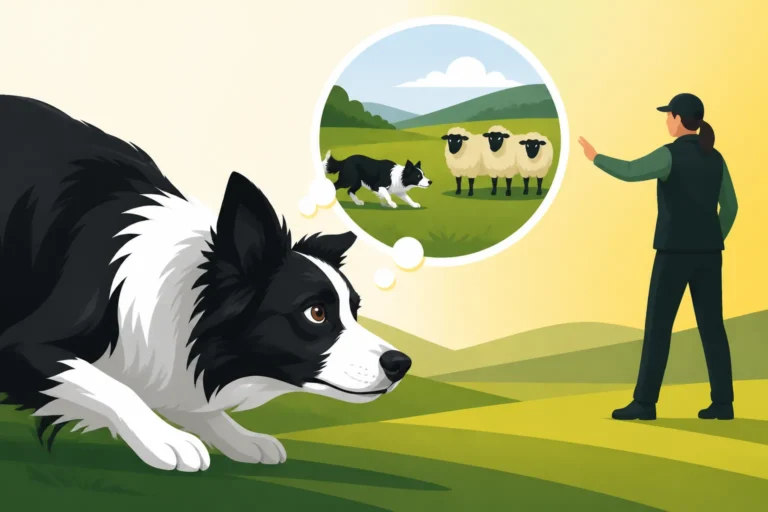
Border Collies are renowned for their powerful herding instinct. It's what makes them such exceptional working dogs and captivating companions. This instinct is a complex interplay of predatory behaviors – the eye, the stalk, the chase – but crucially, it's modified by generations of selective breeding to not harm the stock. A well-bred, well-trained Border Collie moves sheep, gathers them, and drives them without resorting to biting or overly aggressive chasing. But when this delicate balance is disrupted, either through lack of training, overstimulation, or an innate predisposition, instinct can devolve into worrying.
What Worrying Behavior Looks Like
It's not always a full-blown attack. Often, worrying starts subtly and escalates. It's important to understand the spectrum of behaviors that fall under this umbrella, as early intervention can make all the difference.
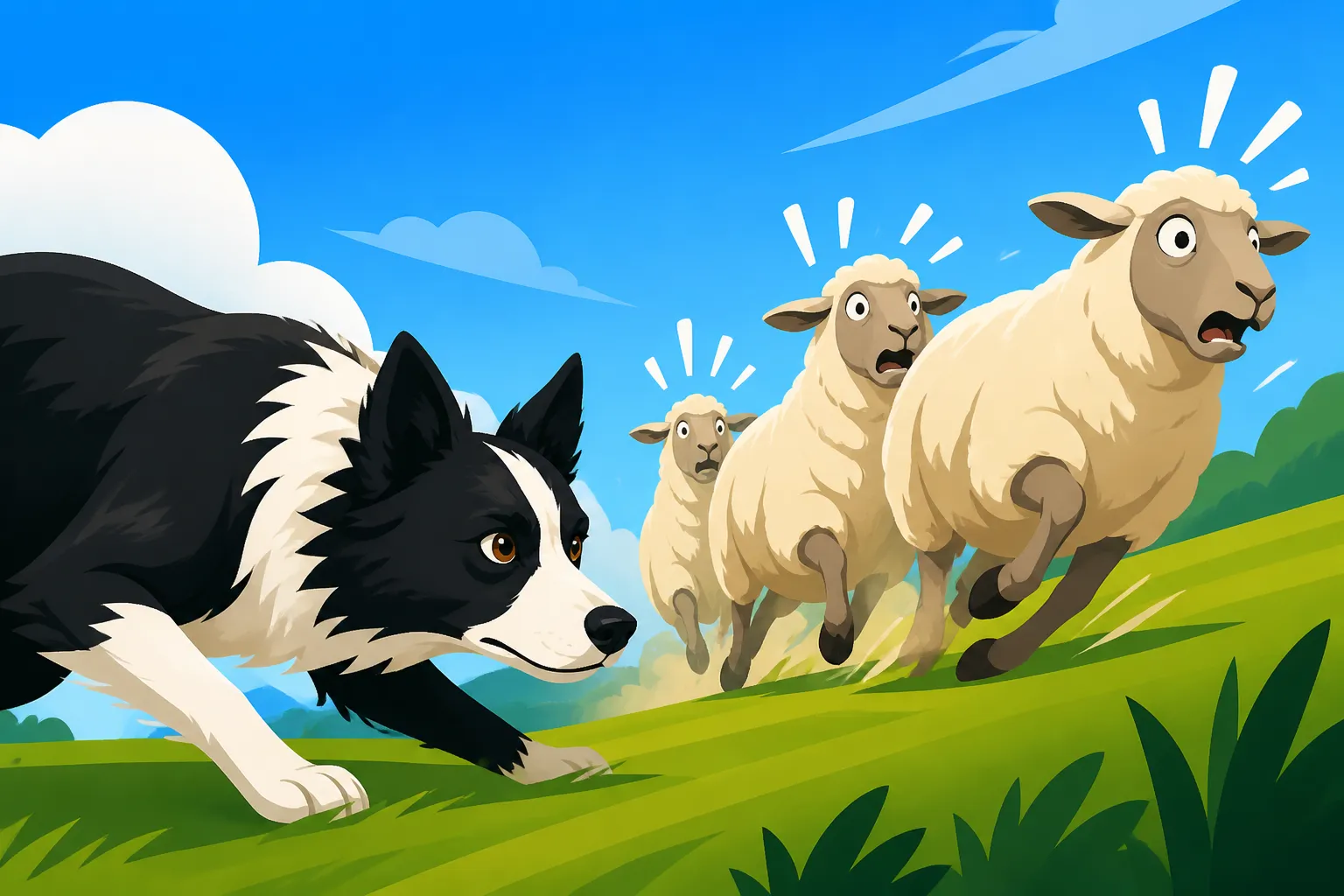
Initially, a Border Collie might show excessive "eye" or a hard stare, pinning an animal in place with its intensity, refusing to move away. This can be intimidating and stressful for livestock, especially lambs or pregnant ewes. Then it might move to persistent, uncontrolled chasing, scattering the flock without purpose or direction. Imagine a group of sheep frantically running into fences, desperately trying to escape a dog that just won't let up. This isn't herding; it's terror. This kind of chasing expends vital energy, causes undue stress, and can lead to physical injuries as sheep collide or fall. Sometimes, the dog might start nipping at heels, flanks, or even heads. This isn't the controlled, gentle "grip" that a working dog might use as a last resort to turn a stubborn animal; this is an aggressive, often repeated bite that causes pain and can tear flesh or pull wool. The dog might grab wool, pulling it out in chunks, or even knock lambs over. These behaviors are a clear sign that the dog's instinct is unchecked and has crossed into harmful territory. It's a far cry from the controlled, purposeful work you'd see when Teaching a Border Collie to Lie Down at Distance or moving sheep quietly.
The Line Between Instinct and Harm
The distinction between a Border Collie's natural, desirable herding behavior and worrying is primarily about control, intent, and impact. A working Border Collie puts pressure on stock to move them, but it can be called off instantly. It works for the handler, not for itself. Worrying, on the other hand, is a dog acting on its own, driven by an unmanaged instinct to chase, dominate, or perhaps even injure. The dog is often unresponsive to commands, completely fixated on the prey drive. This fixation is a key indicator that the dog is "on its own mind," and that's when things can go terribly wrong. For instance, a dog that consistently cuts off sheep, barks incessantly in their faces, or refuses to let them settle is worrying, even if it hasn't physically bitten them yet. The stress alone can be debilitating for livestock, leading to health issues and decreased productivity. It’s also crucial to understand that even seemingly harmless chasing can quickly lead to injury, especially with young or older animals.
Immediate Risks and Consequences of Worrying
When a Border Collie worries sheep or any livestock, the consequences can be swift and severe, impacting not only the animals but also the dog and its owner in profound ways. This is a situation that demands immediate attention and carries significant risks.
Physical Harm to Livestock
The most immediate and obvious risk is physical harm to the livestock. Even if a dog doesn't directly bite or kill an animal, the sheer act of chasing and harassing can be devastating. Sheep are prey animals, and their instinct when threatened is to flee. This can lead to them running headlong into fences, stone walls, or ditches, resulting in broken legs, deep cuts, or concussions. Pregnant ewes can abort their lambs due to stress or physical exertion. Young lambs, delicate and easily separated from their mothers, can be trampled, exhausted, or succumb to hypothermia if driven away from the flock, especially in cold or wet weather. Overheating is also a real danger during prolonged chases, which can lead to collapse and death. In some tragic cases, a Border Collie's worrying can escalate to actual killing, either through repeated biting or by cornering and suffocating an animal. The trauma extends beyond physical injury; the entire flock can become stressed, leading to reduced feed intake, decreased milk production, and a general decline in health and well-being. This is why it's so important for a Border Collie's recall to be absolute, even when faced with temptation, like a group of running animals – Building a Border Collie Recall Against Moving Things is vital.
Legal and Financial Repercussions for Owners
The legal and financial fallout for owners whose Border Collie worries livestock can be immense. Laws regarding livestock worrying vary by region, but generally, the owner of a dog found to be worrying or attacking livestock is held responsible. This can mean substantial financial compensation to the farmer for lost animals, veterinary bills for injured stock, and even for the diminished value or productivity of a traumatized flock. These costs can quickly run into thousands of dollars, far exceeding the initial cost of a puppy or even years of ownership expenses.
Beyond civil liabilities, there can be criminal charges in some jurisdictions, particularly if the worrying leads to death or severe injury. Perhaps the most heartbreaking consequence for a responsible owner is the very real possibility of the dog being seized by authorities or ordered to be destroyed. Many laws empower landowners or animal control officers to act swiftly in cases of active livestock worrying. The emotional toll of this possibility is immense, and it highlights why preventing such behavior is paramount. Farmers, understandably, are fiercely protective of their livelihoods and will not tolerate dogs that pose a threat to their animals.
Impact on the Dog and Future Training
The ramifications of a Border Collie engaging in livestock worrying extend far beyond the immediate damage to animals and the owner's legal woes. It profoundly impacts the dog itself, setting in motion a cycle of unwanted behavior that is incredibly difficult to break.
Developing Bad Habits
A Border Collie is a creature of habit, and once it discovers the exhilarating "game" of chasing and scattering livestock, that behavior becomes deeply ingrained. The intense thrill of the chase, the feeling of power over the moving animals, acts as a self-reinforcing reward. Every successful worrying episode deepens the neural pathways for that behavior, making it more likely to recur. It's like an addiction for them. This isn't necessarily malicious intent on the dog's part; it's instinct run wild, a powerful genetic program executed without appropriate boundaries or direction. The dog learns that its actions yield an immediate, satisfying outcome. This can lead to a dog that becomes increasingly unresponsive to its owner when livestock are present, prioritizing its own unchecked instincts over learned commands. This can manifest in other ways too, such as Stopping a Border Collie Chasing Shadows and Light or even excessive predatory play with other animals or children. The "eye" becomes harder, the focus more intense, and the ability to switch off becomes almost impossible without significant intervention.
Training Setbacks and Rehabilitation Challenges
Rehabilitating a Border Collie that has developed a habit of worrying livestock is an incredibly challenging, often heartbreaking, and lengthy process. It requires immense dedication, expertise, and often, professional help. The dog's prior training, no matter how good, can be severely undermined. Its focus, once reliably directed, might now be completely consumed by the sight or scent of stock. Owners often feel a profound sense of failure and frustration, as the dog they knew seems to have vanished behind a veil of unchecked instinct.
It's not simply about teaching a "leave it" command again; it's about fundamentally reshaping the dog's deeply ingrained behavioral patterns and emotional responses to livestock. This often involves:
- Complete Management: The dog must never again be allowed off-leash or unsupervised in any area where livestock might be present. This is non-negotiable for the safety of all. You might need heavy-duty crates or a secure run.
- Intensive Obedience: Re-establishing a rock-solid foundation of obedience, often far away from any distractions, is crucial. Tools like a long line, easily found on Amazon, become indispensable for practicing recall and control from a distance in a safe environment.
- Counter-Conditioning and Desensitization: Gradually, and under strict control, the dog may be exposed to livestock at a great distance, with positive reinforcement for calm behavior. This process is slow, meticulous, and requires an expert eye to ensure the dog never crosses the line again.
- Professional Guidance: This is not a task for the faint of heart or the inexperienced. Seeking out a qualified professional, perhaps a trainer specializing in working breeds or behaviorists, is often essential. Many reputable online training platforms, such as BAXTER & Bella, offer comprehensive obedience programs that build strong foundations which could be adapted for rehabilitation, though direct, in-person expert guidance for livestock worrying is usually required. The goal is to redirect the dog's incredible intelligence and drive into acceptable channels, or to teach it that livestock are simply "off-limits" entirely. It's a path that can take months or even years, and sometimes, for the safety of all, a dog may never be trusted near stock again. Retraining a Rescued Border Collie With No Rules would be similar in principle, but the stakes here are much, much higher.
Prevention and Responsible Management
The best approach to livestock worrying is always prevention. For Border Collie owners, especially those living near farms or in rural areas, proactive measures and responsible management are absolutely critical to ensure the safety of livestock and the well-being of your beloved dog.
Early Training and Socialization
From the moment you bring home a Border Collie puppy, foundational training is paramount. This breed's intelligence means they soak up information, both good and bad, like sponges. Early and consistent obedience training, focusing on a strong recall, "leave it" commands, and impulse control, is the bedrock. A puppy needs to learn that you are the director of its actions, especially when instincts kick in. Enroll in puppy classes and continue with advanced obedience. The BAXTER & Bella Online Puppy School is an excellent resource for establishing these vital foundations from day one, helping owners navigate the critical early months with structure and positive reinforcement. They teach you how to build a responsive, well-mannered dog, which is key to managing that powerful Border Collie drive.
Socialization, while important, must be carefully managed, especially around livestock. A Border Collie puppy needs to learn appropriate behavior around other animals, but this doesn't mean unsupervised play with sheep. Instead, controlled exposure, perhaps on a leash at a distance from calm, experienced livestock, can help normalize their presence without triggering intense predatory drives. Some breeders offer instinct tests to gauge a puppy's natural herding ability, but even with strong instinct, the focus should always be on control, not unrestrained chasing. For many pet Border Collies, Whether a Pet Border Collie Should Learn to Herd is a big question, and for prevention, the answer for most will be no, unless under strict, professional guidance that prioritizes control above all else.
Secure Environments and Supervision
This is arguably the most crucial aspect of prevention. A Border Collie should never be left unsupervised in an area where it could potentially access livestock. This means secure fencing is non-negotiable. If your property borders a farm, your fence needs to be robust, high enough that a determined Border Collie cannot jump it, and regularly checked for weaknesses. Fencing Heights a Border Collie Will Not Clear are often higher than you might think, especially for an athletic and motivated dog. A six-foot fence is a good starting point, with no gaps underneath.
Even with a secure fence, direct supervision is still key. Border Collies are escape artists and problem-solvers; if there's a way out, they'll often find it. When out on walks, always keep your Border Collie on a leash, especially if there's any chance of encountering livestock. Even if your dog has impeccable recall 99% of the time, that 1% could be devastating when faced with a flock of sheep. A strong, reliable leash and harness are essential tools you can easily find on Amazon. Furthermore, ensure your dog always has appropriate mental and physical stimulation. A bored, under-exercised Border Collie is far more likely to seek its own "work," and if livestock are available, they will become a target. Providing ample opportunities for Mental Work That Tires a Border Collie Faster, like puzzle toys, scent work, or advanced trick training, can help channel their energy positively.
Professional Guidance and Continued Education
Don't be afraid to seek help from experienced professionals. If you suspect your Border Collie is showing concerning interest in livestock, or if you live in an area with working farms, consult a reputable dog trainer or behaviorist who has experience with herding breeds and livestock management. They can help you assess your dog's temperament, strengthen obedience, and provide strategies for managing its instinct safely. This might involve enrolling in controlled herding lessons with an experienced instructor, even if you never intend to trial, purely to teach the dog controlled work and boundaries.
Continuing education for yourself as an owner is also vital. Learn about canine body language, livestock behavior, and local laws regarding dog ownership and livestock worrying. Understanding the subtle cues your dog gives and the natural reactions of sheep can help you intervene before a situation escalates. Being a responsible Border Collie owner means constantly learning and adapting to ensure your dog's well-being and the safety of all animals around it.
| Behavior Type | Appropriate Herding Behavior | Worrying Behavior |
|---|---|---|
| Eye & Stare | Focused, intense, but responsive; used to gather/move stock. | Unblinking, fixated, unresponsive; pins stock with no purposeful movement. |
| Movement | Controlled, purposeful flank, gather, or drive; listens to commands. | Frantic, uncontrolled chasing; scattering stock aimlessly; ignores commands. |
| Contact | Minimal, brief, controlled pressure (e.g., shoulder bump, trained "grip"). | Nipping, biting, grabbing wool, pinning, knocking over, injuring stock. |
| Sound | Quiet or minimal barking to turn a stubborn animal. | Persistent, high-pitched, frantic barking; causing alarm in the flock. |
| Responsiveness | Stops, turns, lies down on command, even at a distance. | Ignores commands, deeply fixated, appears "deaf" to handler. |
| Impact on Stock | Stock move calmly, remain gathered; minimal stress. | Stock are panicked, scattered, stressed; may sustain injury or exhaustion. |
Disclaimer
This article is for general informational purposes only and does not constitute professional advice. Laws, prices and regulations vary by location and change over time. Consult a qualified professional for guidance on your specific situation.