A Border Collie That Herds the Cat
It's a scene many Border Collie owners know all too well, and honestly, sometimes it's even a little funny until it's not: your highly intelligent, driven Border Collie starts "working" the family cat. What begins as a curious sniff can quickly escalate into a full-blown herding session, with your poor feline friend often ending up terrified or annoyed. This guide is here to walk you through understanding why your Border Collie acts this way, how to manage the behavior, and what steps you can take to create a more peaceful coexistence for everyone in your household.
Understanding the Border Collie's Instinct to Herd
Let's be real, your Border Collie isn't doing this to be malicious. It's simply following its programming. These dogs were bred for centuries to gather and control livestock, and that instinct is deeply ingrained in their DNA, often more than any other trait. When they see movement, especially quick, darting movements like a cat makes, it triggers that ancient drive to collect and manage.
The Herding Eye and Its Target
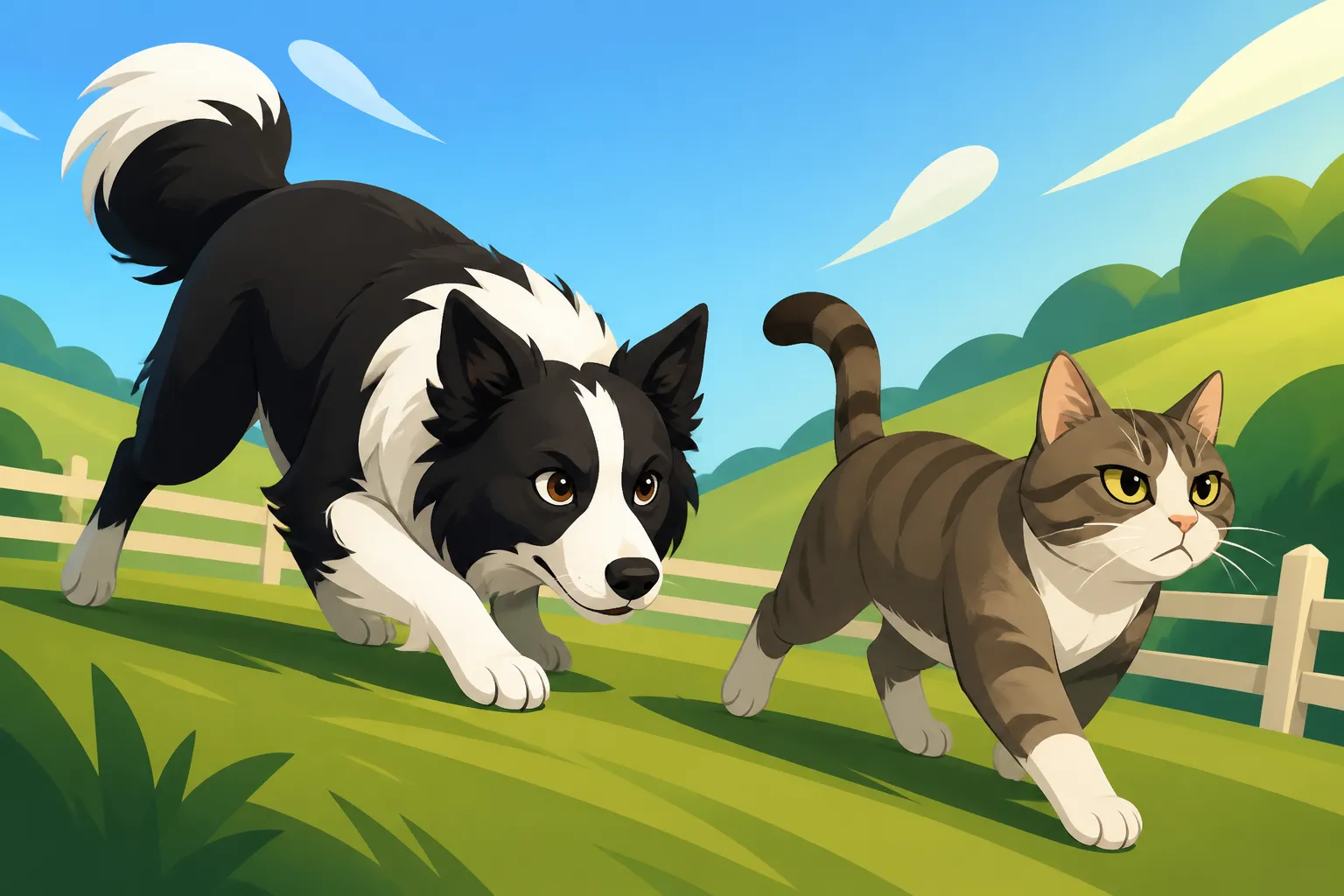
One of the most defining characteristics of a Border Collie is its "eye"—that intense, focused stare they use to control stock. They lower their heads, fix their gaze, and silently communicate their intent to the animal they're working. This isn't just a physical posture; it's a mental state of absolute focus. When a Border Collie encounters a cat, that same intense focus can be brought to bear. The cat, seeing this direct gaze, often perceives it as a threat, which in turn causes them to move, which then further triggers the Border Collie's instinct. It becomes a vicious cycle. They're not trying to hurt the cat, usually; they're trying to gather it, stop it, or move it to where they think it should be. It’s a core part of The Border Collie Stare and Where It Comes From.
Not Always Predation, But Still a Problem
It’s crucial to understand that herding isn't the same as predation, though the lines can sometimes blur if left unchecked. A Border Collie's herding instinct is about control, not necessarily killing. They want to influence movement. However, the actions – the stalking, the low chase, the circling – can look very much like predatory behavior to a cat, and let's be honest, sometimes they can escalate. A Border Collie might nip at heels or push with its nose, which can be genuinely frightening or even harmful to a smaller, more fragile cat. This isn't usually an attempt to injure, but rather a misguided effort to "turn" the cat or stop its movement, just as they would a recalcitrant sheep. The cat, understandably, doesn't appreciate being treated like a sheep.
Recognizing the Behavior and Its Impact
Before you can address the herding, you need to be able to identify it accurately and understand how both your dog and cat are experiencing it. It's not always obvious, especially if your cat is particularly tolerant or your dog is subtle.
Common Border Collie Herding Cues
Your Border Collie might exhibit a range of behaviors when attempting to herd your cat. Keep an eye out for these tell-tale signs:
- The Stalk and Crouch: Dropping into a low crouch, moving slowly and deliberately towards the cat, often with their head low and intense eye contact.
- Circling: Attempting to get behind or around the cat to direct its movement. This is classic herding.
- Nose-Nudging or Bumping: Using their nose or shoulder to try and push the cat in a certain direction.
- Nipping at Heels/Tail: A quick, soft nip or grab at the cat's hindquarters or tail to encourage movement or stop it. This is where it can get dangerous for the cat.
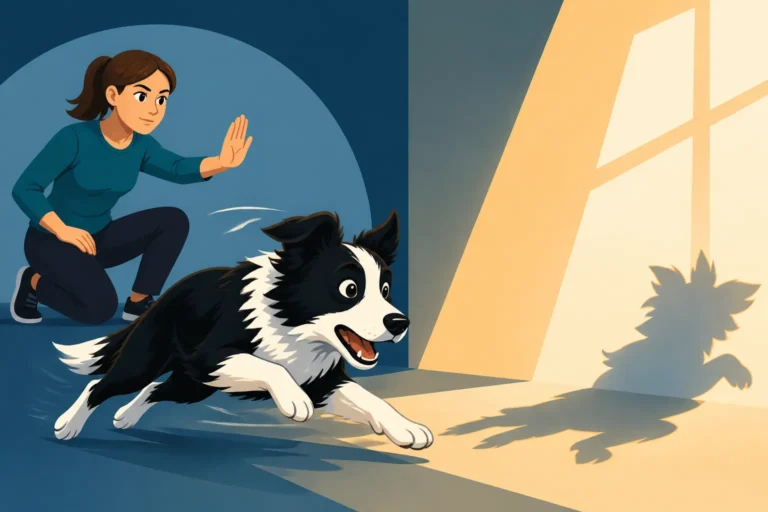
- Blocking: Standing in a doorway or hallway to prevent the cat from moving where it wants to go, essentially "penning" it. This is a common manifestation of A Border Collie Gathering the Family Into One Room.
- Intense Stare (The "Eye"): Locking onto the cat with an unblinking, focused gaze, often accompanied by a lowered body posture.
Cat Stress Signals
While your Border Collie might just be "working," your cat is likely experiencing significant stress. Recognizing your cat's discomfort is paramount:
- Hissing or Growling: Clear signs of aggression or fear, telling the dog to back off.
- Swatting: Using claws, often without full extension initially, to deter the dog.
- Running and Hiding: Trying to escape the situation, seeking high places or secluded spots.
- Piloerection: Raised fur, especially along the spine and tail, indicating fear or aggression.
- Flattened Ears: Ears pinned back against the head, another sign of fear or defensiveness.
- Dilated Pupils: Can indicate fear, excitement, or aggression.
- Inappropriate Urination/Defecation: In extreme stress, a cat might have accidents outside the litter box.
- Refusal to Eat or Drink: Chronic stress can lead to appetite loss.
Here's a quick reference table to help you distinguish between typical Border Collie herding behaviors and your cat's reactions:
| Border Collie Herding Behavior | Cat Reaction (Potential Stress Signals) |
|---|---|
| Intense "Eye" stare | Freezing, tail twitching, flattened ears |
| Stalking/Crouching low | Hissing, low growl, arched back |
| Circling movement | Running away, seeking high ground |
| Nose-nudging/Bumping | Swatting, quick turn to face dog |
| Nipping at heels/tail | Yowl, sharp swat with claws, panicked escape |
| Blocking pathways | Attempts to squeeze past, cries for help |
| Persistent pursuit | Retreat, hiding for extended periods |
Strategies for Managing the Herding Behavior
Once you recognize the pattern, it's time to intervene. Managing herding behavior requires a multi-faceted approach, focusing on prevention, redirection, and clear boundaries for both animals.
Redirection and Appropriate Outlets
The absolute best way to manage unwanted herding is to give your Border Collie an appropriate outlet for that powerful instinct. A tired Border Collie, mentally and physically, is a much less troublesome Border Collie.
- Structured Play: Instead of allowing them to chase the cat, engage them in games that mimic herding in a controlled way. Flirt poles are fantastic for this, allowing them to stalk and chase a lure without targeting a live animal. Strong, durable retrieve toys found on Amazon can also provide an excellent outlet.
- Training Games: Border Collies thrive on mental challenges. Teach them complex tricks, engage in scent work, or introduce puzzle feeders that require problem-solving. This taps into their intelligence and drive in a constructive way. Mental Work That Tires a Border Collie Faster is critical here.
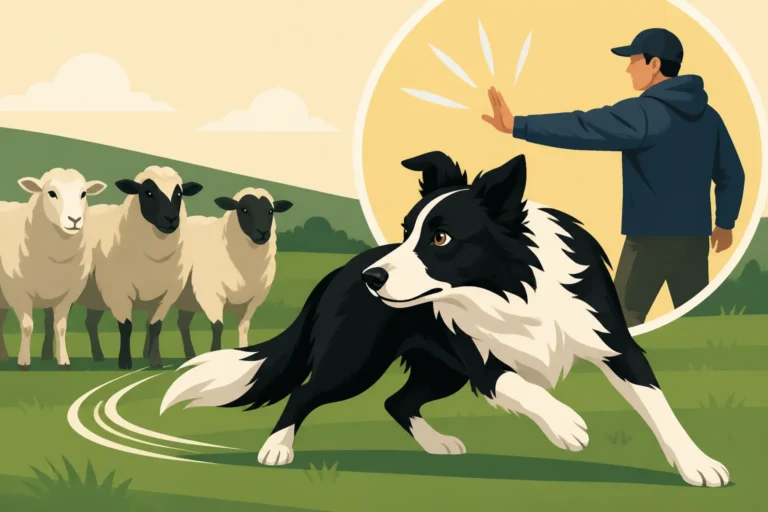
- Herding-Specific Activities: If possible and safe, consider enrolling your Border Collie in an actual herding class. Even if you don't have sheep at home, giving them a sanctioned outlet once a week or so can significantly reduce their need to "work" other household members. Even if they never become a trial dog, understanding The First Time a Border Collie Meets Sheep can provide invaluable insight.
Physical Barriers and Safe Zones
Creating physical separation is often the most immediate and effective way to prevent incidents and give both animals a break.
- Baby Gates: Install baby gates in doorways to create dog-free zones where your cat can roam safely. Make sure these are gates your Border Collie cannot jump over.
- Crates: Teach your Border Collie that their crate is a calm, safe space. This allows you to confine them when you can't actively supervise, giving your cat peace of mind. Check out our guide on What a Border Collie's Off-Switch Crate Setup Costs.
- Vertical Space for Cats: Cats love high places. Invest in tall cat trees, shelves, or even catio installations. This gives your cat an escape route and a place to observe from a safe distance, away from the dog's reach.
Interruption and Positive Reinforcement
You need to teach your Border Collie that herding the cat is not an acceptable behavior.
- Consistent Interruptions: The moment you see your Border Collie staring at the cat with that intense "eye" or starting to stalk, interrupt them with a verbal cue like "Leave it!" or a sharp clap. Immediately redirect their attention to an appropriate toy or a command they know.
- Strong Recall: A solid "come" command is invaluable. If your dog locks onto the cat, a reliable Recall on a Border Collie That Has Locked On can disengage them and bring them back to you.
- Reward Calmness: Whenever your Border Collie ignores the cat, or simply exists peacefully in the same room, reward that behavior. Use treats, praise, or a favorite toy. You're trying to build a new association: "cat present = calm behavior gets rewards," rather than "cat present = time to work!"
- Teaching a "Place" Command: Training your Border Collie to go to a designated "place" (like a dog bed) and stay there until released can be a game-changer. This gives them a job to do and keeps them out of the cat's personal space. Learning Teaching a Border Collie to Stay on Its Bed is a fundamental skill for this.
Prevention and Long-Term Solutions
The goal isn't just to stop the immediate behavior, but to cultivate a long-term peaceful household. This involves proactive training, consistent management, and setting both animals up for success.
Structured Training and Boundaries
Formal obedience training is crucial for a Border Collie, perhaps more so than for many other breeds, because of their intense drive. A well-trained Border Collie is a dog that understands boundaries and responds reliably to commands.
- Early Intervention: If you have a Border Collie puppy, start socialization and training early. Exposing them to cats (safely and supervised) from a young age can help them learn appropriate behavior.
- "Off" Command: This command is vital for a Border Collie who is focused on something they shouldn't be. It teaches them to disengage from whatever they're fixated on.
- Consistency is Key: Everyone in the household needs to be on the same page regarding rules and training. Inconsistent responses will only confuse your intelligent Border Collie. Online training resources, like those offered by BAXTER & Bella, can be incredibly helpful for structured learning and ensuring consistency with your training methods. They provide step-by-step guidance that can make managing a highly driven dog much more approachable.
Environmental Enrichment for Both Species
Making sure both your dog and cat have their needs met can significantly reduce tension and problem behaviors.
- Dog's Needs: Ensure your Border Collie is getting ample physical and mental exercise. This breed needs a "job" to do every single day. Walking alone is rarely enough; they need activities that engage their minds, such as agility, flyball, or advanced obedience. Learn more about What a Border Collie Does With Its Whole Day.
- Cat's Needs: Provide your cat with plenty of resources – multiple litter boxes, food and water stations in safe, elevated locations, scratching posts, and toys. Ensure they have places to retreat where the dog cannot reach them. A cat that feels secure is less likely to become stressed and provoke a chase response.
Supervised Interactions and Gradual Exposure
Never leave your Border Collie and cat unsupervised until you are absolutely certain that peaceful coexistence has been established. Even then, err on the side of caution.
- Leash Management: Initially, keep your Border Collie on a leash in the house when the cat is present. This allows you to immediately correct any undesirable behavior and gives you full control. A long line can be useful for practicing recall around the cat.
- Positive Associations: When the Border Collie and cat are in the same room and behaving calmly, offer high-value treats to both animals. The goal is for them to associate each other's presence with good things.
- Respect Cat's Space: Teach your Border Collie to respect the cat's boundaries. The cat should never feel trapped or cornered. Always ensure the cat has an easy escape route.
Managing a Border Collie's instinct to herd your cat can be a challenge, but with patience, consistency, and a deep understanding of your dog's nature, it's absolutely achievable. It's about providing appropriate outlets, setting clear boundaries, and teaching both animals how to share their home peacefully. Your Border Collie wants a job, and your cat wants to feel safe. By providing both, you can turn a potential conflict into a harmonious home.
Disclaimer
This article is for general informational purposes only and does not constitute professional advice. Laws, prices and regulations vary by location and change over time. Consult a qualified professional for guidance on your specific situation.